Global leaders in finance, science and conservation have urged the ISSB to develop a dedicated nature standard.
The call came as companies face increasing exposure to biodiversity loss, ecosystem degradation and natural resource risk.
For Africa, the debate matters because nature underpins food systems, water security, agriculture, mining, tourism and climate resilience.
Nature Risk Enters The Boardroom
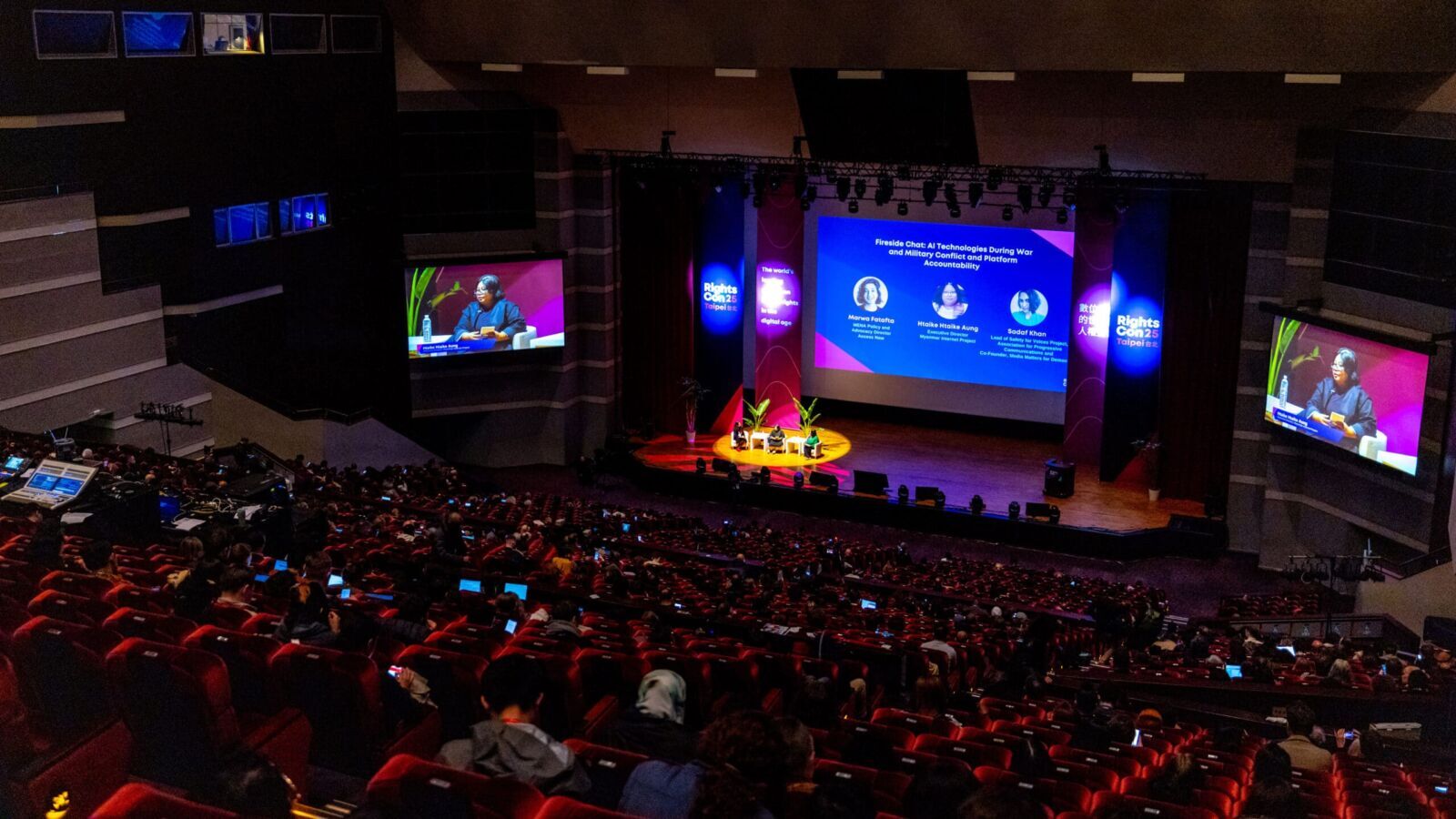
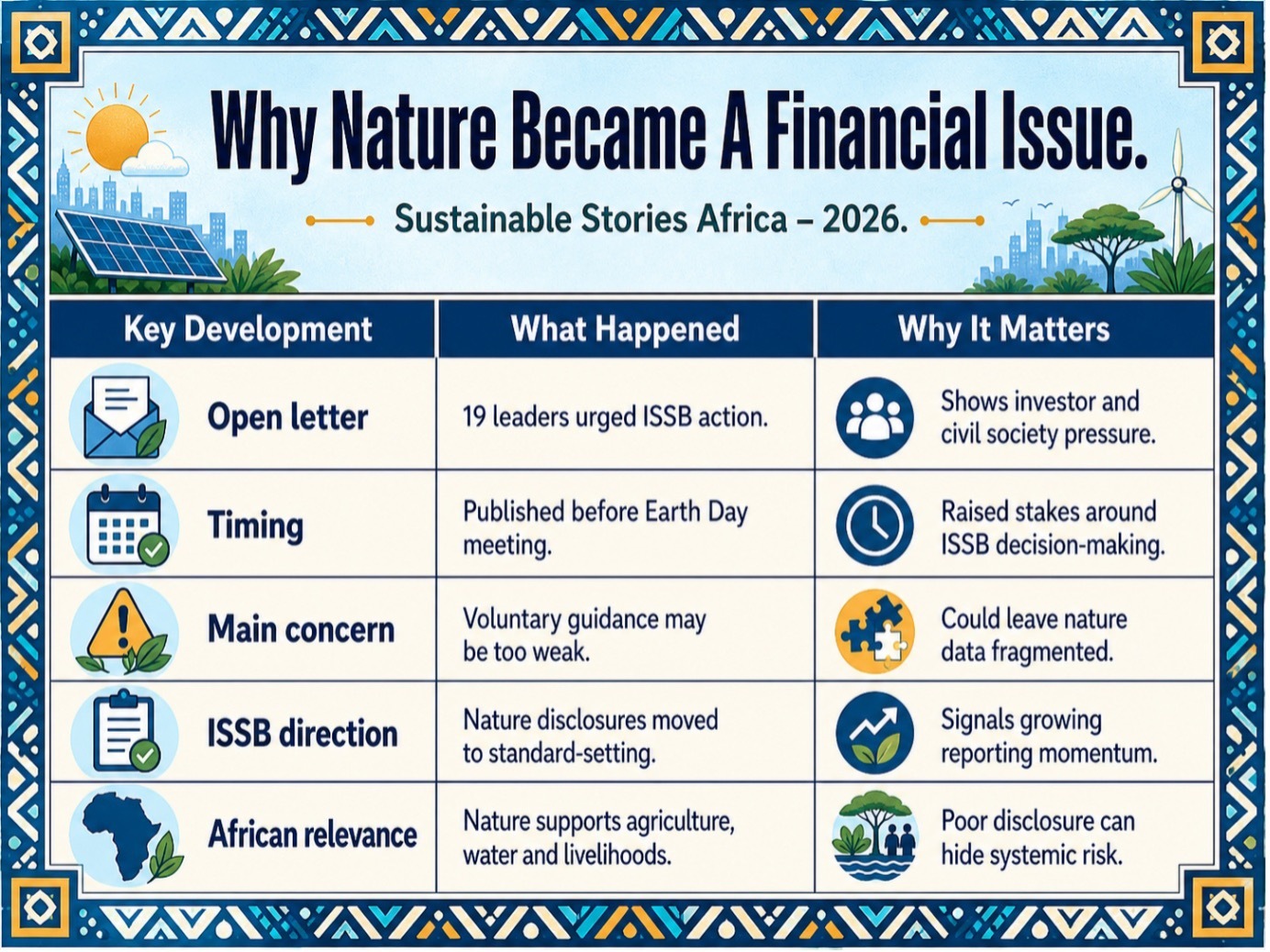
A coalition of 19 global leaders from conservation, science, finance and business has called on the International Sustainability Standards Board to develop a dedicated nature standard, warning that a weaker voluntary approach could slow corporate action on biodiversity loss.
The open letter, published on 20 April 2026 ahead of the ISSB’s Earth Day board meeting, argued that nature risk is now a financial risk, rather than a peripheral environmental concern.
The signatories said they were “extremely concerned” by reports that ISSB staff had recommended against a standalone standard, describing such a move as a regressive decision that could delay progress.
The timing was significant. On 22 April 2026, the ISSB said it had agreed on a proposed way forward for nature-related disclosures, while IFRS project materials show the board has moved nature-related disclosures from research into standard-setting work.
Why Nature Became A Financial Issue
Nature is no longer just an ESG theme. It is becoming a balance-sheet question.
Companies depend on water, soil, forests, pollination, fisheries and stable ecosystems.
When those systems degrade, risks move into supply chains, insurance costs, credit assessments, food prices and infrastructure planning.
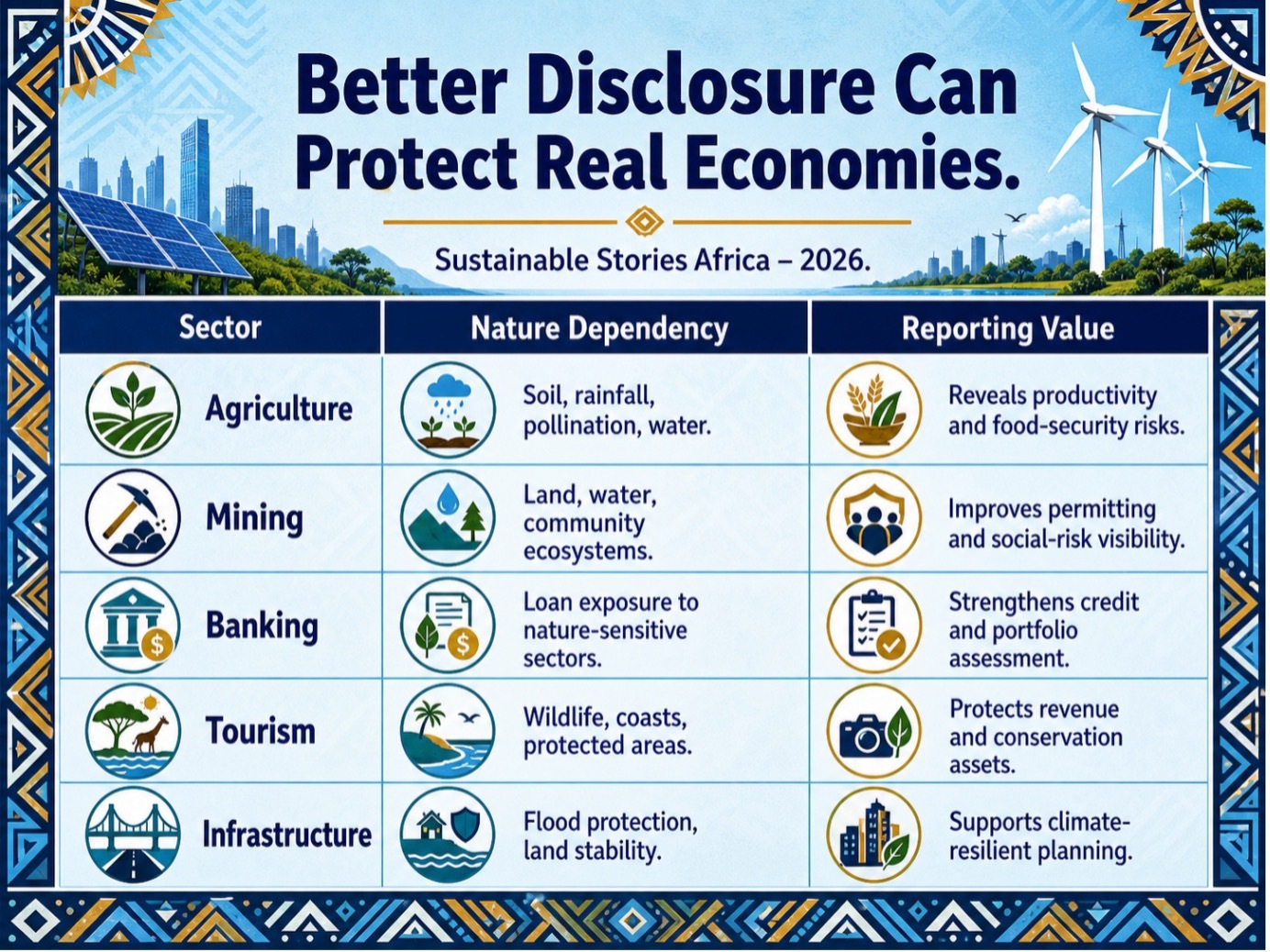
For African markets, this is especially material. Agriculture, extractives, tourism and water-dependent industries all sit close to nature-related risk.
The ISSB’s work matters because its standards are designed to create a global baseline for sustainability-related financial disclosures. IFRS materials state that nature-related standard-setting will draw on the Taskforce on Nature-related Financial Disclosures framework and supplement IFRS S1 and IFRS S2.
Better Disclosure Can Protect Real Economies
A stronger nature standard could help investors understand which companies are exposed to deforestation, water stress, land degradation, ecosystem collapse or biodiversity-linked regulation.
For Africa, the benefit would be practical.
- Banks financing agribusiness could better assess soil and water risks.
- Pension funds could see whether infrastructure projects are exposed to flooding or habitat damage.
- Listed companies could explain how they depend on natural assets, and how they plan to protect them.
The risk of weak disclosure is that markets continue to price nature as if it were free.
That can reward short-term extraction while hiding long-term liabilities.
Africa Should Shape The Standard
African regulators, stock exchanges, banks and sustainability professionals should not wait for global rules to arrive fully formed.
They should engage in the ISSB process, build local capacity and ensure nature-related reporting reflects African realities.
- That means disclosure rules must be usable for large listed companies, banks, agribusinesses and state-linked infrastructure firms.
- It also means aligning nature reporting with climate adaptation, food security, water governance and community impact.
For companies, the practical next step is clear: map nature dependencies, identify material risks, improve data collection and connect nature strategy to financial planning.
For investors, the task is to ask sharper questions before capital is deployed.
Path Forward – Make Nature Disclosure Market-Relevant
The ISSB debate should push African markets to treat nature as economic infrastructure, not just environmental background.
A credible nature standard would strengthen ESG reporting, improve capital allocation and help companies protect the ecosystems that support jobs, food, water and resilience.
Culled From: Global Leaders Call on ISSB to Develop a Nature Standard