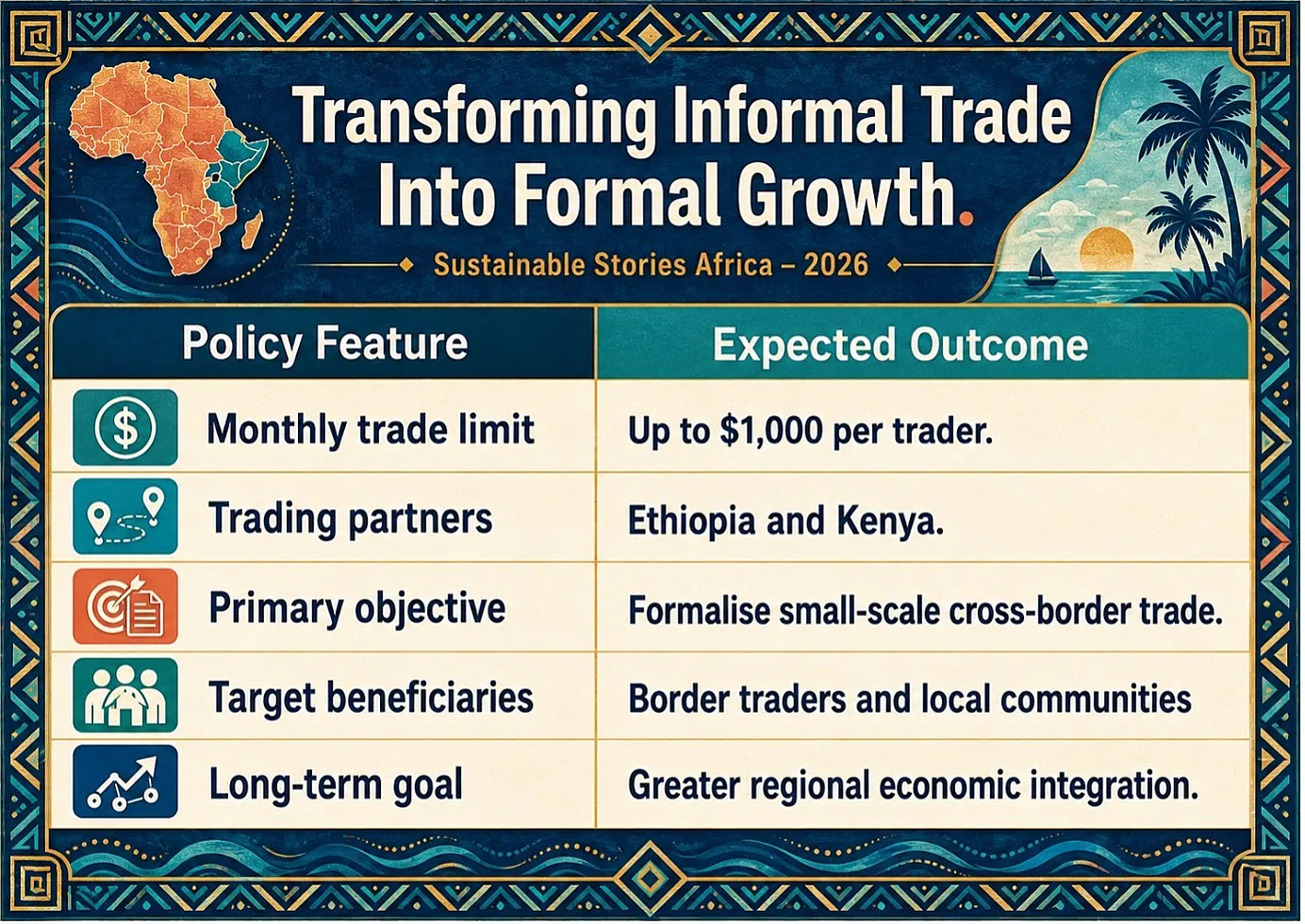
Ethiopia has formalised small-scale cross-border trade with Kenya through a new framework allowing traders to exchange goods worth up to $1,000 per month.
The initiative seeks to shift informal commerce into regulated markets while supporting border livelihoods.
For traders, communities and regional economies, the policy could improve incomes, transparency and economic integration.
A New Chapter For Border Communities
For decades, thousands of traders along the Ethiopia–Kenya border have relied on informal commerce to sustain their families, moving livestock, food products and household goods across one of East Africa's busiest frontier regions.
Now, Ethiopia has introduced a formal framework designed to recognise and regulate that economic reality.
Under a new policy reported by Businessfront, Ethiopia will allow licensed small-scale cross-border traders to exchange eligible goods with Kenya worth up to $1,000 each month.
The initiative aims to simplify legal trade, improve customs administration and bring informal commercial activity into the formal economy while supporting livelihoods in border communities.
The reform reflects a broader regional ambition to strengthen economic integration under the African Continental Free Trade Area (AfCFTA) by making cross-border commerce more accessible for micro, small and informal enterprises that drive local economies.
Transforming Informal Trade Into Formal Growth
Small-scale cross-border trade has long been an economic lifeline across East Africa.
Communities living along the Ethiopia–Kenya border regularly exchange agricultural produce, livestock, textiles, manufactured goods and household essentials.
Much of this trade has historically taken place outside formal customs systems because of complex procedures, high compliance costs or limited access to official border facilities.
The new framework seeks to change that dynamic.
By establishing a recognised monthly trading threshold of US$1,000, authorities hope to simplify compliance, encourage legal trade and improve monitoring without placing excessive administrative burdens on small traders.
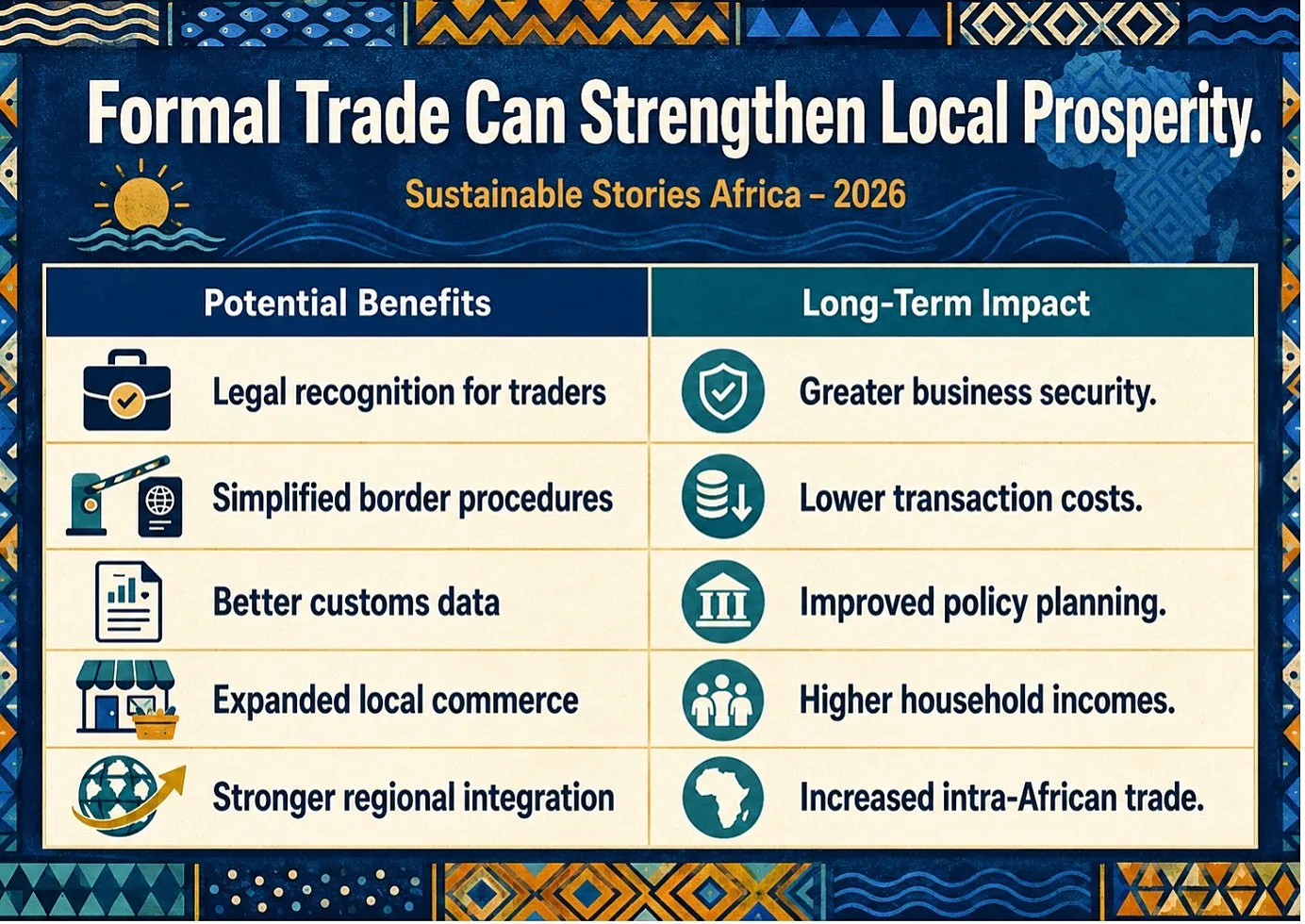
Formalisation offers benefits beyond customs administration.
Traders operating legally are more likely to access financial services, business registration opportunities and government support programmes.
Governments, meanwhile, gains improved trade data, stronger revenue collection and better oversight of commercial activity without disrupting local livelihoods.
The policy also supports broader regional integration efforts across East Africa, where reducing non-tariff barriers remains essential to expanding intra-African trade.
For many families living near the border, formalisation is less about regulation than about reducing uncertainty.
Predictable rules can lower transaction costs, improve security and make it easier for traders to grow small businesses into sustainable enterprises.
Formal Trade Can Strengthen Local Prosperity
The greatest opportunity created by the new framework lies in its potential to transform subsistence trading into sustainable economic participation.
When informal traders gain legal recognition, they become more visible participants in national economies.
- Banks are more willing to provide financial services.
- Businesses can establish longer-term supplier relationships.
- Governments can design policies using better trade information.
Border communities also stand to benefit.
Greater legal trade encourages investment in roads, border markets, storage facilities, digital payments and customs infrastructure, creating employment opportunities beyond trading itself.
The initiative aligns closely with Africa's broader development agenda, in which empowering micro and small enterprises remains essential for inclusive growth, poverty reduction and regional resilience.
If implemented effectively, the framework could demonstrate how practical policy reforms improve both economic inclusion and regulatory efficiency.
Implementation Will Determine Long-Term Success
Introducing new rules is only the first step.
The success of Ethiopia's small-scale trade framework will depend on efficient implementation, simplified customs procedures and sustained collaboration between Ethiopian and Kenyan authorities.
Border infrastructure, digital documentation systems and trader education programmes will all play critical roles in ensuring that compliance remains affordable and accessible.
Financial institutions, development partners and business associations also have an opportunity to support small traders through access to finance, business training and digital payment solutions that help enterprises transition into the formal economy.
For policymakers across Africa, Ethiopia's initiative offers an important lesson: formalisation succeeds when regulation enables entrepreneurship rather than creating additional barriers.
As implementation progresses, the policy could become a model for integrating informal commerce into national and regional development strategies while advancing the objectives of the AfCFTA.
Path Forward – Inclusive Trade Must Drive Regional Prosperity
Ethiopia's new framework demonstrates how practical trade reforms can strengthen border economies while supporting formal market participation.
The priority now is to ensure simple implementation, efficient border management and strong cooperation with Kenya.
If sustained, the initiative could deepen regional integration, expand opportunities for small businesses and accelerate inclusive economic growth across East Africa while advancing Africa's broader sustainable development ambitions.
Culled From: Ethiopia formalises small-scale cross-border trade with Kenya under $1,000 monthly limit - Businessfront