The European Union has committed €16.9 billion to accelerate Africa's clean-energy transition, targeting renewable power expansion, green industrialisation, and climate-resilient infrastructure. The investment forms part of the EU's Global Gateway strategy to strengthen equitable energy partnerships across the continent.
The funding will support solar, wind, hydrogen, and grid-modernisation projects while enabling African countries to reduce fossil-fuel dependence, unlock green jobs, and meet long-term emission-reduction goals.
EU Commits €16.9bn to Drive Africa's Clean-Energy Transformation
The European Union has announced a €16.9 billion financing commitment to fast-track Africa's clean-energy transition, marking one of the region's largest energy-development packages in recent years.
Officials said the funding, which was unveiled during a Brussels–Africa dialogue, will support renewable-energy expansion, transmission upgrades, and emerging sectors such as green hydrogen.
Why the EU's New Commitment Matters for Africa
Africa hosts some of the world's highest solar and wind potential, yet more than 600 million people still lack reliable electricity.
The EU said its investment aims to close this gap by supporting scalable, climate-aligned projects that drive economic productivity, reduce energy poverty, and build resilient power systems capable of integrating renewables at national and regional levels.
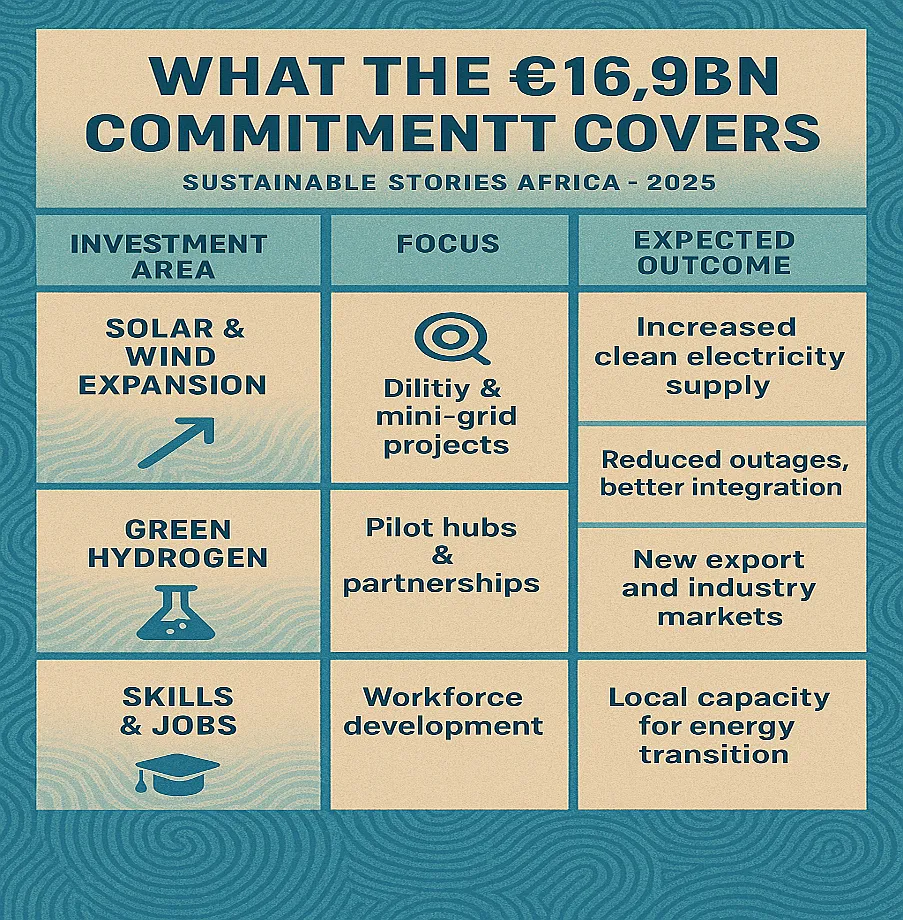
What the €16.9bn Commitment Covers
| Investment Area | Focus | Expected Outcome |
|---|---|---|
| Solar & Wind Expansion | Utility & mini-grid projects | Increased clean electricity supply |
| Grid Modernisation | Transmission & distribution | Reduced outages, better integration |
| Green Hydrogen | Pilot hubs & partnerships | New export and industry markets |
| Skills & Jobs | Workforce development | Local capacity for energy transition |
Evidence Behind the Strategic Investment Push
The EU noted that Africa's fast-growing population, rising clean-energy demand, and vulnerability to climate shocks require urgent and coordinated investment. The continent faces annual energy investment needs of over $250 billion, far above current flows.
Officials emphasised that clean-energy investments not only reduce emissions but unlock new value chains, from battery manufacturing to hydrogen production, positioning Africa as a key global energy partner.
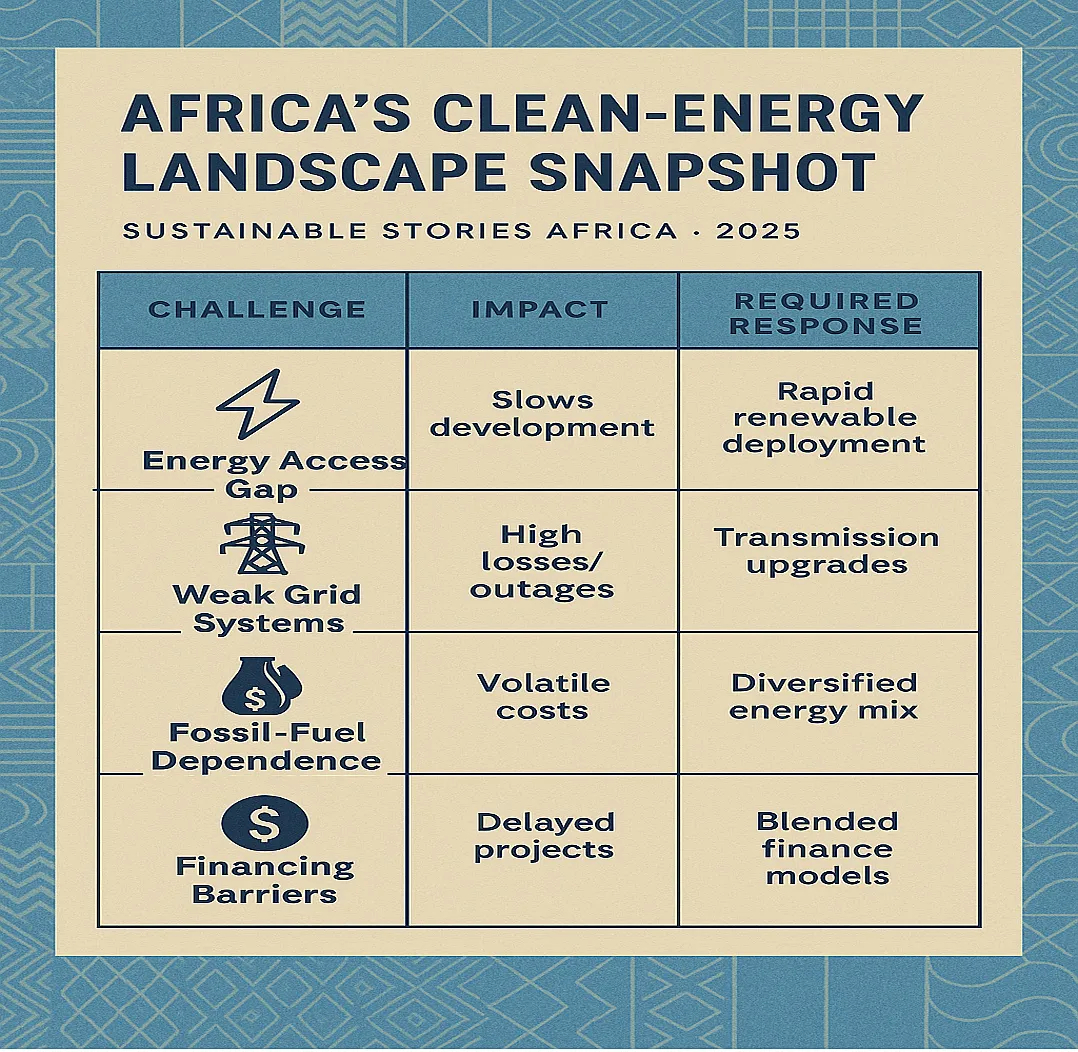
Africa's Clean-Energy Landscape Snapshot
| Challenge | Impact | Required Response |
|---|---|---|
| Energy Access Gap | Slows development | Rapid renewable deployment |
| Weak Grid Systems | High losses/outages | Transmission upgrades |
| Fossil-Fuel Dependence | Volatile costs | Diversified energy mix |
| Financing Barriers | Delayed projects | Blended finance models |
What African Governments and Partners Must Do Next
African policymakers were urged to streamline regulatory approvals, expand public-private partnerships, and strengthen investment protection frameworks. The EU committed to mobilising additional private capital through risk-sharing guarantees, concessional loans, and technical assistance for project preparation.
The partnership will also support cross-border electricity markets, regional power pools, and climate-resilient infrastructure development to ensure long-term sustainability.
PATH FORWARD – Deepening Partnerships to Accelerate Clean Transition
The €16.9bn pledge offers African economies a major opportunity to expand renewable-energy infrastructure, strengthen grids, and unlock green jobs. Implementation success will depend on regulatory alignment, transparent governance, and strong regional cooperation.
By advancing co-investment and technology transfer, Africa and the EU can build a greener, more resilient energy future anchored in shared climate goals.
Culled From: https://esgnews.com/eu-commits-16-9b-for-africas-clean-energy-transition/