The European Parliament's Environment Committee has backed expanding the EU's Carbon Border Adjustment Mechanism (CBAM) to around 180 additional downstream products.
The proposal aims to close loopholes that allow emissions-intensive imports to bypass Europe's carbon pricing regime.
For exporters, especially in developing economies, carbon performance is becoming a determinant of market access and competitiveness.
Europe's Carbon Border Is Growing Wider
The European Union is signalling that carbon accountability will increasingly follow products throughout the manufacturing value chain, not just the raw materials from which they are made.
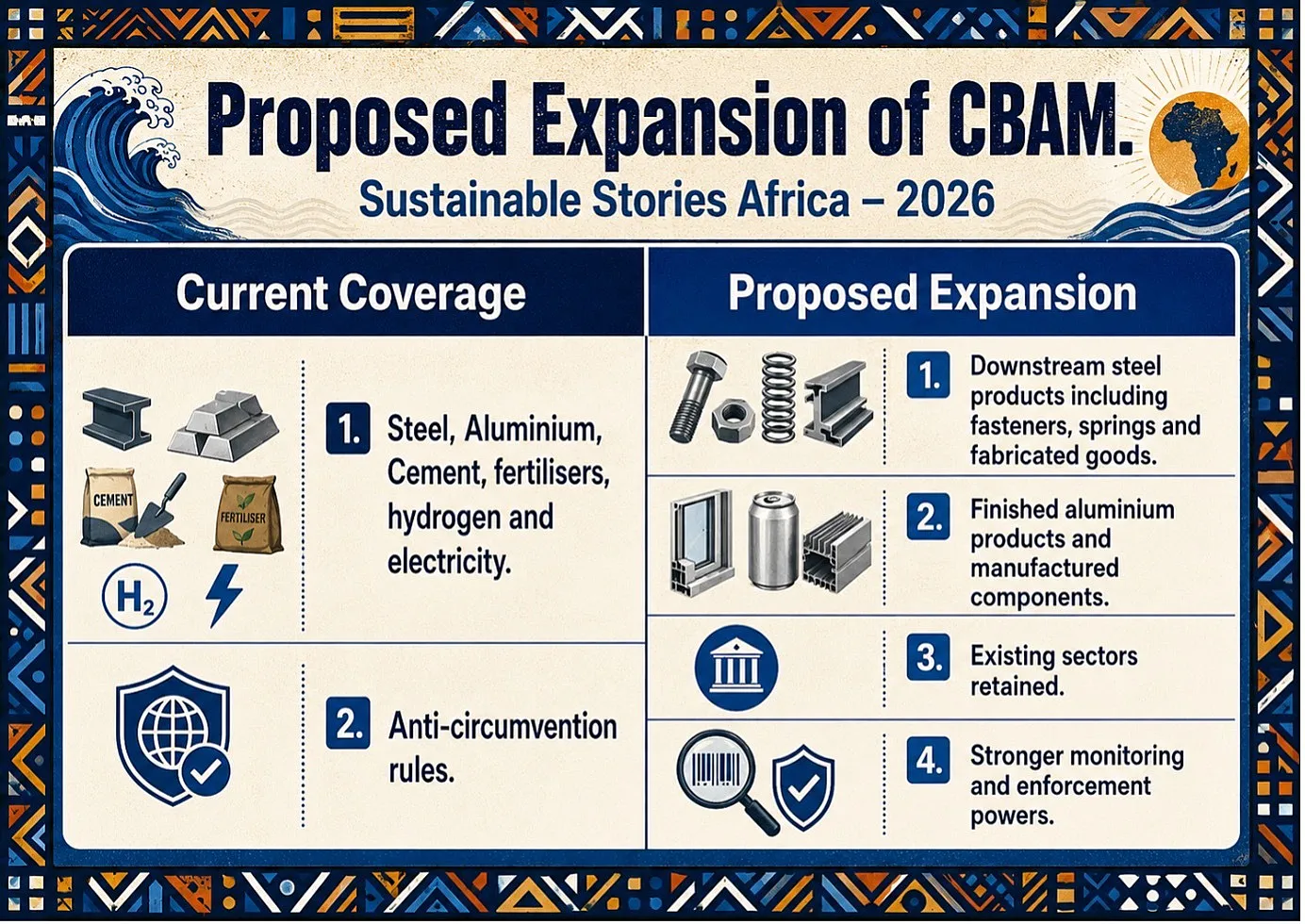
The European Parliament's Committee on the Environment, Climate and Food Safety (ENVI) has voted to expand the Carbon Border Adjustment Mechanism (CBAM) to approximately 180 additional downstream steel and aluminium products, including machinery, fasteners, household goods and industrial components.
The committee also endorsed stronger anti-circumvention measures and backed the creation of a temporary decarbonisation fund to support European industry as negotiations move to the next legislative stage.
The proposal reflects Europe's determination to prevent "carbon leakage", in which production shifts to countries with weaker climate regulations, while ensuring imported goods face carbon costs comparable to those borne by European manufacturers under the EU Emissions Trading System (ETS).
For exporters across Africa and the Global South, the message is becoming increasingly clear: sustainability performance is no longer simply a reporting exercise; it is fast becoming a trade requirement.
Closing Loopholes Across Global Supply Chains
The current CBAM applies carbon pricing to imports of iron and steel, aluminium, cement, fertilisers, hydrogen and electricity.
However, policymakers identified a growing loophole.
Manufacturers could avoid carbon charges by exporting finished or semi-finished products containing large amounts of steel or aluminium instead of the primary materials themselves.
The committee's proposal therefore extends CBAM to downstream products, ensuring carbon pricing follows embedded emissions further along manufacturing supply chains.
The proposal also strengthens anti-circumvention rules by tightening definitions around slight product modifications designed solely to evade CBAM obligations and empowering the European Commission to respond where systematic avoidance is identified.
For African manufacturers, the implications are significant.
- Engineering firms, metal fabricators, appliance manufacturers and exporters of industrial components may increasingly need robust emissions accounting systems to remain competitive in European markets.
- Companies able to demonstrate lower embedded emissions could strengthen their position, while businesses without credible carbon data may encounter additional compliance costs or reduced market access.
The committee also supports requiring future product additions to be based on transparent, quantitative methodologies while asking the European Commission to continue reviewing other sectors that may present carbon leakage risks.
Cleaner Trade Could Reward Competitive Producers
Although the proposal introduces additional compliance obligations, it also creates opportunities.
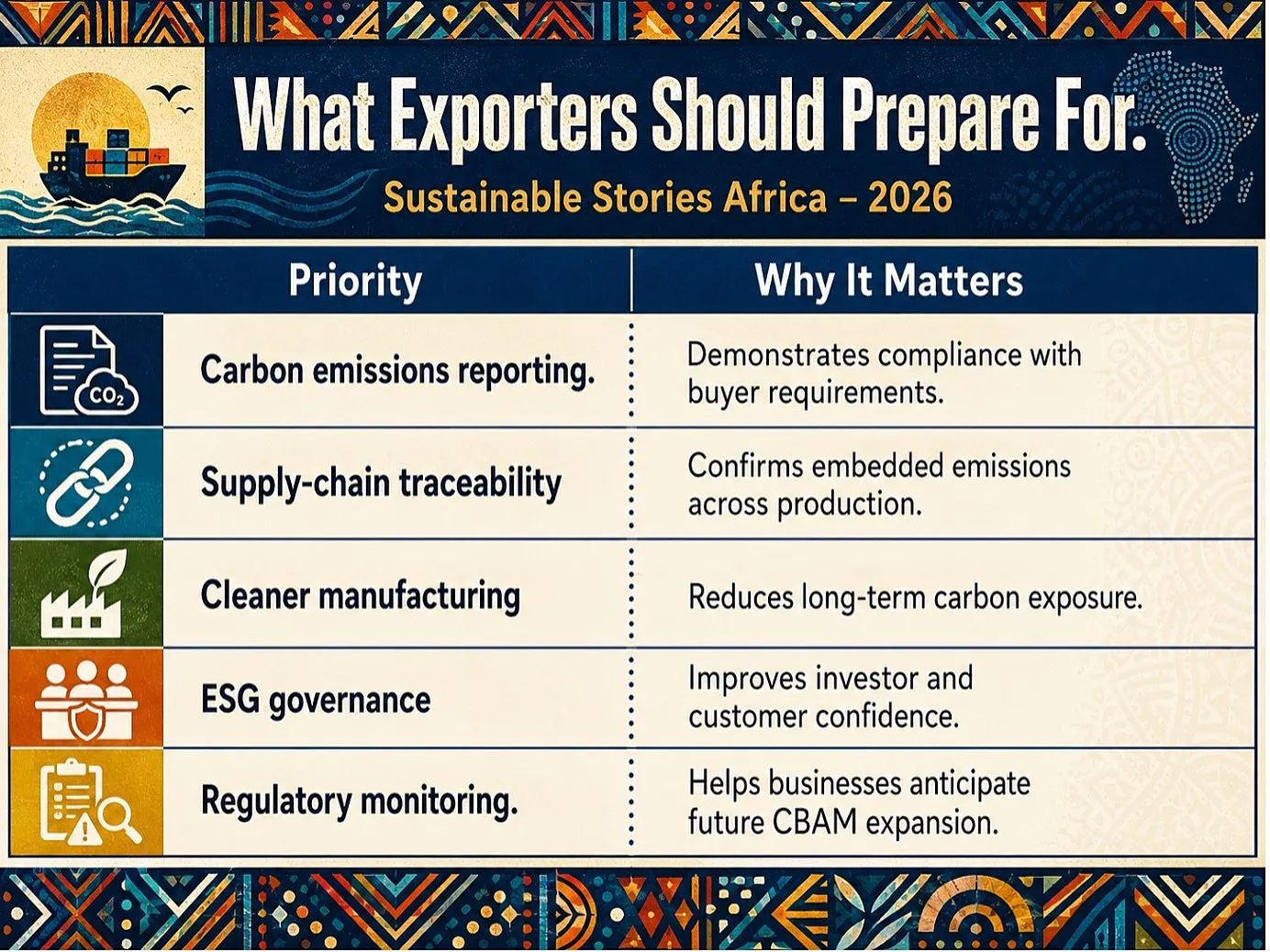
Companies investing in cleaner production technologies, renewable energy and transparent emissions reporting may enjoy stronger access to premium export markets as buyers increasingly seek verified low-carbon supply chains.
For African economies pursuing industrialisation, the policy reinforces an emerging reality: competitiveness will increasingly depend not only on labour costs or raw materials but also on carbon efficiency and ESG performance.
Governments that support emissions measurement systems, cleaner industrial energy, green manufacturing finance and internationally recognised reporting standards could position domestic industries to benefit from evolving global trade rules rather than being disadvantaged by them.
The committee's proposal also includes a temporary decarbonisation fund designed to help European industries remain competitive during the transition, highlighting that climate policy is increasingly being paired with industrial policy.
Competitiveness Now Includes Carbon Performance
The committee's vote does not immediately change the law. Negotiations between the European Parliament, the Council of the European Union and the European Commission must now determine the final legislative text before implementation.
Nevertheless, the direction of travel is unmistakable.
Exporters, policymakers and financial institutions should begin strengthening carbon accounting systems, improving industrial decarbonisation strategies and supporting businesses that must comply with increasingly climate-focused trade requirements.
For African governments, the response should extend beyond compliance. Investing in renewable-powered manufacturing, emissions-verification infrastructure and regional green industrial policies could help domestic producers compete in a global marketplace where carbon transparency is becoming an essential feature of international trade.
Path Forward – Strengthening Trade Through Climate Competitiveness
The proposed CBAM expansion signals a future in which carbon performance increasingly shapes international market access alongside product quality and price.
Businesses that invest early in emissions transparency and cleaner production will be better positioned for evolving global trade rules.
As negotiations continue, governments and industries have an opportunity to strengthen green industrial capacity, improve ESG reporting and build more resilient export sectors that align with international climate ambitions.
Culled From: EU Committee Backs Expanding Carbon Border Tax to 180 More Products