
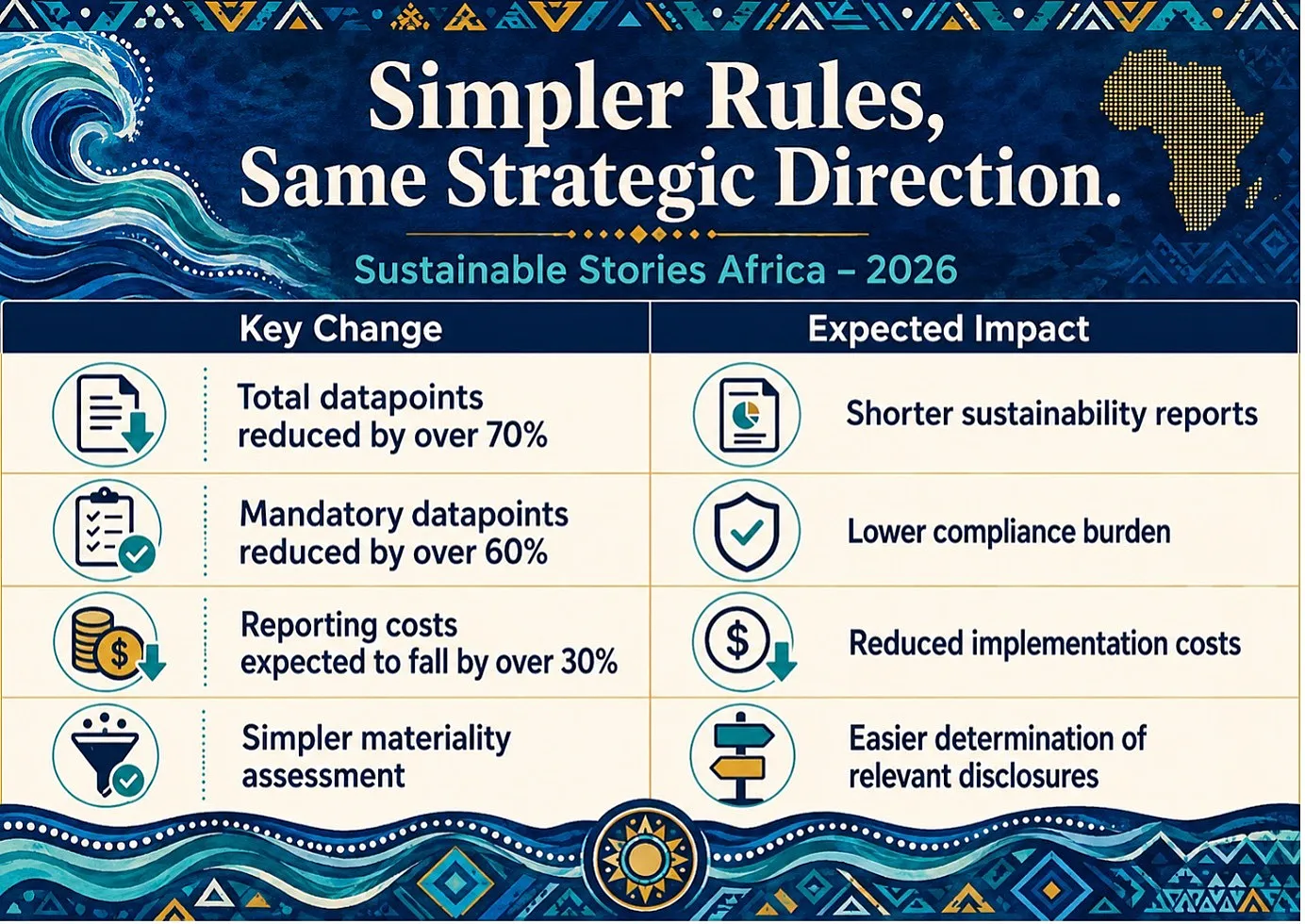
Europe has approved a major overhaul of its sustainability reporting standards, reducing total ESRS datapoints by more than 70%.
The move aims to lower compliance costs while keeping material sustainability disclosures at the heart of corporate reporting.
For African exporters, investors and multinational businesses, the changes could reshape how sustainability information is collected, shared and trusted.
Europe's Biggest ESG Reporting Reset Yet
The European Commission has adopted a sweeping revision of the European Sustainability Reporting Standards (ESRS), cutting total reporting datapoints by more than 70% and mandatory disclosures by over 60% in what is being described as the most significant simplification of corporate sustainability reporting since the introduction of the Corporate Sustainability Reporting Directive (CSRD).
The revised standards are expected to reduce reporting costs for companies by more than 30% while retaining disclosures considered material to investors and other stakeholders.
The overhaul forms part of the EU's broader competitiveness agenda under the Omnibus package, reflecting concerns from businesses that sustainability reporting had become excessively complex, resource-intensive and costly.
Rather than abandoning ESG reporting, Brussels says the reforms are designed to make disclosures more focused, practical and decision-useful.
For businesses across Africa, the implications extend beyond Europe. Thousands of African suppliers, exporters, financial institutions and subsidiaries that operate within European value chains will likely experience changes in the information requested by European customers and investors.
Simpler Rules, Same Strategic Direction
The revised ESRS remain anchored in the principle of double materiality, requiring companies to report sustainability issues that both affect business performance and reflect the company's impacts on people and the environment.
However, companies will now report significantly fewer data points, while the standards introduce clearer guidance, additional reporting flexibilities and simplified materiality assessments.
European policymakers argue that the objective is not weaker sustainability governance but smarter regulation.
Companies should spend less time producing lengthy reports and more time managing the sustainability risks those reports are intended to reveal.
For African companies seeking European investment or exporting into EU markets, the message is equally important.
Sustainability expectations have not disappeared; they have become more focused on material information that supports investment decisions, financing and risk management.
Many African businesses are already building ESG reporting capabilities aligned with global frameworks such as the Global Reporting Initiative (GRI), the International Sustainability Standards Board standards and national sustainability regulations.
The revised ESRS may therefore reduce reporting duplication rather than fundamentally changing strategic sustainability expectations.
Better Reporting Through Greater Focus
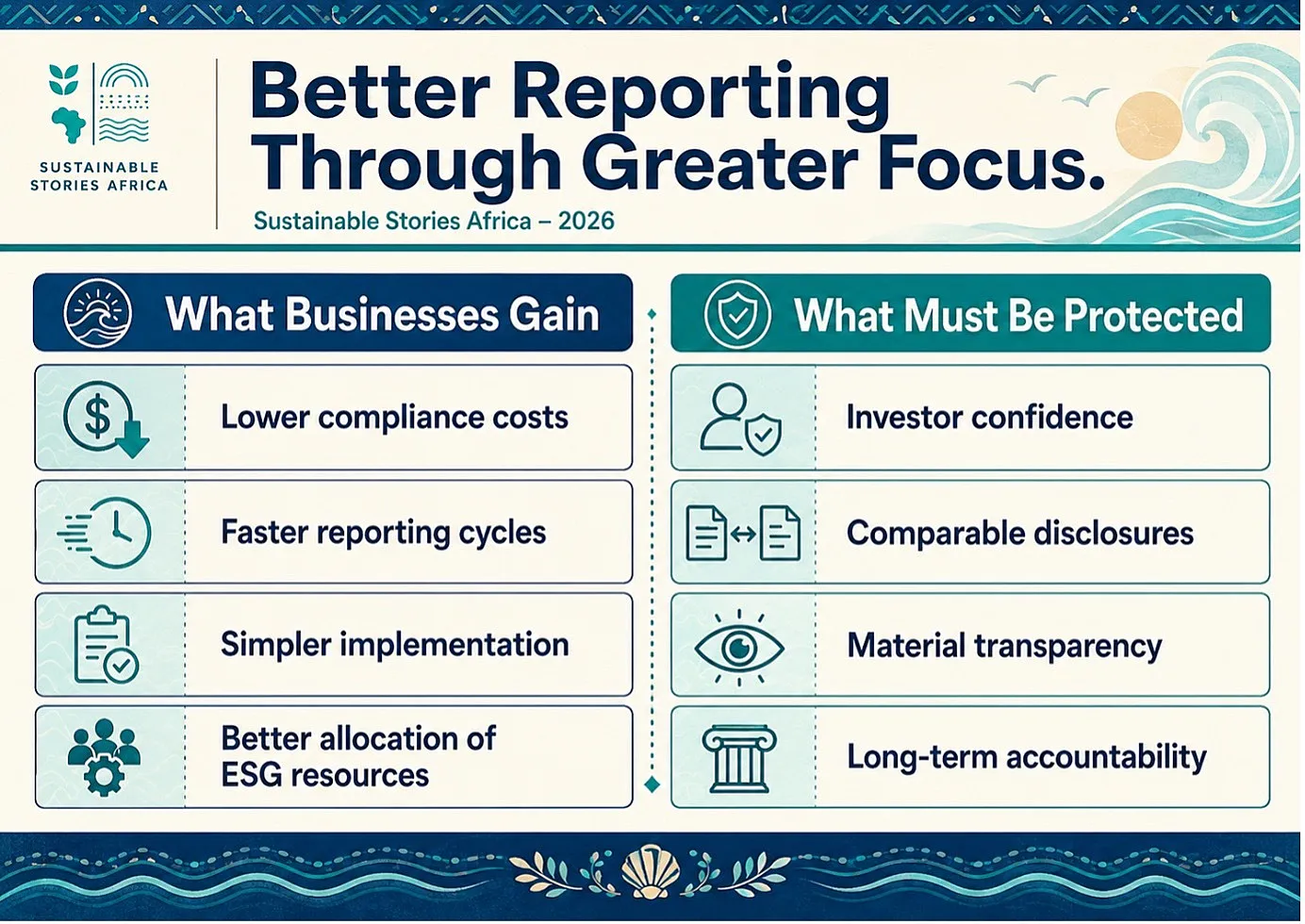
If implemented effectively, the revised standards could shift sustainability reporting away from compliance-heavy documentation toward higher-quality strategic communication.
Instead of collecting hundreds of marginal indicators, organisations can concentrate resources on climate resilience, workforce wellbeing, governance, biodiversity, human rights and other issues that genuinely influence long-term enterprise value.
For African markets, that presents an opportunity.
- Financial institutions could spend more time integrating sustainability into lending decisions rather than processing excessive documentation.
- Regulators may focus on disclosure quality rather than disclosure volume.
- Businesses could redirect compliance savings into decarbonisation projects, renewable energy investments, workforce development and stronger governance systems.
The challenge, however, is maintaining investor confidence. Some institutional investors and sustainability advocates have cautioned that reducing disclosure requirements could make it harder to compare companies or identify genuine sustainability leaders if implementation weakens transparency.
Turning Simplification Into Stronger Sustainability
The success of the revised ESRS will ultimately depend not on how many datapoints disappear, but on whether the remaining disclosures become more meaningful.
African regulators developing sustainability disclosure frameworks have an opportunity to learn from Europe's experience by prioritising proportionality, materiality and usability from the outset.
Rather than replicating highly complex reporting systems, policymakers can design disclosure regimes that support both competitiveness and transparency.
Businesses should also resist interpreting simplification as deregulation. Investors continue to demand reliable climate, governance and social performance information, while global supply chains increasingly depend on credible ESG data to allocate capital and manage risk.
The future belongs to organisations that can explain, rather than report simply, how sustainability creates resilience, protects communities and strengthens long-term economic value.
Path Forward – Focused Standards, Stronger, Sustainable Corporate Decisions
Europe's revised ESRS demonstrate that sustainability reporting can evolve without abandoning accountability.
The priority now is improving the quality, comparability and usefulness of disclosures while reducing unnecessary complexity.
For African markets, the opportunity lies in developing reporting systems that remain globally credible, support investment and strengthen corporate resilience without creating disproportionate compliance burdens.
Culled From: EU Cuts Sustainability Reporting Datapoints by Over 70% in ESRS Overhaul