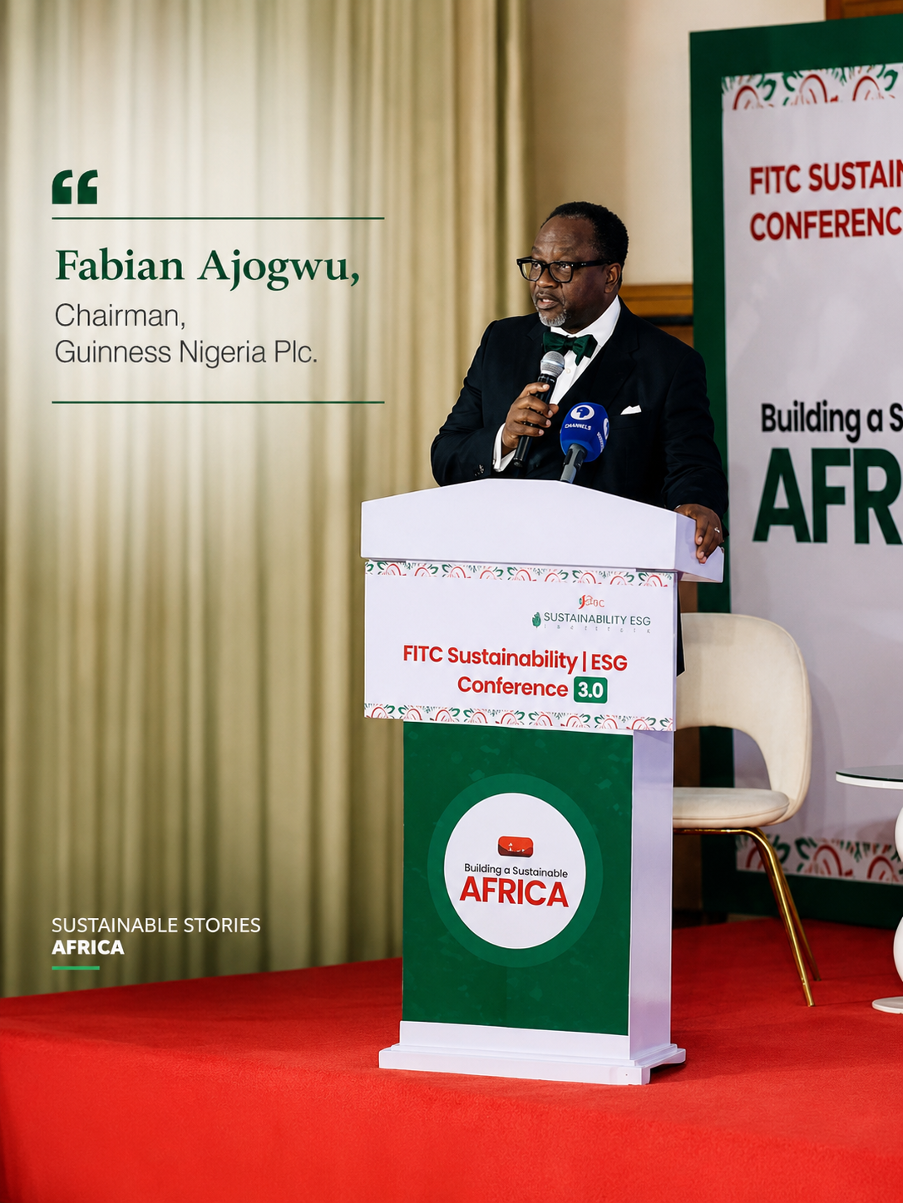
Fabian Ajogwu has urged African regulators, boards and companies to move sustainability from conference language to boardroom decisions, warning that governance must come before credible ESG action.
Speaking at a conference on building a sustainable Africa, he said sustainability now shapes capital allocation, regulatory expectations and market access.
His message was direct: without rules, stewardship and implementation, Africa risks turning mineral wealth into social disorder rather than shared prosperity.
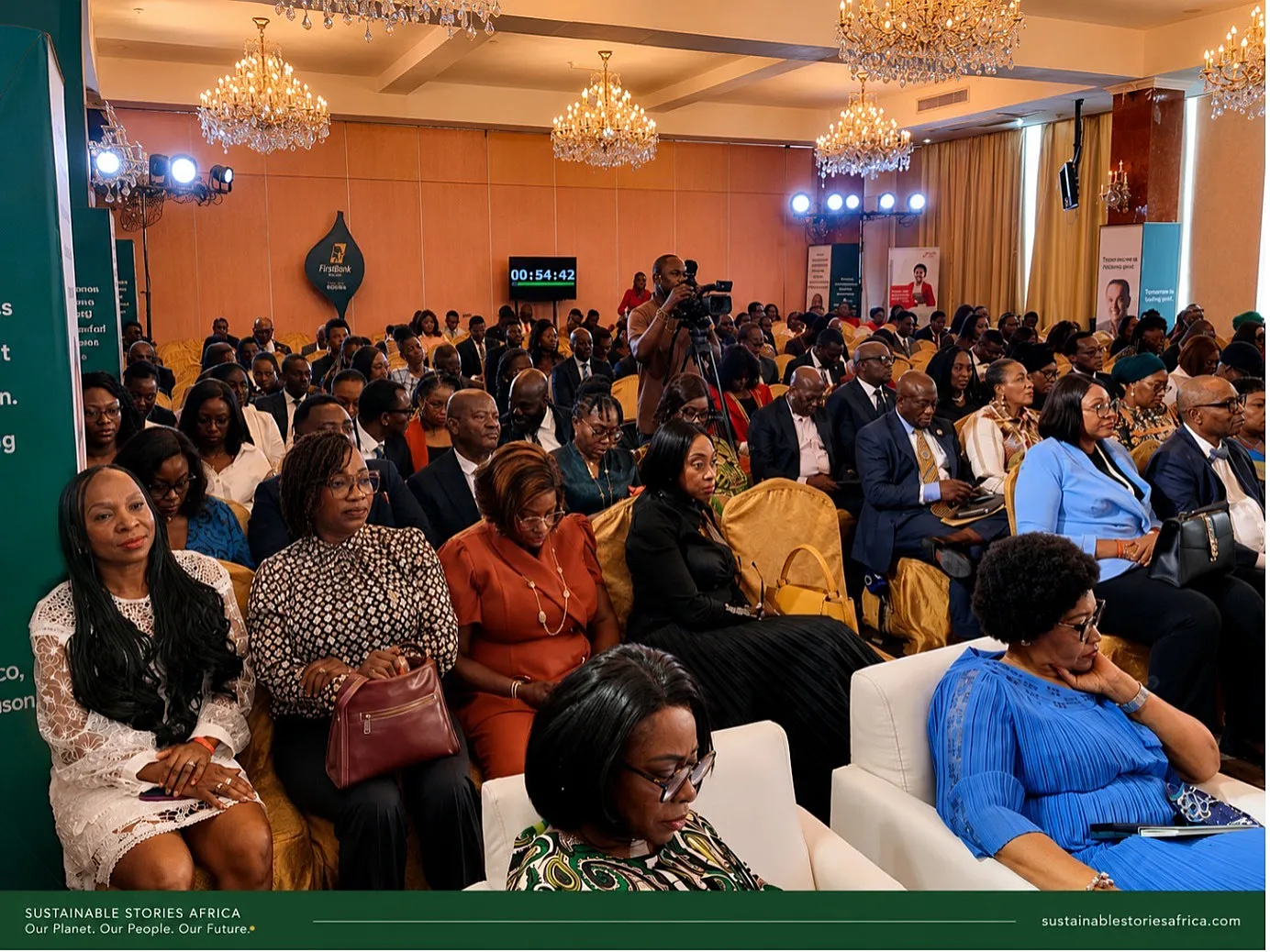 | 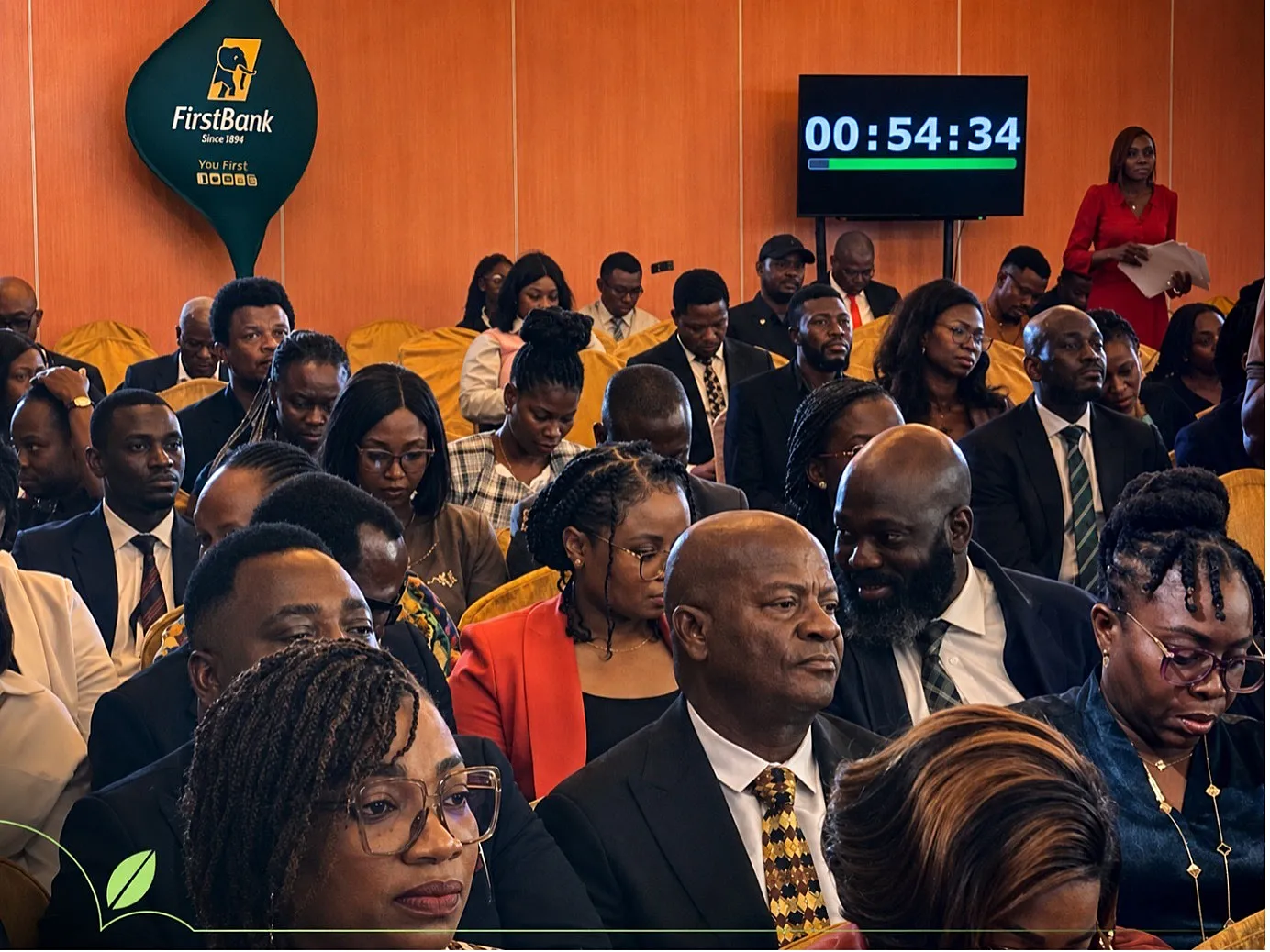 |
Governance First, Or Sustainability Remains Performance
Fabian Ajogwu, Senior Advocate of Nigeria and governance expert, has called on African markets to move from passive ESG compliance to active rulemaking, warning that the continent cannot build a sustainable future on weak governance, imported standards and delayed implementation.
Delivering the opening address at the FITC Sustainability and ESG Conference, themed “Building A Sustainable Africa: Integrating Environmental Stewardship, Social Impact, and Governance for a Prosperous Future.”, Ajogwu said sustainability had moved far beyond corporate conscience.
It is now a defining factor in how capital is allocated, how regulators assess companies, and how markets compete for long-term finance.
“Sustainability has gone beyond the talk,” he said. “It is no longer just a matter of corporate conscience; it has become the determinant of capital allocation.”
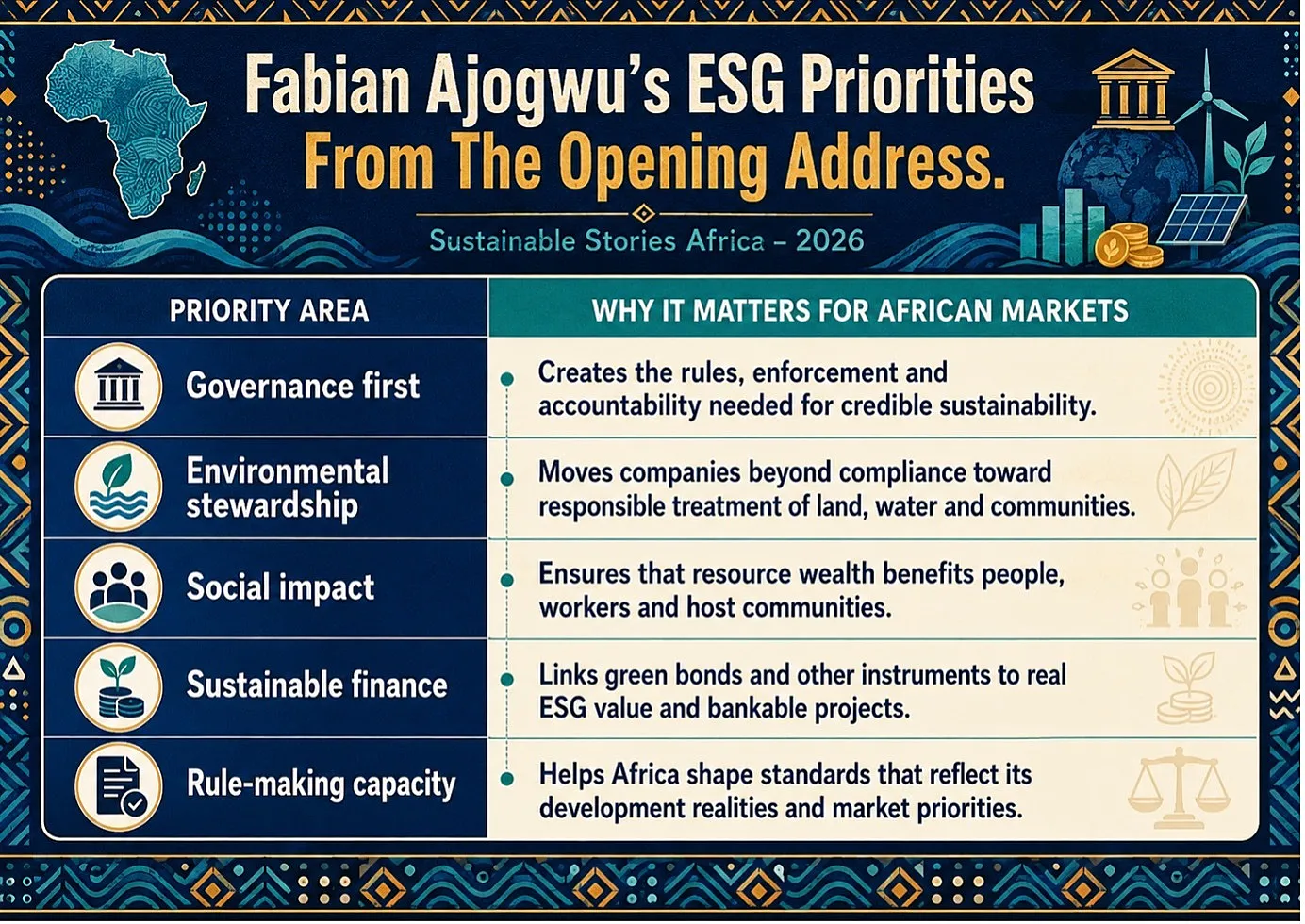
His central argument was sharp: Africa’s sustainability conversation must start with governance. Without it, he warned, ESG risks becoming another fashionable language of reports, panels and commitments, rather than a practical framework for investment, environmental stewardship and social stability.
“Governance comes first,” Ajogwu said. “Without it, every other thing is an exercise in pretence.”
From Rule Takers To Rule Makers
Ajogwu framed Africa's ESG challenge around a deeper structural concern: the continent remains largely a recipient of global rules, not an author of the standards shaping its markets.
"Africa must move from being rule takers to rule makers in relation to what concerns it," he said, noting that externally designed frameworks are often adopted regardless of local fit.
This message lands at a critical moment, as companies face rising pressure to disclose sustainability risks, strengthen governance and access climate finance, even as many markets grapple with fragmented regulation and weak enforcement.
Ajogwu highlighted Africa's resource paradox: the continent holds nearly 30% of global mineral resources yet struggles to convert this abundance into broad-based prosperity.
Mineral wealth without regulation, he warned, can breed disorder.
"Boom and doom sound alike, and they are cousins," he said, describing how economic promise turns into social and environmental damage when governance fails.
Turning Mineral Wealth Into Shared Prosperity
Ajogwu's address was not only a warning but also a case for possibility. He pointed to Morocco, where governance, agriculture, minerals and national development are more deliberately connected, citing phosphate as proof that one mineral, properly organised, can drive economic transformation.
The comparison was meant to provoke reflection: if one country can build value around a single resource, African nations with multiple minerals and expanding markets should not accept underperformance as destiny.
The stakes are practical.
- Better governance means cleaner communities, safer work and stronger investor confidence
- Poor governance costs Africa an estimated $88 billion to $90 billion, a value that could otherwise fund infrastructure and jobs.
His warning on illegal mining was direct: where minerals go unregulated, "nature abhors vacuum", criminal actors move in, communities suffer, and external buyers exploit weak systems.
Boards Must Move ESG Into Decisions
Ajogwu's charge to companies was clear: ESG must leave the realm of speeches and enter the boardroom.
He called for frameworks embedded in national development, implemented in factories, and reflected in governance systems.
He argued that sustainability cannot be reduced to annual reports but must shape real decisions on capital, permits and revenue sharing.
He pushed for expanded sustainable finance, including green bonds; however, he insisted that financing stay tied to genuine ESG value, warning that without credible governance, it risks becoming a label without measurable impact.
His message to regulators was equally pointed: rules should enable responsible projects, not frustrate them; he hopes that permits for OCP–Nigerian Sovereign Investment Authority cooperation proceed unobstructed.
The deeper call was institutional: Africa needs conferences that move outcomes to "the ears that matter."
Path Forward – Governance, Finance, and Stewardship Must Converge
Africa’s ESG future will depend on whether leaders can connect governance reform, environmental stewardship, social impact and sustainable finance into one credible development agenda.
Ajogwu’s opening address leaves policymakers, regulators and boards with a direct task: write better rules, enforce them fairly, finance serious projects and ensure that Africa’s resources serve people, markets and future generations.