FinDev Canada will receive CAD 2.73 billion in new capital to scale climate finance across emerging markets.
The package strengthens Canada’s development finance role as climate investment gaps widen across Africa, Asia-Pacific, Latin America and the Caribbean.
For businesses and communities, it could mean more renewable power, resilient infrastructure, climate-smart agriculture and private capital.
Canada Raises Its Climate Finance Bet
Canada has announced a CAD 2.73 billion capitalisation for FinDev Canada, giving its bilateral development finance institution more firepower to mobilise private investment for climate action across emerging markets.
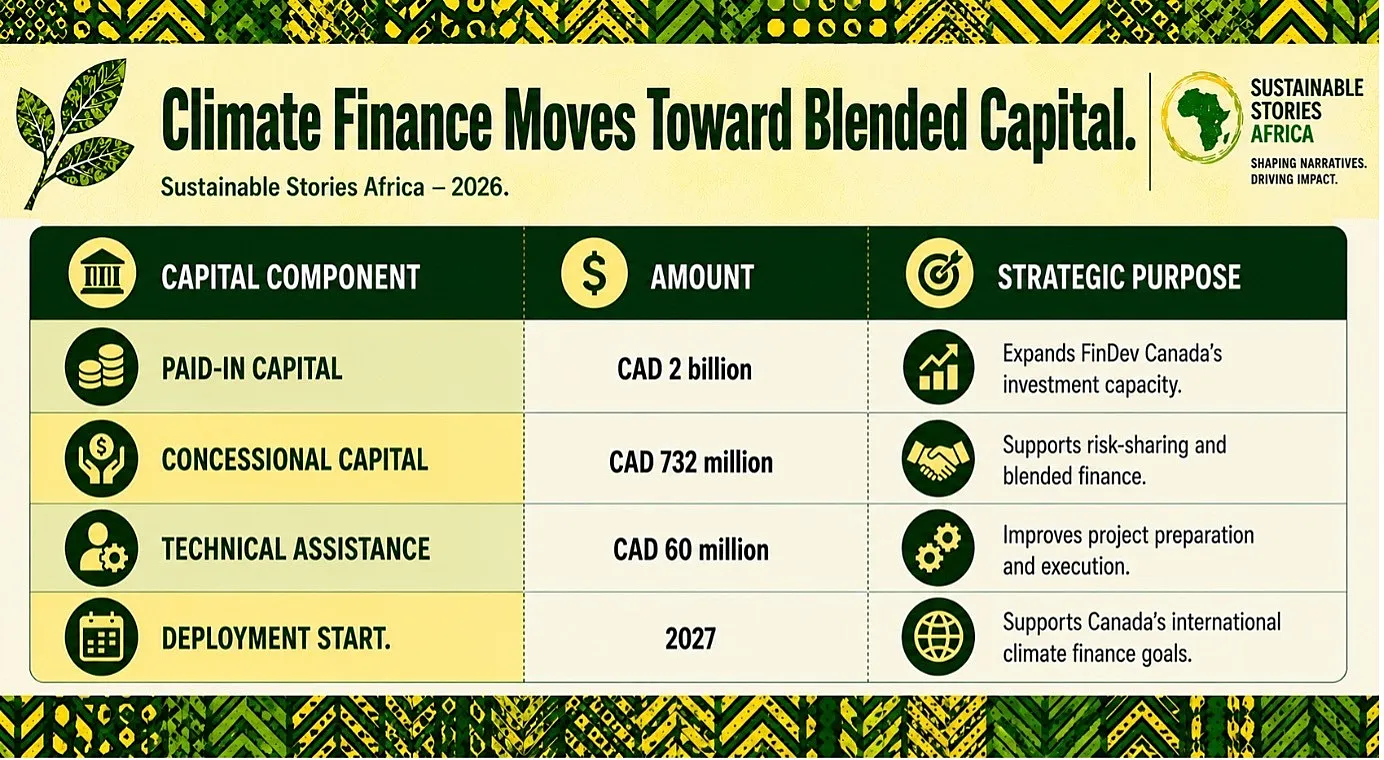
The commitment, announced in Montréal on 2 June 2026 during the Sustainable Finance Summit, includes CAD 2 billion in paid-in capital and CAD 732 million in concessional capital. Of the concessional amount, CAD 60 million is earmarked for technical assistance.
FinDev Canada will begin receiving capital from 2027, with a focus on Africa, Asia-Pacific, Latin America and the Caribbean.
The timing is important. Emerging markets need more long-term capital for clean power, resilient food systems, water security and sustainable transport, yet many projects remain underfunded because investors see currency, policy and project risks as too high.
Climate Finance Moves Toward Blended Capital
FinDev Canada’s new capitalisation is designed to do more than expand lending.
It is intended to crowd in private capital by combining commercial investment, concessional funding and technical support.
That structure matters because climate projects in emerging markets often need more than money.
They need early-stage preparation, bankable contracts, risk-sharing tools and local capacity to move from concept to construction.
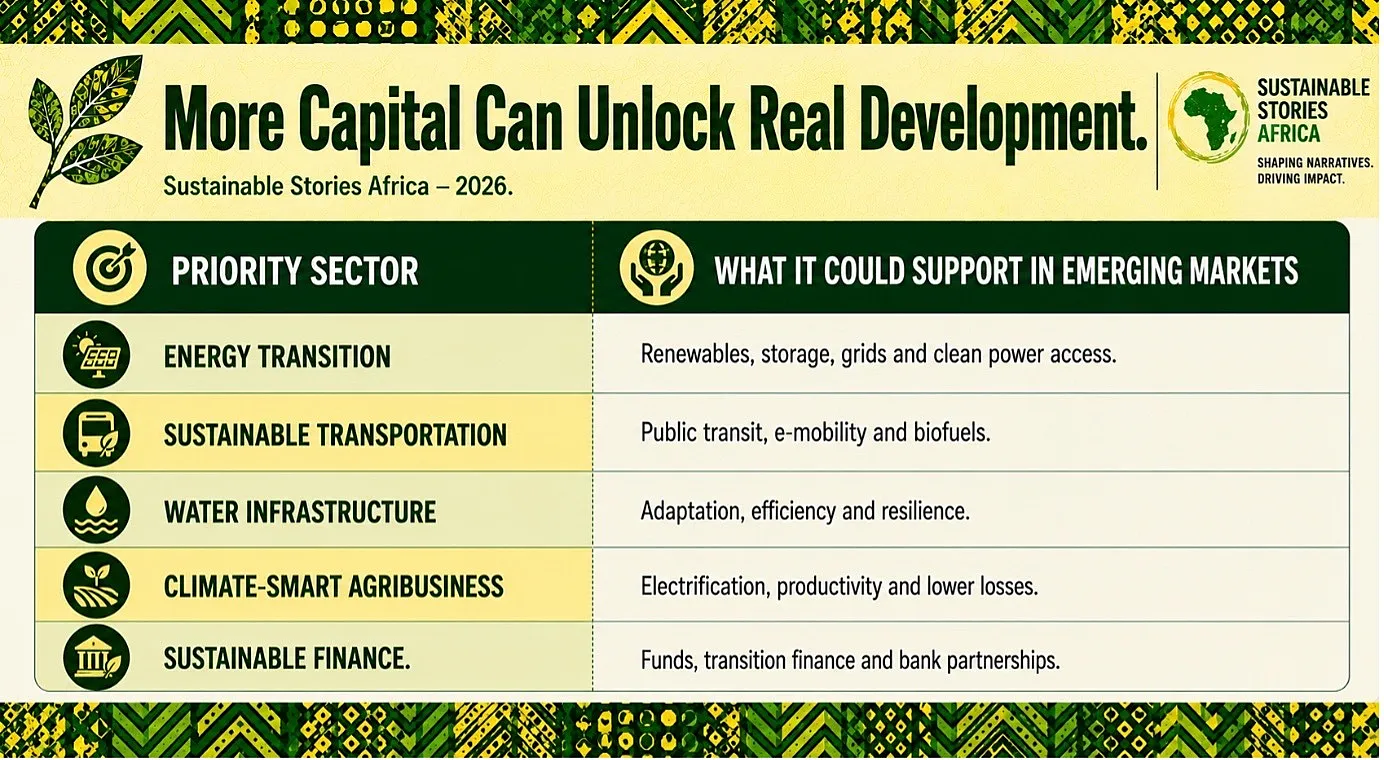
The institution will prioritise five areas: energy transition, sustainable transportation, water infrastructure, climate-smart agribusiness and sustainable finance.
These are not isolated sectors.
- In an African city, clean buses need reliable power.
- In a farming community, irrigation and cold storage depend on affordable energy.
- In a coastal economy, water infrastructure can determine whether households, farms and firms can withstand climate shocks.
More Capital Can Unlock Real Development
For African markets, the promise is practical. If deployed well, FinDev Canada’s expanded balance sheet can help accelerate climate finance from conference commitments into real projects.
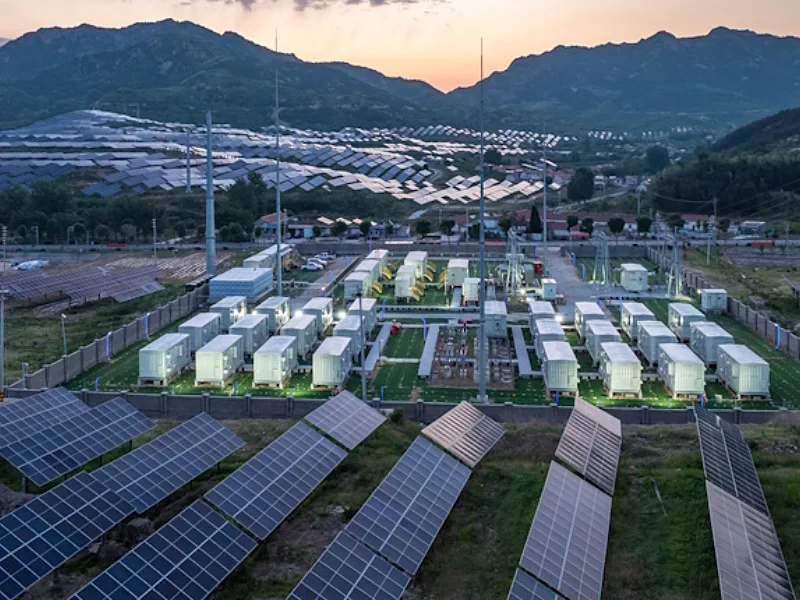
- A solar mini grid can support a rural clinic.
- A climate-smart agribusiness loan can help farmers reduce losses.
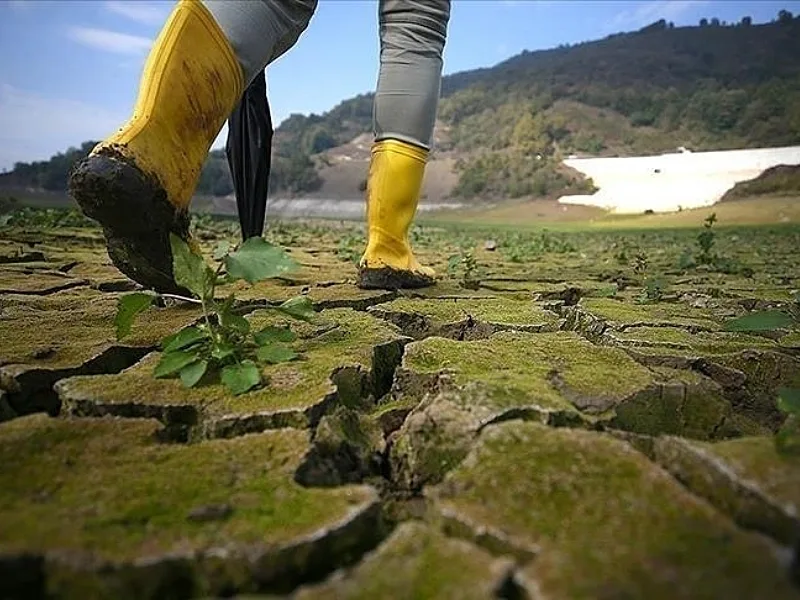
- A water-efficiency project can protect communities during drought.
- A transition finance structure can help banks lend to businesses that are trying to cut emissions without losing competitiveness.
The upside is greater than climate mitigation alone. Properly done, this capital can support jobs, supply chains, women-led enterprises, food security and lower-cost energy access.
However, the risk is also clear. If climate finance remains concentrated in easier markets, smaller economies and riskier projects may still be left behind.
That is why concessional capital and technical assistance are central. They can help make harder projects investable.
Africa Must Prepare Bankable Pipelines
FinDev Canada’s capitalisation strengthens the supply of climate finance. African markets must now strengthen demand through better project preparation.
- Governments need clear procurement rules, credible energy plans, bankable public-private partnership frameworks and stable regulation.
- Local banks need tools to assess climate risk and structure green lending.
- Developers need early-stage support to turn ideas into investment-ready projects.
Development finance institutions also need discipline. They should measure success
- By how much capital they deploy
- By how much private investment they mobilise
- How many local businesses can they strengthen
- Whether projects improve resilience for people who face climate risk daily.
Climate finance is entering a more competitive era. Countries with strong pipelines, transparent governance and credible transition plans will attract more capital.
Path Forward – Turn Climate Capital Into Development
The next test is execution. FinDev Canada’s capital boost must translate into investable projects, stronger local institutions and measurable climate impact.
For African markets, the opportunity is to prepare early. Better pipelines, stronger governance and practical ESG data can turn global climate finance into renewable power, resilient agriculture, cleaner transport and inclusive growth.
Culled From: FinDev Canada Receives CAD 2.73 Billion Capitalisation to Scale Climate Finance Across Emerging Markets