Global development leaders have warned that fragile economies are being squeezed by shrinking aid, rising debt, climate shocks and geopolitical uncertainty.
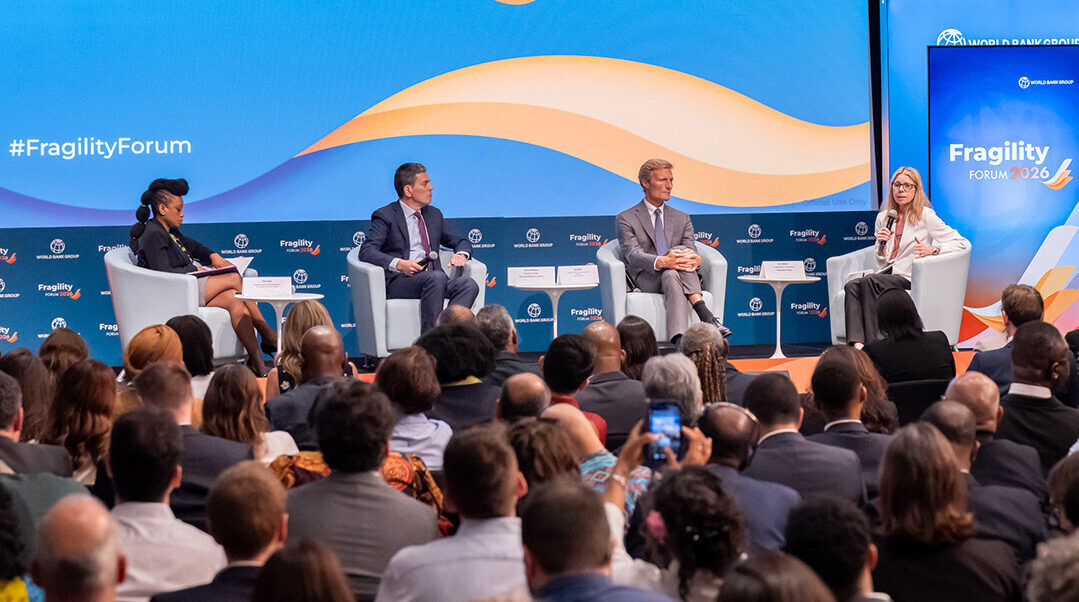
The warning came during the World Bank Group’s Fragility Forum 2026 high-level plenary on development in a shifting international order.
For African markets, the message is sharp: fragility is no longer isolated. It is becoming regional, fiscal, social and deeply political.
Fragility Now Travels Across Borders
Fragile countries are making harder choices with fewer resources as the global development order shifts away from predictable aid, trade and cooperation.
That was the central message at the World Bank Group's Fragility Forum 2026 high-level plenary, which examined what development means when fragility, conflict and violence are no longer exceptional conditions.
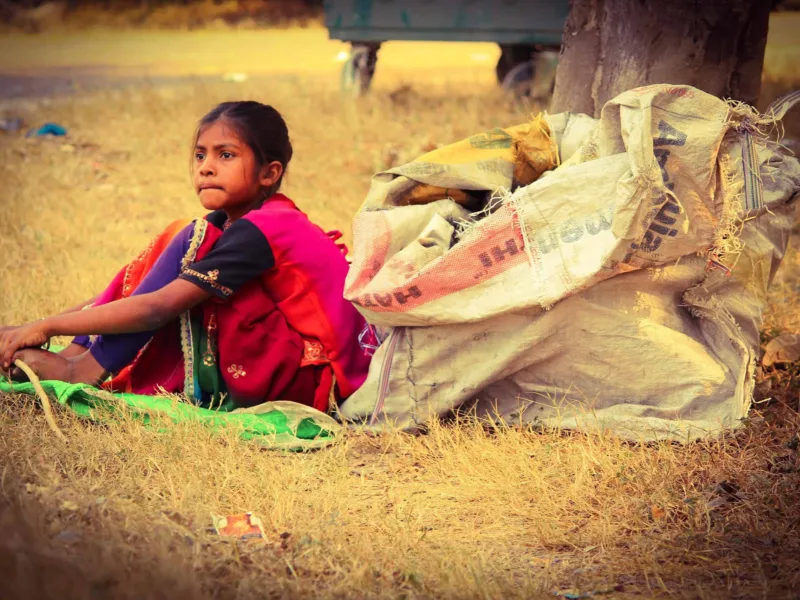
The urgency is grounded in stark reality: FCV-affected countries now account for more than half of the world's extreme poor, and global poverty reduction could reverse by 2030 if current patterns continue.
For countries like Sierra Leone, DRC, Mozambique, Lebanon and Sudan's neighbours, the crisis is layered, with debt service, shrinking aid, climate exposure, displacement, youth unemployment and reduced fiscal space converging into a single, compounding emergency.
Painful Choices Define The Moment
Sierra Leone's Vice President Mohamed Juldeh Jalloh gave the Fragility Forum 2026 plenary one of its sharpest phrases: the "politics of painful choices."
For small economies, he argued, the assumptions underpinning development planning are weakening, globalisation is less predictable, aid is slowing, investment flows are shaped by geopolitics, and commodity shocks from Ukraine and the Middle East are driving up fuel, food and transport costs.
The consequences fall quickly on ordinary citizens. Governments must choose between paying teachers, building roads, funding hospitals or servicing debt, decisions that translate directly into classrooms, health centres and family survival.
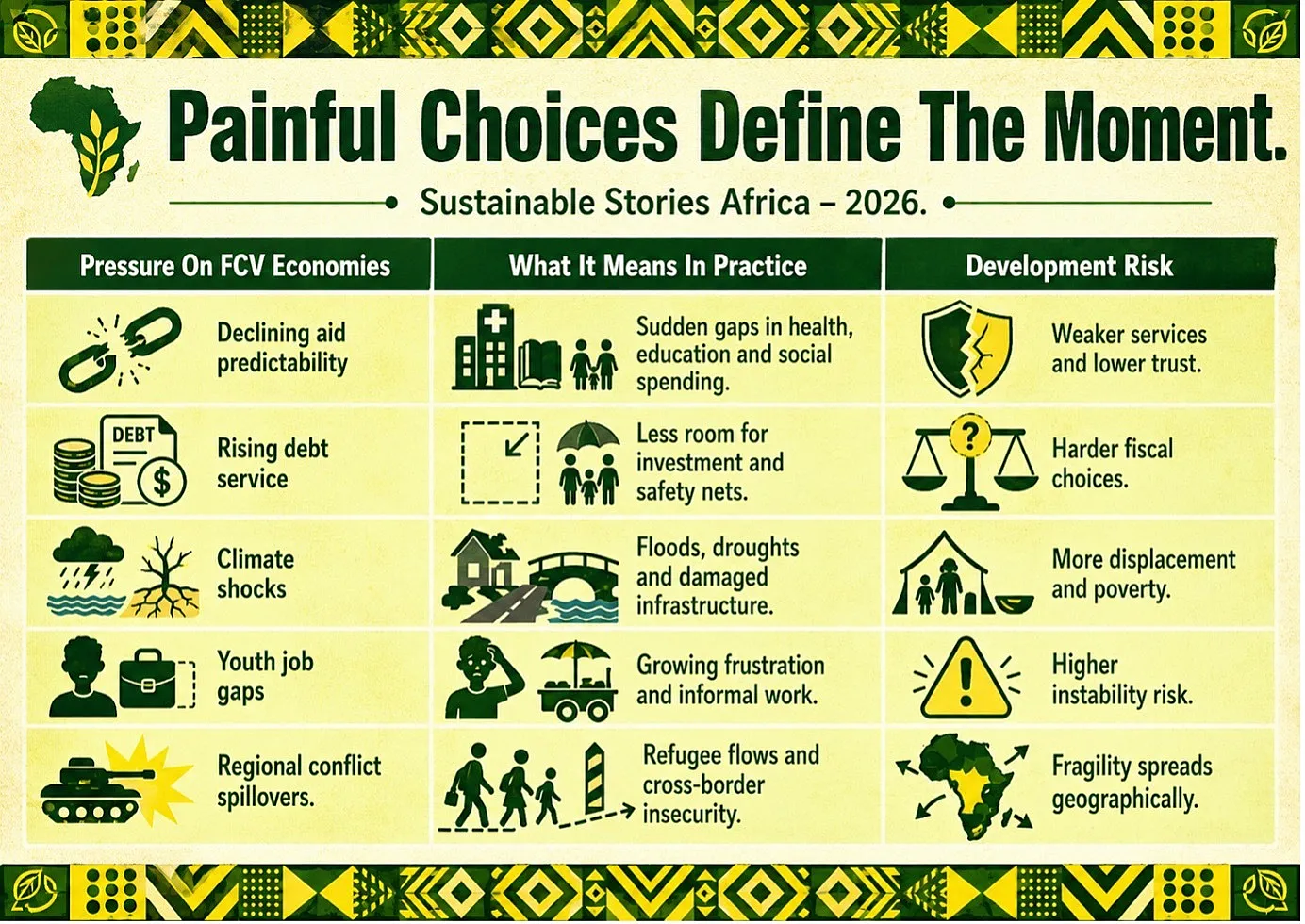
Lebanon's Minister of Social Affairs, Haneen Sayed, illustrated the human scale, describing compounding shocks, financial crisis, COVID-19, the Beirut port blast and successive wars, that left mass displacement and a stark gap between humanitarian needs and available financing.
World Bank VP Ndiame Diop broadened the African lens, warning that conflict in FCV countries such as Ethiopia and DRC spills across borders, worsening displacement and straining neighbouring economies with already limited fiscal space.
Development Can Still Change Trajectories
The Fragility Forum 2026 plenary closed not with despair, but with a practical call to action: rebuild development around prevention, jobs, institutions and local realities.
The strongest opportunity lies in acting before fragility becomes a crisis, supporting governments earlier, backing job creation and recognising that political settlements, security, economics and social trust are inseparable.
For African markets, the stakes are personal. A young person without work in a fragile region faces more than income insecurity; they face a system where weak services and exclusion deepen instability.
The optimism was grounded. Private capital, technology, urbanisation and youth enterprise can still drive growth; however, only if countries create credible conditions for investment and inclusion, and if the international system moves faster than fragility does.
Make Fragility Central To Strategy
The call to action is direct: fragility must move from the margins of development planning to the centre of national, regional and multilateral strategy.
- Governments should integrate fragility risk into budgets, job plans, infrastructure choices, social protection and climate policy.
- Development partners should provide more predictable financing and technical assistance, while moving faster behind country-owned priorities.
- Private investors should be supported with risk-sharing tools that make difficult markets investable without ignoring social impact.
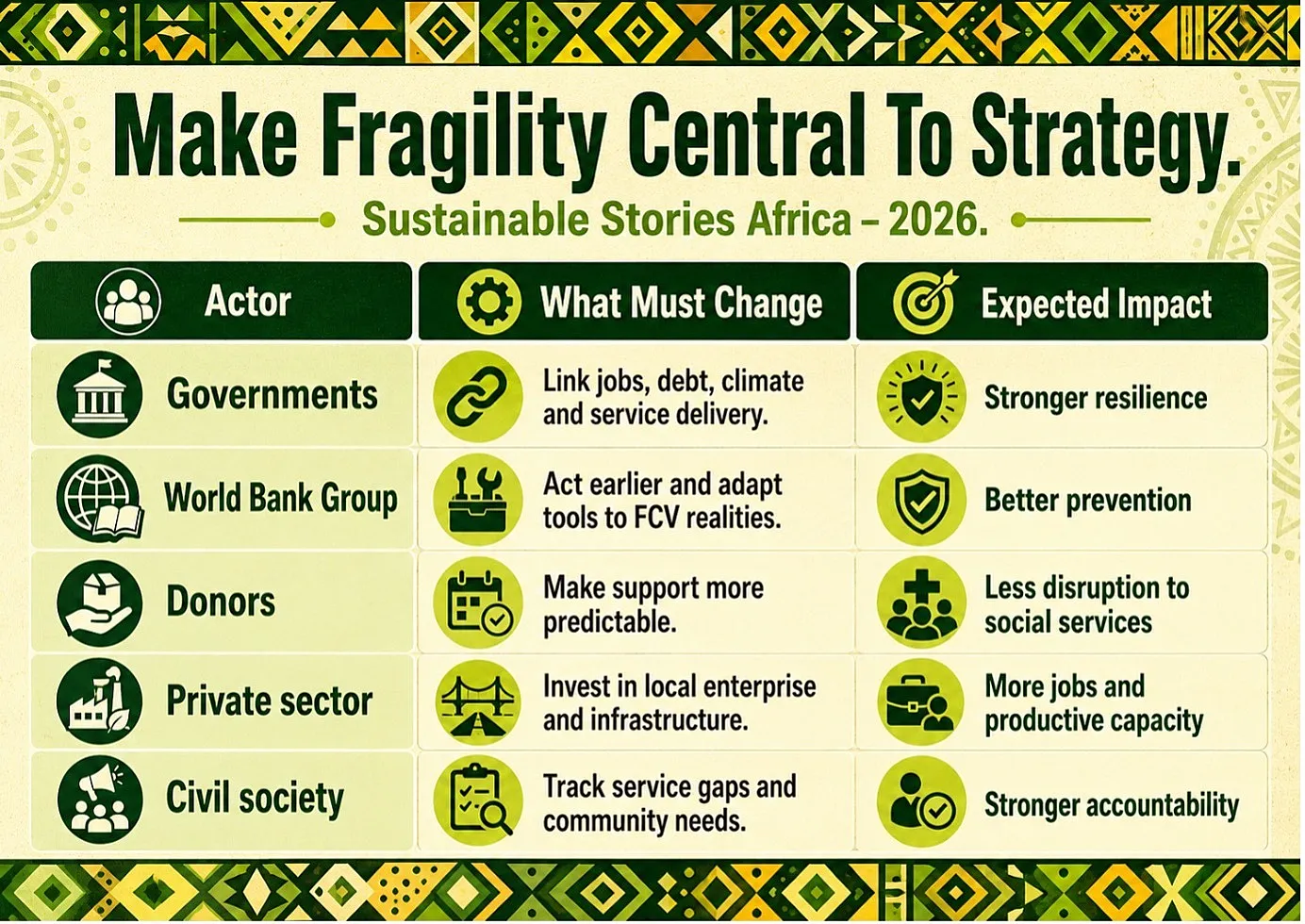
For African leaders, the lesson is not to wait for a crisis to become the label. Countries that are not formally classified as fragile can still face fragility risks through food pressure, debt stress, contested politics, climate shocks or youth exclusion.
Fragility prevention is now a governance discipline.
Path Forward – Put Fragility At Development’s Centre
African markets need earlier risk detection, stronger institutions, job-focused investment and development financing that is predictable to protect social gains.
This advances ESG by linking poverty reduction, climate resilience, inclusion and institutional trust. The priority is to stop treating fragility as a crisis category and start treating it as a systems risk.