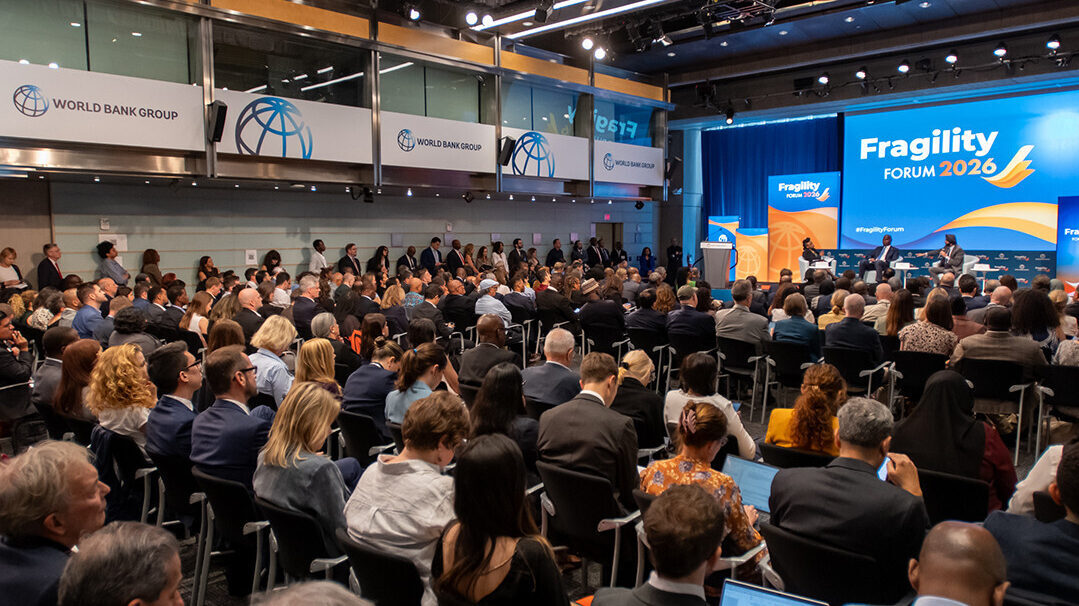
The World Bank Group’s Fragility Forum has renewed calls for faster, better coordinated support in fragile and conflict-affected countries.
Speakers warned that slow delivery, fragmented financing and weak coordination can leave vulnerable countries trapped between crisis and recovery.
For African markets, the issue is practical: resilience requires partners who stay the course; however, they also move at the speed of need.
Attention: Fragility Is Outrunning Slow Systems
Fragile states do not only need more support. They need support that arrives faster, connects better and responds to the real geography of crisis.
That was one of the strongest messages from the World Bank Group’s Fragility Forum 2026, where global leaders, development institutions and practitioners examined how to operate in a world where conflict, displacement, climate shocks and fiscal stress increasingly overlap.
The discussion moved beyond traditional aid language. Speakers argued for a more integrated model: bring electricity, education, water, roads, markets, jobs and private investment together in the places most exposed to fragility.
Makhtar Diop, Managing Director of the International Finance Corporation, captured the shift by describing the need for a “package of intervention” across historically abandoned places.
The point was not only to fund projects, but to connect them into a development bundle that can reduce risk before it becomes a crisis.
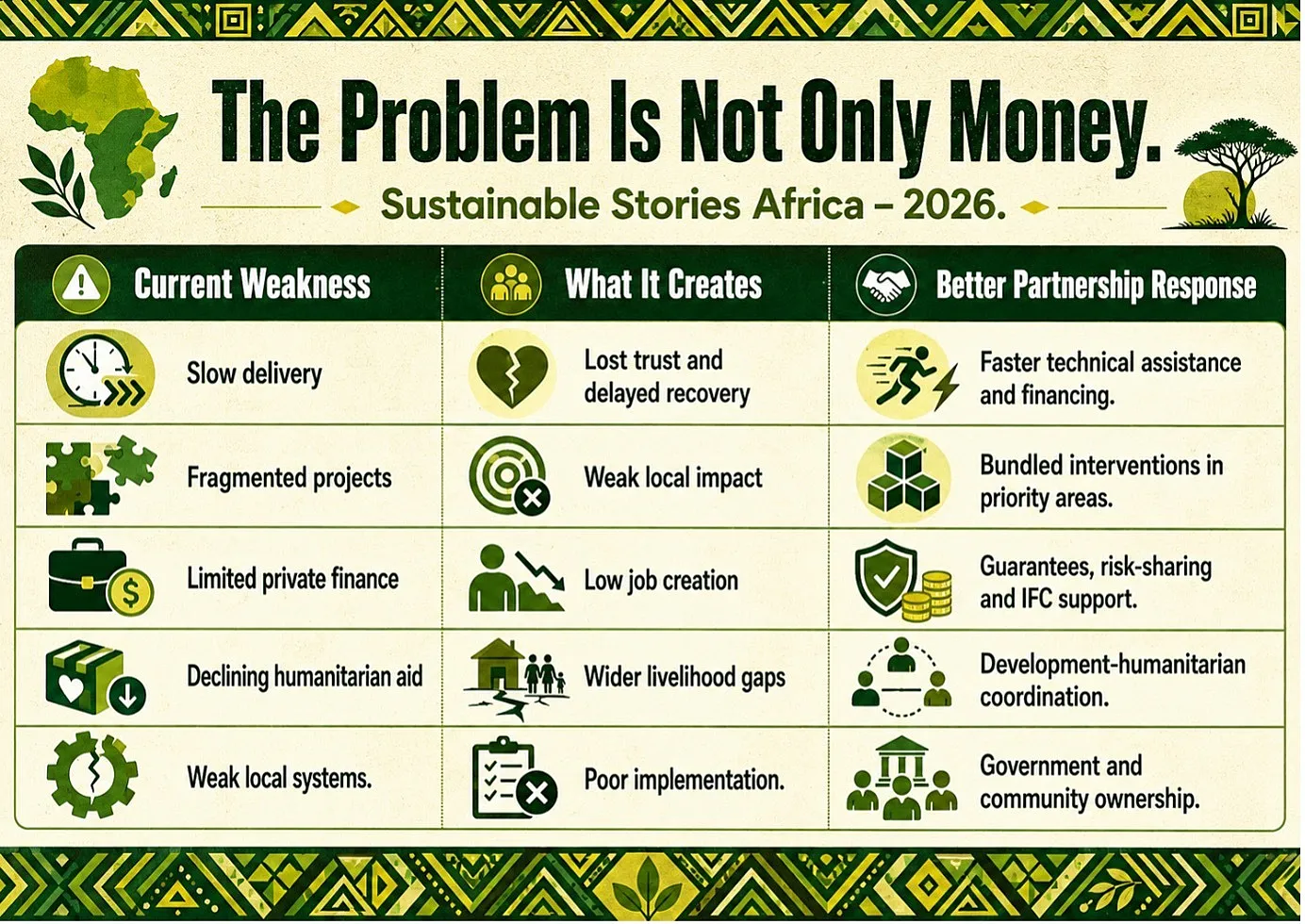
The Problem Is Not Only Money
Development systems have long viewed fragile settings through separate channels, humanitarian relief, public finance, security and social services.
However, in real communities, these challenges arrive together.
- A displaced mother needs cash, food, schooling and healthcare simultaneously.
- A small business needs electricity, finance and security at once.
The World Bank Group's Fragility Forum 2026 confronted this complexity directly, focusing on anticipating risks earlier, supporting committed governments, expanding economic opportunities and strengthening strategic partnerships.
The central question was unambiguous: how can institutions deliver impact when operating environments grow more complex?
Lebanon's Minister Haneen Sayed sharpened the delivery challenge. Long-term partnerships matter; however, speed remains a critical gap when governments urgently need technical assistance and practical financing.
Across African markets, this resonance is immediate. In the Sahel, the Horn of Africa and conflict-affected coastal states, development delays quickly compound into challenges such as security, migration, food and fiscal pressures.
A late road, a stalled water project or an undersized jobs programme can erode public confidence faster than it was built.
Coordination Can Change Daily Life
The promise of better partnerships is not abstract. It can be measured in daily life.
- If a fragile district receives electricity without roads, businesses may still struggle.
- If farmers receive inputs without storage or market access, incomes remain unstable.
- If displaced people receive temporary relief without jobs, dependency deepens.
- If schools reopen without safety measures for teachers or livelihoods for parents, attendance may remain fragile.
However, when interventions are bundled, the story can change.
- Power can support clinics, cold storage and small factories.
- Roads can connect farms to markets.
- Water systems can improve health and productivity. Job programmes can reduce social tension.
- Digital systems can help track delivery and improve accountability.
For African governments, this is a strategic opportunity. Fragility response can become a platform for inclusive development if partners align behind national priorities, local needs and measurable outcomes.
The alternative is costly fragmentation: many projects, weak coordination, limited ownership and communities that still feel abandoned.
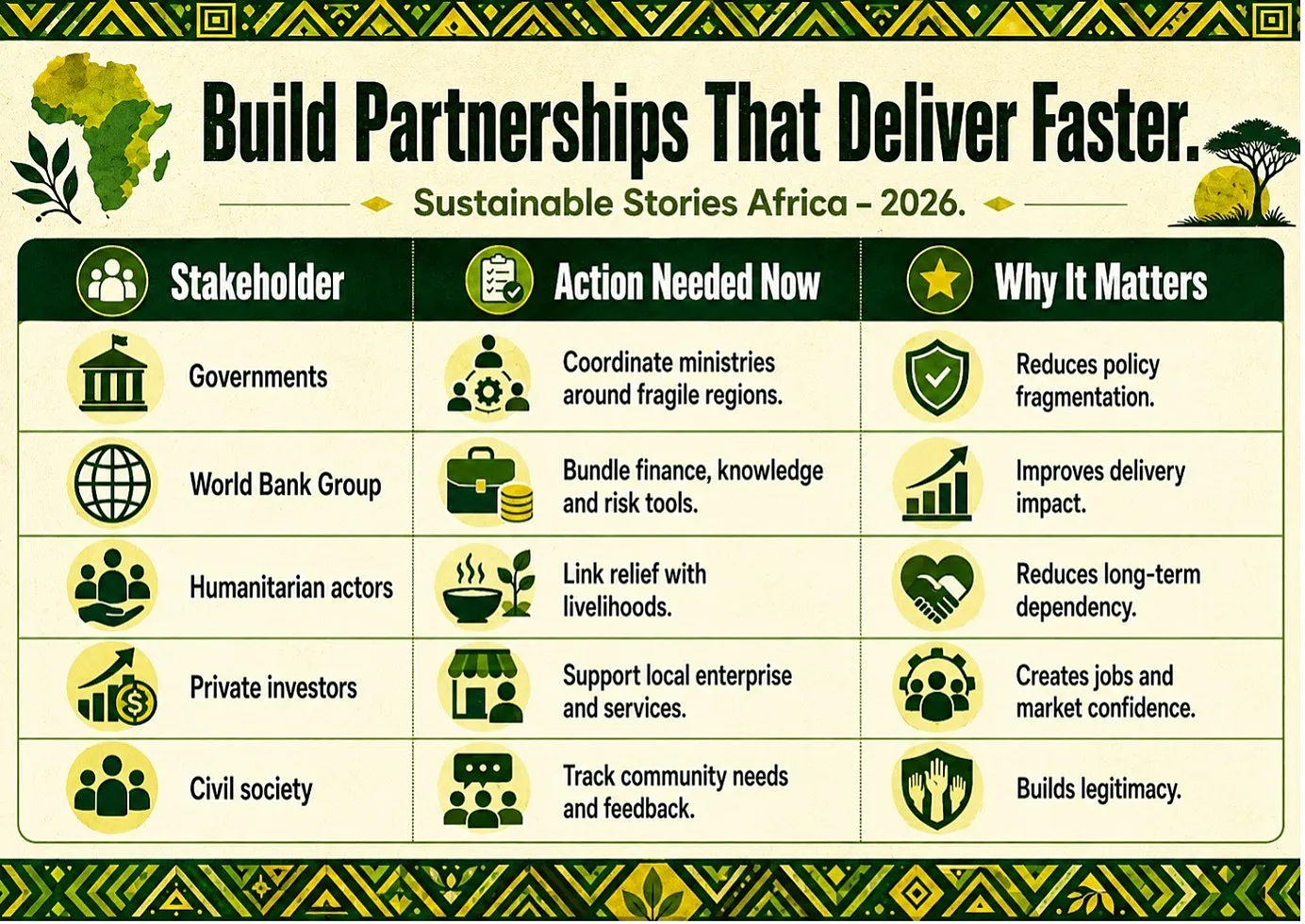
Build Partnerships That Deliver Faster
Development partners must now move from coordination language to delivery discipline.
- That requires fewer isolated interventions and more place-based strategies. Institutions should identify high-risk geographies, align financing, pool data, reduce duplication and empower local implementers.
- Governments should strengthen coordination units that connect energy, agriculture, water, jobs, health and roads into one resilience agenda.
- Private investors also need a clearer role. In fragile settings, investment rarely flows without support.
- Development finance institutions can use guarantees, concessional capital and risk-sharing tools to help viable businesses operate where commercial risk is high but social returns are significant.
For Africa, the call is especially urgent. Climate pressure, debt stress, youth unemployment and insecurity are converging. Countries cannot afford slow, disconnected development machinery.
They need partners who understand that resilience is built through systems, not single projects.
The forum’s lesson is clear: staying the course is essential, but staying slowly is no longer enough.
Path Forward – Partner Faster, Bundle Development Better
Fragile markets need coordinated support that links finance, infrastructure, jobs, water, energy and social services.
Partners must align with national priorities while responding faster to local realities.
This advances ESG by strengthening resilience, inclusion and institutional trust.
In African markets, better partnerships can turn crisis response into long-term development, reducing vulnerability before it becomes another emergency.