Energy is becoming the language through which private equity reads risk, resilience and growth. KPMG’s PE data shows rising investor interest in infrastructure, energy and AI-enabling assets.
For Africa, the decisive issue is relationship-driven: how tariffs, contracts, utilities, currencies and regulation interact to shape outcomes for households, companies and investors.
Energy Pricing Now Shapes Capital
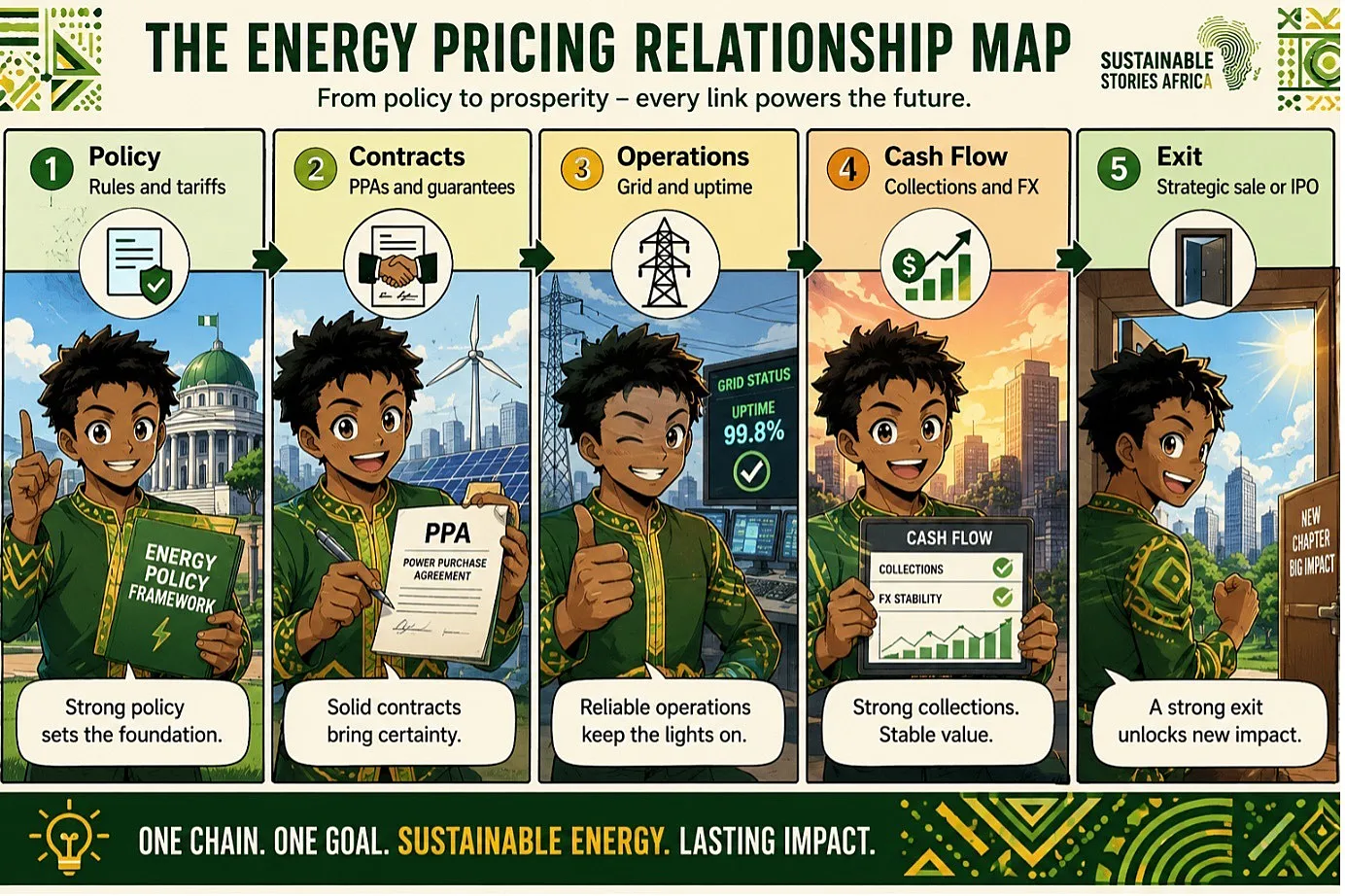
Private equity does not invest in electricity in the abstract. It invests in the relationships that convert electricity into cash flow: tariff structures, power purchase agreements, industrial demand, utility payments, grid access, regulatory stability and exit routes.
That is why the global PE shift toward AI infrastructure and energy matters for Africa. It is not enough to have sun, wind, gas, hydro, minerals or demand. The continent must show that energy projects can be priced, contracted, governed and exited.
KPMG’s Q4’25 and Q1’26 reports suggest a market in which capital is abundant but selective. The African question is whether energy systems can move from price-taking exposure to price-shaping credibility.
The Real Asset Is Certainty
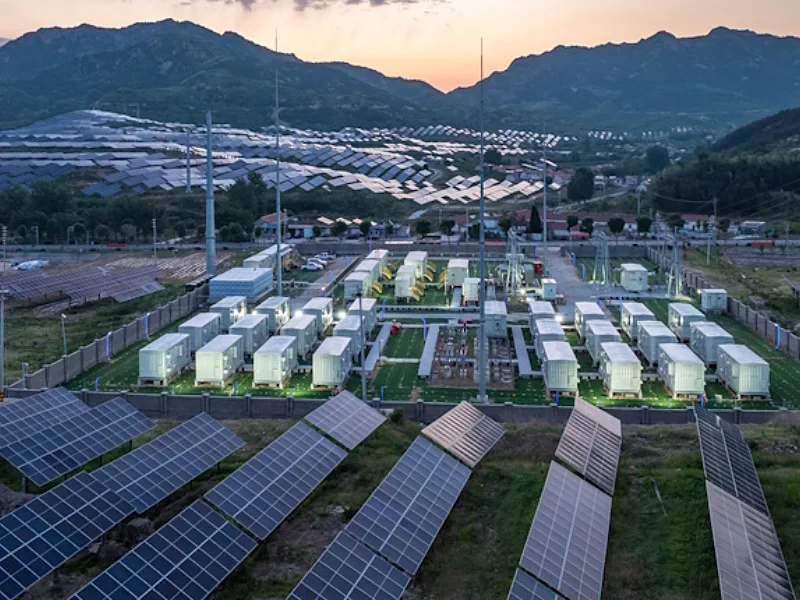
A solar farm, a gas plant, a grid upgrade or a data centre is only as investable as the relationships around it.
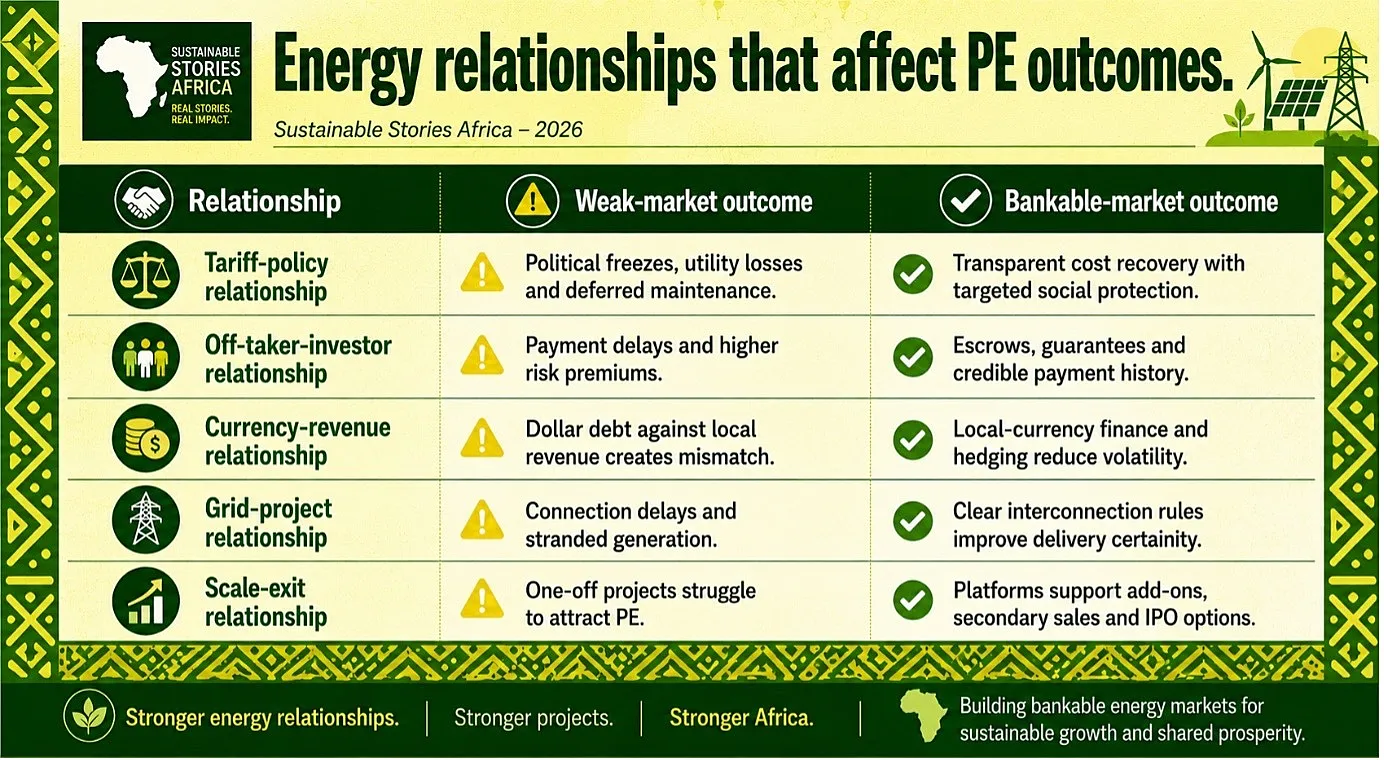
If tariffs are politically frozen, utilities are undercapitalised, grid connections are delayed, and contracts are exposed to foreign-exchange shocks, the asset becomes harder to finance.
If those risks are visible, allocated and mitigated, the same asset can become a platform.
KPMG’s Q1’26 report shows PE investors prioritising AI ecosystem plays, including data centres and the energy generation needed to support rising AI activity.
That makes power certainty a competitiveness tool. African countries that reduce uncertainty in energy pricing can position themselves as future locations for data processing, digital trade, green manufacturing and industrial services.
Relationships Decide The Cost Of Capital
The most important relationship is between price and trust. Investors do not need tariffs to be high; they need them to be credible.
- A low tariff that cannot support maintenance, debt service or grid expansion can be more damaging than a higher tariff with targeted support for vulnerable users.
- Equally, a tariff that changes without transparent rules becomes a political risk premium.
The second relationship is between energy security and industrial demand.
- Countries exposed to imported fuel volatility are price-takers in a global market that they do not control.
- Countries with diversified generation, storage, regional interconnection and demand-response tools can reduce exposure and create more predictable operating costs.
The third relationship remains the relationship between project scale and exit pathway.
- KPMG’s data shows investors increasingly favour large, high-quality assets and add-ons that can create value.
- African developers therefore need platforms, not isolated projects: portfolios with repeatable customer acquisition, standardised contracts and governance strong enough to support strategic sales, secondary buyouts or local-market listings.
A Better Market Lowers Risk
A stronger African energy investment market would create benefits beyond balance sheets.
- Manufacturers would spend less time planning around outages.
- Health facilities could protect cold storage and emergency services.
- Schools and digital businesses could rely on stable connectivity.
- Cities could attract logistics, cloud and industrial tenants with fewer hidden energy costs.
Also,
- For investors, the prize is a pipeline of cash-generating infrastructure assets
- For governments, the prize is a stronger tax base, deeper local capital markets and lower pressure on public budgets.
- For communities, the prize is service reliability and job creation.
The lesson from global PE is that capital is searching for conviction. Africa can provide that conviction by turning energy demand into a bankable system.
Five Fixes Can Unlock Platforms
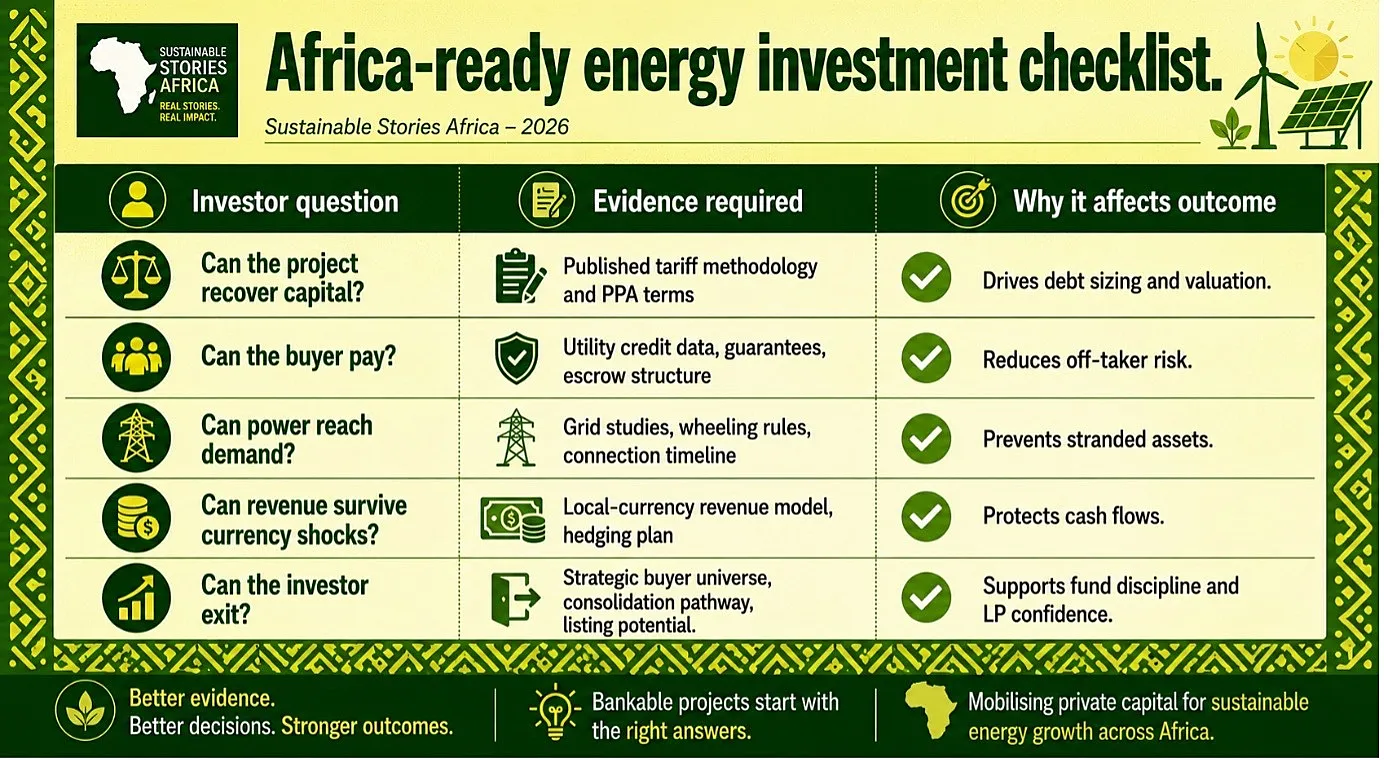
- First, regulators should publish transparent tariff methodologies that balance affordability with cost recovery.
- Second, governments should strengthen off-taker credit through payment discipline, escrow mechanisms, guarantees and loss-reduction plans.
- Third, utilities and regulators should standardise PPAs and grid-connection processes to cut transaction time.
- Fourth, African markets should deepen local-currency financing and hedging tools so projects are not overexposed to dollar debt while earning local revenue.
- Fifth, regional power pools should become commercial markets, not only diplomatic frameworks.
Cross-border trade can reduce price-taking exposure by linking surplus and deficit systems.
Private equity will not replace public planning. However, it can scale disciplined platforms where rules are clear, and risk allocation is credible.
Path Forward – Price Signals Must Work
Africa’s energy transition needs price credibility, not price fantasy. Bankable tariffs, reliable contracts and stronger utilities can turn demand into investment.
The next phase of PE capital will reward countries that treat electricity as infrastructure, climate strategy and industrial policy at once.