FTSE Russell and Planetrics have signed an MoU to develop climate-scenario indices and analytics.
The partnership comes as investors demand tools that price physical climate shocks and transition risk.
For African markets, the move signals a future in which climate exposure could shape capital access, valuations and portfolio flows.
Climate Risk Enters Portfolio Benchmarks
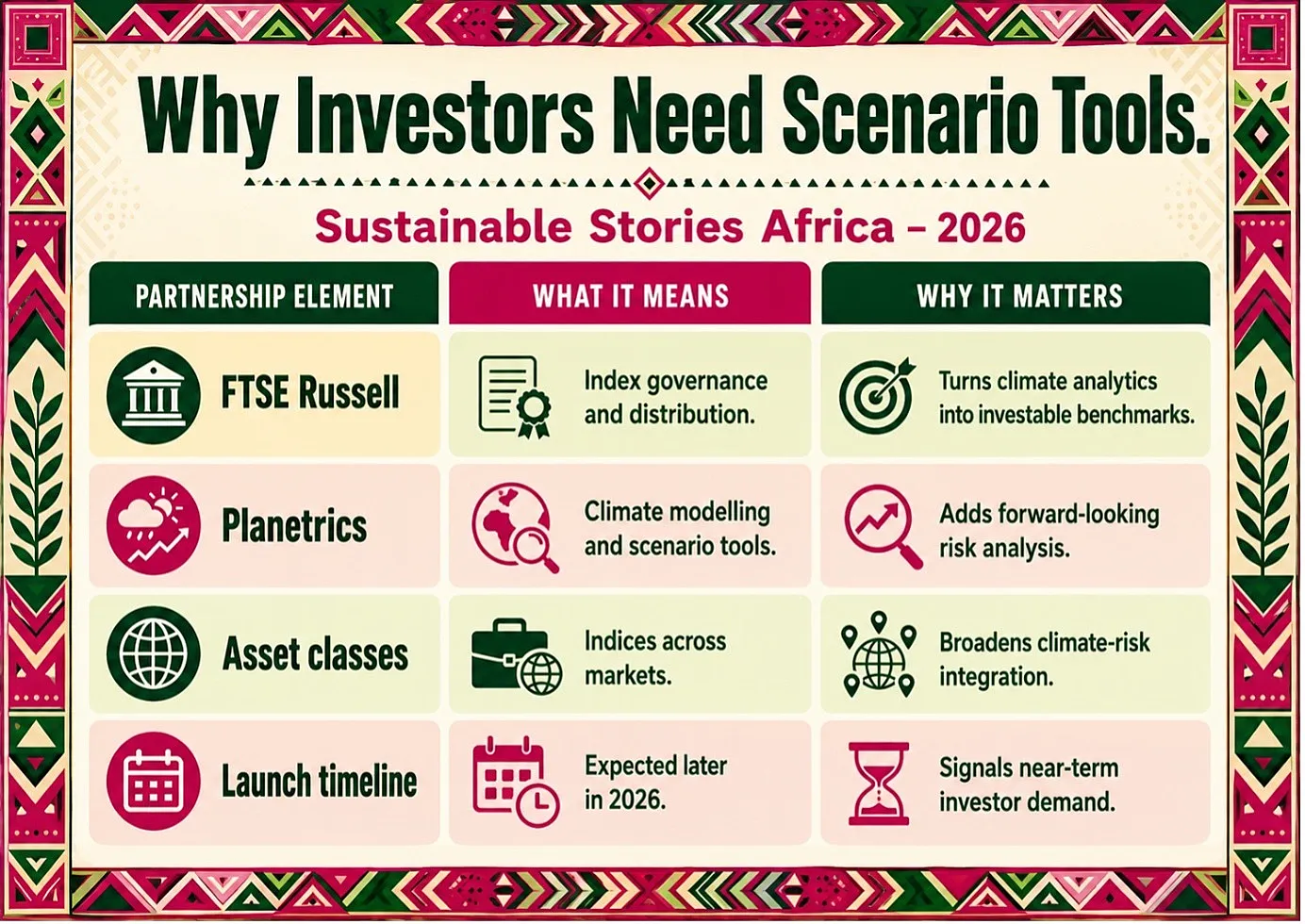
FTSE Russell and Planetrics have signed a Memorandum of Understanding to jointly develop climate-scenario-based indices and analytics across asset classes, marking a shift from climate risk disclosure toward climate risk pricing.
The companies announced the proposed partnership on May 14, 2026, with new indices expected later this year.
Under the proposed collaboration, Planetrics, SLR’s climate-risk analytics and scenario-modelling platform, will provide physical and transition climate-risk models to FTSE Russell.
FTSE Russell will be responsible for index governance and commercial distribution.
Why Investors Need Scenario Tools
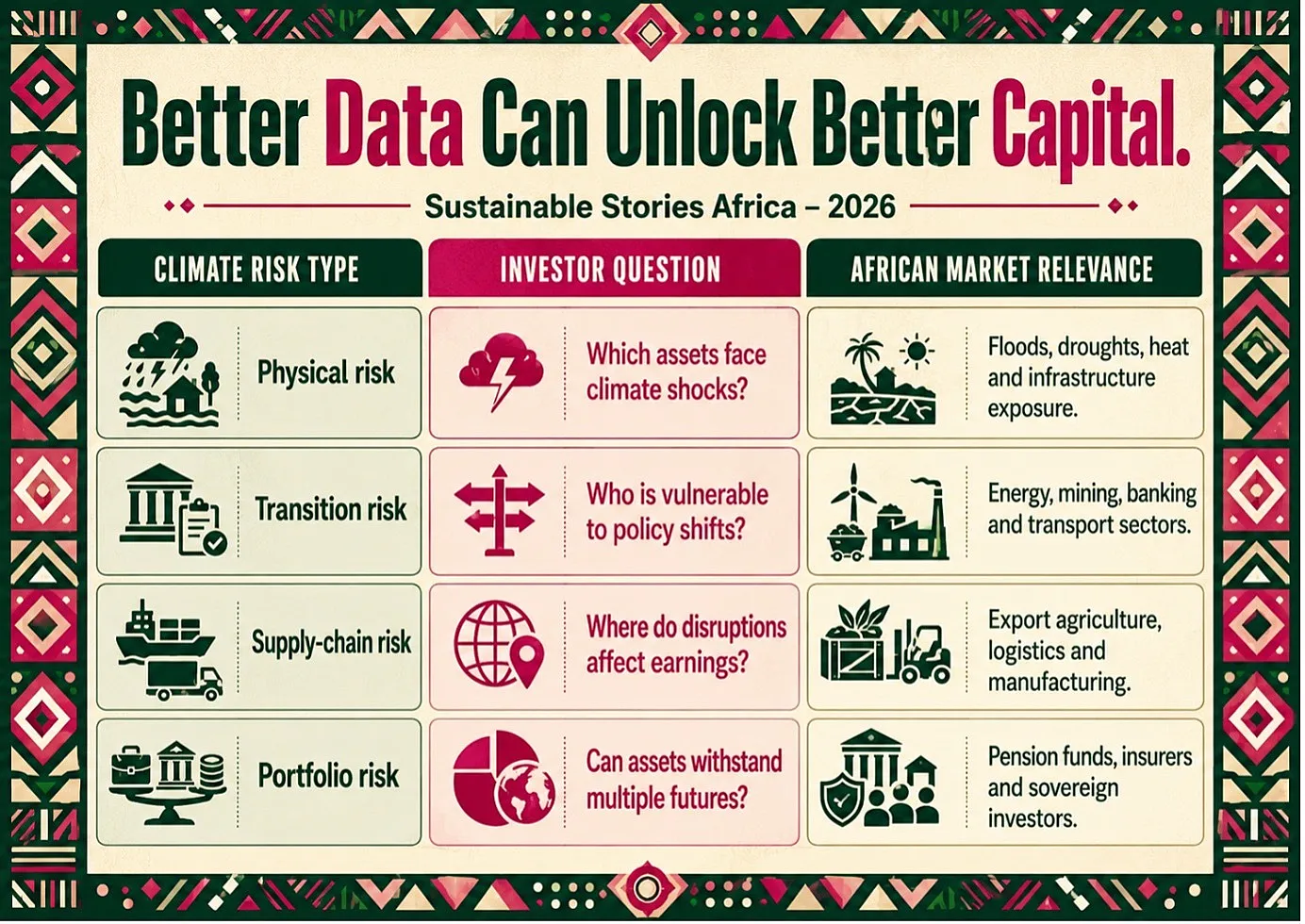
Climate risk is becoming harder to treat as a side issue. Floods, heat stress, carbon pricing, regulation, supply-chain disruption and changing consumer demand can all affect company earnings, bond risk and asset values.
Stephanie Maier, Head of Sustainable at FTSE Russell, said the intended partnership reflects a commitment to “transparent, innovative indices” that help clients invest through the low-carbon transition.
From Climate Awareness To Pricing
The deeper market signal is that climate data is moving from reports into portfolio construction. Traditional ESG screens often look backwards, relying on emissions data or policy commitments.
Scenario analysis asks a sharper question: how would companies perform under different climate futures?
Thomas Bremner Bligaard, Executive Director at Planetrics, said the market must move “from acknowledging climate risk to actually pricing it,” adding that the firm’s modelling tracks physical shocks, uneven transitions, supply chains and company-level cost impacts.
For African and Global South markets, this matters. Countries exposed to floods, droughts, heat, commodity dependence or high transition costs may increasingly be assessed through climate-risk models.
That could influence how investors price sovereign debt, infrastructure assets, listed equities and bank portfolios.
Better Data Can Unlock Better Capital
If designed well, climate-scenario indices can help investors allocate capital with more precision.
They can identify companies better prepared for transition, flag assets exposed to physical damage and support investment products aligned with long-term climate resilience.
The opportunity is clear: better climate analytics can help African issuers tell stronger transition stories, attract patient capital and avoid being mispriced by blunt risk assumptions.
Markets Must Prepare For Climate Pricing
The next step is institutional readiness. Regulators, exchanges, banks and asset managers in Africa should strengthen climate disclosure, scenario analysis and sector-level transition planning.
Without credible data, African markets may be judged by external models that miss local realities.
With better reporting, domestic institutions can shape how climate risk is understood, priced and financed.
Path Forward – Build Climate-Ready Market Infrastructure
African markets should treat climate analytics as financial infrastructure, not ESG decoration.
The priority is to improve disclosure, deepen local modelling capacity and link climate risk to investment decisions.
As global benchmarks evolve, African issuers must be ready to demonstrate resilience, transition credibility and bankable climate opportunity.
Culled From: FTSE Russell and Planetrics Sign MoU to Develop Climate-Scenario Indices Across Asset Classes