Germany has overtaken the United States as South Africa’s second-largest buyer of goods.
The shift follows new US tariffs that hit value-added exports, especially vehicles and transport equipment.
For South Africa, the change raises bigger questions about industrial resilience, market diversification and trade security.
Tariffs Are Redrawing South Africa’s Trade Map
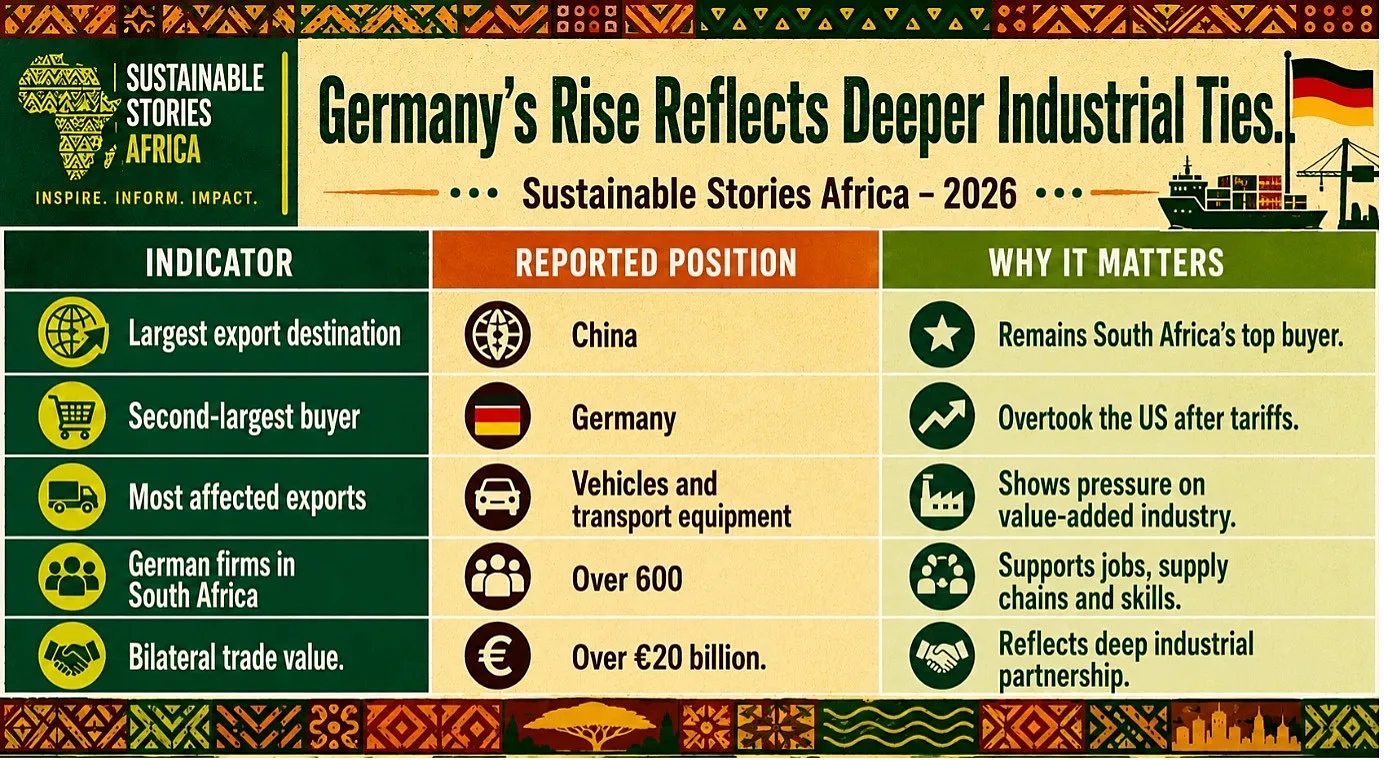
Germany has overtaken the United States as South Africa’s second-largest bilateral export partner after new US tariffs disrupted demand for South African goods, according to Semafor’s reporting on new trade data.
China remains South Africa’s largest export destination.
The shift matters because the damage is not concentrated in raw commodities alone.
The South African Reserve Bank said the tariffs hit value-added goods hardest, with vehicles and transport equipment absorbing the largest pressure.
For factory workers, auto suppliers, logistics firms and exporters, this is more than a change in ranking.
It is a warning that trade policy can quickly reshape jobs, margins and industrial strategy.
Germany’s Rise Reflects Deeper Industrial Ties
Germany’s move into second place builds on a long economic relationship. Germany’s foreign ministry describes South Africa as its most important partner in sub-Saharan Africa, with bilateral trade worth over €20 billion and more than 600 German companies operating there.
The export shift also comes as South Africa’s ties with Europe remain structurally important.
The EU was South Africa’s largest trading partner in 2024, accounting for 23.4% of imports and 18.2% of exports, according to EU figures.
Diversification Can Protect Industrial Jobs
South Africa’s opportunity is to turn disruption into trade resilience.
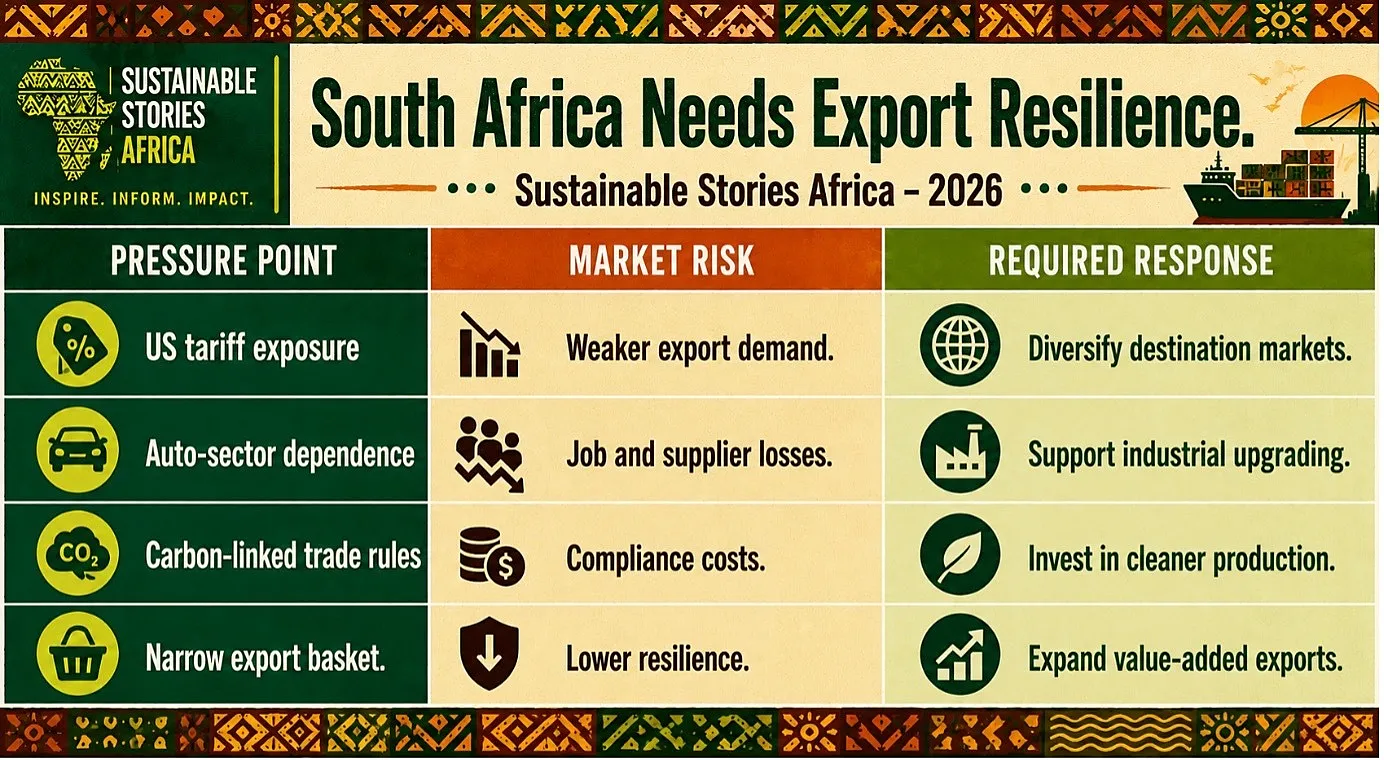
If exports are spread across Europe, China, Africa and other growth markets, manufacturers are less exposed to one country’s tariff decisions.
That matters for the automotive sector, where factories depend on predictable export access, supplier planning and long investment cycles.
Germany’s position could also support cleaner industrial cooperation. The South Africa-Germany relationship already spans manufacturing, vocational training, energy transition and investment.
German companies employ about 100,000 people directly in South Africa and support additional jobs indirectly, according to Germany’s foreign ministry.
South Africa Needs Export Resilience
The lesson is clear: South Africa cannot treat market access as permanent.
Government, industry and financiers need to protect value-added exports by widening buyer markets, strengthening trade diplomacy, supporting local suppliers and accelerating green industrial upgrades.
For the automotive sector, that means preparing for electric mobility rules, carbon standards and more demanding European supply chains.
For African markets, the broader message is important. Trade partnerships are moving from simple market access to standards, geopolitics, climate rules and industrial competitiveness.
Path Forward – Build Resilient Export Partnerships Now
South Africa should deepen trade diversification while protecting industries that create skilled jobs and export value.
The priority is not replacing one partner with another. It is building a stronger, cleaner and more competitive export base that can withstand tariffs, policy shocks and changing global demand.
Culled From: Germany overtakes US as South Africa’s second-largest bilateral trade partner | Semafor