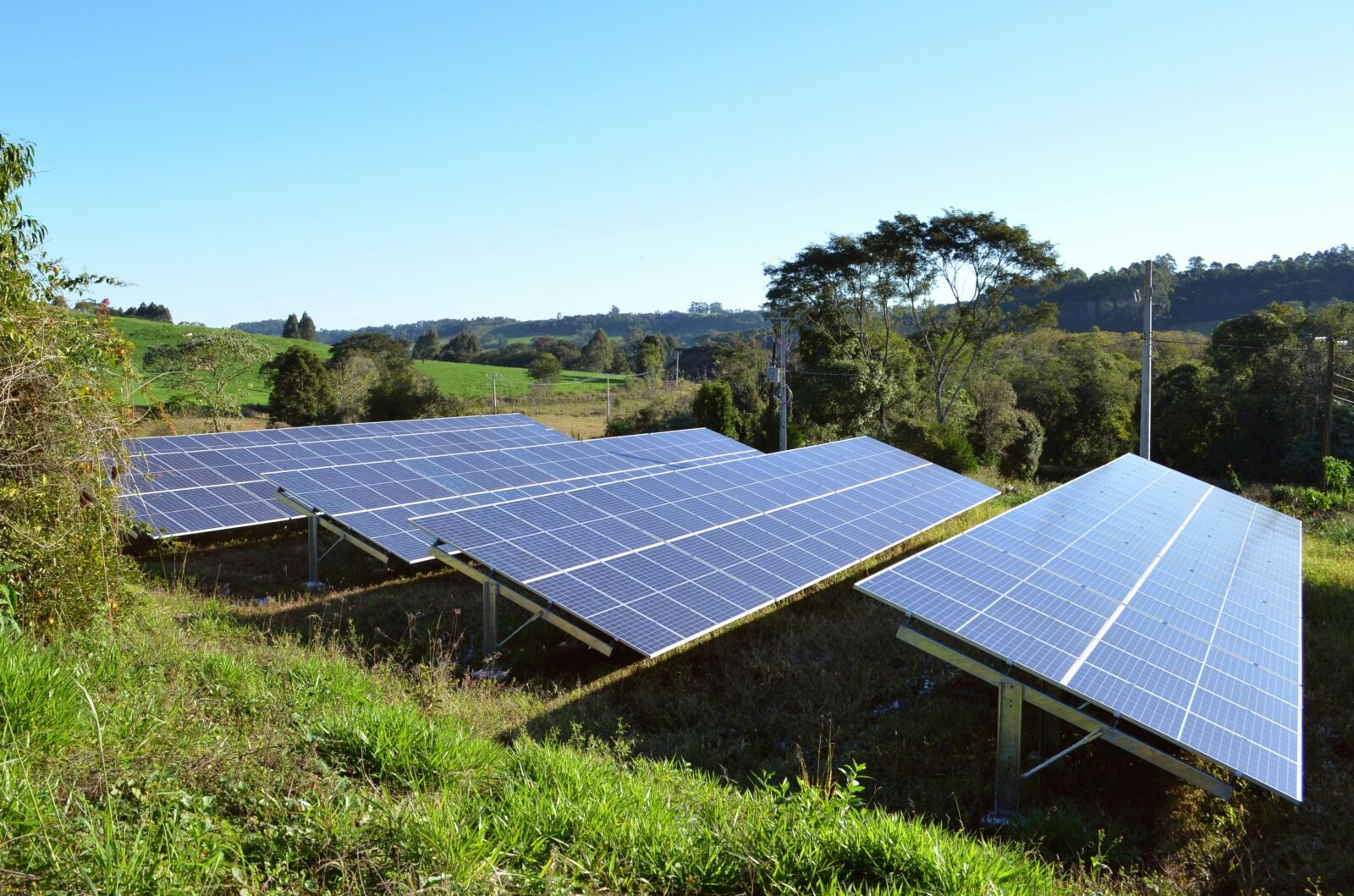
Ghana is moving to expand renewable energy projects as part of its green transition agenda.
The push focuses on solar systems, mini-grids, rooftop installations and cleaner infrastructure for households, businesses and underserved communities.
For West Africa, the signal is important: energy transition is no longer only about emissions. It is about jobs, affordability, resilience and industrial competitiveness.
Ghana Wants Cleaner Power To Work
Ghana is accelerating plans to expand renewable energy projects as the country tries to make its green transition more practical, inclusive and economically useful.
The Ministry of Energy and Green Transition is expected to focus the expansion on solar power systems, mini-grids, rooftop solar installations and other clean-energy infrastructure, according to Africa Energy Portal.
The move aligns with Ghana’s wider energy transition strategy, which seeks to build a lower-carbon economy while improving energy access, reliability and affordability.
The development matters because Ghana’s energy challenge is not only environmental. It is also social and industrial.
Homes need reliable power. Small businesses need predictable electricity. Schools, hospitals and farms need energy that can support learning, healthcare, irrigation, cold storage and digital services.
Ghana’s Energy Transition and Investment Plan, launched in 2023, sets out a pathway toward net-zero energy-related carbon emissions by 2060, covering power, transport, industry, oil and gas, and clean cooking.
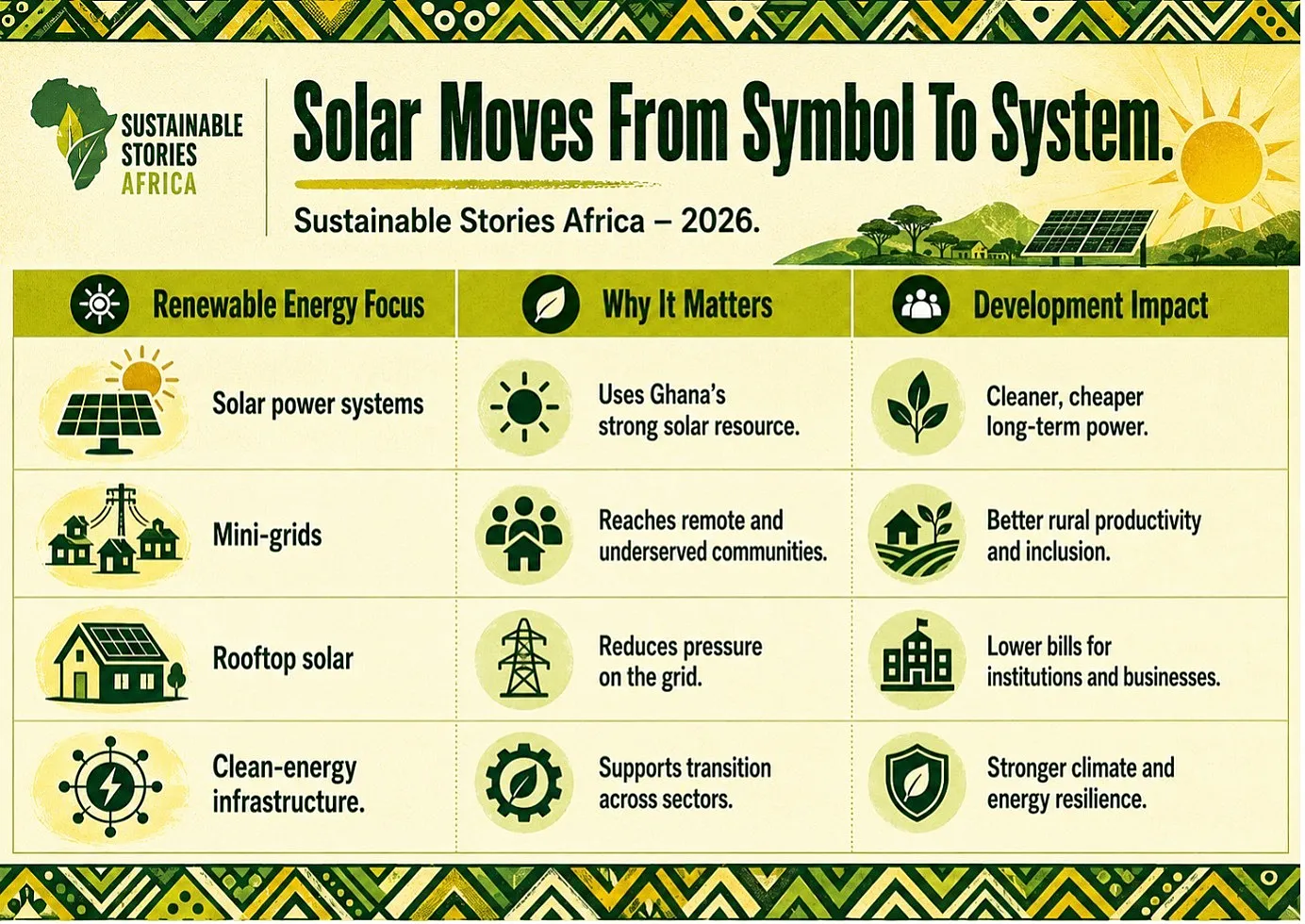
Solar Moves From Symbol To System
Renewable energy is becoming more central to Ghana’s development planning because it can reach places where grid expansion is costly, slow or unreliable.
- Mini-grids can support island, lakeside and remote communities.
- Rooftop solar can reduce pressure on public buildings, households and commercial facilities.
- Solar systems can help farmers pump water, power digital learning, and health centres keep vaccines, medicines and equipment running.
Ghana’s National Energy Transition Framework also envisages a diversified future energy mix, including 21 GW of renewable energy, as part of a broader plan to meet future electricity demand and support affordable low-carbon development.
The renewed push also comes as Ghana works to link clean energy with broader economic goals.
In May 2026, the Association of Ghana Industries called for expanded incentives for renewable energy projects, arguing that clean power can support industrial growth and a more sustainable power supply.
That business angle is important. For manufacturers, agro-processors, cold-chain operators and digital firms, energy reliability is not a climate slogan.
- It is a cost line, a productivity constraint and, in many cases, the difference between expansion and stagnation.
Cleaner Energy Can Unlock Local Value
If Ghana gets the renewable expansion right, the gains could be felt far beyond the power sector.
- For households, cleaner decentralised power can reduce dependence on expensive backup systems and improve quality of life.
- For businesses, renewable energy can reduce exposure to fuel-price volatility and improve competitiveness.
- For the government, it can support climate commitments while easing pressure on public infrastructure.
The opportunity is especially strong in rural and peri-urban communities.
- A solar-powered irrigation system can extend farming beyond rainfall cycles.
- A mini-grid can help a small enterprise cluster run equipment for longer hours.
- A health facility with reliable electricity can deliver safer services.
- A school with steady power can support digital learning.
The government has also set up a Renewable Energy and Green Transition Fund to support sustainable energy initiatives, including solar power, irrigation projects and mini-grid upgrades for communities without electricity.
However, the risks are real. Renewable projects can fail if tariffs are unclear, maintenance is poor, financing is short-term, or local technicians are not trained.
Green transition plans can also lose public support if they raise costs without improving everyday reliability.
For Ghana, success will depend on whether renewable energy becomes visible in daily life, not only in policy documents.
Finance, Skills, and Trust Must Align
The next step is execution.
Ghana will need bankable projects, credible regulation, transparent procurement and stronger local supply chains.
- Developers need predictable rules.
- Communities need reliable maintenance.
- Banks need clear risk frameworks.
- Industries need incentives that make renewable power commercially attractive.
The expansion should also support local content. Ghana can use renewable energy projects to grow skills in installation, maintenance, solar design, electrical engineering, metering and project management.
That would turn the transition into an employment strategy, rather than just an infrastructure programme.
For African markets watching Ghana, the lesson is clear: green transition works best when it answers practical development questions.
- Who gets power?
- Who pays less? Who gets jobs?
- Which industries become stronger?
- Which communities become more resilient?
Path Forward – Turn Clean Power Into Development
Ghana’s renewable expansion should prioritise solar, mini-grids, rooftop systems, local skills, transparent finance and productive energy use for businesses and communities.
This advances ESG by linking emissions reduction with access, jobs, resilience and inclusive growth.
The next test is delivery: clean power must become reliable power that people can feel in homes, farms, schools and factories.
Culled From: Ghana to Expand Renewable Energy Projects as Green Transition