Global investment in the energy transition reached $2.3 trillion in 2025, signalling continued momentum despite slowing growth.
Policy uncertainty, higher financing costs, and supply chain constraints tempered expansion across key clean energy sectors.
Analysts warn that sustaining momentum will require stronger policy clarity, capital mobilisation, and infrastructure development to meet climate targets.
Energy Transition Investment Reaches Historic Milestone
Global investment in the energy transition reached a record $2.3 trillion in 2025, reflecting sustained momentum toward the deployment of clean energy despite emerging policy and market challenges.
The investment surge highlights growing global commitment to decarbonisation, electrification, and climate resilience.
However, growth rates slowed compared to previous years due to policy uncertainty, higher interest rates, and supply chain disruptions affecting infrastructure deployment.
The slowdown underscores the growing complexity of financing and delivering large-scale energy transition projects.
While investment remains historically high, sustaining progress will require stronger policy alignment, improved financial conditions, and accelerated infrastructure deployment.
The transition is increasingly driven by structural energy security priorities as well as climate commitments.
Financing Conditions and Policy Shifts Affect Growth
Energy transition investment is being shaped by evolving financial and policy environments.
Higher borrowing costs, inflationary pressures, and regulatory uncertainty have affected project economics and investment timelines.
Despite these challenges, clean energy continues to attract significant capital flows globally.
Investment Driver | Market Impact | Strategic Outcome |
|---|---|---|
Renewable energy deployment | Increased clean power capacity | Emissions reduction progress |
Electrification investments | Reduced fossil fuel dependence | Energy system transformation |
Grid infrastructure expansion | Improved electricity reliability | Integration of renewable energy |
Energy storage development | Enhanced system resilience | Stability of power systems |
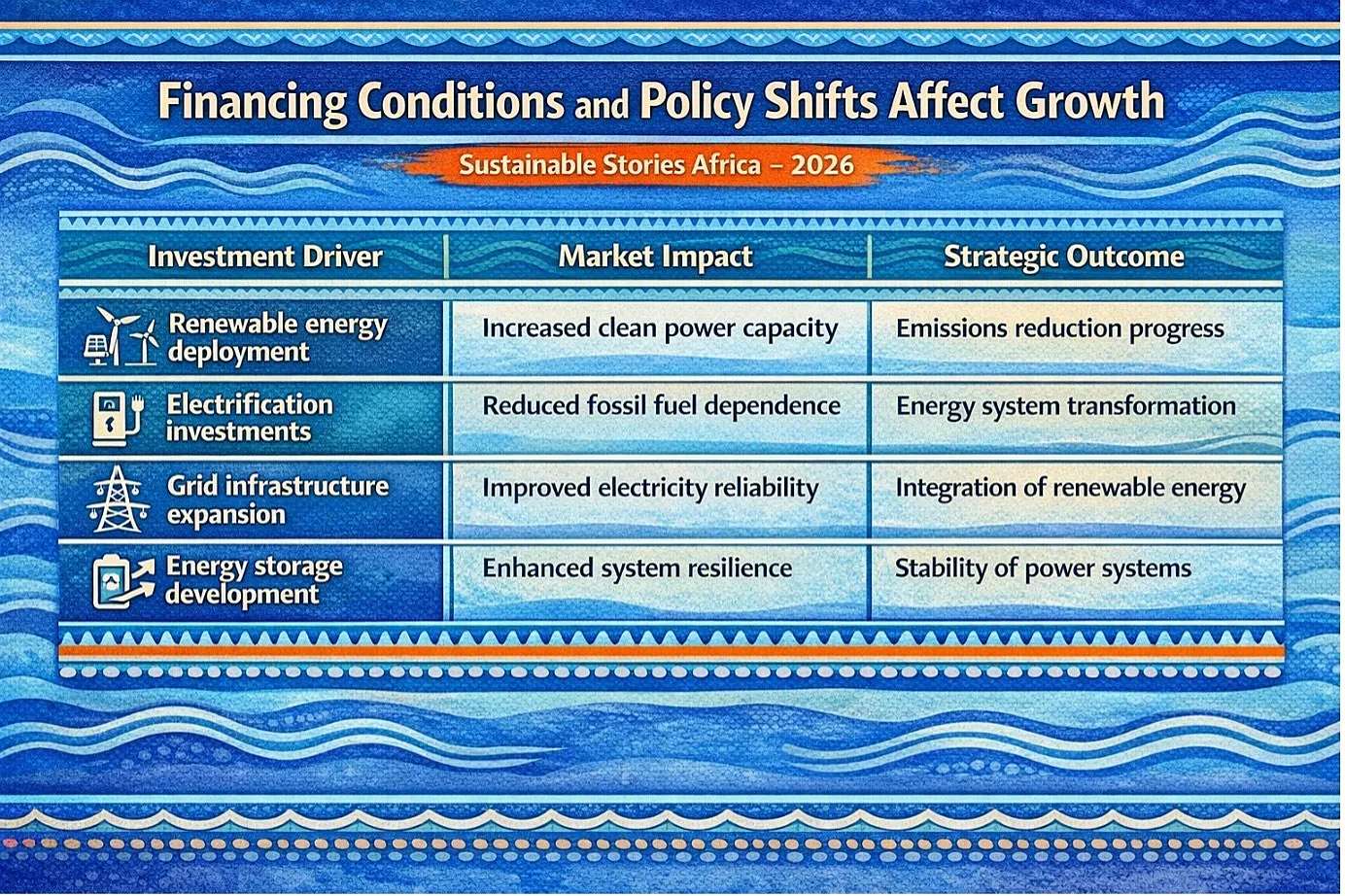
Solar, wind, battery storage, and electrification projects remain key areas that attract investment, supporting long-term decarbonisation objectives.
However, financial constraints and policy uncertainty are slowing the pace of expansion.
Transition Investment Strengthens Energy Security Globally
Energy transition investment supports economic growth, energy security, and climate resilience.
Clean energy infrastructure reduces dependence on fossil fuel imports, strengthens national energy independence, and supports industrial development.
Countries investing in clean energy infrastructure are positioning themselves for long-term economic competitiveness.
Strategic Benefit | Economic Impact | Climate Outcome |
|---|---|---|
Renewable energy deployment | Reduced energy costs | Lower emissions |
Electrification expansion | Improved productivity | Energy efficiency gains |
Infrastructure modernisation | Increased investment attractiveness | Climate resilience |
Clean technology innovation | Industrial growth | Sustainable economic development |
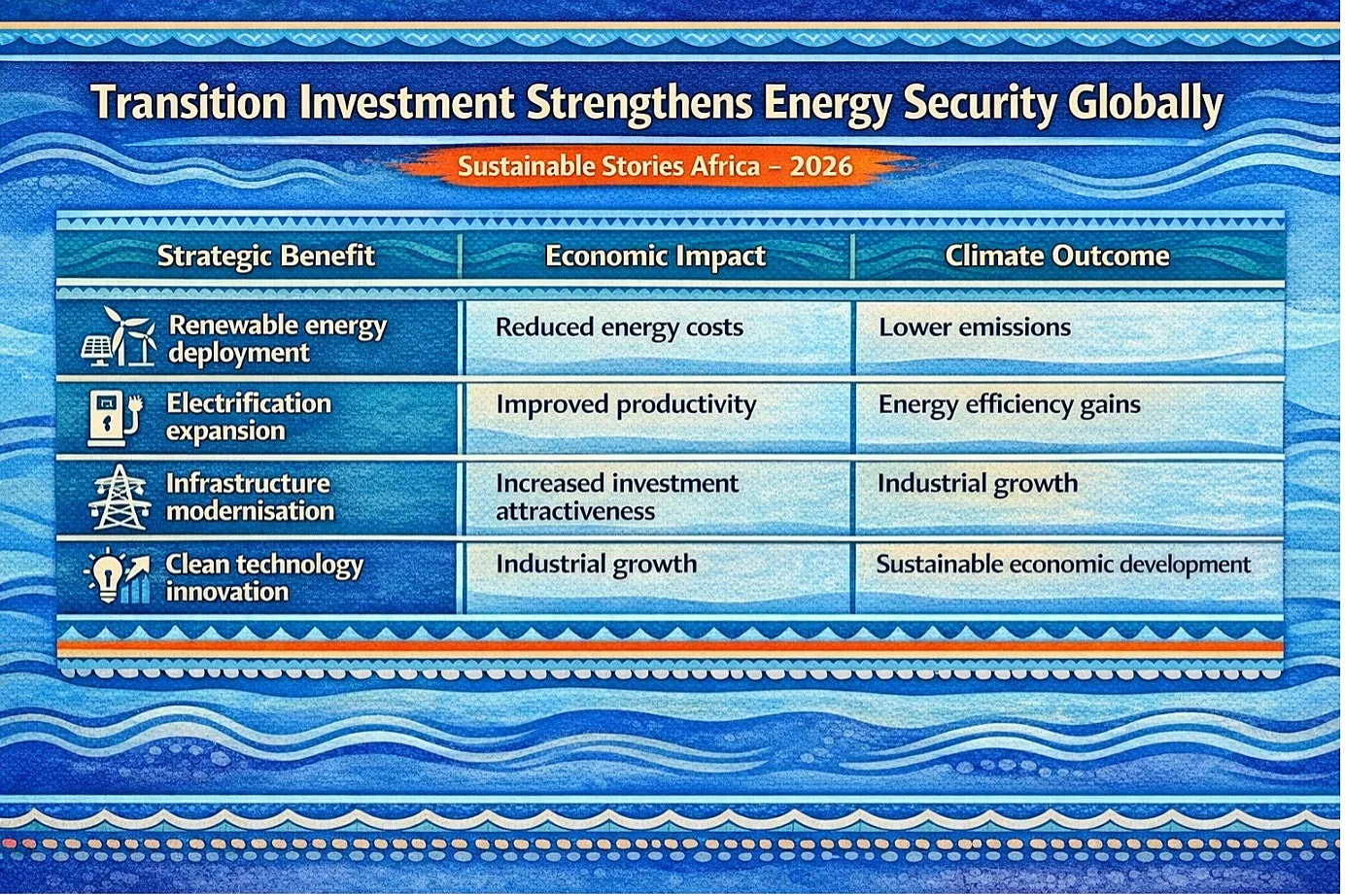
Energy transition investment is increasingly viewed as a strategic economic priority rather than solely an environmental objective.
Clean energy infrastructure supports long-term economic stability and competitiveness.
Policy Alignment Critical to Sustain Momentum
Maintaining the momentum of the energy transition will require stronger policy clarity, regulatory stability, and capital mobilisation.
Governments must create stable investment environments that reduce risk and attract private capital.
Financial institutions, investors, and policymakers must work together to accelerate the deployment of clean energy and infrastructure development.
Without sustained investment and policy support, global decarbonisation targets could face delays.
Investment in energy transition remains essential for achieving climate goals and strengthening global energy systems.
Path Forward – Sustained Investment Essential for Energy Transition
Governments must strengthen policy frameworks, mobilise capital, and accelerate the deployment of clean energy infrastructure.
Sustained investment can support energy security, economic growth, and long-term climate resilience.
Culled From: Global Energy Transition Investment Reaches $2.3 Trillion in 2025 as Growth Slows Amid Policy and Market Shifts