Salaries for sustainability professionals are rising worldwide as regulatory reforms and investor expectations reshape corporate hiring.
The trend matters because organisations increasingly need experienced ESG talent to navigate mandatory reporting requirements and climate commitments.
For Africa, the findings signal both an opportunity to build globally competitive expertise and a warning against a widening sustainability skills gap.
The Global Race For ESG Talent Has Begun
The global sustainability profession is entering one of its fastest periods of salary growth, driven by tightening ESG disclosure rules, expanding corporate climate commitments and an increasingly competitive market for experienced professionals.
The 2026 Sustainability Salary Survey by OneStop ESG found that compensation increased across virtually every seniority level and region during the 2025 - 2026 period.
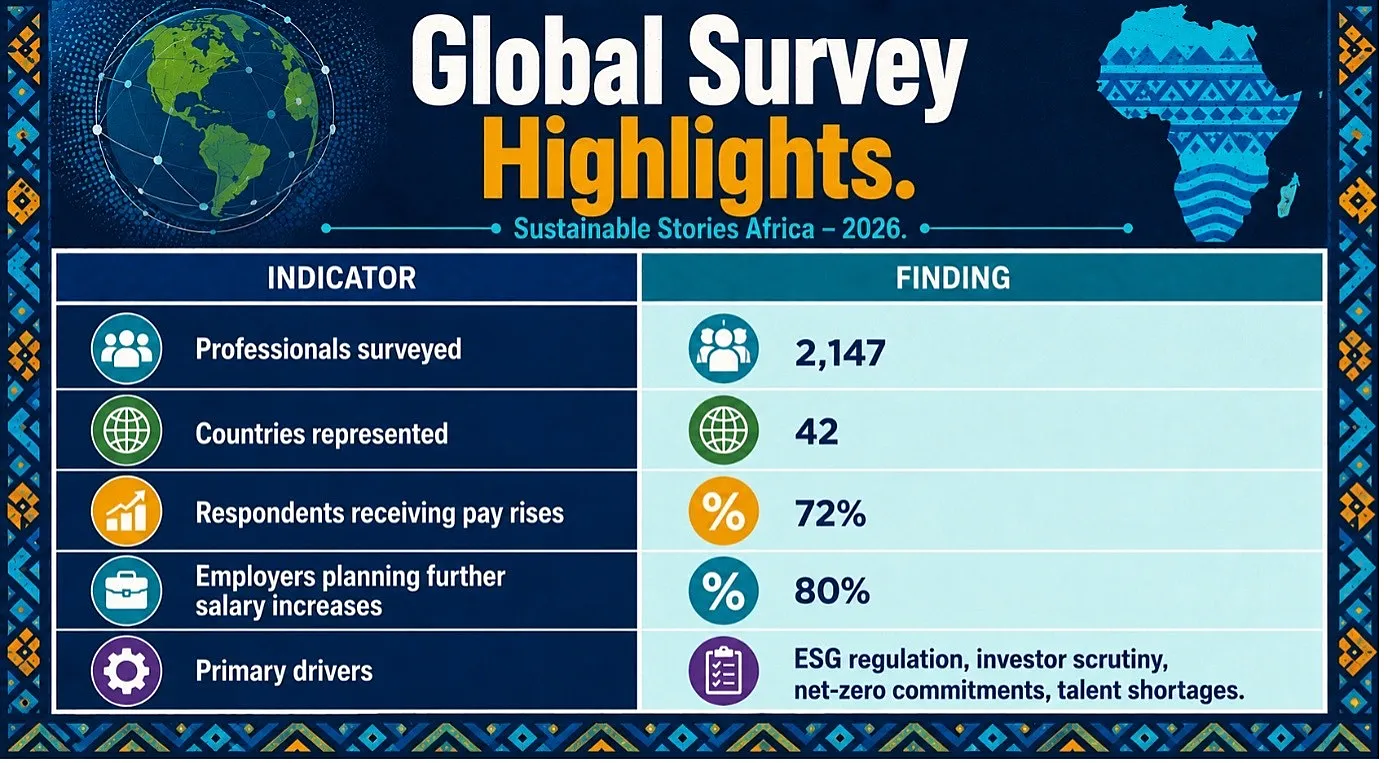
Based on responses from 2,147 sustainability professionals across 42 countries, the survey reports that 72% received a pay rise, while 80% of employers expect to increase salaries further, underscoring an intensifying global competition for ESG talent.
The findings arrive as organisations prepare for increasingly complex sustainability reporting obligations under frameworks such as the International Sustainability Standards Board (ISSB) standards, the European Financial Reporting Advisory Group's European Sustainability Reporting Standards, and other jurisdiction-specific disclosure regimes.
These changes are transforming sustainability from a compliance function into a strategic business capability.
Regulation Is Redefining The Sustainability Profession
The survey shows that rising salaries are not simply a reflection of inflation but of structural changes within the global economy.
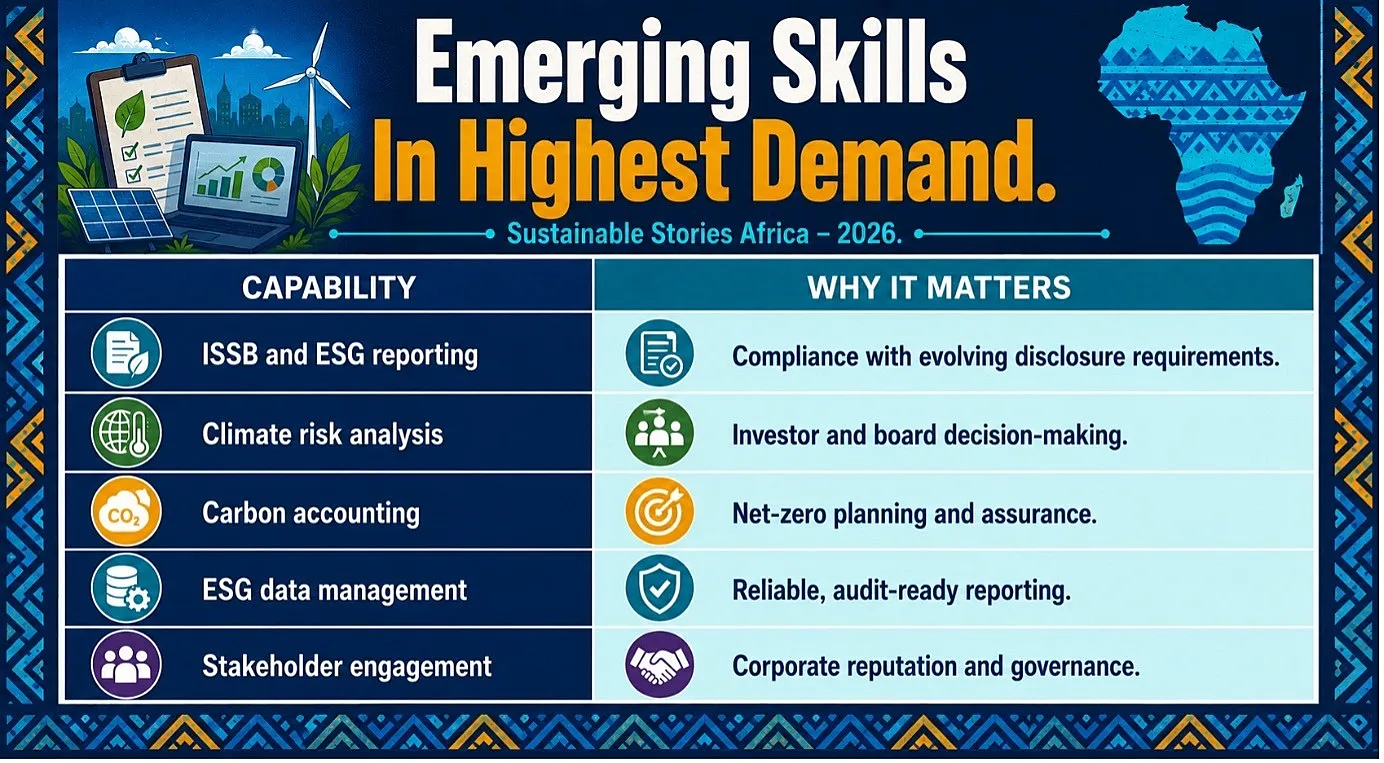
Companies increasingly require professionals capable of integrating climate risks into financial reporting, managing carbon inventories, developing transition strategies and engaging investors on ESG performance. The result is growing demand for specialists with both technical sustainability expertise and commercial understanding.
North American salary benchmarks illustrate the widening opportunity. Sustainability and ESG Managers typically earn between $81,000 and $176,000, while Chief Sustainability Officers can command compensation exceeding $420,000, depending on company size, location and sector.
Regional salary premiums remain particularly strong in innovation hubs such as San Francisco, New York and Washington, D.C.
For African professionals, the findings present a compelling opportunity. As more African jurisdictions adopt ISSB-aligned reporting requirements, including Nigeria's transition toward mandatory sustainability reporting, organisations will require skilled professionals capable of producing reliable, decision-useful ESG information.
Rather than importing expertise indefinitely, businesses and governments have an opportunity to cultivate domestic sustainability talent capable of serving both African and international markets.
Africa Can Turn Talent Into Competitive Advantage
The expanding sustainability labour market offers more than higher salaries. It represents a pathway toward stronger institutions, improved corporate governance and greater investor confidence.
Universities, professional bodies and employers that invest in ESG education today can create a workforce capable of supporting sustainable finance, climate adaptation, responsible mining, renewable energy, biodiversity conservation and transparent corporate reporting.
The benefits extend beyond individual careers. Strong sustainability capability helps organisations reduce regulatory risk, attract investment, improve operational resilience and strengthen long-term competitiveness.
Conversely, failing to invest in talent development could leave African businesses increasingly dependent on expensive external consultants while global demand continues pushing skilled professionals toward higher-paying international markets.
Closing The ESG Skills Gap Requires Investment
Governments, regulators, universities, professional institutes and employers must collaborate to build a stronger sustainability talent pipeline.
- This means expanding ESG education, embedding sustainability into finance and business curricula, strengthening professional certification pathways and creating structured career opportunities across both public and private sectors.
- Companies should also recognise sustainability as a strategic investment rather than a compliance cost.
Competitive remuneration, continuous learning and cross-functional leadership development will be essential for attracting and retaining professionals capable of delivering credible ESG performance.
For Africa, the opportunity is clear: build world-class sustainability expertise now or risk losing talent to faster-moving global markets.
Path Forward – Invest Today Build Tomorrow's ESG Workforce
Africa's sustainability transition will depend as much on people as on policy.
Building technical capability, strengthening professional education and rewarding ESG expertise can create resilient institutions that support investment, transparency and inclusive economic growth.
As sustainability reporting becomes mainstream, developing local talent will be one of the continent's strongest competitive advantages in the global green economy.
Culled From: 2026 Sustainability Salary Survey | OneStop ESG