Governance has overtaken environment as the top ESG reputational risk for global businesses, according to GlobeScan.
The shift signals rising scrutiny of ethics, transparency, accountability and corporate conduct.
For African firms, the message is clear: sustainability credibility now depends on how companies are governed.
Governance Moves To The Front
Governance has become the leading ESG reputational risk for global businesses in 2026, overtaking environmental concerns for the first time in GlobeScan’s latest Corporate Affairs survey.
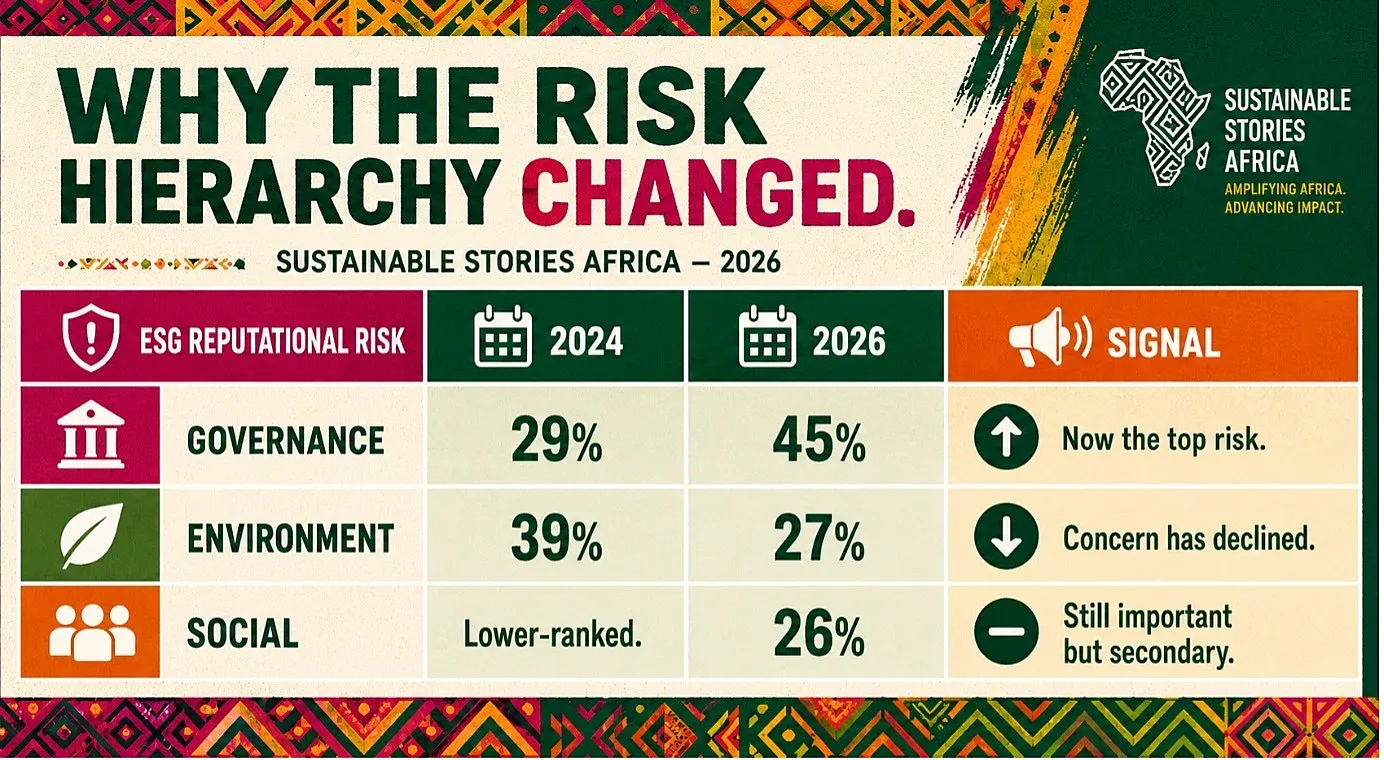
The findings show that 45% of corporate affairs teams now rank governance as their top ESG reputational risk, ahead of environment at 27% and social issues at 26%.
The shift is significant because it changes how companies should think about sustainability.
Climate action still matters; however, reputation is increasingly shaped by board oversight, transparency, ethics, anti-corruption controls, executive accountability, and the consequences of corporate promises aligning with conduct.
Why The Risk Hierarchy Changed
GlobeScan’s data show a sharp three-year movement. Governance rose from 29% in 2024 to 45% in 2026, while environmental risk fell from 39% to 27% over the same period.
For companies in Africa and the Global South, this matters deeply.
- A renewable energy firm can lose investor trust if procurement is opaque.
- A mining company can publish climate targets but still face backlash over weak community engagement.
- A bank can launch green products but suffer reputational damage if governance failures expose customers, shareholders or regulators to risk.
In short, ESG is no longer judged only by environmental targets. It is judged by whether institutions are credible enough to deliver them.
Better Governance Builds Market Trust
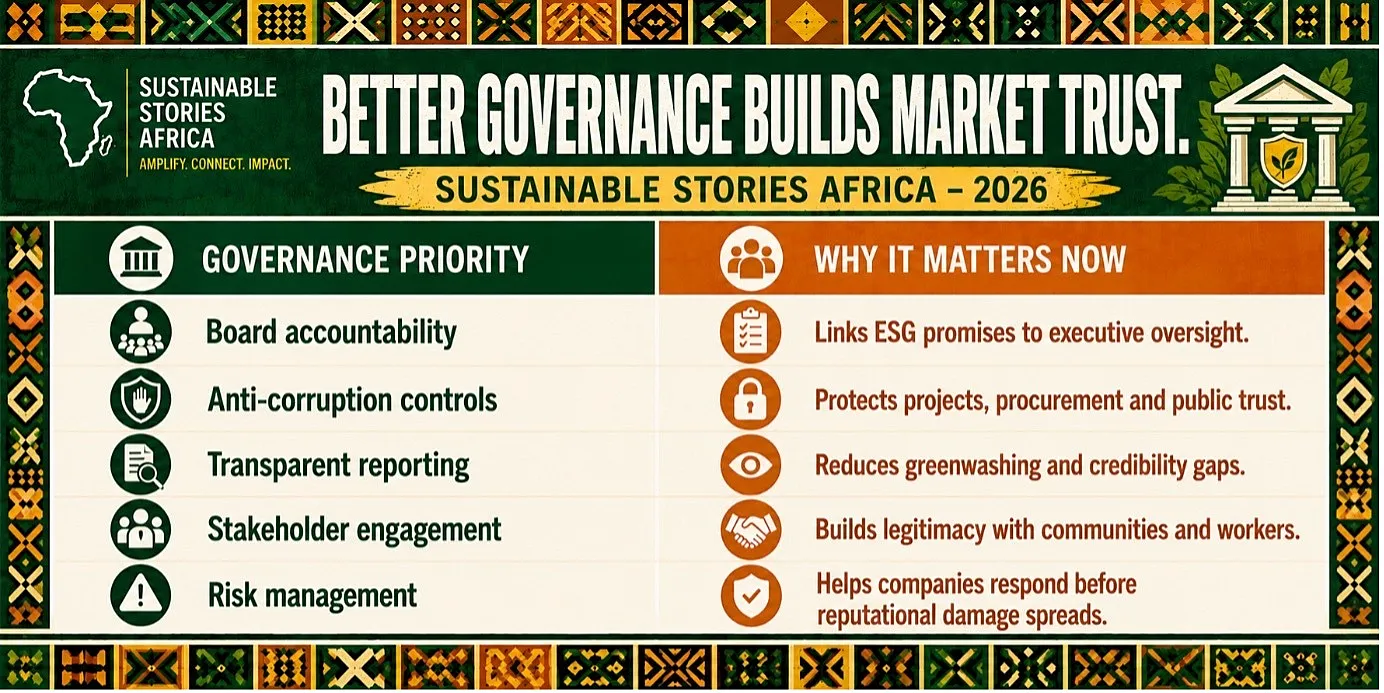
Good governance is not just a compliance box. It is the operating system that makes sustainability believable.
- For investors, strong governance lowers risk.
- For communities, it improves accountability.
- For regulators, it strengthens market confidence.
- For companies, it protects reputation before crises become public scandals.
This is especially relevant in African markets, where climate finance, infrastructure, extractives and supply chain investments are expanding.
Capital will not only follow bold sustainability claims. It will follow companies that can demonstrate discipline, disclose clearly and manage risk before controversy emerges.
Companies Must Fix The Governance Gap
The new risk outlook should push boards and executives to treat governance as a frontline ESG issue, rather than an internal legal function.
Sustainability teams cannot carry a reputation alone if procurement, leadership conduct, disclosure and accountability systems are weak.
Companies should strengthen ethics controls, publish clearer ESG data, improve whistleblower protections, link executive incentives to verified outcomes and make boards directly responsible for sustainability oversight.
The lesson is simple: environmental commitments fail when governance fails. The companies that understand this early will be better placed to attract capital, avoid reputational shocks and build long-term public trust.
Path Forward – Make Governance The ESG Foundation
African companies should treat governance as the foundation for credible climate, social and sustainability action.
The next step is stronger board oversight, transparent reporting, anti-corruption systems and measurable ESG delivery.
In 2026, reputation will not be protected by promises alone. It will be protected by proof, accountability and institutional discipline.
Culled From: Global Business Risk Outlook 2026: Governance Overtakes Environment as Top ESG Reputational Risk