Governments are raising renewable energy targets after the COP28 pledge to triple capacity by 2030.
But new ambition remains uneven, with national targets still below the 11 terawatts required.
For African markets, the shift could unlock cheaper power, jobs and resilience—if finance, grids and policy execution catch up.
Clean Power Targets Face Reality
Governments are beginning to raise renewable energy targets, but the world remains off pace for the historic COP28 commitment to triple renewable power capacity by 2030.
The shift matters now because clean electricity has become central to energy security, industrial competitiveness and climate action.
The International Energy Agency projects global renewable capacity will rise by almost 4,600 GW between 2025 and 2030, roughly double the deployment of the previous five years, with solar PV accounting for nearly 80% of the expansion.
However, ambition has not fully caught up with the market. Ember says current national targets add up to about 7.4 TW by 2030, far below the 11 TW needed to meet the global tripling goal.
Markets Are Moving Faster Than Policies
The clean-energy transition is no longer only a climate story. It is now a cost, jobs and competitiveness story.
Solar modules have become cheaper, batteries are scaling, and countries are ensuring insulation against volatile fossil-fuel markets.
However, the policy picture remains mixed. Ember reports that only 22 countries, mostly in the European Union, have updated national renewables targets since COP28, raising global ambition by just 2%.
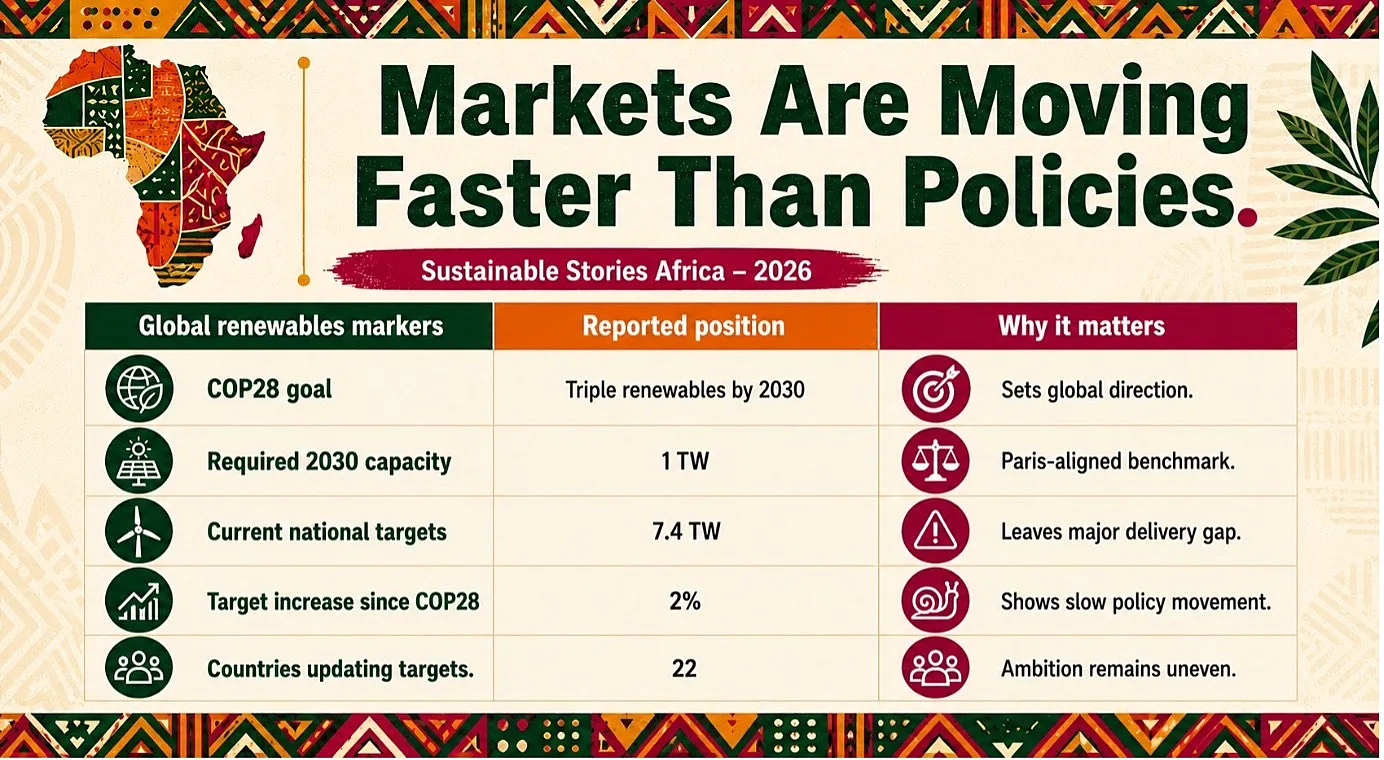
For African economies, this gap is not abstract.
It appears in factories waiting for stable power, healthcare centres relying on diesel generators, and households paying more for backup energy than for grid electricity.
What Higher Ambition Could Unlock
If governments turn higher targets into bankable plans, the gains could be substantial. More renewables can reduce fuel-import exposure, support local manufacturing, lower long-term electricity costs and expand access to underserved communities.
For African markets, the opportunity is especially strategic. Countries with strong solar, wind, hydro and geothermal resources can use clean power to support agro-processing, cold storage, digital services and green industrial zones.
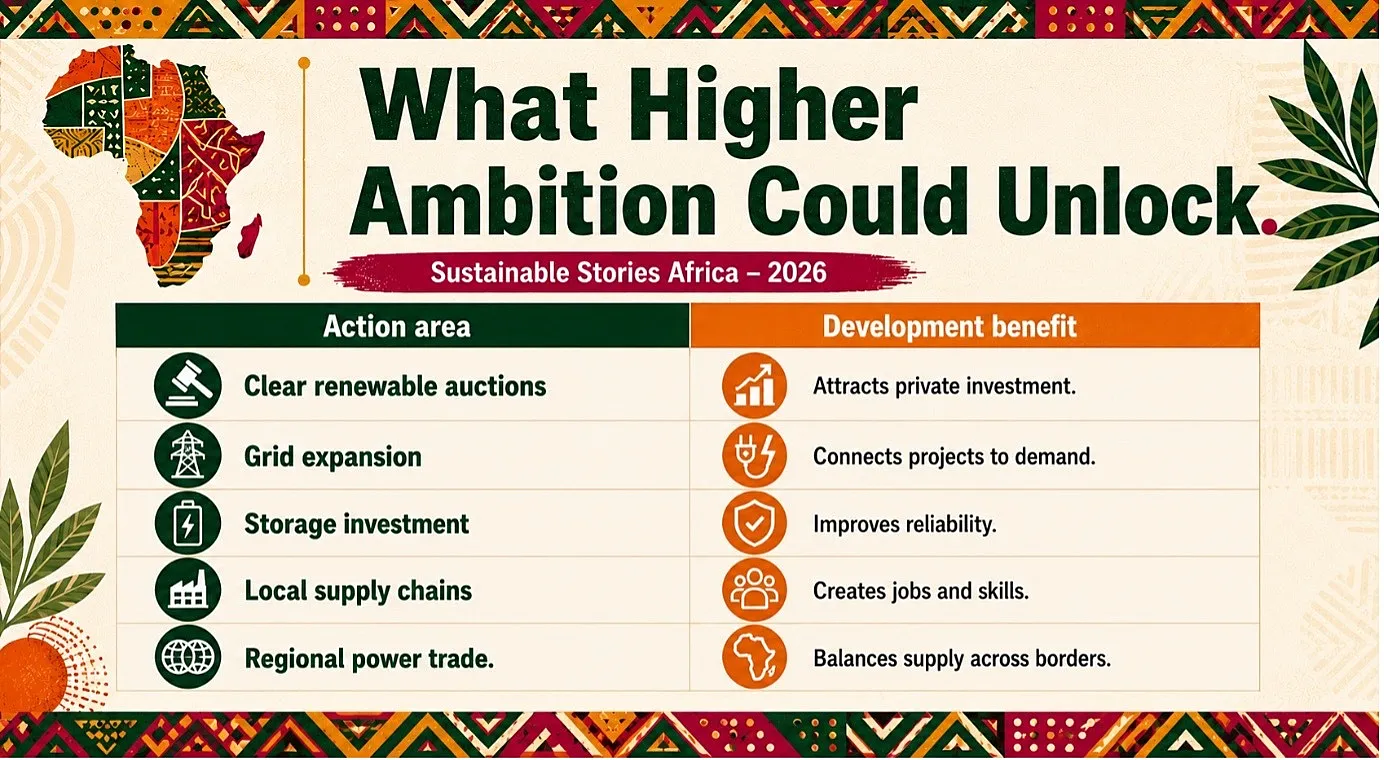
However, without transmission lines, storage, permitting reform and affordable finance, higher targets risk becoming political slogans rather than electricity delivered.
Targets Must Become Investable Plans
- Governments now need to move from announcements to execution. That means publishing credible project pipelines, reducing permitting delays, strengthening utilities and expanding grid infrastructure.
- Development finance institutions also have a central role. They can lower risks for private investors, support early-stage project preparation and help African countries avoid being priced out by high capital costs.
The message for policymakers is clear: ambition must be measurable, financed and connected to real demand.
Path Forward – Turn Ambition Into Delivered Power
The next phase must prioritise grids, storage, finance and faster approvals.
For Africa, renewable energy targets should be linked to jobs, industry, energy access and climate resilience. The prize is not only cleaner electricity; it is a more secure, inclusive and competitive development model.
Culled From: Governments raise their renewables targets