Heat pumps are emerging as one of the most practical tools for cutting emissions from buildings.
The shift matters as buildings remain a major source of global energy use and carbon pollution.
For African cities, the lesson is immediate: cleaner cooling, efficient heating and better building systems can reduce bills, emissions and climate vulnerability.
Buildings Have A Hidden Carbon Problem
The climate challenge inside buildings is quiet but consequential — hidden in ageing boilers, inefficient air conditioners and rising energy bills.
A new OneStopESG analysis, "The Quiet Engine of Building Decarbonization" (June 10, 2026), positions heat pumps as a critical technology that bridges energy efficiency, electrification, and net-zero targets.
The data is sobering. The IEA estimates building operations account for 30% of global final energy consumption and 26% of energy-related emissions.
UNEP and GlobalABC place the broader buildings and construction sector at 32% of energy use and 34% of CO₂ emissions.
For African cities navigating rapid urbanisation and surging demand for homes, offices and hospitals, the imperative is clear: the next phase of climate action must move inside the building itself.
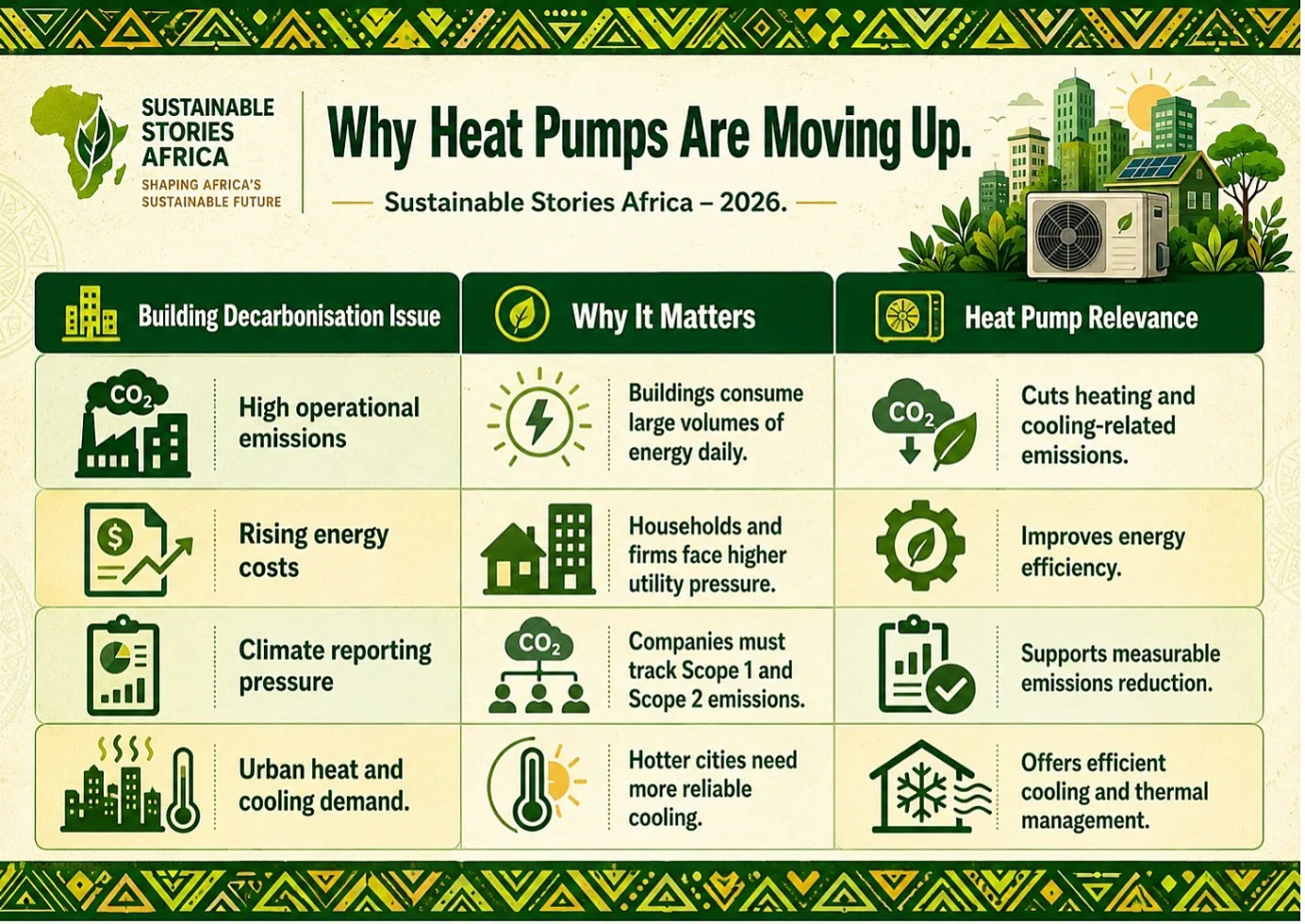
Why Heat Pumps Are Moving Up
Heat pumps work by moving heat rather than generating it, cooling spaces, heating water and providing efficient thermal comfort without combustion.
The IEA identifies heat pumps powered by low-emissions electricity as central to the global transition toward sustainable heating.
Their significance is easy to underestimate. Unlike solar farms or electric vehicles, heat pumps are invisible infrastructure; however, what they replace matters enormously: fossil-fuel boilers, inefficient cooling systems and fragmented building operations.
While Europe accelerates adoption through policy incentives and Asia ties heat pumps to industrial competitiveness, Africa's conversation is still emerging.
However, the relevance is already tangible, from Lagos hotels reducing their dependence on diesel to Nairobi offices cutting cooling costs.
The core question is universal: how do buildings deliver comfort without locking into high-carbon systems?
Cleaner Buildings Can Lower Everyday Costs
Heat pumps offer more than climate ambition; they deliver economic practicality.
- For building owners, efficient thermal systems reduce energy waste and improve asset value.
- For tenants, they mean better comfort.
- For companies, they strengthen ESG reporting and support credible net-zero transition plans.
The deeper opportunity lies in systems transformation, heat pumps paired with insulation, smart controls, renewable electricity and building performance standards unlock far greater savings than equipment changes alone.
For African markets, the stakes are especially high.
Cities expanding ahead of strong green-building regulations risk inheriting decades of avoidable energy costs.
However, developers, financiers, and regulators acting early can embed efficiency from the ground up.
The risk of delay is real: poorly performing buildings may become harder to finance, lease and insure as climate reporting tightens.
Decarbonisation Must Enter Building Decisions
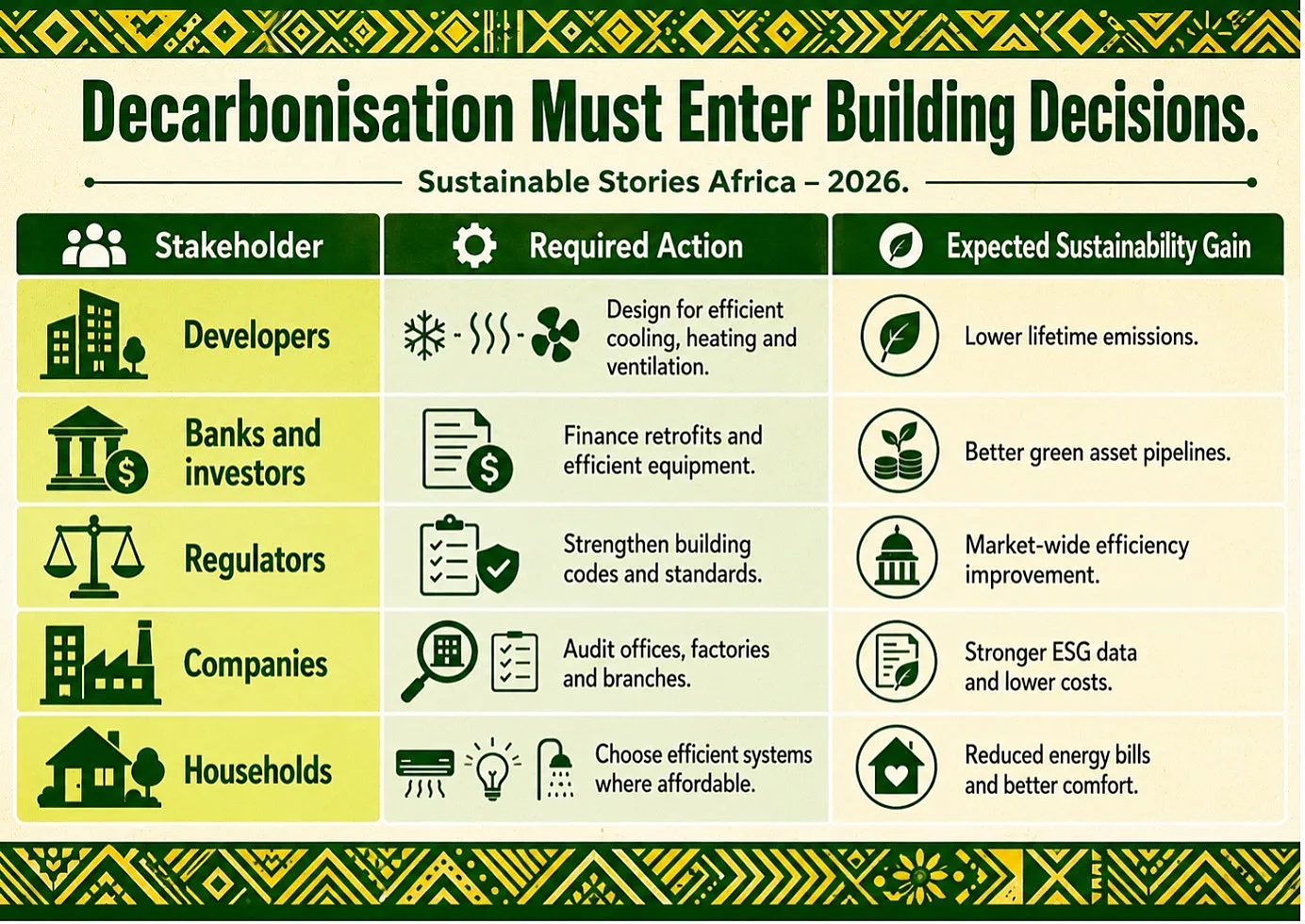
The next step is to move heat pumps and building efficiency from engineering discussions into the boardroom, policy and finance decisions.
- Developers should assess lifecycle energy costs before choosing mechanical systems.
- Banks should integrate building performance into green finance products. Regulators should update building codes, appliance standards and public procurement rules.
- Companies should include building operations in emissions inventories and transition plans.
African governments can also use public buildings as proof points. Schools, hospitals, ministries and social housing can demonstrate how efficient building systems reduce long-term public costs.
This matters because public procurement can help create local markets for installers, engineers, energy auditors and maintenance providers.
For businesses, the call to action is direct: stop treating buildings as passive assets. They are energy systems, emission sources and climate resilience infrastructure.
Path Forward – Retrofit Buildings, Finance Cleaner Comfort
Africa’s building transition should begin with practical retrofits, stronger energy codes, skilled technicians, green finance and credible emissions data.
Heat pumps should be assessed alongside solar, storage, insulation and smart controls.
The sustainability case is strong. Cleaner buildings can lower emissions, reduce energy waste, improve comfort and support ESG reporting.
The quiet engine now needs louder policy, finance and market support.
Culled From: The Quiet Engine of Building Decarbonization