Renewable energy is no longer only an engineering story. It is becoming an insurance story, too.
As solar farms, wind projects, batteries and mini-grids expand across emerging markets, insurers are becoming central to whether projects can raise capital, survive climate shocks and remain bankable.
For Africa, where clean power must grow quickly, insurance could determine which projects move from ambition to reliable electricity.
Clean Power Now Needs Risk Protection
Renewable energy developers are discovering a harder truth behind the clean-energy boom: a project is only as strong as the risks it can survive.
Across global markets, insurers, reinsurers and lenders are paying closer attention to the vulnerability of solar panels, wind turbines, batteries and transmission assets to floods, storms, fires, equipment failures, theft, political risk and delayed construction.
That shift matters because insurance is not just a back-office requirement. It is becoming a condition for finance.
For African markets, the implications are immediate.
- Governments want more clean power.
- Businesses want cheaper electricity.
- Communities want a reliable supply. Investors want stable returns.
However, without credible risk protection, many renewable projects may struggle to secure debt financing, attract long-term capital or recover quickly when extreme weather or technical failure hits.
Insurance is now becoming the quiet infrastructure behind the energy transition.
Why Renewable Risk Is Rising
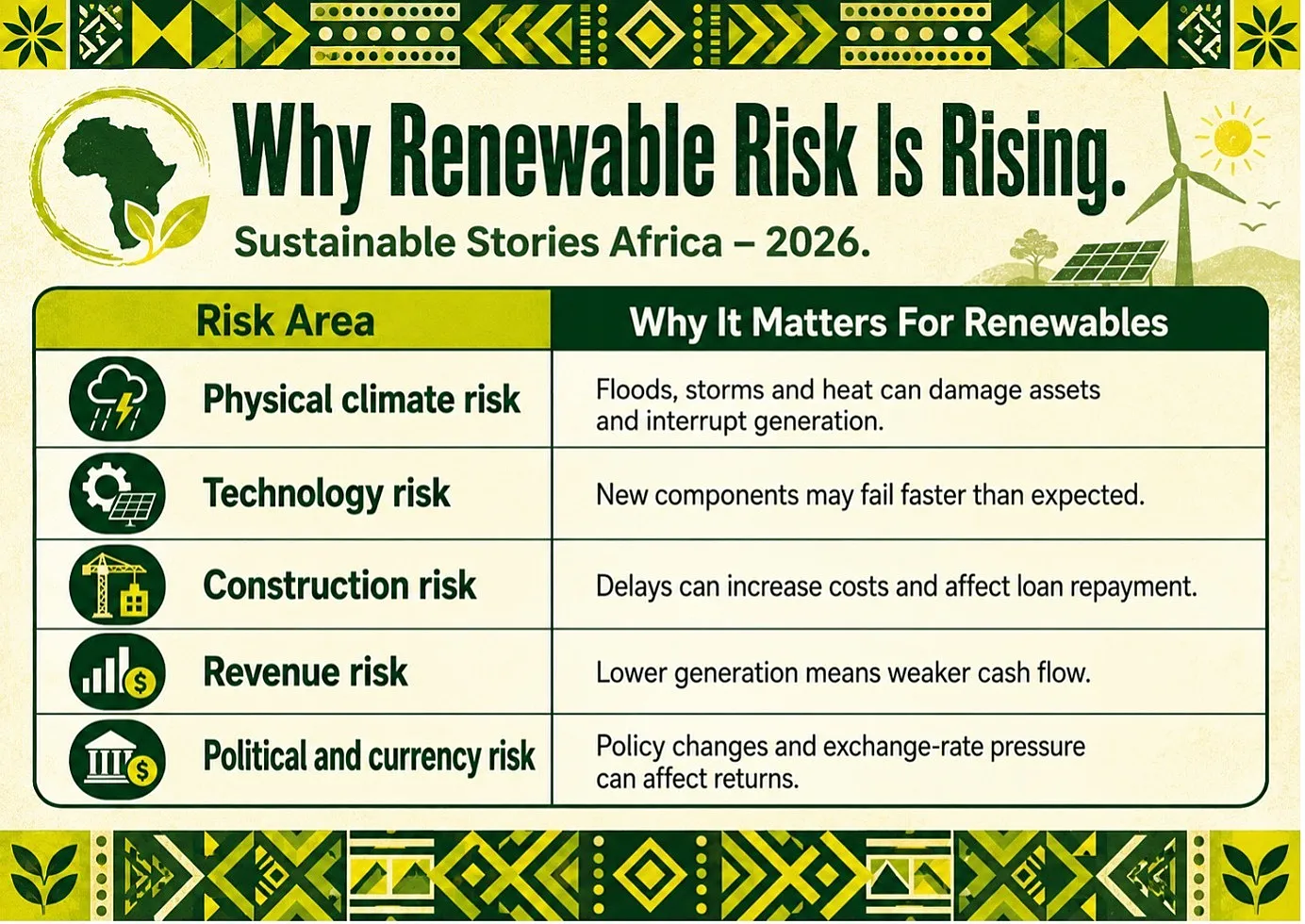
The renewable energy sector is growing fast; however, so are its risks.
Solar farms, wind projects, battery systems and mini-grids each carry distinct vulnerabilities, from hail and flooding to theft, turbine defects and currency exposure.
In mature markets, insurers have already witnessed how climate shocks can cripple clean-energy assets.
In emerging markets, the challenge deepens: weaker grid infrastructure, limited weather data and political uncertainty compound the risk.
The insurance industry is responding with specialised products, construction cover, operational insurance, business interruption, equipment warranties and parametric protection.
Parametric insurance is particularly promising for emerging markets, triggering payouts when defined conditions are met rather than waiting months for traditional claims assessment.
For solar, wind and mini-grid operators, faster payouts mean faster recovery.
Insurance Can Unlock Cleaner Growth
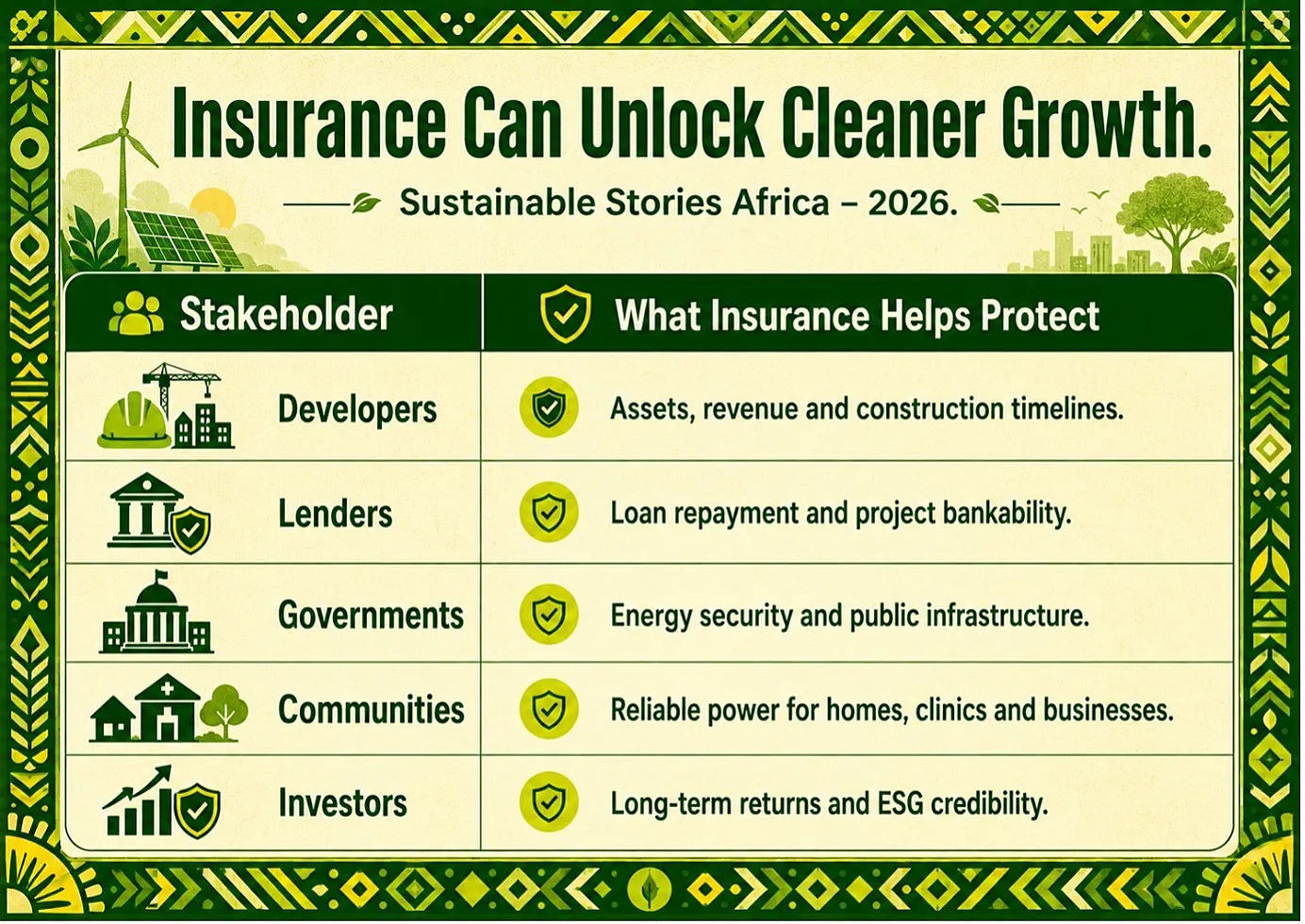
If designed well, insurance can make renewable energy more investable, more resilient and more inclusive.
- For a lender, insurance reduces the chance that a single storm, fire or equipment failure destroys repayment capacity.
- For a developer, it protects cash flow.
- For communities, it can keep electricity systems running after climate shocks.
- For governments, it helps reduce the fiscal pressure of disaster recovery.
This is where insurance becomes more than risk transfer. It becomes development infrastructure.
A solar mini-grid serving a rural clinic, school or farming cluster does not only need panels. It needs a maintenance plan, a financial model and protection against shocks.
If the system fails after a flood and cannot be repaired, clean-energy access becomes temporary. If insurance helps restore it quickly, the development benefit continues.
The opportunity is clear: better insurance can lower perceived risk, attract more capital and improve the credibility of Africa’s renewable energy pipeline.
However, the reverse is also true. If insurance becomes too expensive, unavailable or poorly structured, renewable energy could face a financing bottleneck.
Projects in climate-vulnerable markets may be judged too risky, even where the need for clean power is greatest.
Risk Planning Must Start Earlier
The renewable energy sector needs to treat insurance as a strategic design issue, not a final-stage compliance item.
- Developers should involve insurers and risk advisers early in project planning, especially during site selection, technology procurement and contract structuring.
- Lenders should require stronger climate-risk modelling.
- Governments should improve weather data, grid planning and permitting transparency.
- Regulators should support insurance innovation without weakening consumer protection.
African markets also need local insurance capacity. If too much of the renewable energy risk depends on offshore underwriting, projects may face higher costs and slower claims.
Building domestic expertise in renewable-energy underwriting, engineering assessment and climate-risk modelling will be critical.
The message for policymakers and investors is direct: clean-energy finance will not scale without clean-energy risk management.
Renewables need capital, but capital needs confidence. Insurance is becoming one of the systems that creates that confidence.
Path Forward – Build Resilience Into Clean Power
Africa’s renewable-energy future will depend not only on megawatts installed, but on megawatts protected. Insurance, data, regulation and project design must work together from the start.
The next phase should prioritise local underwriting capacity, parametric products, stronger climate-risk data and bankable project standards.
Well done, insurance can help turn renewable ambition into durable power, stronger communities and more credible ESG outcomes.
Culled From: Why insurance is becoming critical to renewables