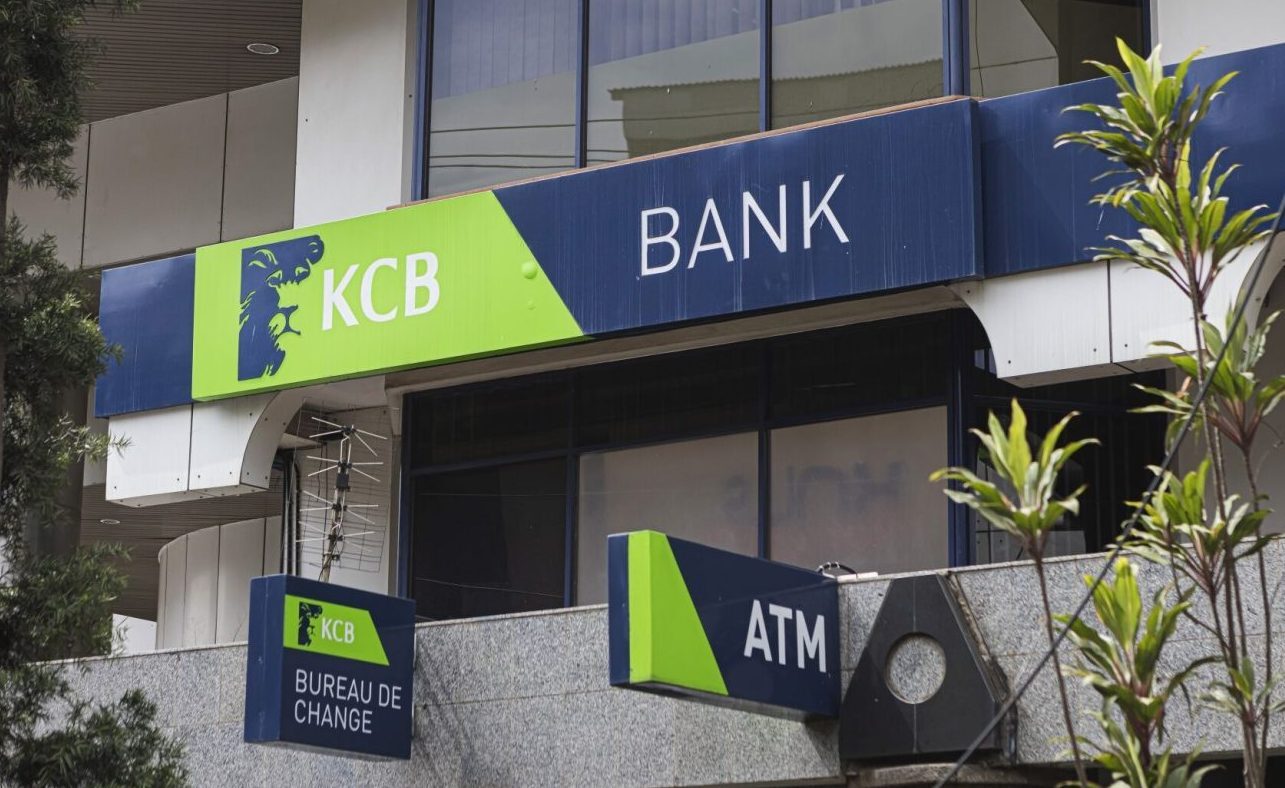
KCB Bank Kenya has signed a $100 million EBRD facility to expand lending to underserved micro, small and medium-sized enterprises.
35% is reserved for women- and youth-led businesses and 30% for eligible green investments, making execution and measurable additional lending the next tests.
New credit line targets underserved businesses
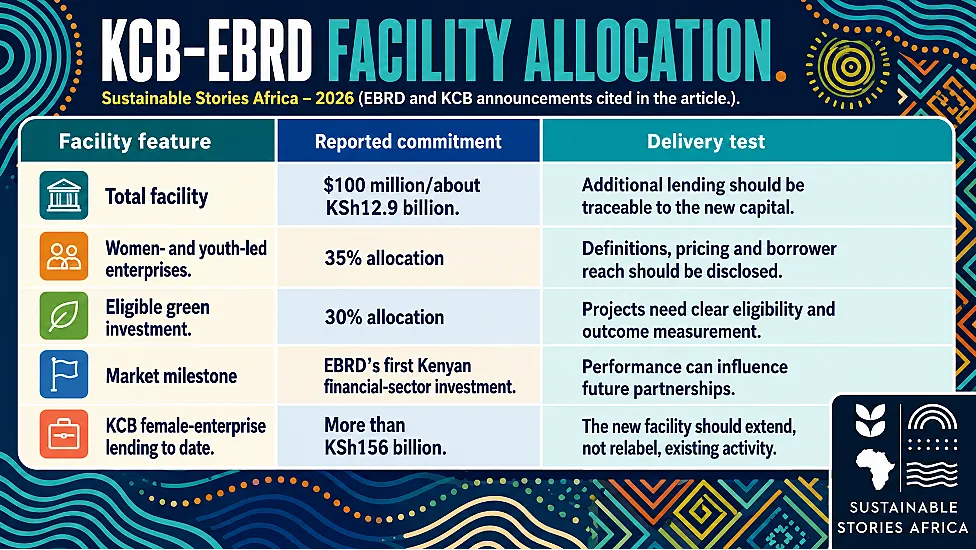
KCB Bank Kenya has secured a $100 million, or about KSh12.9 billion, financing facility from the European Bank for Reconstruction and Development to expand credit for micro, small and medium-sized enterprises.
The agreement, signed on 28 July, is the EBRD’s first investment in Kenya’s financial sector.
Under the facility, 35% of funds will be lent to women- and youth-led enterprises, while 30% will support investments that meet the lender’s green eligibility requirements.
The structure brings three objectives into a single credit line: business growth, financial inclusion and climate investment.
It arrives as high borrowing costs, short repayment periods and collateral requirements continue to restrict the capacity of smaller Kenyan firms to invest in equipment, technology and expansion.
Green finance moves through local banks
Development lenders increasingly use established commercial banks to reach borrowers they cannot serve directly at scale.
KCB contributes its branch network, customer relationships and underwriting capacity; the EBRD contributes long-term capital, eligibility rules and technical support.
The green allocation could finance renewable energy, energy efficiency, climate-smart agriculture, water-saving systems and cleaner production.
These investments may reduce operating costs and exposure to fuel or electricity volatility, but only when loan products match the cash-flow cycles of participating businesses.
The EBRD said it will provide advisory support and staff training to strengthen KCB’s ability to identify and assess eligible projects.
That capacity building is important because green lending requires more than attaching a climate label to conventional credit.
Banks must assess technical performance, environmental benefits and repayment risk.
Inclusion targets need transparent delivery
The 35% allocation for women- and youth-led enterprises is designed to address persistent financing gaps.
Many viable businesses in these groups lack titled assets for collateral, long credit histories or access to networks that help larger companies secure finance.
KCB says it has already extended more than KSh156 billion through its Female-Led and Made Enterprises programme.
The new facility can extend that work, but impact will depend on the definitions used, the number and size of loans, geographic distribution, pricing and whether new borrowers are reached.
Public reporting should therefore go beyond the amount disbursed.
Useful indicators include approval rates, average loan tenor, cost of credit, enterprise survival, jobs supported and the share of green assets that achieve verified energy, emissions, and resilience.
Kenya strengthens sustainable finance position
The transaction supports Kenya’s wider effort to align financial flows with its climate and development objectives.
The country has developed a green finance taxonomy and national climate plans while building a power system with a substantial contribution from geothermal, hydro and wind.
Commercial banks remain essential because most African climate investment cannot be funded from public budgets or development institutions alone.
Domestic lenders can aggregate smaller transactions, finance local-currency costs and maintain long-term customer relationships.
However, a development-backed facility does not automatically solve affordability. Kenya’s monetary and credit conditions still shape the final interest rate charged to borrowers.
KCB and the EBRD will need to show how the facility improves access, tenor or pricing compared with ordinary market finance.
First transaction can become a wider signal
The EBRD expanded its mandate into selected sub-Saharan African markets in 2023.
Its first Kenyan financial-sector investment signals confidence in the country’s banking infrastructure and creates a possible route for further partnerships.
- For KCB, the transaction adds funding and technical capacity to an existing sustainable-finance portfolio.
- For Kenya, it tests whether international capital can be converted into practical loans for the enterprises expected to create jobs and adopt cleaner technologies.
The facility’s success will not be measured by the signing value alone.
- It will be measured by additional businesses financed, credible green outcomes and whether women and young entrepreneurs receive terms that allow their enterprises to grow.
Regular portfolio disclosure would also help other Kenyan lenders identify viable green segments and improve the market’s shared understanding of risk.
Path Forward - KCB-EBRD Deal: Scale Transparent Green Finance
KCB should publish clear allocation, pricing and impact data, including the number of new borrowers reached and the performance of green assets financed.
The EBRD should use lessons from this first Kenyan banking investment to expand facilities that combine longer tenors, technical support and measurable inclusion across the region.