Kenya has shelved a planned electricity tariff review that could have raised power bills for households and businesses from July 2026.
The decision comes as consumers face pressure from fuel, food and wider living costs, making energy affordability a political and economic priority.
For families, manufacturers and small traders, the move offers relief; however, it also delays hard choices on power-sector investment.
Kenya Chooses Relief Over Higher Bills
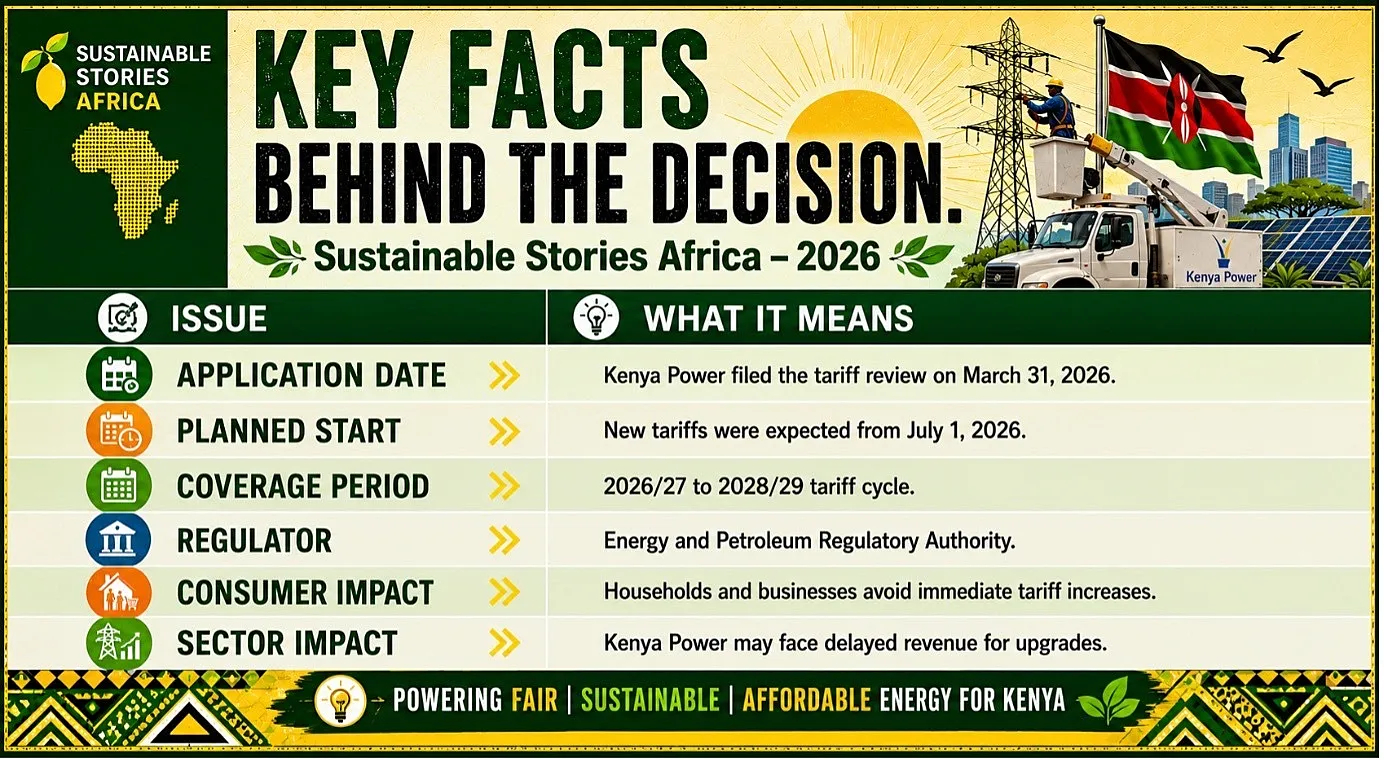
Kenya has frozen a planned electricity tariff review, withdrawing Kenya Power’s application for new retail electricity prices that were expected to guide bills from July 1, 2026, through June 2029.
The decision, directed by the Ministry of Energy and Petroleum and confirmed by the Energy and Petroleum Regulatory Authority, immediately pauses a process that had raised concern among households, manufacturers and small businesses already struggling with the high cost of living.
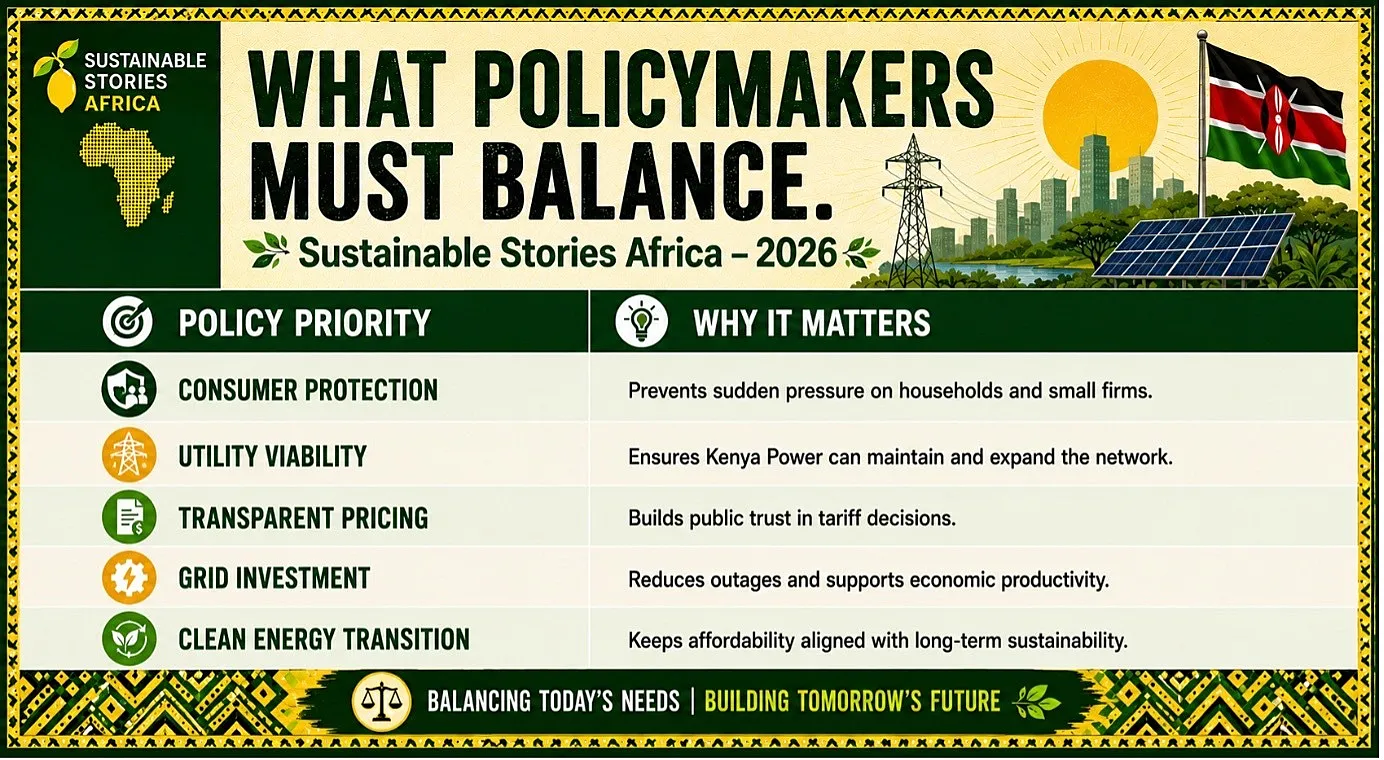
At the centre of the issue is a difficult policy trade-off: how to keep electricity affordable while ensuring that Kenya Power and other sector players have enough revenue to maintain ageing infrastructure, expand access and improve reliability.
- For a Nairobi household, the decision means electricity bills will not rise immediately under a new tariff structure.
- For a small restaurant, barber shop or welding business, it means one more cost line is not suddenly moving upward.
- For Kenya Power, however, it means expected additional revenues for network upgrades and operations may have to wait.
Why The Tariff Review Was Withdrawn
Kenya Power submitted the tariff review application on March 31, 2026, on behalf of players in the electricity sector.
The review was expected to set prices for the 2026/27 to 2028/29 period, in line with the country’s tariff cycle.
Public participation was expected before implementation, but the process was halted after the government moved to shield consumers from potential cost increases.
The timing matters. Electricity is not just another bill. It affects food storage, transport systems, digital work, school study time, factory output, hospital services and informal businesses.
When power prices rise, the effect can quickly travel through the economy.
Kenya’s energy sector has been trying to balance several pressures: system losses, network upgrades, inflation, generation costs, and the need to compensate power producers.
At the same time, consumers have become more sensitive to price increases after years of pressure from fuel, taxes, food costs and currency-linked import expenses.
Lower Bills Can Protect Livelihoods
The immediate benefit is consumer protection.
- For low-income households, energy affordability determines whether families can light homes, preserve food or support children’s evening study.
- For small businesses, power costs influence pricing, margins and survival.
- For manufacturers, electricity is a competitiveness issue.
By shelving the tariff hike, Kenya has created breathing room for consumers and businesses.
It sends a social signal that energy policy must be sensitive to household welfare, not only utility balance sheets.
But relief is not the same as reform.
If network upgrades are delayed, consumers may still pay indirectly through outages, unstable supply, higher backup-power costs and reduced productivity.
A lower bill today can become a higher economic cost tomorrow if the electricity system is underfunded.
That is the deeper tension Kenya must now manage.
Reform Must Go Beyond Freezing Prices
The government’s next challenge is to convert the tariff pause into a wider reform moment.
Kenya needs a transparent review of electricity cost drivers, including system losses, power purchase obligations, operational efficiency, debt pressures and infrastructure needs. Consumers deserve protection; however, they also deserve reliable power.
Kenya Power must also strengthen accountability around network investments.
If customers are asked to pay more in the future, they should see measurable improvements, such as fewer outages, better service response, clearer billing, expanded metering and stronger grid resilience.
Regulators should use the pause to rebuild trust through open data, accessible consultations and clear explanations of how tariffs are calculated.
Public participation should not be treated as a procedural box. It should be a real conversation about affordability, investment and energy justice.
Path Forward – Make Affordable Power Financially Sustainable
Kenya’s tariff freeze protects consumers; however, the country still needs a financially stable power sector that can deliver reliable electricity.
The next step is transparent reform: lower inefficiencies, strengthen regulation, improve billing, invest in the grid and protect vulnerable users.
Affordable power should not mean a weaker electricity system. It should mean a fairer, cleaner and more reliable one.
Culled From: Kenya shelves electricity tariff hike plan to shield consumers from rising costs - Businessfront