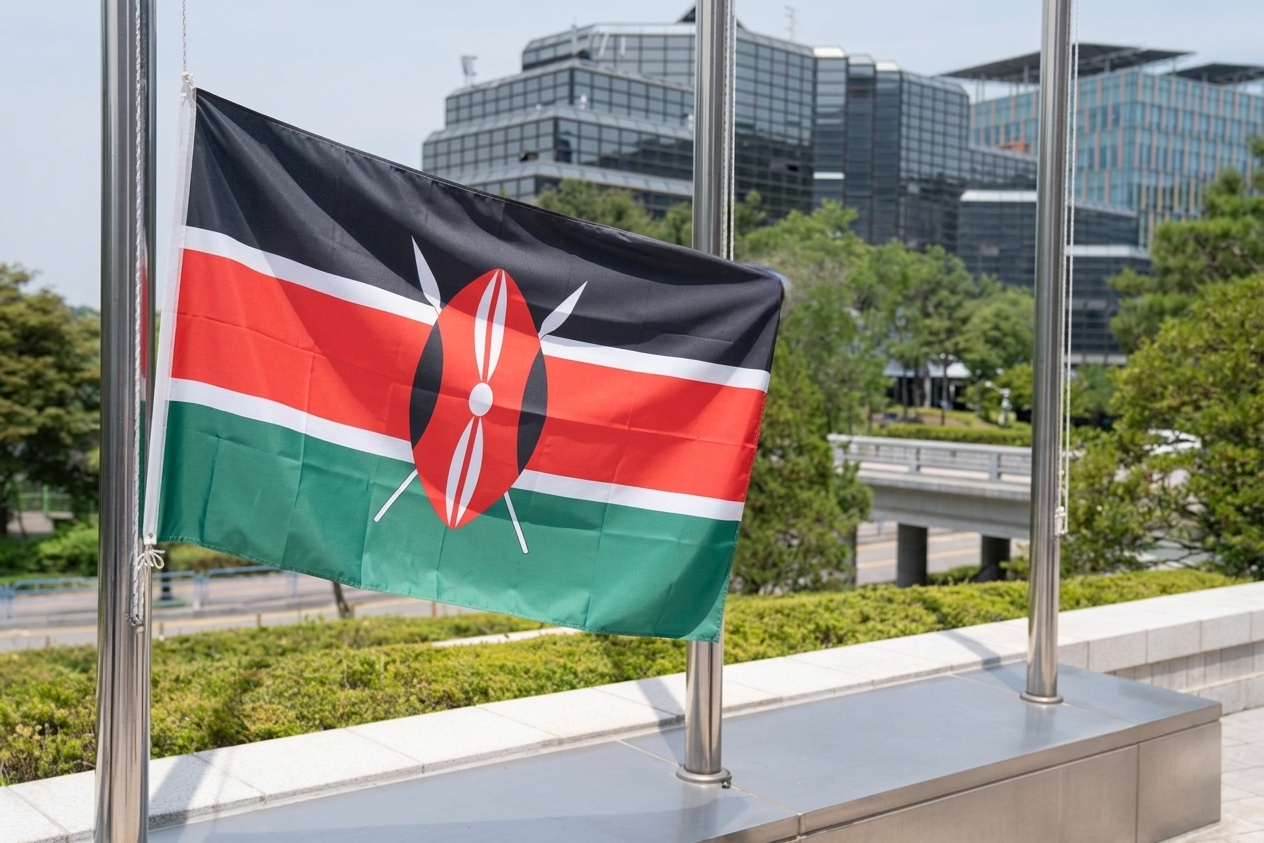
Kenya is moving closer to a critical minerals agreement with the United States that would prioritise domestic processing.
The shift comes as African countries push to capture more value from minerals needed for clean energy and advanced technologies.
For workers, communities and policymakers, the test is whether mining becomes an engine for industrialisation, rather than another extraction story.
Kenya Wants More Than Extraction
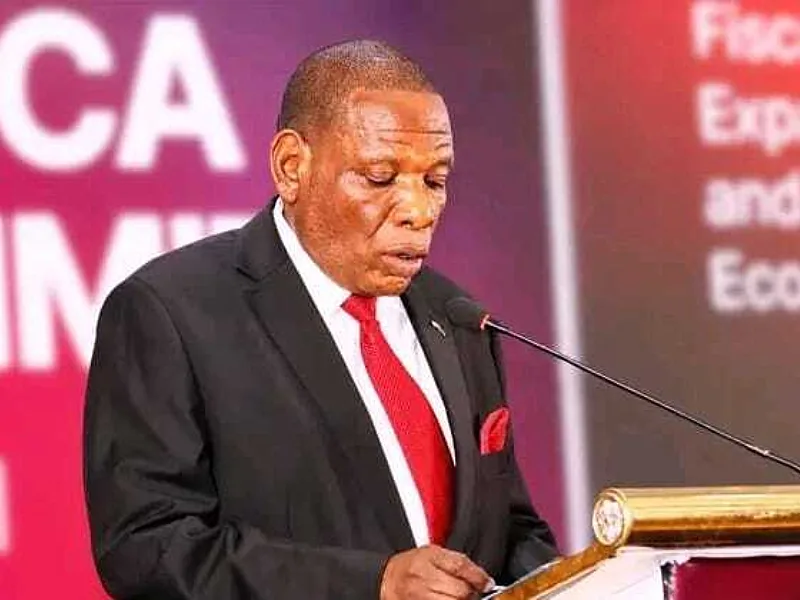
Kenya is positioning itself more firmly within Africa’s critical-minerals beneficiation movement, as President William Ruto says Nairobi is nearing a deal with the United States that would allow strategic minerals to be processed locally rather than exported unprocessed.
The proposed agreement is expected to cover rare earths and other minerals such as niobium, lithium, graphite, copper, and nickel, resources increasingly central to batteries, electric vehicles, renewable power systems and advanced manufacturing.
The significance is larger than Kenya. Across Africa, governments are questioning a decades-old model in which raw minerals leave the continent cheaply, are processed elsewhere, and return as expensive finished goods.
Value Addition Becomes Policy Direction
Kenya’s mining sector remains small compared with its broader economy, but the government sees minerals as a future growth pillar.
Officials have identified more than 970 mineral occurrences, including gold, copper, manganese, bauxite, rare earth elements and gemstones.
The country’s draft Minerals, Mining and Beneficiation Policy 2026 places local processing at the centre of reform.
It aims to support job creation, diversify the economy and capture more value within Kenya.
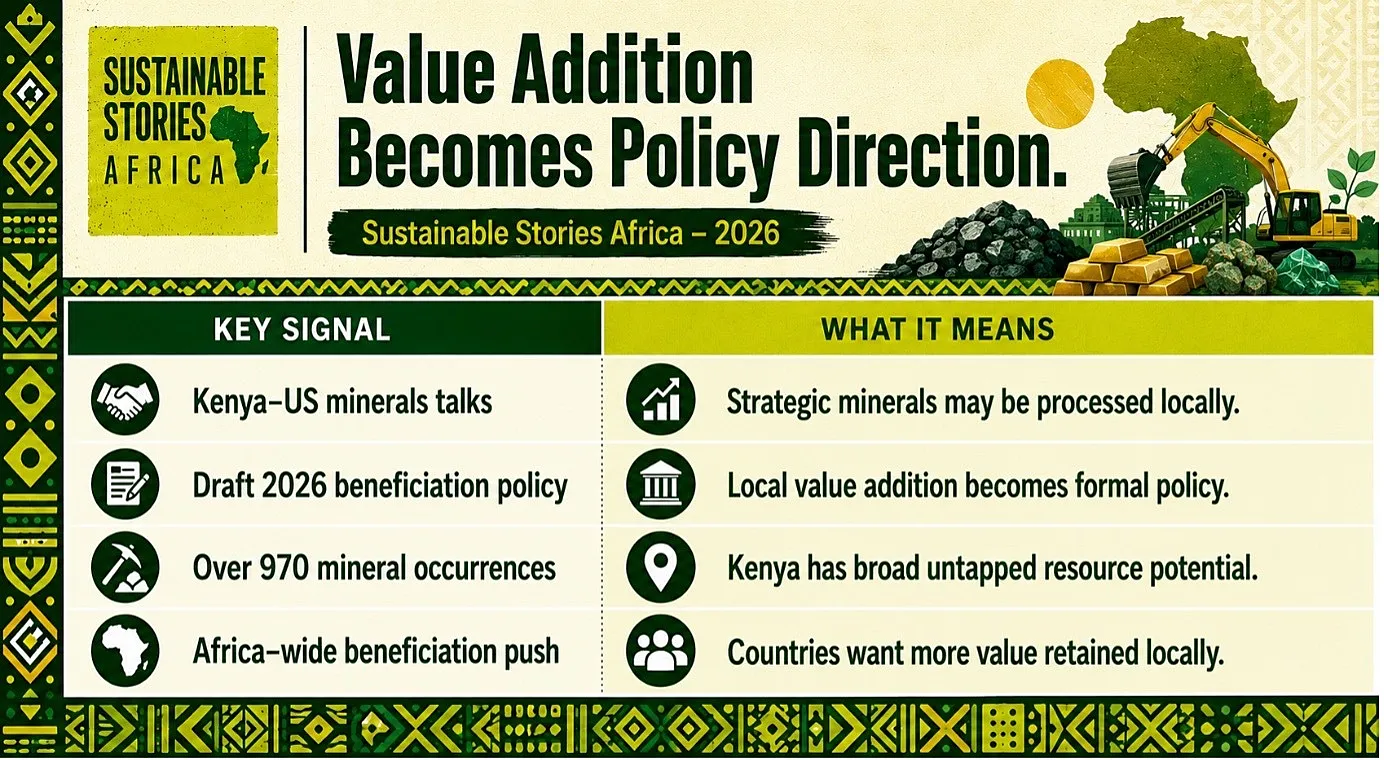
This is also a geopolitical moment. The US, China, Europe and Gulf economies are competing to secure critical minerals for the energy transition. African governments are using that demand to negotiate differently.
For Kenya, the message is clear: partnership must mean investment, jobs, processing capacity and shared value, rather than only raw-material supply.
Mining Can Become Industrial Policy
Beneficiation could change what mining means for ordinary people.
Instead of a mine producing only royalties and exported ore, processing could create demand for engineers, technicians, logistics providers, energy suppliers, environmental specialists and local manufacturers.
It could also help Kenya build regional value chains connected to batteries, electric mobility, clean power and industrial inputs.
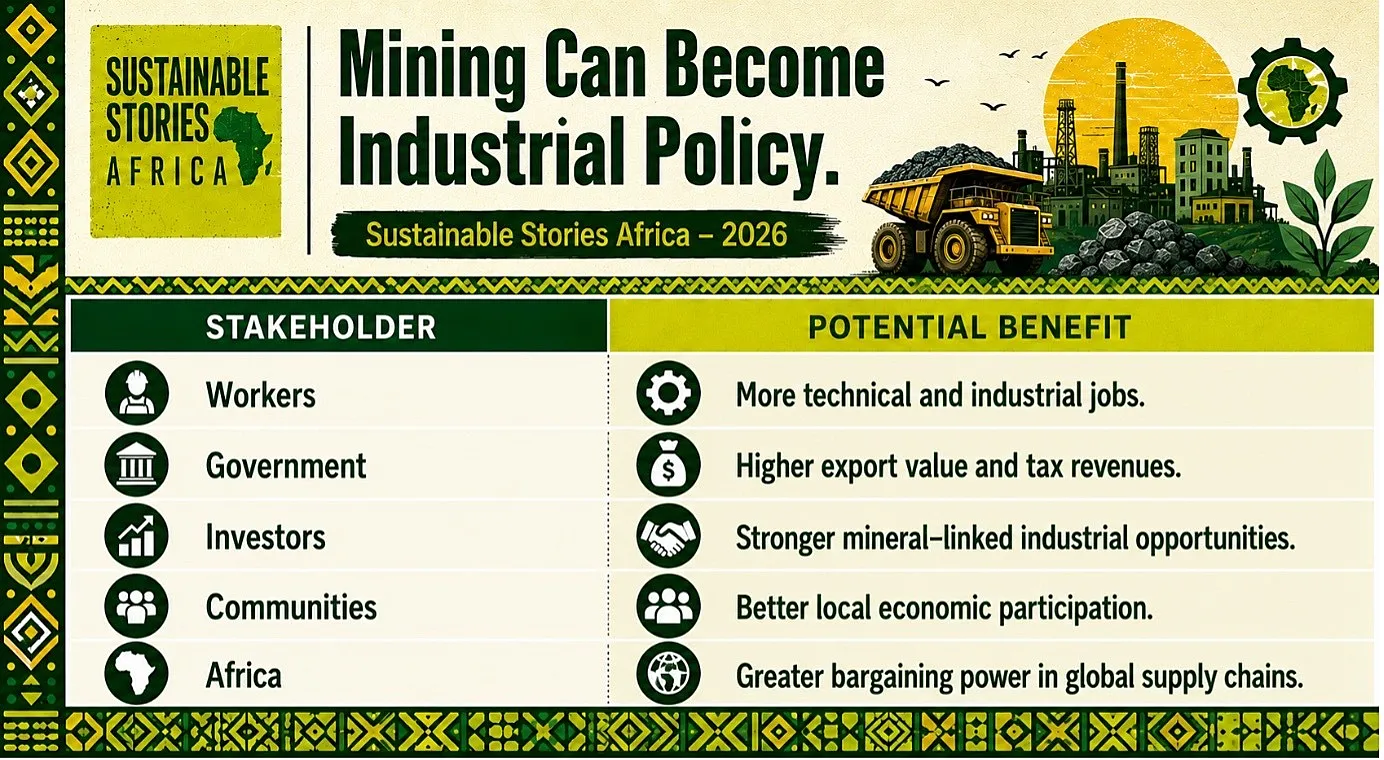
However, the opportunity carries risks. Beneficiation requires reliable power, skilled labour, transport infrastructure, environmental safeguards and credible regulation. Without these, processing ambitions can become policy slogans rather than bankable projects.
Communities also matter. Critical minerals projects can create land, water, biodiversity and cultural concerns. If local people do not see benefits, the social licence for mining will weaken.
Build The Ecosystem Around Minerals
Kenya’s next task is execution.
- The government must turn policy intent into working industrial systems: clear licensing rules, transparent contracts, reliable geological data, local-content standards, processing incentives and environmental accountability.
- Financial institutions also have a role. Beneficiation needs patient capital for infrastructure, processing plants, skills development and energy supply.
- Development finance can help reduce early-stage risk, while private capital can support commercially viable value-chain projects.
For Africa, the strategic lesson is clear: critical minerals should support industrial transformation, rather than repeat previous patterns of extraction.
Path Forward – Process Minerals, Build African Value
Kenya’s push for critical minerals reflects a broader African demand for fairer participation in global clean-energy supply chains.
The priority now is disciplined implementation: local processing, stronger governance, community protection, clean energy supply and skills development.
Well done, beneficiation can turn mineral wealth into jobs, resilience and sustainable industrial growth.
Culled From: Kenya joins Africa's drive for critical mineral beneficiation