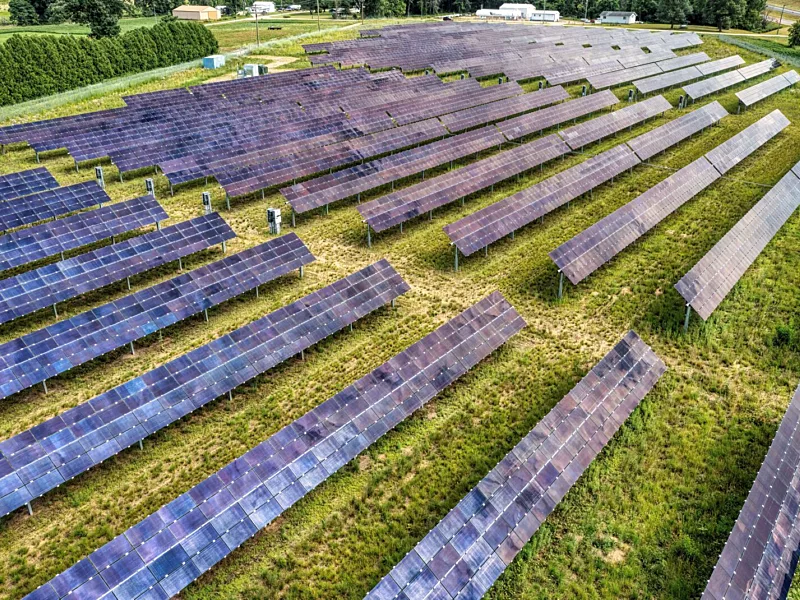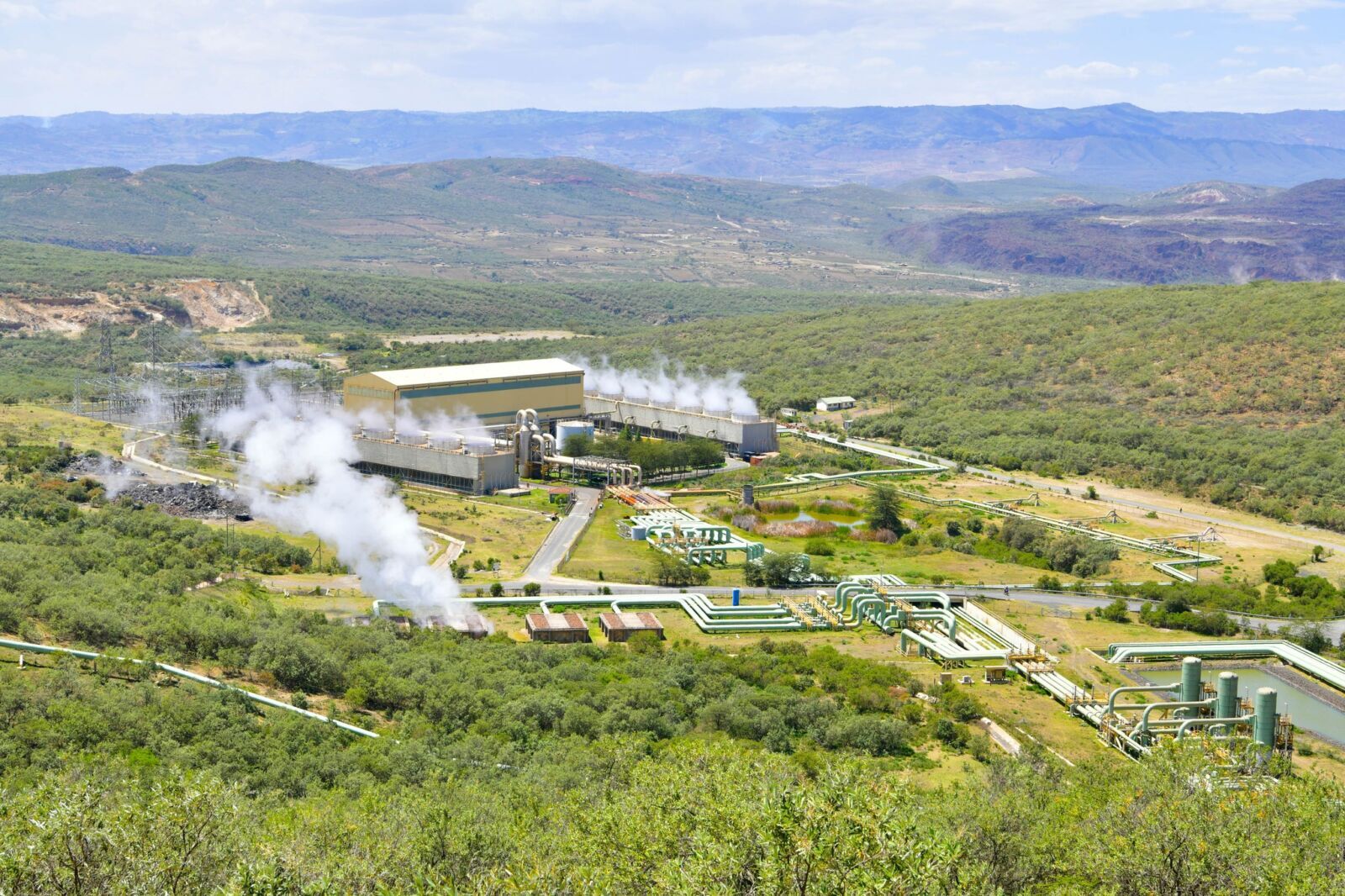
Kenya’s geothermal resources are giving the country a distinct advantage in green hydrogen development.
Unlike solar and wind, geothermal power can run almost continuously, improving electrolyser use and reducing storage pressure.
For Kenya, the prize is not only exports, but also cleaner fertiliser, industry, transport and jobs.
Kenya’s Hydrogen Edge Lies Underground
Kenya’s green hydrogen opportunity may be strongest not in its sunshine or wind corridors, but in the geothermal steam rising from the Rift Valley.
In a Q&A with Hydrogen Rising, Paul Wambugu, investment manager at KenGen, said geothermal makes Kenya structurally different from most African hydrogen markets because it can provide reliable renewable power almost around the clock.
That matters because green hydrogen production depends heavily on how consistently electrolysers can run.
For Kenya, this is a strategic opening. While many hydrogen markets rely on intermittent solar and wind, geothermal power can support steadier production, reduce storage needs and improve project economics.
The issue is urgent because African countries are trying to position themselves in a global hydrogen economy shaped by high costs, uncertain demand and stringent competition.
Kenya’s advantage is that its clean power base already supports one of Africa’s most renewable-heavy grids.
Baseload Power Changes Hydrogen Economics
Green hydrogen is produced by using renewable electricity to split water into hydrogen and oxygen. The cleaner and cheaper the electricity, the stronger the business case.
Kenya’s geothermal resources give it a rare advantage because geothermal plants can operate at high availability compared with weather-dependent renewables.
That means hydrogen facilities connected to geothermal power can run more consistently, improving utilisation and reducing the need for expensive backup systems.
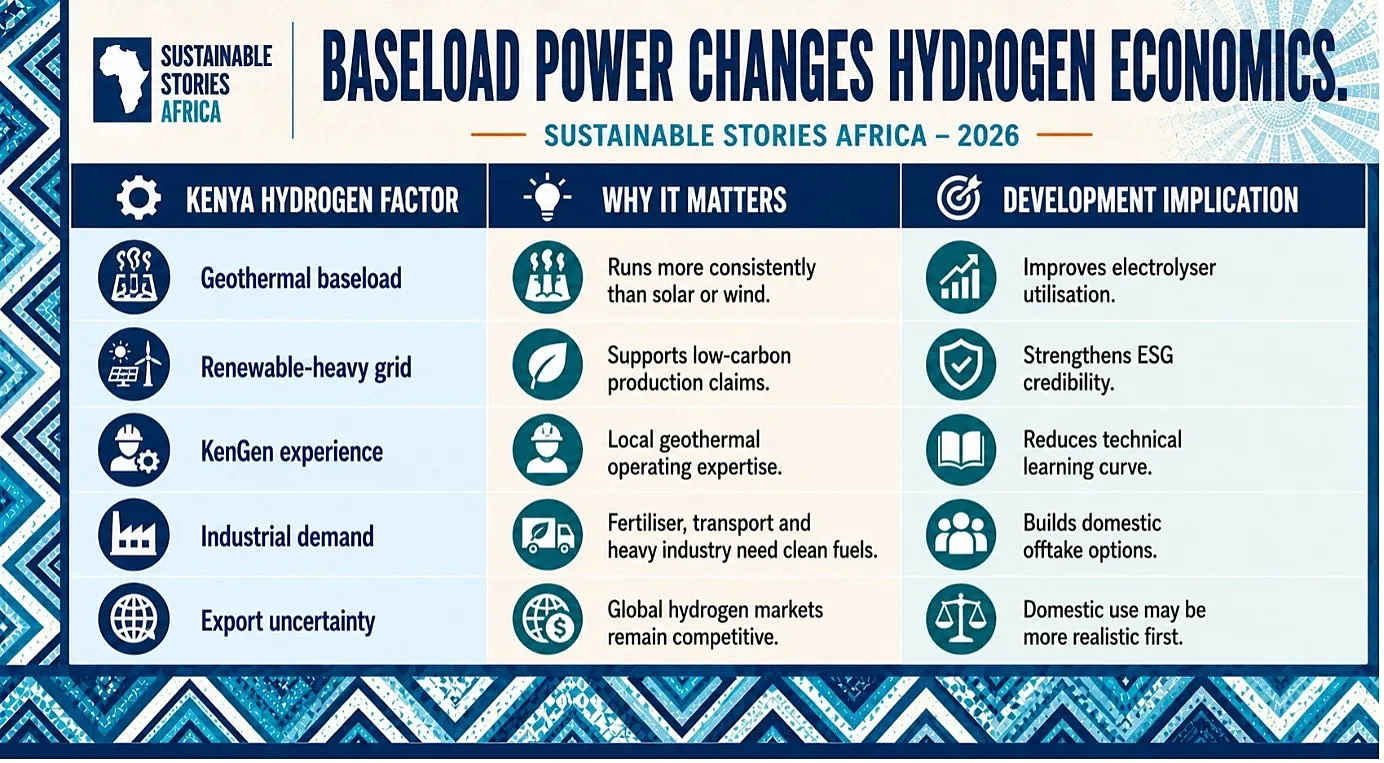
This distinction is important for African markets. Namibia, Morocco and Egypt are often discussed as export-led hydrogen players because of their solar and wind resources.
Kenya’s pitch is different: geothermal can make hydrogen production more stable, which could be valuable for domestic industrial use.
Johns Hopkins researchers recently argued that hydrogen in Kenya may be most valuable when connected to the grid and linked to economic growth, rather than treated only as an export commodity.
That aligns with a practical African development question: can hydrogen support local industry before it serves distant buyers?
Hydrogen Can Serve the Real Economy
Kenya’s hydrogen opportunity becomes most powerful when linked to everyday economic needs.
One of the clearest applications is fertiliser. Many African farmers remain exposed to imported fertiliser prices, foreign exchange challenges, and supply disruptions.
If green hydrogen supports local green production of ammonia or fertiliser, it could strengthen food security and reduce dependence on imported inputs.
Transport and heavy industry are also important. Long-haul trucks, steel, cement and high-temperature industrial processes are difficult to electrify directly.
Hydrogen could help cut emissions in these sectors while supporting new green value chains.
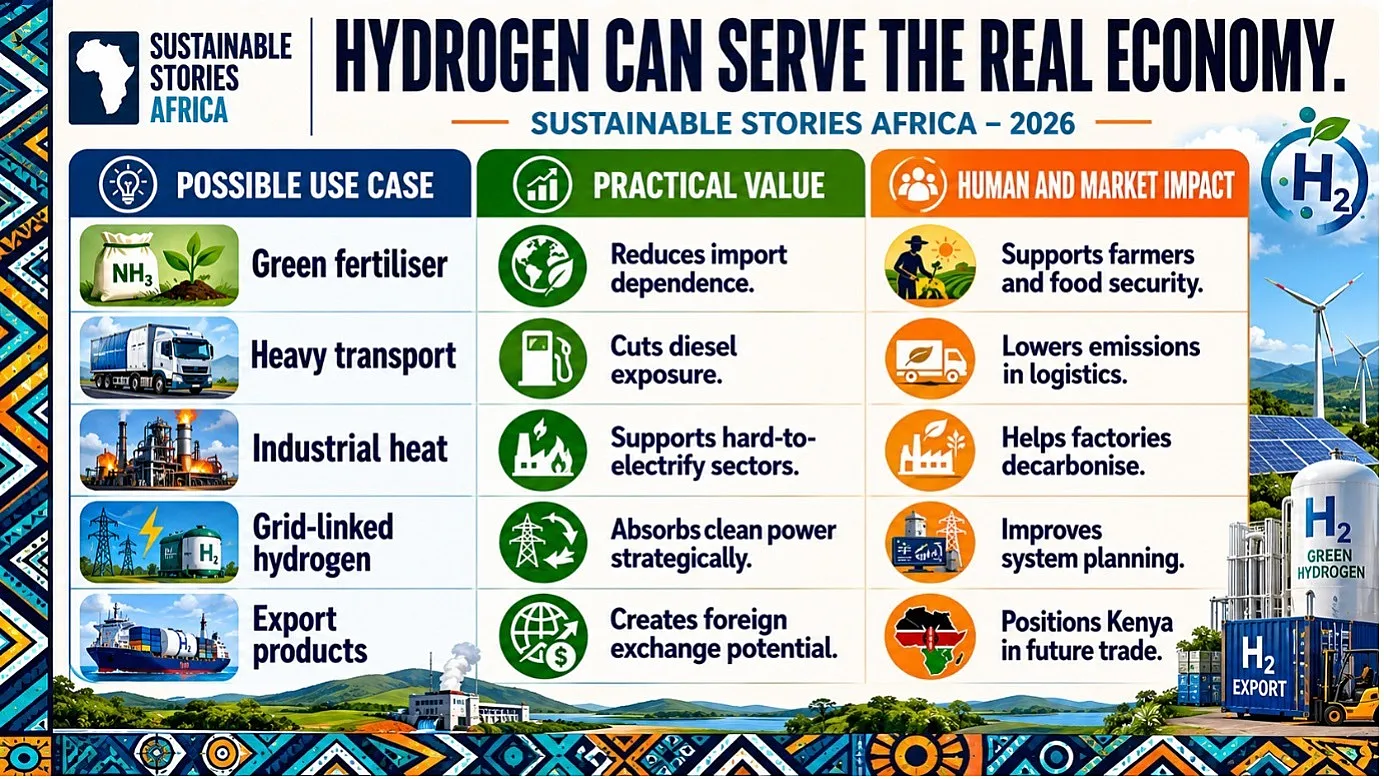
The promise is significant: cleaner production, stronger energy security, new jobs and greater industrial competitiveness.
However, the risks are real. If hydrogen projects use scarce clean electricity without expanding supply, they could raise costs for households and businesses.
That is why Kenya’s hydrogen strategy must be built around additional renewable capacity, affordable tariffs, transparent offtake and local value creation.
Turn Resource Advantage Into Strategy
Kenya now needs to turn its geothermal advantage into a bankable hydrogen policy.
That means prioritising projects with clear domestic demand, especially fertiliser, logistics and industrial applications.
It also means ensuring communities near geothermal zones benefit from jobs, infrastructure and fair engagement.
- Investors will need credible offtake agreements, stable regulation, water-use safeguards and predictable power pricing.
- Policymakers must avoid the trap of announcing large export ambitions before building the domestic foundations that make hydrogen useful.
For Africa, Kenya’s lesson is clear: green hydrogen should not be treated as a prestige project. It should solve real economic problems, such as energy security, fertiliser access, industrial emissions and jobs.
Path Forward – Build Hydrogen Around Local Demand
Kenya should anchor green hydrogen in geothermal power, domestic industry and food-system resilience.
Fertiliser, transport and industrial heat offer practical early markets.
The next step is disciplined execution: expand renewable supply, protect affordability, secure offtake and ensure community benefits.
If done well, geothermal hydrogen can advance Kenya’s ESG goals while building a more competitive green economy.
Culled From: Q&A: Geothermal gives Kenya a unique green hydrogen advantage