Kristina Wyatt is urging companies to treat climate and nature as connected business risks, not separate sustainability themes.
Her message comes as extreme weather, biodiversity loss and ecosystem stress reshape supply chains, infrastructure costs and investor expectations.
For African markets, the lesson is practical: resilience is no longer a matter of philanthropy.
It is risk management, competitiveness and long-term economic protection.
Nature Becomes A Balance-Sheet Issue
For years, companies treated climate as a carbon problem and nature as a conservation concern.
Kristina Wyatt is challenging that split, arguing that the future of business resilience depends on seeing forests, wetlands, rivers, soils and coastlines as operating systems that protect markets, people and assets.
Wyatt, now Executive Vice President and General Counsel at The Conservation Fund, has become one of the clearest voices connecting climate disclosure, natural capital and corporate strategy.
Her recent argument is direct: nature is not scenery. It is infrastructure.
That framing matters for African markets, where businesses face a sharper version of the global resilience test.
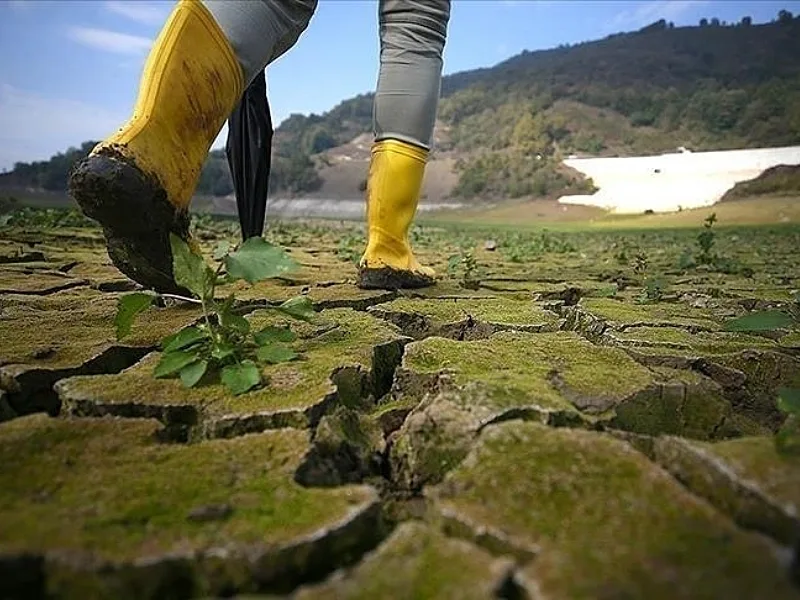
Flooded roads disrupt food distribution. Drought weakens agriculture. Coastal erosion threatens housing and ports. Power systems, cities and farms are increasingly exposed to climate shocks that do not wait for annual ESG reports.
The central business case is simple: when ecosystems fail, companies pay. They pay through supply disruptions, insurance losses, asset damage, water scarcity, worker health pressures and higher capital costs.
When ecosystems are protected, they reduce risk before it appears on a balance sheet.
Climate And Nature Risks Converge
Sustainability is no longer confined to communications departments. It is moving into finance, law, operations and board governance, and the careers of practitioners like Katie Wyatt of The Conservation Fund illustrate why.
With senior roles at Persefoni and the U.S. Securities and Exchange Commission behind her, Wyatt brings regulatory and market credibility to a critical argument: climate, nature and disclosure are converging, not competing.
For African businesses, the stakes are immediate.
- Food companies depend on stable rainfall.
- Banks financing real estate must assess flood exposure.
- Telecoms operators need resilient power infrastructure.
- Governments planning energy corridors must weigh development against natural buffers.
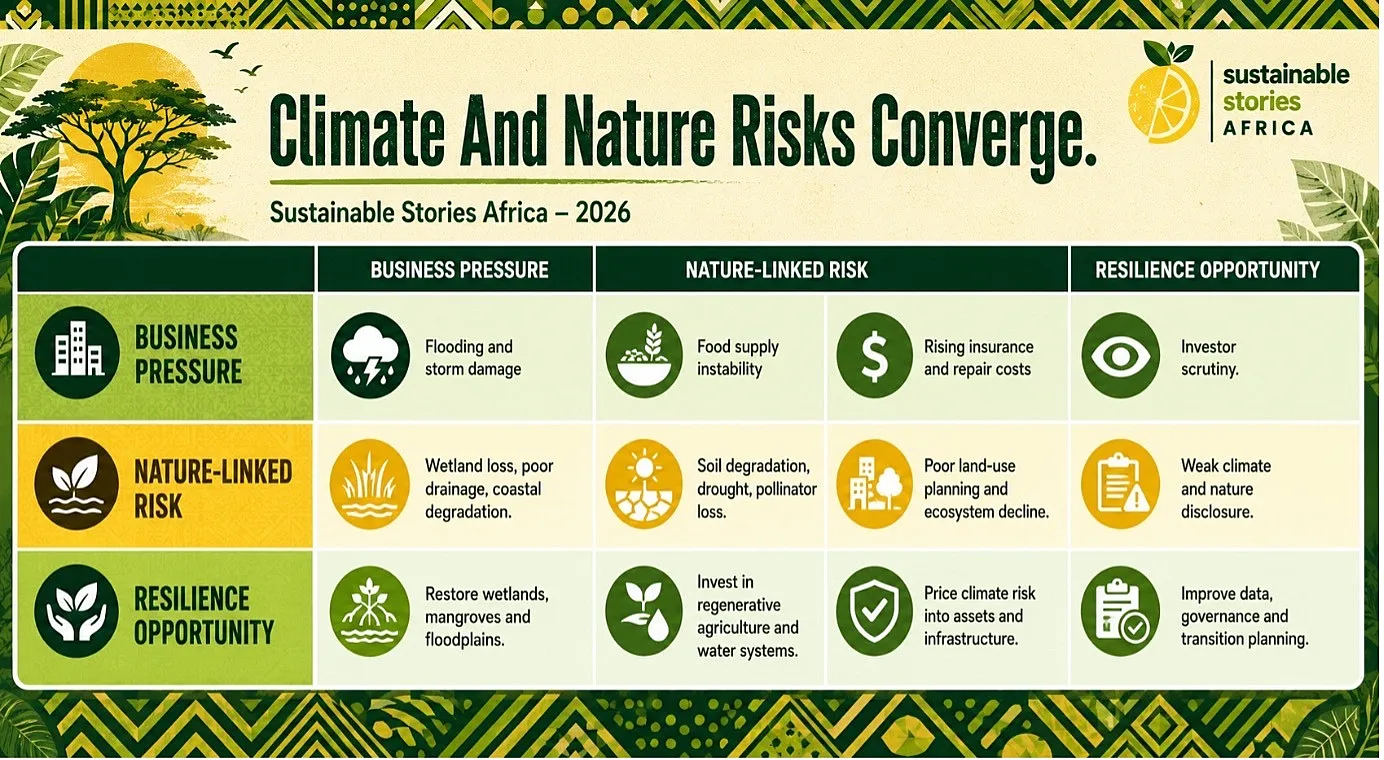
The core insight is precise: nature does not replace built infrastructure; it reduces demand on it.
- Mangroves absorb storm energy.
- Urban trees lower cooling loads.
- Healthy watersheds improve water reliability and cut treatment costs.
Nature, properly valued, is an asset on the balance sheet.
Resilience Creates Market Advantage
The positive case is as important as the warning.
Companies that understand nature early can protect supply chains, reduce disruption, strengthen community trust and improve access to sustainability-linked capital.
In Africa.
- That could mean agribusinesses financing soil restoration across supplier networks.
- It could mean banks screening flood risk before lending to housing projects.
- It could mean insurers rewarding climate-smart land management.
- It could mean governments treating mangroves, wetlands and urban green corridors as public infrastructure, rather than leftover land.
The gains are practical. Better land-use decisions reduce future losses. Stronger ecosystem protection supports agriculture, fisheries, tourism and public health.
Improved climate and nature data help companies explain risk to investors with more credibility.
There is also a competitiveness angle. As global supply chains tighten sustainability expectations, African exporters will increasingly need to demonstrate not only lower emissions, but also stronger resilience, traceability and nature-sensitive production. Companies that move early may find that resilience becomes a market access tool.
Businesses Must Invest Before Losses
The call to action is clear: companies need to move from awareness to integration. Climate and nature risk should sit inside enterprise risk management, capital allocation, procurement, legal review and infrastructure planning.
That means boards asking harder questions.
- Where are our assets exposed to floods, heat or water stress?
- Which suppliers depend on fragile ecosystems?
- What natural buffers protect our operations?
- Are we investing in resilience before losses arrive?
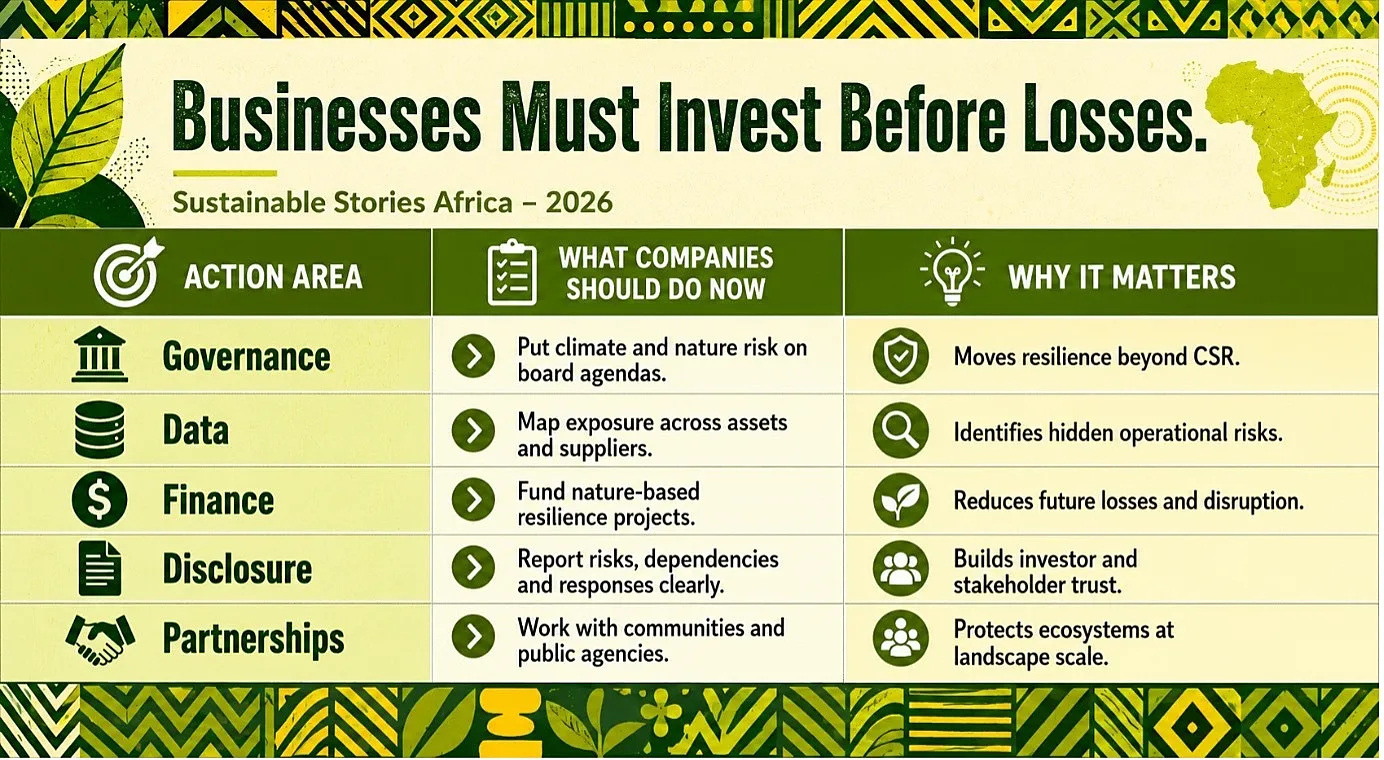
- For policymakers, the lesson is equally urgent. Planning rules, infrastructure approvals, agricultural policy and climate finance should reward projects that protect natural systems.
- For financiers, resilience should be priced into lending, insurance and investment decisions.
The business case for nature is no longer abstract. It is showing up in damaged roads, failed harvests, heat-stressed workers, expensive repairs and fragile supply chains.
Wyatt’s argument gives companies a sharper language for what many communities already know: when nature breaks down, economies feel it first through everyday life.
Path Forward – Build Resilience Before Risks Compound
The path forward is to treat nature as essential economic infrastructure. African markets need climate-smart planning, better disclosure, resilient supply chains and finance that values ecosystems before they are lost.
For businesses, the promise is stronger continuity, lower exposure and more credible ESG performance.
For communities, it means safer livelihoods, healthier landscapes and development that protects the systems people already depend on.
Culled From: Kristina Wyatt on Climate, Nature and the Business Case for Resilience