Lagos plans to commission the first phase of its Central Food Security Systems and Logistics Hub this year.
The state has also activated a ₦500 billion offtake fund to support farmers, traders and logistics operators.
The goal is simple: reduce waste, enable steadier prices and make food supply more reliable.
Lagos Moves To Fix Food Bottlenecks
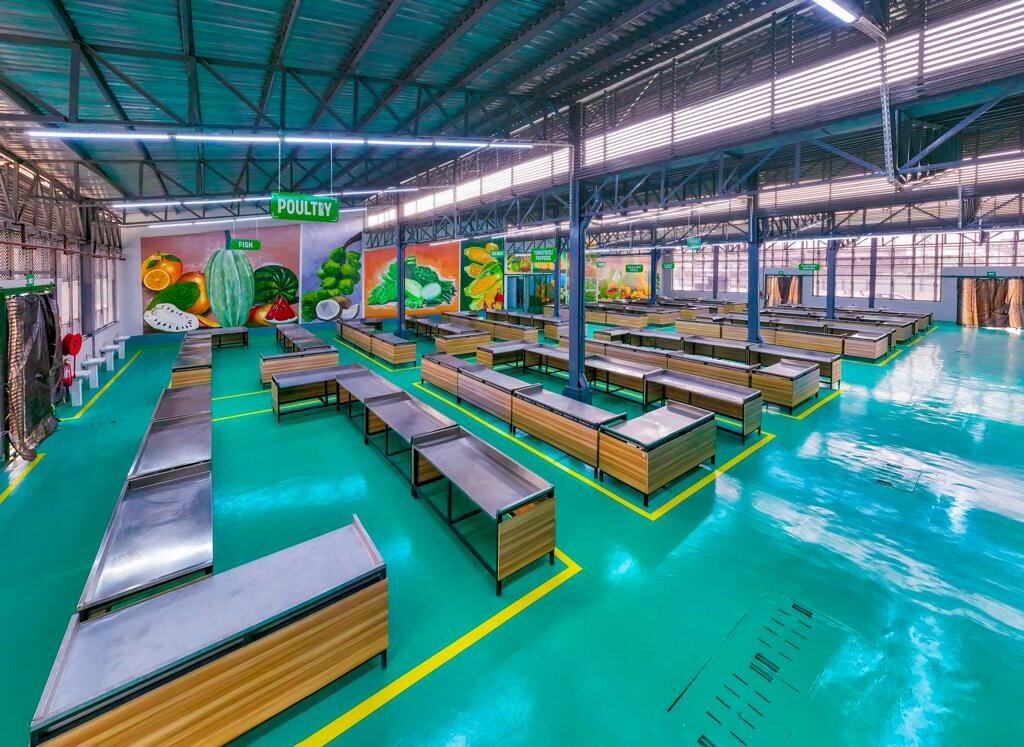
Lagos State says it will commission the first phase of what it describes as Sub-Saharan Africa’s largest food logistics hub this year, while activating a N500 billion Offtake Guarantee Fund to strengthen food security and stabilise prices in Nigeria’s largest consumer market.
The Lagos Central Food Security Systems and Logistics Hub is located in Epe and is designed as a modern platform for storage, aggregation, repackaging, processing and distribution.
Its wider purpose is to reduce the losses, delays and price shocks that shape daily food access for millions of Lagos residents.
Why The Hub Matters Now
Lagos is Nigeria’s biggest food market, but much of what it eats comes from outside the state.
That makes the city vulnerable to high transport costs, limited storage capacity, fragmented markets, and supply disruptions. Lagos officials say those weaknesses continue to affect food availability and prices.
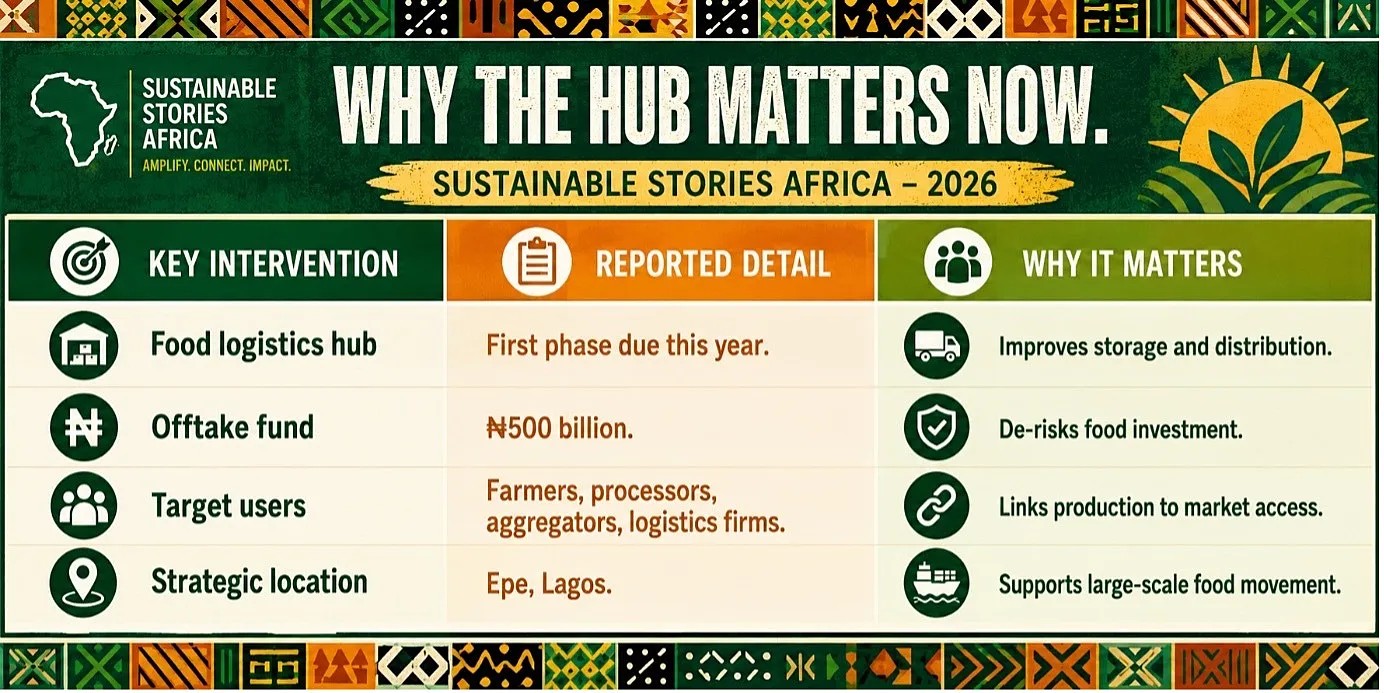
The fund is designed to provide guaranteed market access for farmers, producers, processors, aggregators, logistics operators, financiers and investors.
That matters because uncertainty about who will buy produce, at what price, and through which channel often discourages production and investment.
What A Better Food System Unlocks
For a tomato trader in Mile 12, a rice processor in the North, or a mother pricing food in Ikorodu, logistics is not an abstract policy word.
It decides whether food arrives fresh, whether prices jump overnight, and whether small businesses can plan.
If the hub works, Lagos could reduce post-harvest losses, improve cold-chain access, shorten distribution delays and create a more predictable route between producers and consumers.
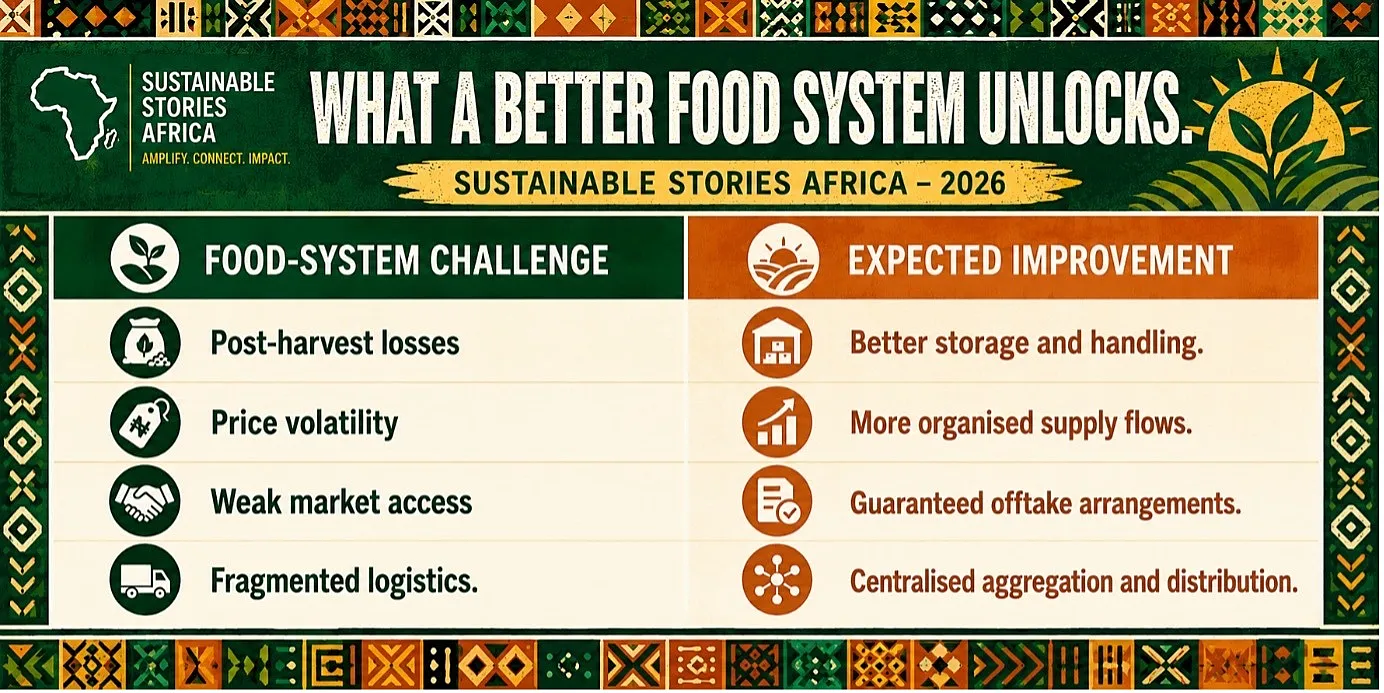
The project also signals a broader shift: food security is no longer only about farming.
It is about infrastructure, finance, transport, data, storage and market coordination.
Delivery Must Reach Households
The real test will be execution. Lagos must ensure the hub does not become another elite infrastructure project disconnected from market women, informal traders, smallholder farmers and low-income households.
The N500 billion fund must be transparent, accessible and tied to measurable outcomes: lower losses, improved farmer incomes, improved supply stability and reduced price pressure.
Without strong governance, the programme risks helping larger players while leaving smaller operators behind.
For policymakers, financiers and agribusinesses, the message is clear. Food security requires investment across the chain, from farms and roads to cold rooms, warehouses, markets and consumer access.
Path Forward – Build Food Systems That Work
Lagos should prioritise transparent fund management, smallholder access, trader inclusion and measurable price stability outcomes.
If delivered well, the hub and offtake fund can turn Lagos’ food demand into a stronger national supply system, supporting farmers, reducing waste and making food security a practical ESG priority.
Culled From: Lagos to unveil Africa’s largest food logistics hub, activates ₦500bn food security fund - The Nation Newspaper