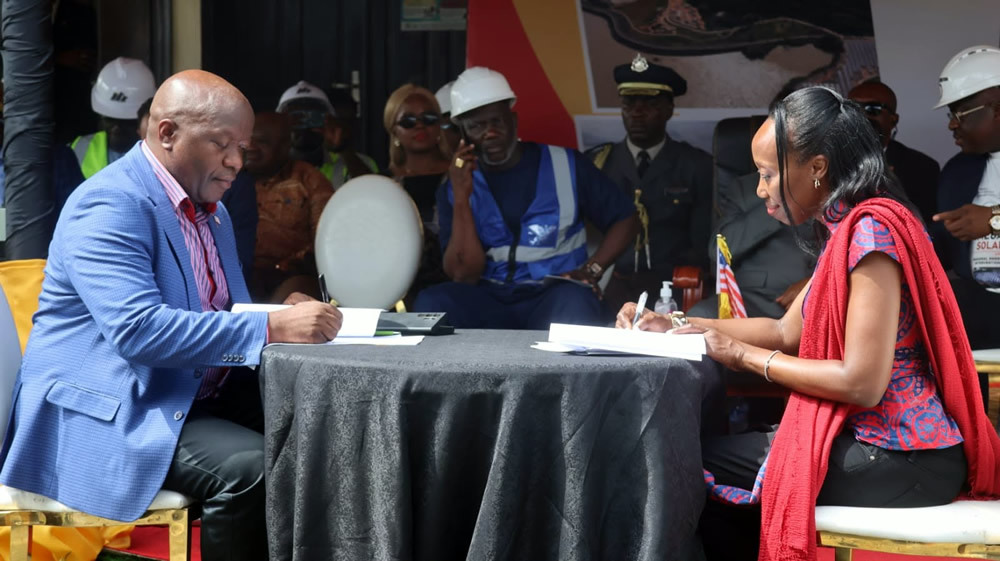
Liberia and the World Bank have signed three financing agreements worth US$125 million.
The package targets renewable energy, broadband connectivity and road infrastructure, three pressure points in Liberia’s development agenda.
For households, firms and rural communities, the deal could mean more reliable power, better digital access and lower transport barriers.
Liberia Bets on Three Growth Foundations
Liberia has signed $125 million in financing agreements with the World Bank to expand renewable energy, digital connectivity and road infrastructure, placing three core development bottlenecks at the centre of its growth strategy.
The agreements, signed in Harrisburg, Montserrado County, cover the Western Africa Regional Digital Integration Program, the Regional Emergency Solar Power Intervention Project, and the Southeastern Corridor Road Asset Management Project.
President Joseph Boakai oversaw the signing shortly after the switching-on of the newly completed 20-megawatt solar photovoltaic plant at the Mount Coffee Hydropower Complex, a symbolic moment for a country trying to turn infrastructure investment into jobs, trade and better living standards.
Energy, Roads and Broadband Move Together
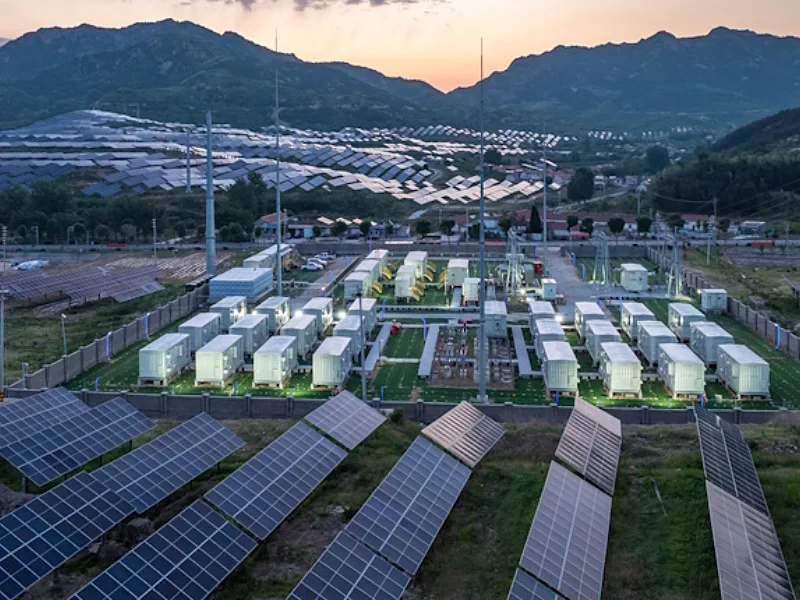
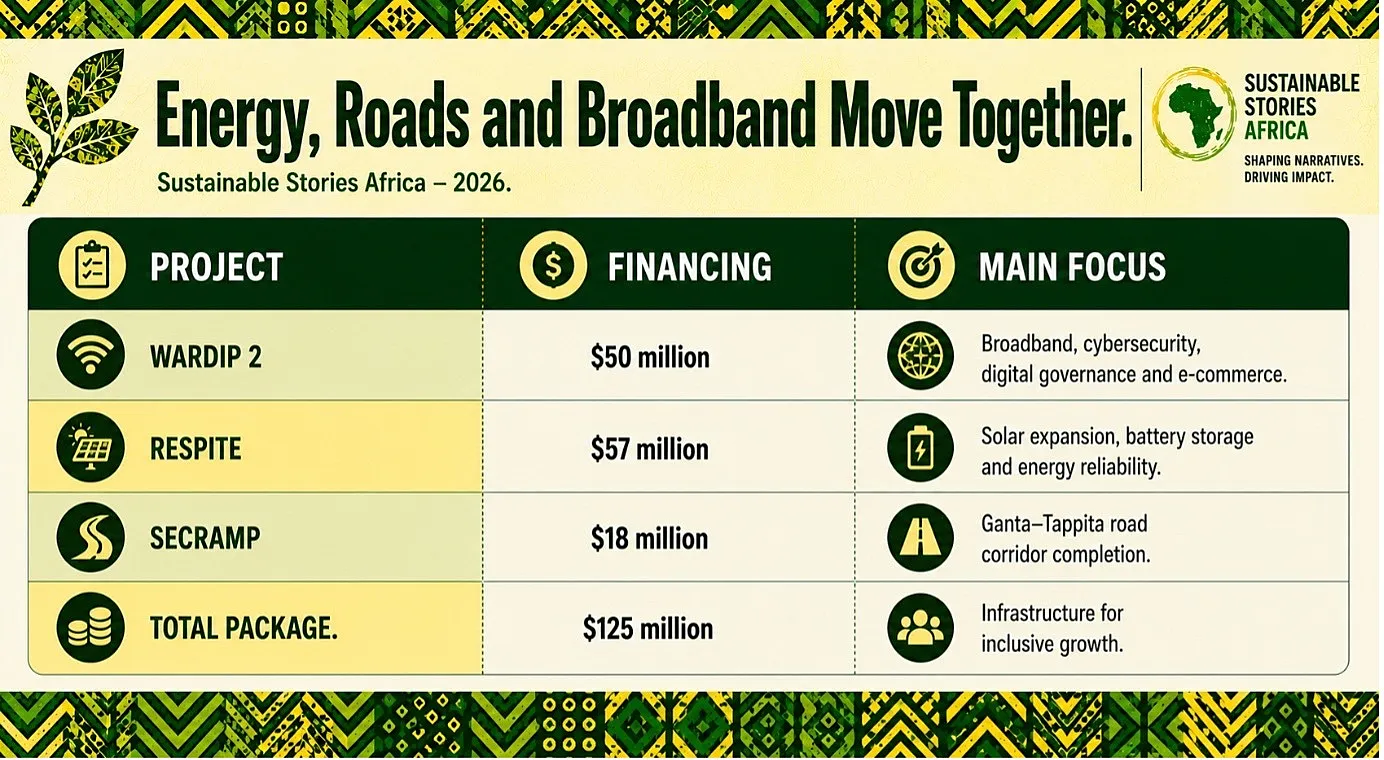
The largest share of the package, $57 million, will support renewable energy through the RESPITE additional financing.
The money will help expand the Mount Coffee Solar Park from 20MWp to 30MWp, deploy battery energy storage systems, and improve the national energy network.
Another $50 million will go to WARDIP 2, supporting broadband access, cybersecurity, digital governance, digital entrepreneurship, e-commerce and digital payments.
The remaining $18 million will support the 100-kilometre Ganta–Tappita corridor under SECRAMP.
For many Liberians, these are not abstract development terms.
- Electricity affects whether a small business can keep operating after sunset.
- Broadband determines whether students can learn online, traders can use digital payments, and entrepreneurs can reach wider markets.
- Roads shape the price of food, the speed of trade and access to clinics and schools.
Finance and Development Planning Minister Augustine Kpehe Ngafuan described energy, roads and digital connectivity as foundations for economic development, linking the package to Liberia’s ARREST Agenda for Inclusive Development.
Infrastructure Can Make Growth More Inclusive
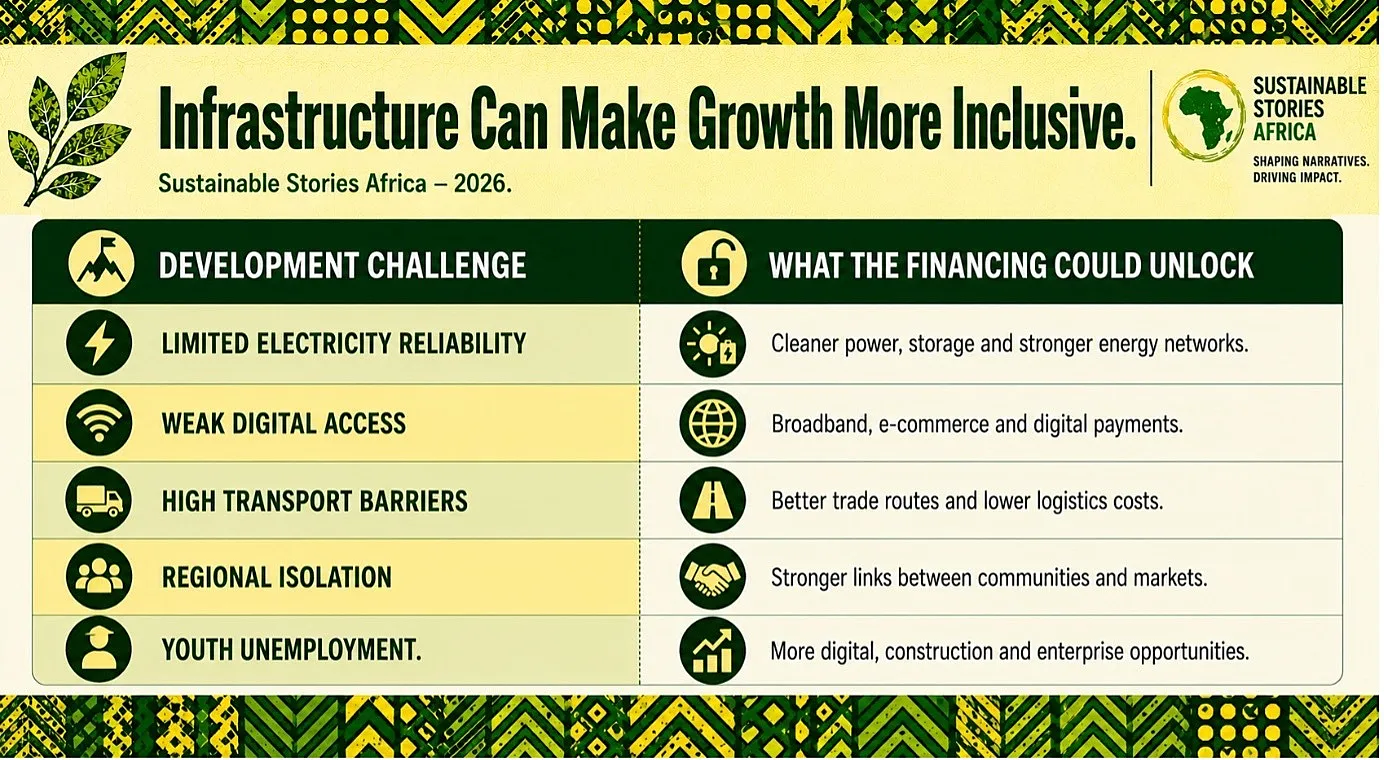
If delivered well, the package can help Liberia move from fragmented infrastructure to connected development.
- Solar power backed by battery storage can reduce reliability gaps.
- Broadband can pull more citizens into the digital economy.
- Better roads can lower transport costs and connect southeastern communities to markets and services.
The human impact is clear.
- A farmer moving produce through poor roads loses time and income.
- A clinic without reliable electricity struggles with service delivery.
- A young entrepreneur without broadband remains cut off from digital commerce.
Infrastructure is not just concrete, cables and panels; it is the system that determines who can participate in growth.
Delivery Must Now Match the Ambition
The financing is a strong signal, but implementation will determine impact.
- Liberia must now ensure transparent procurement, strong project supervision, local job creation and measurable outcomes across energy access, road completion and digital inclusion.
The World Bank partnership gives Liberia financing capacity.
- The government’s task is to convert that capital into visible improvements: fewer outages, better internet access, safer road movement and stronger economic opportunity.
For African markets, the lesson is broader.
- Development finance works best when it connects sectors instead of treating them separately.
- Energy powers digital systems.
- Roads move goods and workers.
- Connectivity expands markets.
Together, they can shift national productivity.
Path Forward – Connect Infrastructure To Inclusive Growth
Liberia’s next test is execution. The country must turn financing agreements into reliable power, working roads, digital access and stronger public trust.
For Africa, the message is clear: infrastructure is climate policy, jobs policy and inclusion policy.
When energy, connectivity and transport move together, development becomes more practical, visible and investable.