Africa's infrastructure financing landscape is undergoing a significant shift as governments, development finance institutions and investors increasingly back large-scale projects using local currencies.
The move aims to reduce exchange-rate risks that have long undermined project viability and increased debt burdens across emerging markets.
For businesses, communities and governments, the change could unlock more sustainable investment, stronger local capital markets and greater economic resilience.
A New Era for Project Finance
For decades, one of Africa's biggest infrastructure challenges was not the lack of projects. It was the currency mismatch behind them.
Roads, power plants, railways, water systems and industrial zones were often financed in dollars or euros while revenues were earned in local currencies.
When exchange rates weakened, project costs surged, debt repayments ballooned, and governments faced mounting fiscal pressure.
That reality is beginning to change.
Across Africa and other emerging markets, development finance institutions, commercial lenders, and institutional investors are increasingly embracing local currency financing for major infrastructure projects.
The shift reflects growing recognition that sustainable development requires financing structures aligned with local economic realities.
The emerging model allows projects to raise capital and repay obligations in the same currency in which they generate revenue, reducing exposure to foreign exchange volatility while strengthening domestic financial markets.
For countries seeking to close infrastructure gaps estimated in the tens of billions of dollars annually, the implications could be transformative.
Why the Financing Model Matters
The challenge of currency risk has repeatedly undermined otherwise viable projects.
When a power project earns revenue in naira, shillings or cedis but owes debt in dollars, any depreciation of the local currency can dramatically increase repayment costs. Governments and utilities often absorb these shocks, creating pressure on public finances and increasing investor uncertainty.
Local currency financing seeks to break that cycle.
By mobilising domestic pension funds, insurance assets, sovereign wealth funds and local capital markets, countries can create financing ecosystems that match local investment needs with local savings.
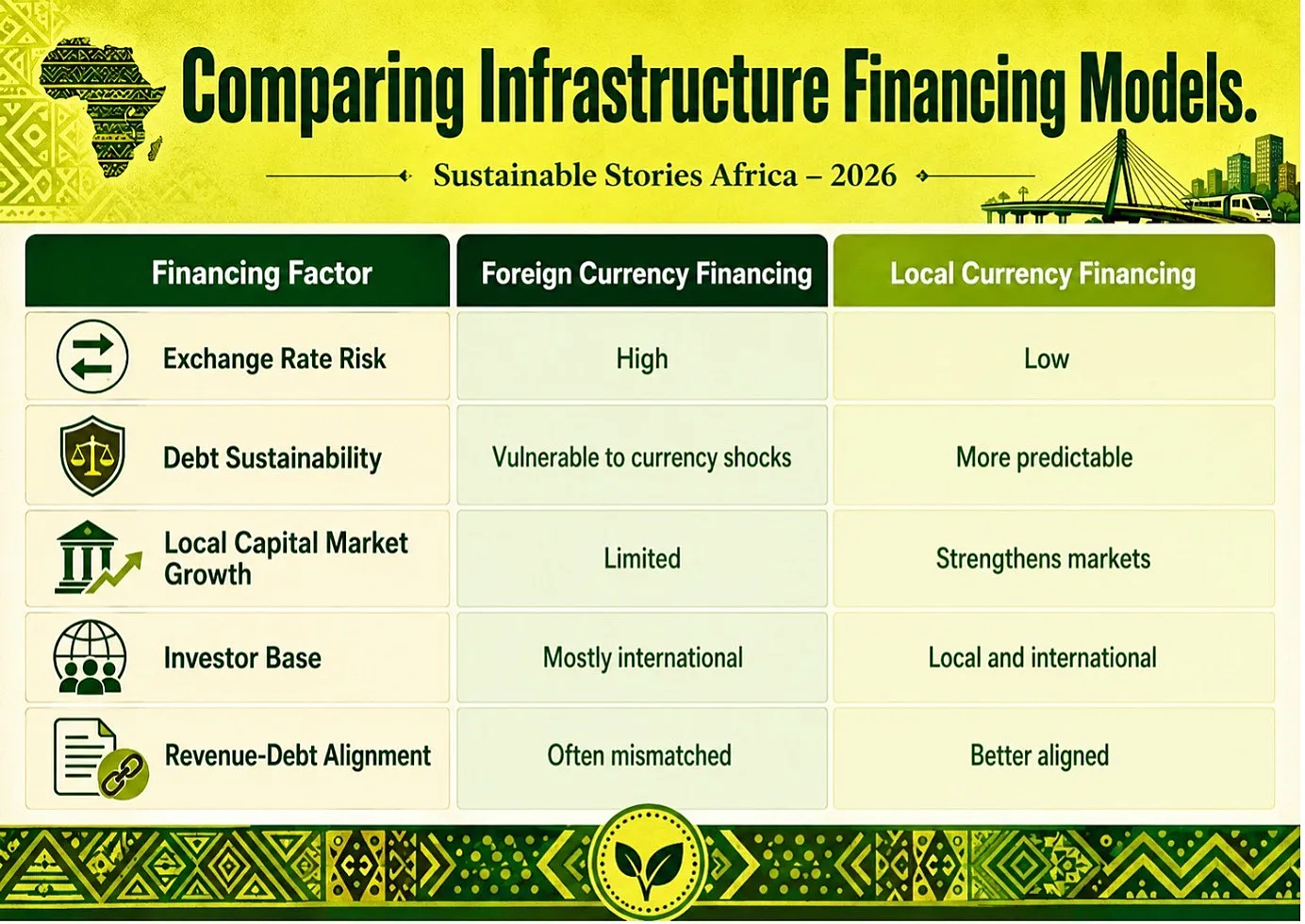
Several African countries have already demonstrated what is possible. Domestic bond markets are increasingly supporting energy, transport and housing projects, while blended-finance structures are helping attract institutional investors previously hesitant to participate.
The shift is also attracting attention from global development partners who recognise that infrastructure resilience is not only about physical assets but also about financial sustainability.
For communities waiting for reliable electricity, better roads or improved water systems, financing structures may seem distant. However, they often determine whether projects succeed, stall or become unaffordable.
Unlocking Long-Term Development Benefits
The promise of local currency financing extends far beyond reducing exchange-rate risk.
A stronger local financing ecosystem can deepen capital markets, encourage long-term savings mobilisation and create investment opportunities for domestic institutions.
Pension funds, for example, can invest in assets that support national development while generating stable returns for future retirees.
The approach can also improve project affordability.
When currency-related costs decline, governments and developers can allocate more resources toward construction, maintenance and service delivery.
This improves the likelihood that infrastructure investments generate lasting social and economic benefits.
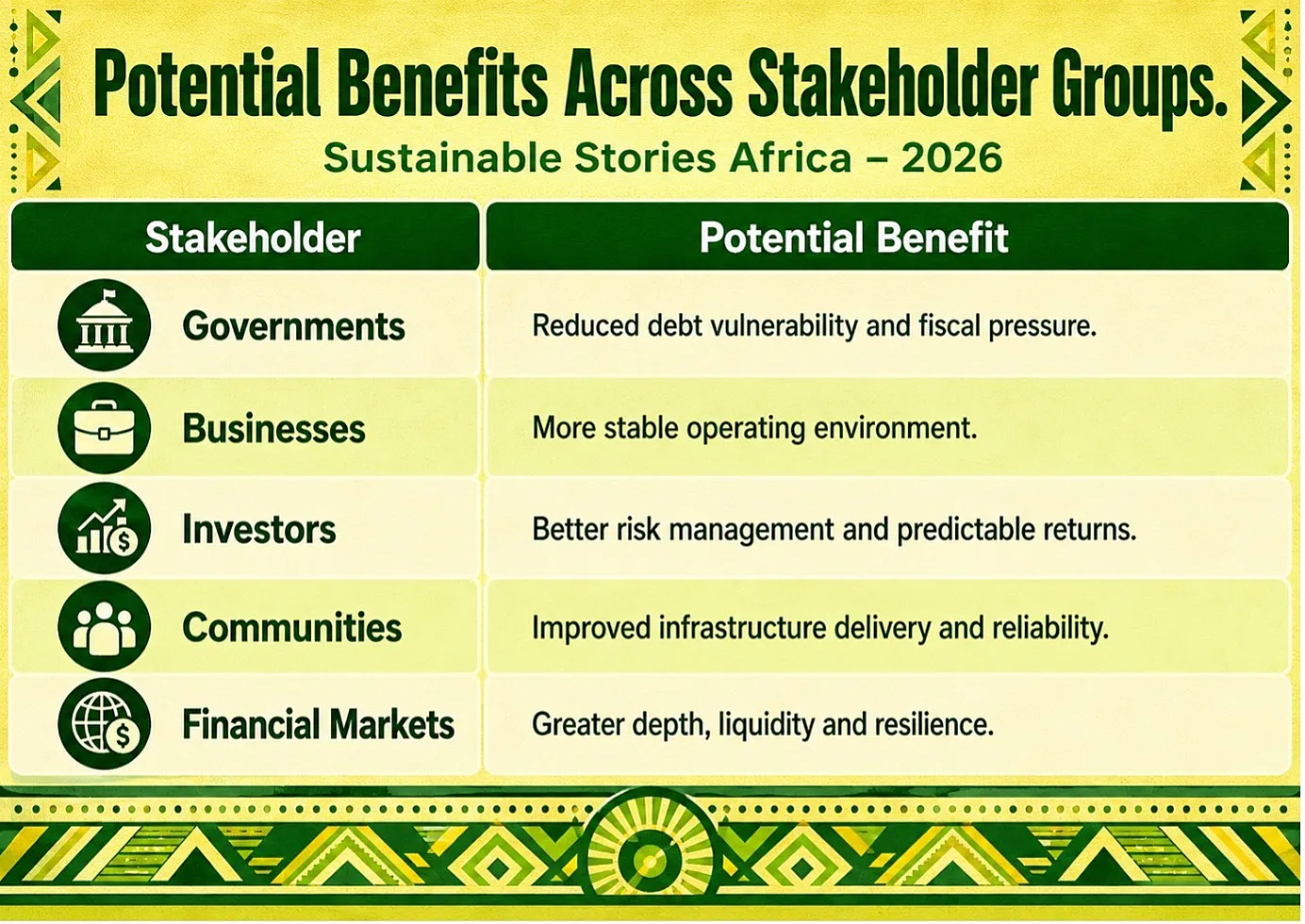
The broader development impact could be substantial. More resilient infrastructure financing can support energy access, industrialisation, digital connectivity and regional integration, critical foundations for sustainable economic growth across Africa.
Building the Ecosystem for Scale
The opportunity is significant, but success is not automatic.
Scaling local currency financing requires deeper domestic capital markets, stronger regulatory frameworks and improved project preparation.
- Governments must create predictable policy environments that encourage long-term investment while maintaining macroeconomic stability.
- Development finance institutions also have an important role to play.
- Credit enhancement mechanisms, guarantees and blended-finance structures can help attract private capital and reduce perceived risks.
- Institutional investors, meanwhile, must continue expanding their participation in infrastructure assets that deliver both financial returns and developmental impact.
The objective is not to eliminate international capital. Rather, it is to create financing systems in which local and global capital work together to strengthen economic resilience, not increase vulnerability.
Path Forward – Building Resilient Capital For Growth
Africa's next generation of infrastructure projects will require financing models that reflect local realities.
Expanding local-currency financing can reduce risk, improve project sustainability and unlock domestic investment at scale.
Success will depend on stronger capital markets, supportive regulation and partnerships that connect long-term savings with long-term development.
If achieved, local currency financing could become one of the continent's most important tools for sustainable growth and economic resilience.
Culled From: Local currency financing for big projects is here