A London court has upheld restrictions that block South Sudan from entering new oil prepayment deals.
The ruling matters because Juba relies heavily on crude exports and has used future cargoes as a cash bridge.
For citizens, the risk is not legal language. It is delayed salaries, weaker services and deeper economic fragility.
A Legal Ruling Hits Juba’s Cash Flow
South Sudan's fragile public finances have suffered another blow. London's High Court has upheld an injunction blocking the country from entering new oil prepayment contracts while a dispute with commodities trader BB Energy remains unresolved.
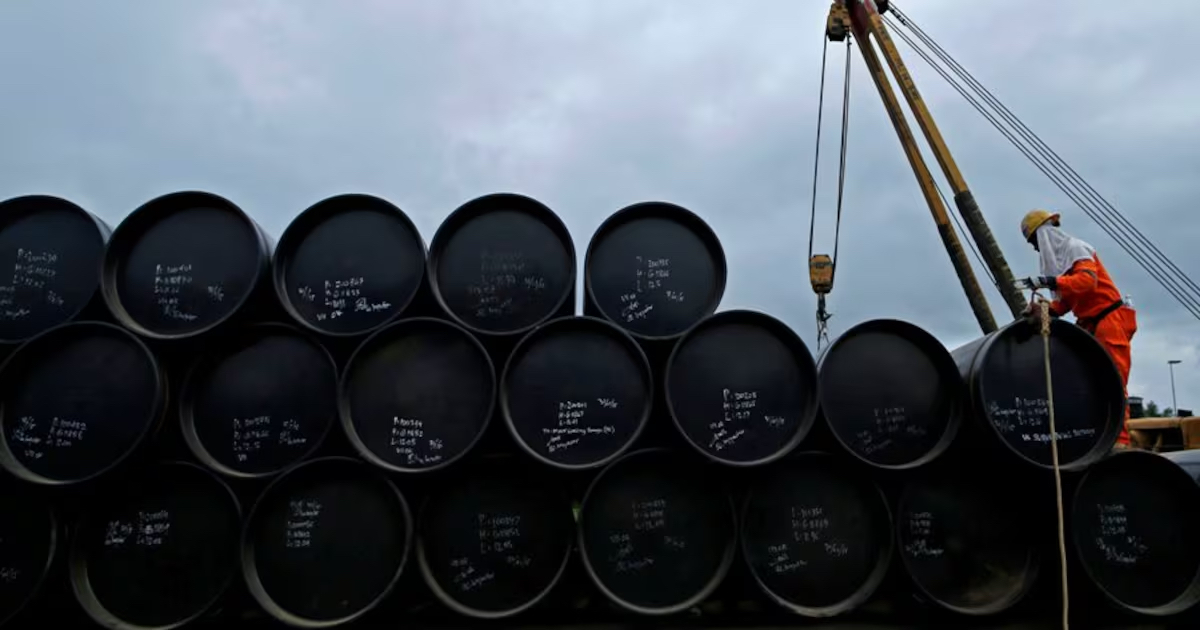
The order, dated June 15 and read down June 17, restricts prepayment arrangements tied to Dar Blend and Nile Blend crude, South Sudan's two key export grades.
It directly limits Juba's ability to raise quick cash by pledging future oil cargoes, a financing tool the government has relied on amid budget pressure, disrupted exports and limited access to conventional credit.
For a country where oil revenue underpins public salaries, imports and basic state operations, this ruling is more than a commercial dispute.
It is a stark warning about the systemic risk of building a national budget around a single commodity and a single fragile export route.
Oil Dependence Becomes A Fiscal Trap
Oil prepayment deals are straightforward in concept but hazardous in practice. A government receives upfront cash from a trader or financier, pledging future cargoes as repayment.
- When production is steady, the arrangement bridges short-term funding gaps.
- When exports are disrupted, it becomes a legal, fiscal and reputational trap.
South Sudan is especially exposed. Landlocked and dependent on pipeline infrastructure through Sudan, the country faces recurring threats to export flows from neighbouring conflict, domestic instability and weak public finance systems.
The World Bank warns that oil disruptions, wage arrears and high inflation have compounded its macroeconomic pressures, with oil accounting for nearly all exports and approximately 90% of government revenues.
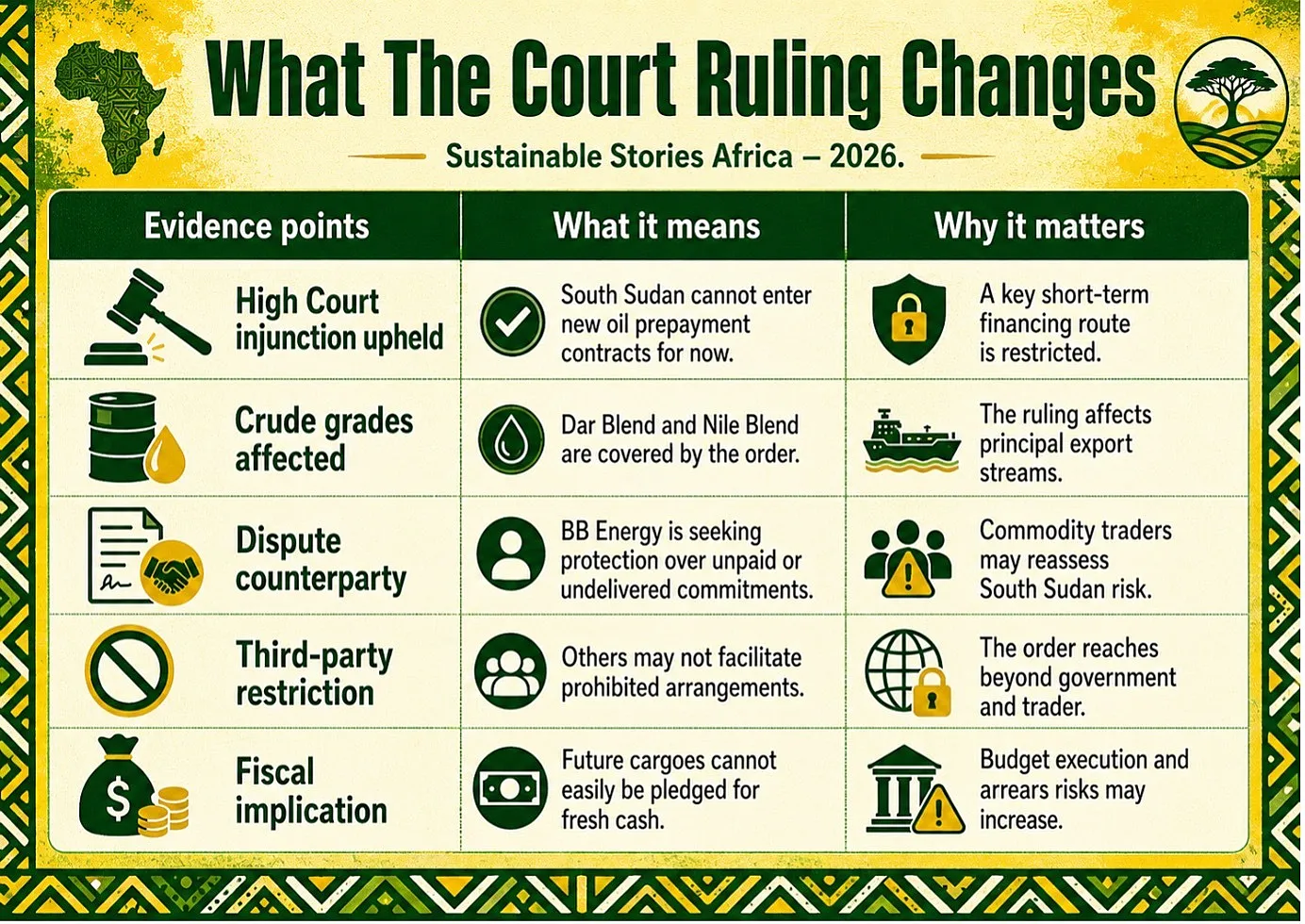
When these structures unravel, the consequences rarely stop at the negotiating table.
- A teacher awaiting back pay, a nurse working without adequate supplies, a trader watching the local currency weaken, each is indirectly exposed to the same oil-finance chain.
This is the human cost of commodity-backed borrowing: when the bridge collapses, households bear the weight first.
Transparency Can Rebuild Confidence
The ruling should not be read only as a setback. It can also be a turning point for stronger fiscal governance.
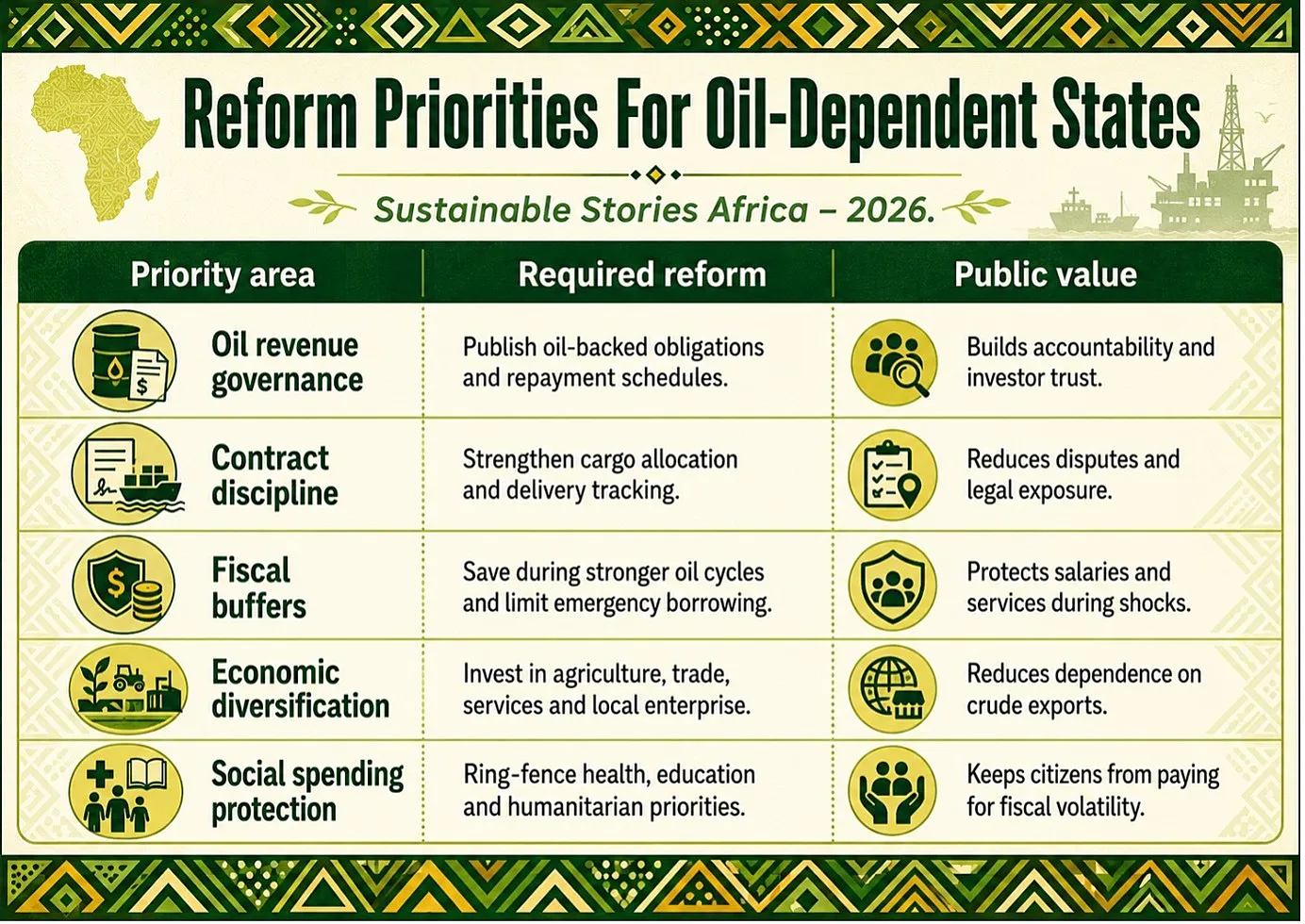
South Sudan needs oil revenue, but it also needs more transparent oil-backed financing, clearer debt disclosure, stronger contract management and better parliamentary and public oversight.
Commodity-backed loans can help a country survive immediate pressure, but only when they are transparent, affordable and linked to credible repayment capacity.
A better system would protect both the state and investors.
- Traders would have greater confidence that cargo commitments are trackable.
- Citizens would have clearer information on how national resources are pledged.
- Development partners would find it easier to support reforms. Public-sector workers would be less exposed to sudden cash shortages.
Must Treat Governance As Survival
South Sudan now needs more than legal defence. It needs a fiscal reset.
- The government should urgently review all oil-backed obligations, publish a clear debt schedule of cargo commitments, and strengthen the institutions responsible for petroleum revenue management.
- Creditors and traders should also support transparent restructuring rather than opaque arrangements that deepen future risk.
- Regional and multilateral partners have a role to play. Technical assistance on debt transparency, oil revenue governance, public financial management and non-oil revenue mobilisation should become central to any stabilisation agenda.
South Sudan’s crisis is not only about one court order. It is about how resource-dependent states finance themselves when institutions are weak, markets are closed, and citizens urgently need services.
The answer cannot be more secret. It must be more discipline.
Path Forward – Turn Oil Pressure Into Reform
South Sudan should use the ruling to rebuild credibility around oil contracts, debt disclosure and public financial management.
The priority is urgent but achievable: protect essential services, clear salary arrears, improve transparency and reduce dependence on future crude cargoes as emergency cash.
For African oil producers, the lesson is clear: governance is now as important as geology.
Culled From: London court blocks South Sudan's oil prepayment deals, cutting off key revenue lifeline - Businessfront