Mining companies are increasingly generating their own electricity as unreliable grids and rising energy costs reshape investment decisions.
Renewable energy and battery storage are becoming essential infrastructure rather than optional sustainability investments.
The shift promises stronger industrial resilience, cleaner mineral production and new opportunities for Africa's energy transition.
Mining Companies Are Becoming Their Own Utilities
Africa's mining industry is no longer waiting for electricity; it is building it.
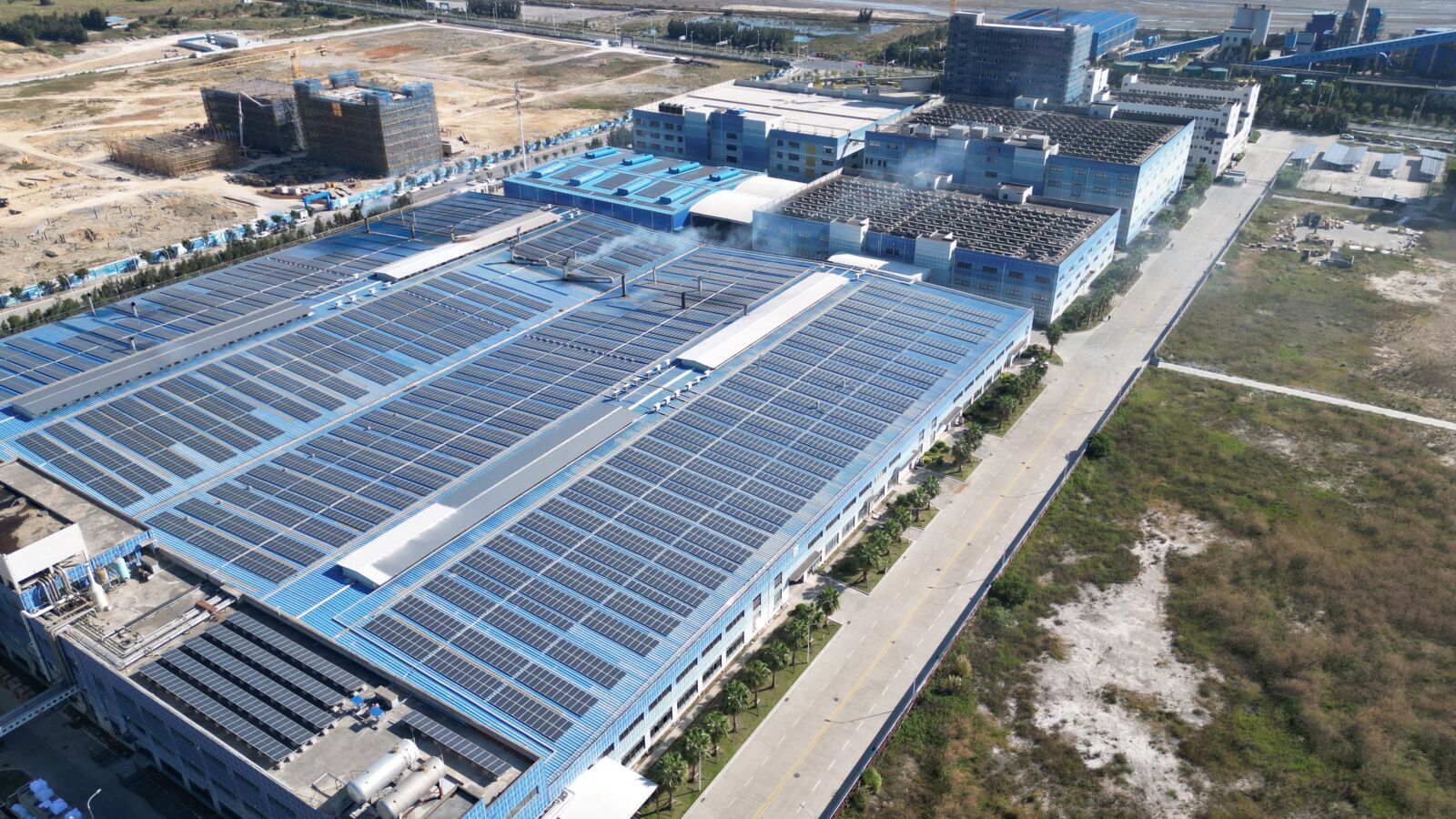
Across the continent and other resource-rich regions, mining companies are investing heavily in self-generated renewable energy, battery storage and hybrid power systems to secure reliable electricity for their operations.
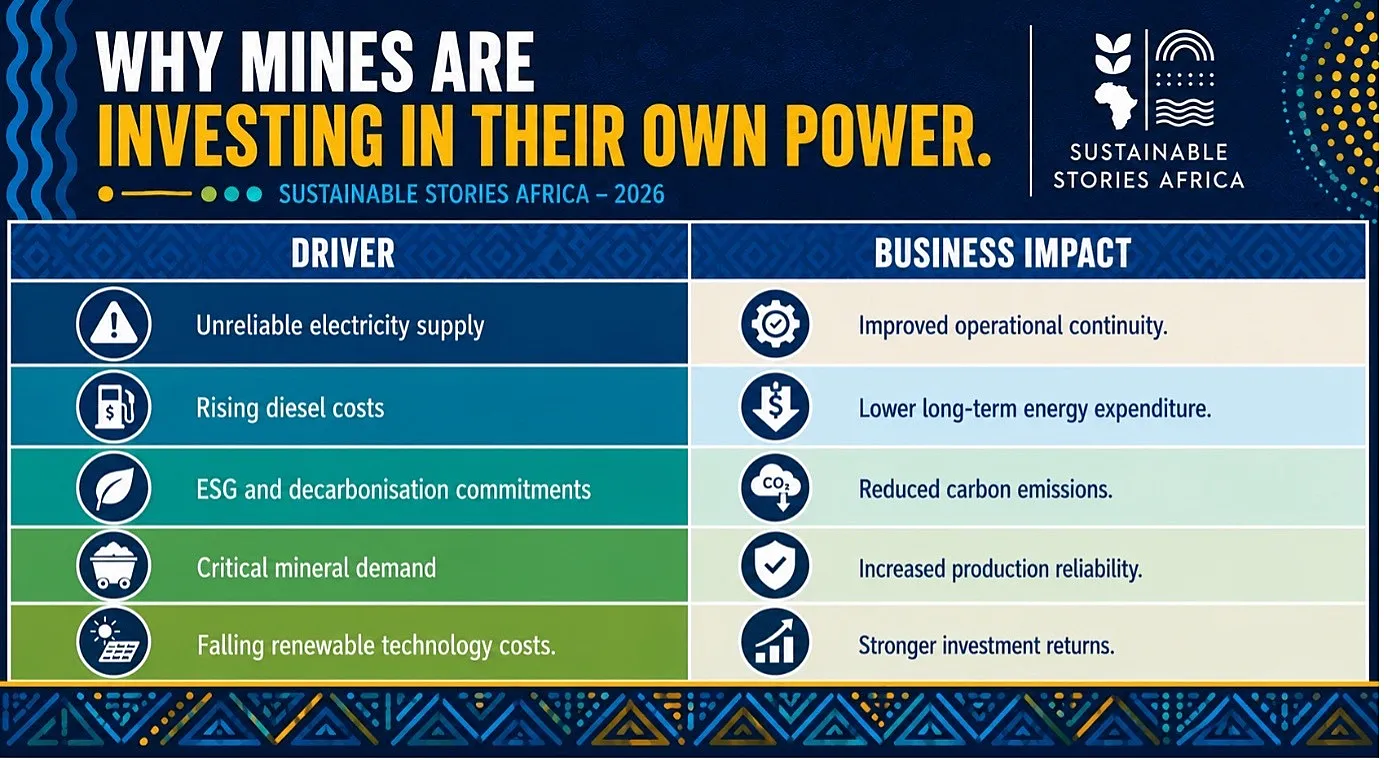
Faced with grid instability, rising diesel costs and increasing pressure to reduce carbon emissions, developers are taking energy production into their own hands.
The trend is reshaping both the mining and power sectors. Mines that once depended almost entirely on national utilities are evolving into integrated energy producers, generating clean electricity that improves operational certainty while supporting broader decarbonisation goals.
For Africa, where critical minerals underpin the global clean energy transition, reliable power is becoming just as valuable as the minerals themselves.
Reliable Power Has Become A Strategic Asset
Energy has always been one of mining's highest operating costs.
Today, it has become one of its biggest business risks.
Unexpected power outages interrupt production, damage equipment, increase operating expenses and undermine export commitments.
As global demand for copper, lithium, cobalt, manganese and platinum group metals increases, producers cannot afford prolonged electricity disruptions.
The response has been decisive.
Mining companies are deploying utility-scale solar plants, wind farms, battery storage systems and hybrid microgrids to reduce dependence on national electricity networks.
These investments increasingly form part of long-term business strategy rather than corporate sustainability programmes.
For countries such as South Africa, Namibia, Botswana and Zambia, where mining contributes significantly to exports and employment, self-generation is helping companies maintain production while easing pressure on overstretched national grids.
Beyond operational efficiency, the transition is strengthening investor confidence.
Global financiers increasingly favour mining companies that demonstrate energy resilience and credible pathways toward lower-carbon production, particularly as downstream manufacturers seek responsibly produced critical minerals.
Desire: Energy Independence Can Strengthen Sustainable Mining
The implications extend far beyond individual mine sites.
Self-generated renewable power enables mining companies to operate more efficiently while reducing greenhouse gas emissions and improving environmental performance. Lower electricity costs can extend mine life, increase profitability and make African mineral projects more competitive globally.
Communities also stand to benefit.
Where infrastructure is appropriately designed, excess electricity generated by mining projects can support neighbouring communities, industrial parks and local businesses, creating wider economic value beyond extraction activities.
For governments, resilient mining operations translate into more stable export earnings, stronger tax revenues and increased confidence among international investors considering long-term projects.
However, challenges remain.
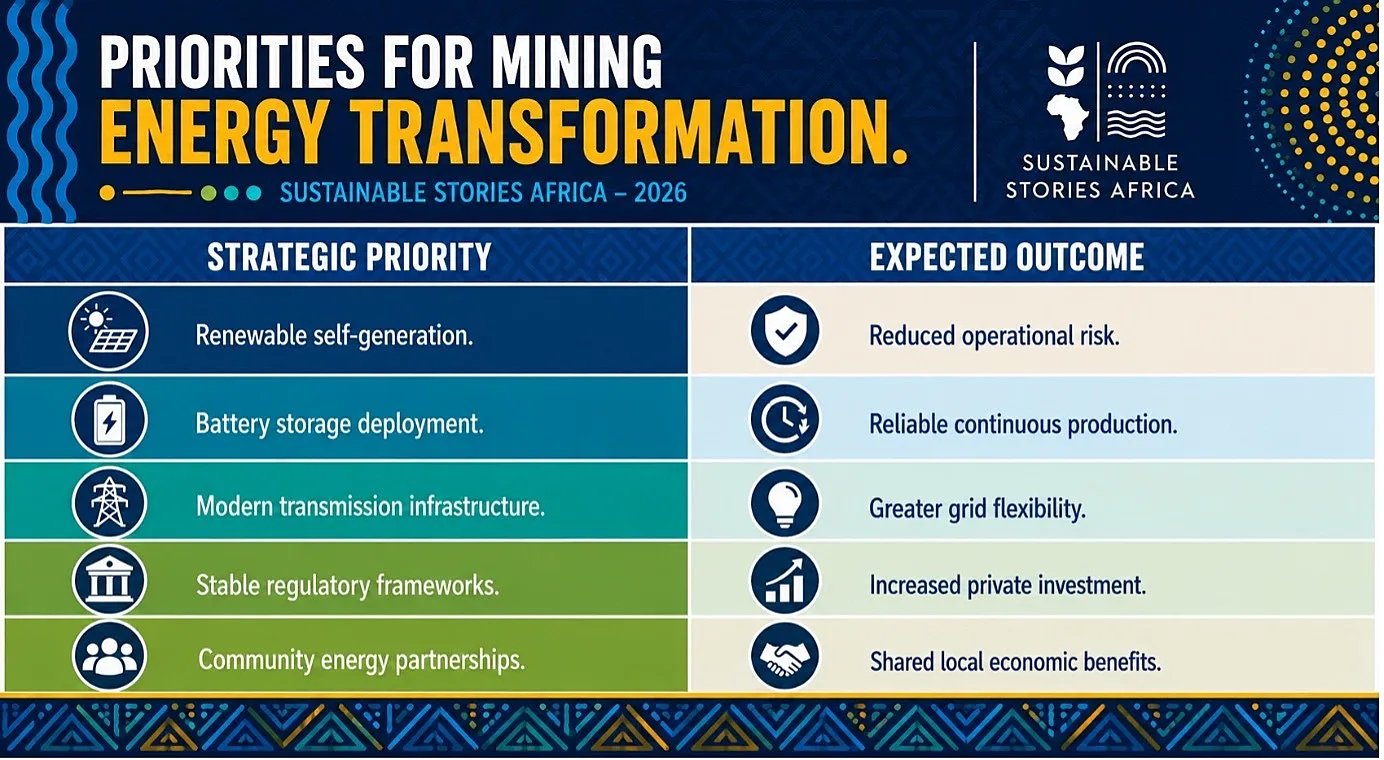
Large renewable installations require substantial upfront capital, supportive regulations, transmission infrastructure and permitting systems capable of keeping pace with investment demand. Without these enabling conditions, project pipelines could face costly delays.
Align Mining Growth With Energy Reform
Africa's mining boom should become a catalyst for modernising energy systems rather than a workaround for weak infrastructure.
- Governments should accelerate regulatory reforms that encourage private renewable generation while expanding transmission networks capable of integrating industrial-scale clean energy projects.
- Clear permitting processes, transparent electricity market rules and supportive investment policies will be essential to maintaining momentum.
- Mining companies should continue to integrate renewable energy into core business strategies
- Development finance institutions and commercial investors should expand financing solutions for large-scale industrial decarbonisation.
The future competitiveness of Africa's critical minerals sector will increasingly depend not only on what lies beneath the ground, but also on the reliability, affordability and sustainability of the electricity that powers extraction.
Path Forward – Clean Energy Will Secure Mining Competitiveness
Mining companies are demonstrating that reliable clean energy has become a strategic production asset.
Continued collaboration among governments, utilities, investors and industry will be critical to scaling this momentum across African markets.
By aligning renewable energy investment with industrial development, Africa can strengthen critical mineral value chains, improve energy security and deliver measurable ESG outcomes that support sustainable economic growth and global competitiveness.
Culled From: Mines take power into their own hands