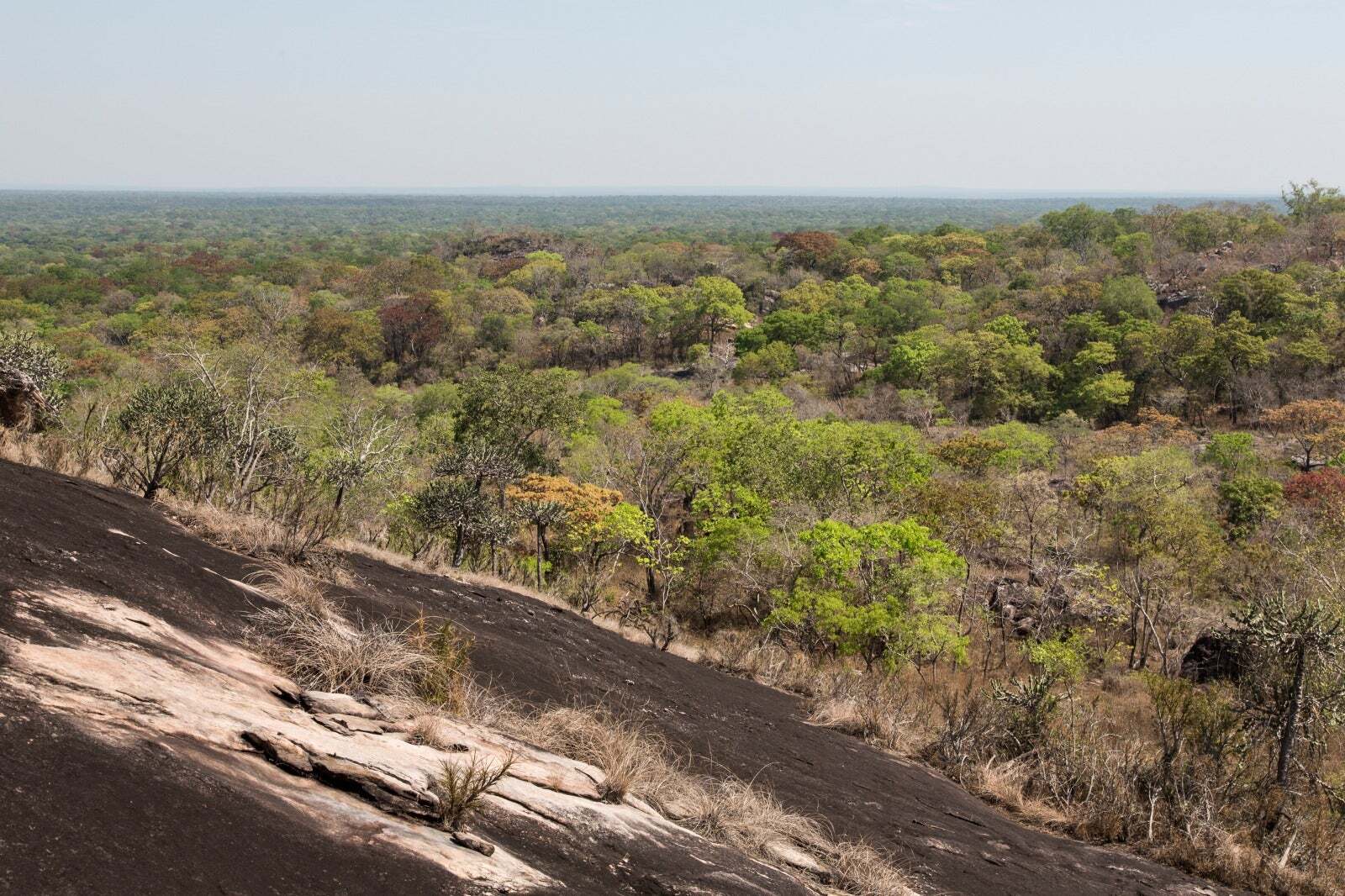
The Miombo Restoration Alliance has launched Article 6-aligned carbon removal projects across four African countries, marking one of the continent’s most coordinated entries into the Paris Agreement’s carbon market framework.
The initiative targets degraded miombo woodlands, aiming to unlock high-integrity carbon credits while restoring biodiversity and supporting the livelihoods of rural communities.
For African governments, it signals a strategic shift: from carbon credit suppliers to rule-makers in a fast-evolving global market.
Miombo Alliance Launches Article 6 Carbon Projects Across Four African Nations
The Miombo Restoration Alliance has initiated Article 6-compliant carbon removal projects across four African countries, positioning the continent at the forefront of the Paris Agreement’s emerging carbon market architecture.
The project is expected to restore the degraded miombo woodlands, one of Africa’s largest dry forest ecosystems, while generating high-integrity carbon credits for international compliance markets.
The announcement marks a transition in Africa’s journey to accessing carbon finance opportunities.
Article 6 of the Paris Agreement provides the legal framework for countries to trade emission reductions.
By anchoring restoration projects within this system, participating governments are seeking not only climate mitigation gains but structured revenue streams tied to global carbon pricing mechanisms.
Miombo woodlands stretch across Southern and Central Africa, supporting millions of livelihoods.
Years of deforestation, charcoal production, and land degradation have weakened the ecosystem’s potential for carbon sequestration. The Alliance’s model aims to reverse that trajectory.
Carbon Markets Meet African Woodlands
At the heart of the initiative lies a strategic recalibration. Instead of voluntary carbon offsets with variable standards, the projects are structured under Article 6, the Paris Agreement’s compliance-grade carbon mechanism.
This shift elevates African forestry restoration from peripheral climate action to a sovereign-level carbon trading strategy.
The projects are expected to deliver measurable carbon removals while aligning with national climate commitments (NDCs).
Participating governments retain oversight, ensuring that carbon credits align with national accounting frameworks and avoid double-counting challenges, a persistent concern in voluntary markets.
Restoring Ecosystems, Structuring Finance
The miombo ecosystem covers approximately 2.7 million square kilometres across multiple African countries.
It plays a vital role in biodiversity preservation, regulating rainfall, and rural energy systems. However, degradation rates have accelerated in recent decades.
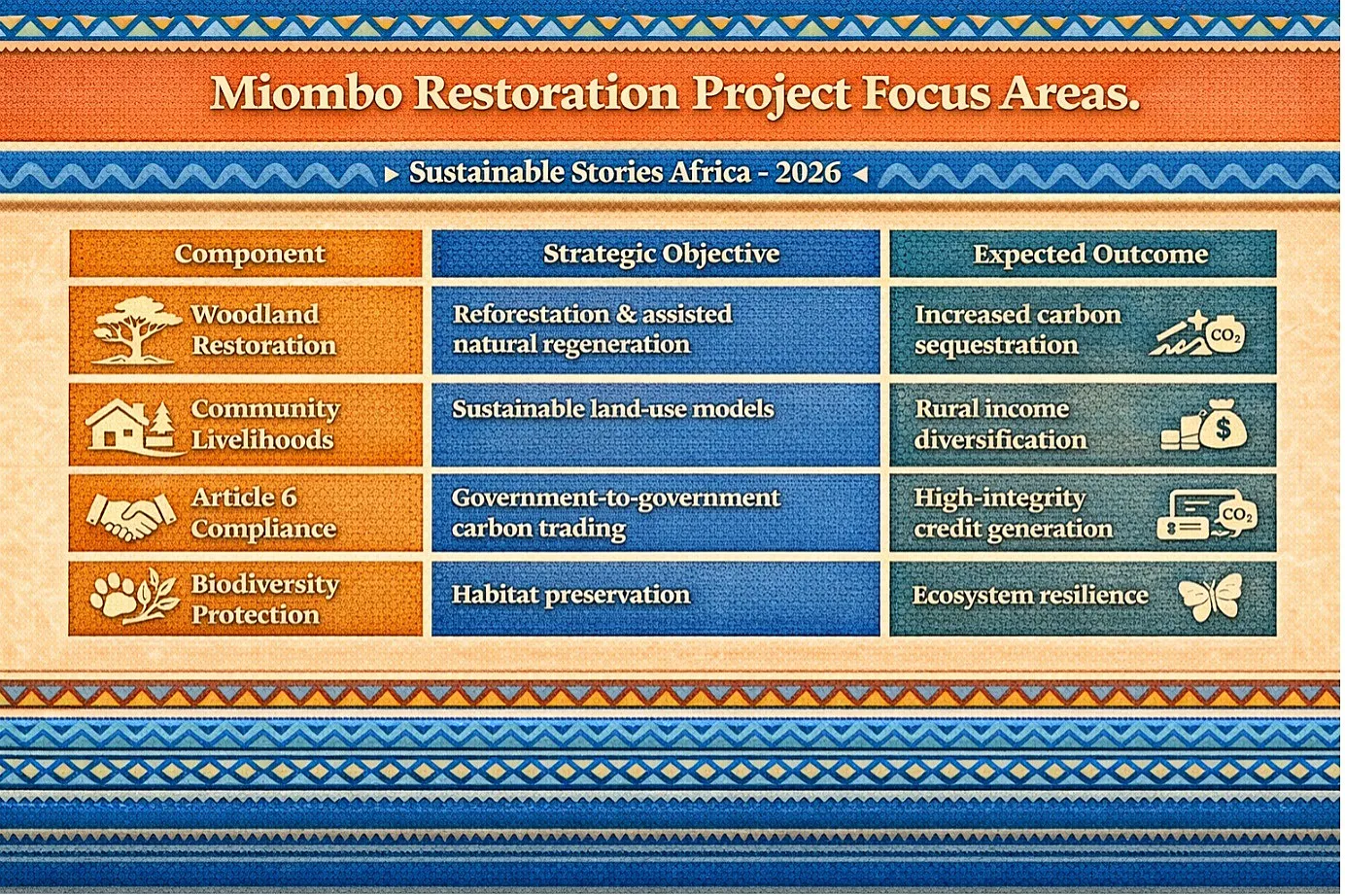
Miombo Restoration Project Focus Areas
Component | Strategic Objective | Expected Outcome |
|---|---|---|
Woodland Restoration | Reforestation & assisted natural regeneration | Increased carbon sequestration |
Community Livelihoods | Sustainable land-use models | Rural income diversification |
Article 6 Compliance | Government-to-government carbon trading | High-integrity credit generation |
Biodiversity Protection | Habitat preservation | Ecosystem resilience |
By integrating restoration with Article 6 accounting structures, the Alliance aims to attract compliance-driven buyers rather than purely voluntary offset purchasers. This could significantly increase price stability and long-term project viability.
For governments, the projects represent a dual dividend: climate mitigation plus fiscal opportunity.
For communities, structured benefit-sharing mechanisms are expected to ensure local participation and livelihood protection.
From Carbon Sellers to Carbon Strategists
The implications extend beyond forestry. If executed effectively, these projects could establish a template for Africa-led carbon governance, where sovereign oversight, transparency, and credit issuance are underpinned by environmental integrity.
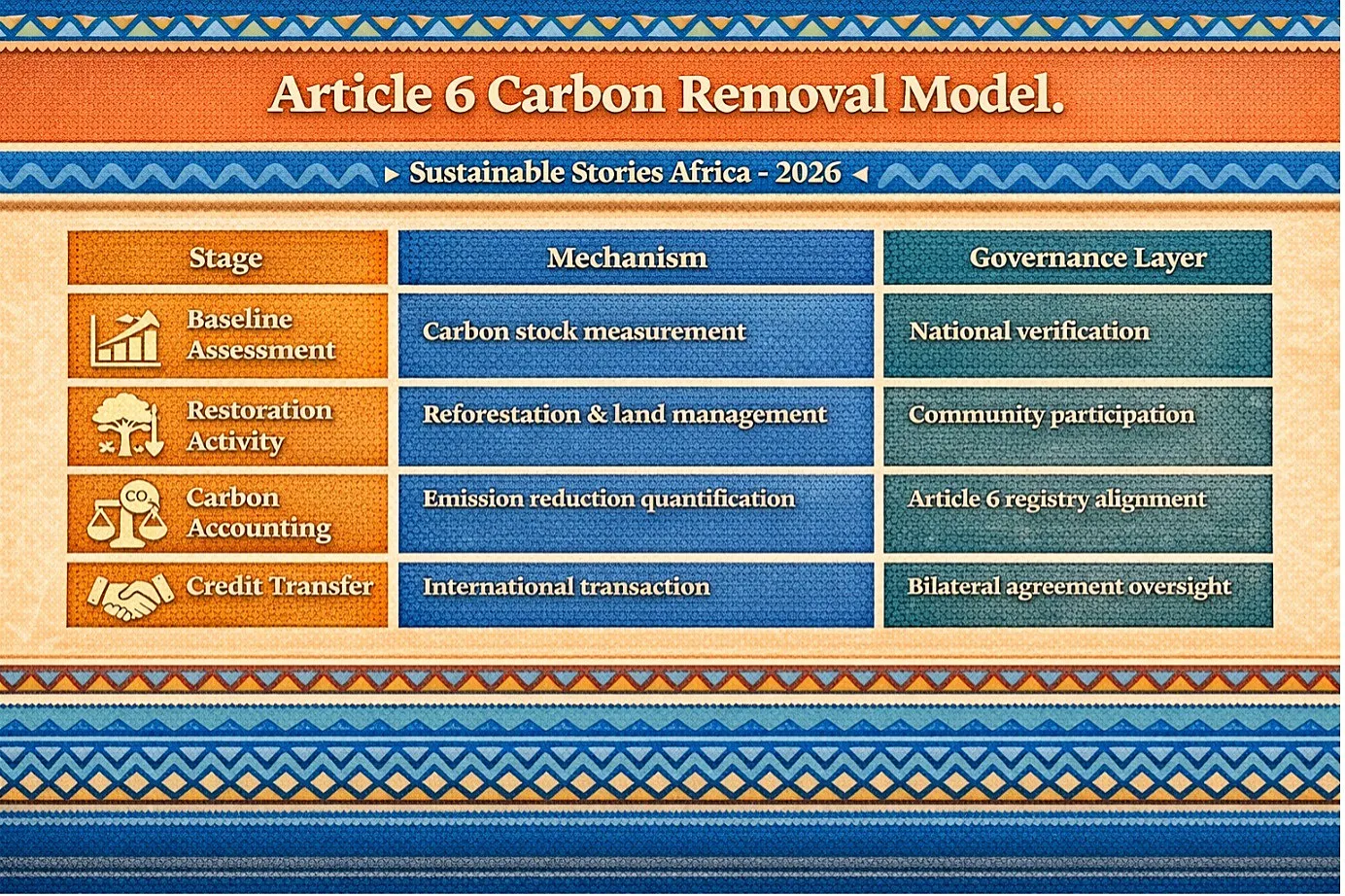
Article 6 Carbon Removal Model
Stage | Mechanism | Governance Layer |
|---|---|---|
Baseline Assessment | Carbon stock measurement | National verification |
Restoration Activity | Reforestation & land management | Community participation |
Carbon Accounting | Emission reduction quantification | Article 6 registry alignment |
Credit Transfer | International transaction | Bilateral agreement oversight |
The strategic pivot lies in compliance-grade carbon markets. Article 6 allows countries to transfer mitigation outcomes internationally under structured agreements.
For African nations with large natural carbon sinks, this represents a potential revenue channel linked to global decarbonisation targets.
Beyond carbon, the restoration of miombo woodlands enhances water retention, soil stability, and biodiversity. These co-benefits improve climate resilience, increasing priority in regions vulnerable to drought and extreme weather patterns.
Building Institutional Readiness
For African governments, the next steps are institutional. Article 6 implementation requires robust monitoring, reporting, and verification systems. National registries must align with UNFCCC protocols. Transparent benefit-sharing arrangements must be codified to maintain community trust.
Private investors and compliance buyers will scrutinise governance standards closely. High-integrity carbon credits depend on traceability, permanence guarantees, and safeguards against double counting.
The Alliance’s launch sends a clear message: Africa is not waiting for global carbon markets to mature; it is actively shaping them.
PATH FORWARD – Scaling Integrity, Securing Sovereign Gains
Governments are prioritising registry development, verification systems, and transparent benefit-sharing frameworks to anchor Article 6 compliance.
Institutional capacity-building is central to ensuring environmental integrity and sovereign oversight.
The Alliance aims to expand the scale of restoration, while attracting compliance-driven buyers.
If governance standards hold, miombo restoration could become a continental blueprint for carbon-financed ecosystem recovery.