Africa’s first G20 summit on its own soil was more than a ceremony. Johannesburg 2025 marked a recalibration of voice, visibility and ambition in global governance.
However, panellists warned, it does not automatically convert to structural power. Without financial reform, diplomatic cohesion and sustained media scrutiny, Africa’s G20 breakthrough could remain largely procedural.
The question now is whether the continent can transform presence into influence and narrative into leverage.
Johannesburg G20 Reshapes Africa’s Global Leverage Debate – Africa’s Historic Seat, Unfinished Influence
When leaders gathered in Johannesburg for the 2025 G20 Summit, it marked the first time the forum convened on African soil. For many observers, the symbolism was profound: Africa was no longer outside the room.
However, speakers at the high-level dialogue, “Africa at the G20: What Johannesburg Changed,” cautioned that hosting does not equate to control.
The panel, organised by the Africa China Centre for Policy Advisory and the Institute for Strategic and Policy Studies, framed Africa’s inclusion as “necessary but insufficient.”
The summit highlighted priorities long championed by African states, including debt restructuring, climate finance, reform of global financial institutions and equitable trade rules.
However, subsequent diplomatic signals, including the muted continuity of some African priorities in later G20 engagements, reinforced the structural limits facing the continent.
Structural Asymmetries Still Shape Outcomes
Panellists argued that while Africa now holds formal membership through the African Union, power asymmetries remain entrenched.
Key constraints highlighted included:
Structural Constraint | Implication for Africa |
|---|---|
Debt dependency | Limits fiscal sovereignty and policy autonomy |
Bretton Woods governance imbalance | Weak voting power in IMF/World Bank reforms |
Fragmented continental diplomacy | Reduced negotiating cohesion |
GDP-centric wealth metrics | Understates natural capital and resource value |
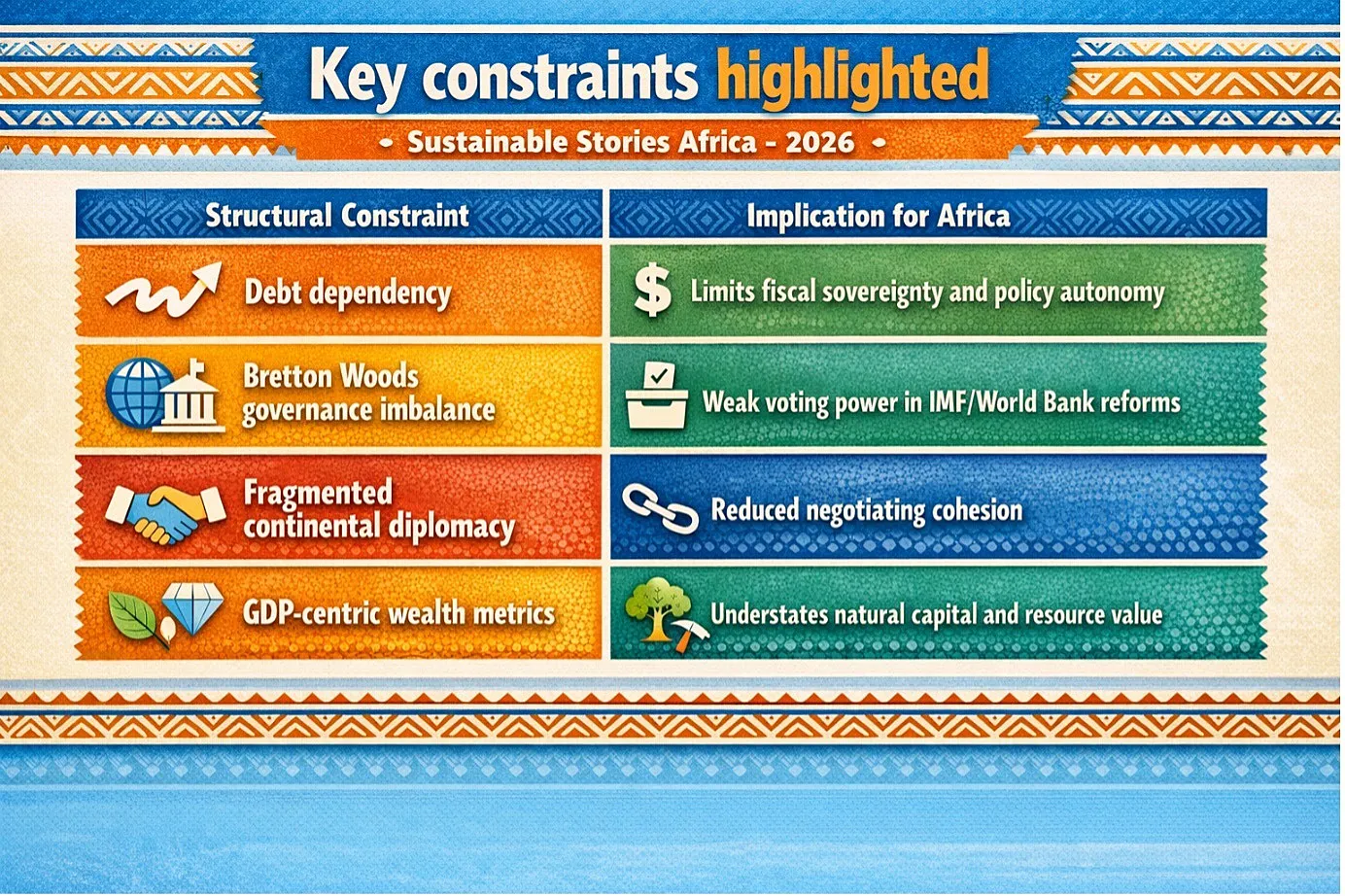
Speakers questioned the adequacy of GDP as a development metric, pointing to resource-rich countries that remain statistically “poor.”
They advocated alternative wealth indicators that integrate natural capital and sustainability metrics, a recalibration that could shift Africa’s bargaining position.
Climate justice emerged as a defining theme. Despite contributing minimally to global emissions, African economies face disproportionate climate impacts. Johannesburg foregrounded operational climate finance, not pledges, but accessible funding mechanisms for adaptation and energy transition.
The philosophical debate was equally pointed. Panellists contrasted unipolar dominance with multipolar multilateralism, arguing that Africa’s normative alignment with sovereign equality and rule-based order could become a strategic asset in global negotiations.
Converting Symbolism into Leverage
If Johannesburg changed anything, it was perception. Africa demonstrated convening capacity, diplomatic maturity and policy clarity. The summit reframed Africa not as an aid recipient but as a stakeholder in global stability.
Priority areas identified include:
Strategic Priority | Intended Outcome |
|---|---|
Reform of international financial institutions | Greater voting equity and debt relief flexibility |
African-led financial institutions | Increased monetary sovereignty |
Coordinated AU diplomacy | Stronger agenda-setting capacity |
Operational climate finance | Accelerated adaptation and just transition |
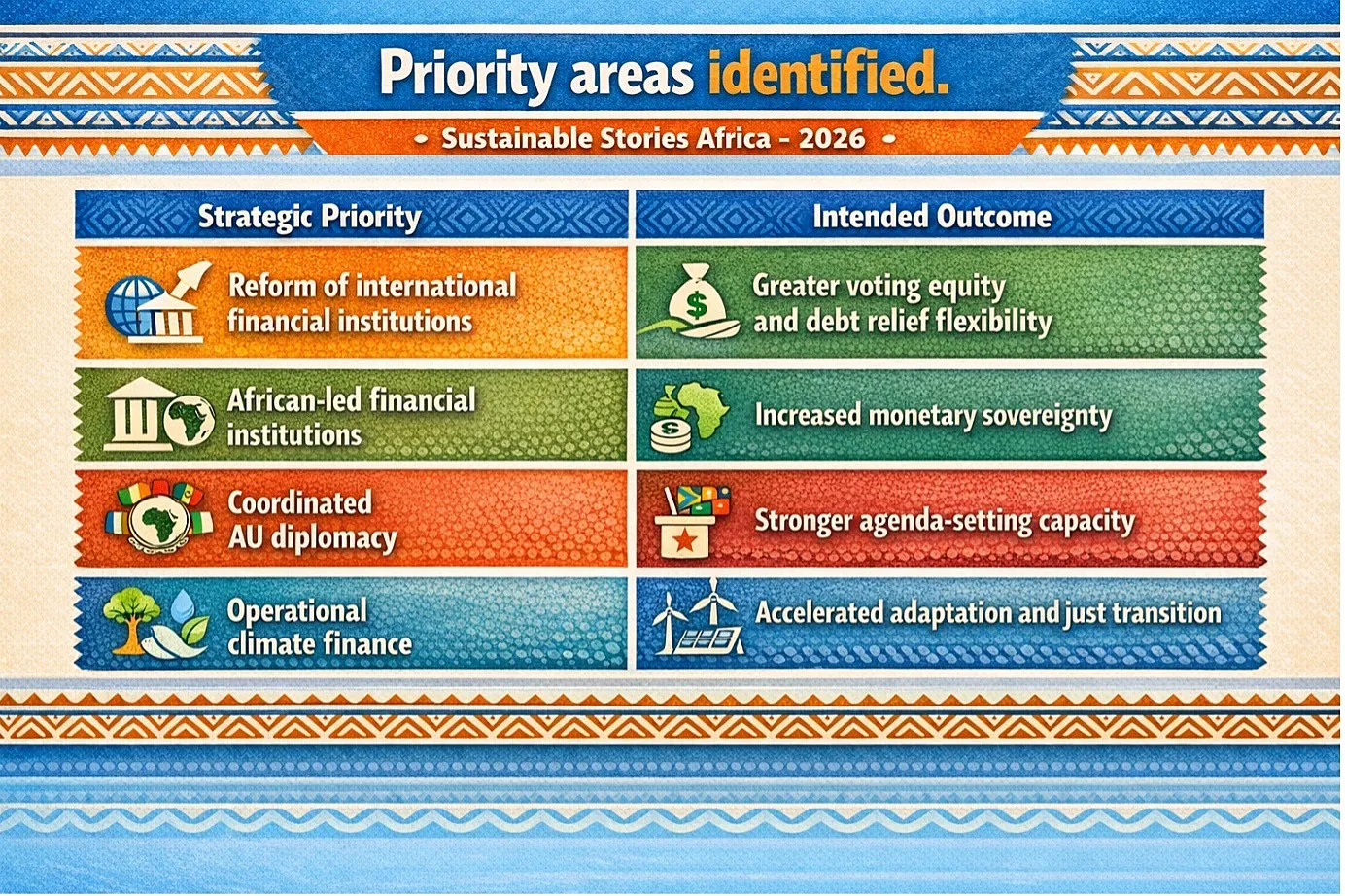
Media was identified as a critical force multiplier. By localising G20 decisions into national consequences, from flooding to fiscal pressures, African journalism can sustain public scrutiny beyond summit communiqués.
Collective security also featured prominently. Without political stability and protection of resources, economic leverage remains fragile.
Institutional Reform, Diplomatic Unity Required
The discussion concluded that Africa’s G20 milestone must now transition into institutional reform and strategic coordination.
Immediate priorities include strengthening the African Union’s technical capacity, harmonising regional blocs, and building sovereign financial mechanisms capable of reducing external dependency.
Diplomatically, Africa must move from reactive participation to proactive coalition-building within the G20 framework.
For policymakers, the Johannesburg precedent offers both proof of capability and a warning: influence requires continuity. For civil society and media, sustained monitoring of commitments, especially on debt relief and climate finance, will determine whether Johannesburg becomes a turning point or a footnote.
Path Forward – From Presence To Policy Power
Africa’s G20 breakthrough demands disciplined follow-through. Institutional reform within the African Union, redesigning the financial architecture, and unified diplomatic messaging must now take precedence in the continental strategy.
By 2030, success will not be measured by hosting the summit, but by tangible shifts in debt sustainability, institutional finance for climate, and voting power within global institutions.
Johannesburg opened the door; structural transformation must walk through it.