A major Africa–Europe cultural partnership has launched a three-year initiative to expand heritage-based sustainable tourism across six Southern African countries.
The project focuses on community-led heritage site enhancement, capacity building and tourism product diversification, to create jobs, stimulate local economies and preserve cultural identity.
This initiative marks a shift in how culture and tourism are integrated into regional development strategies.
Cultural Tourism as an Engine for Inclusive Growth
Officials from UNESCO, the European Union, national UNESCO commissions and partner institutions formally initiated the Africa–Europe Partnerships for Culture: Promoting Culture and Heritage-based Sustainable Tourism in Southern Africa project on 15 January 2026, setting in motion a structured implementation roadmap to convert cultural assets into sustainable tourism opportunities.
The launch signifies more than a funding announcement. It establishes governance, delivery mechanisms and institutional coordination that will guide site-level pilots, community programmes and capacity-building initiatives over the next three years.
Representatives from Botswana, Eswatini, Lesotho, South Africa and Zimbabwe joined the steering committee meeting, reinforcing regional ownership and signalling a shared development agenda anchored in culture and heritage.
Turning Heritage into Sustainable Touristic Value
The project's design recognises the vast cultural and historical assets within African landscapes, living traditions, monuments and community practices as drivers of sustainable tourism that can generate economic opportunity and preserve identity.
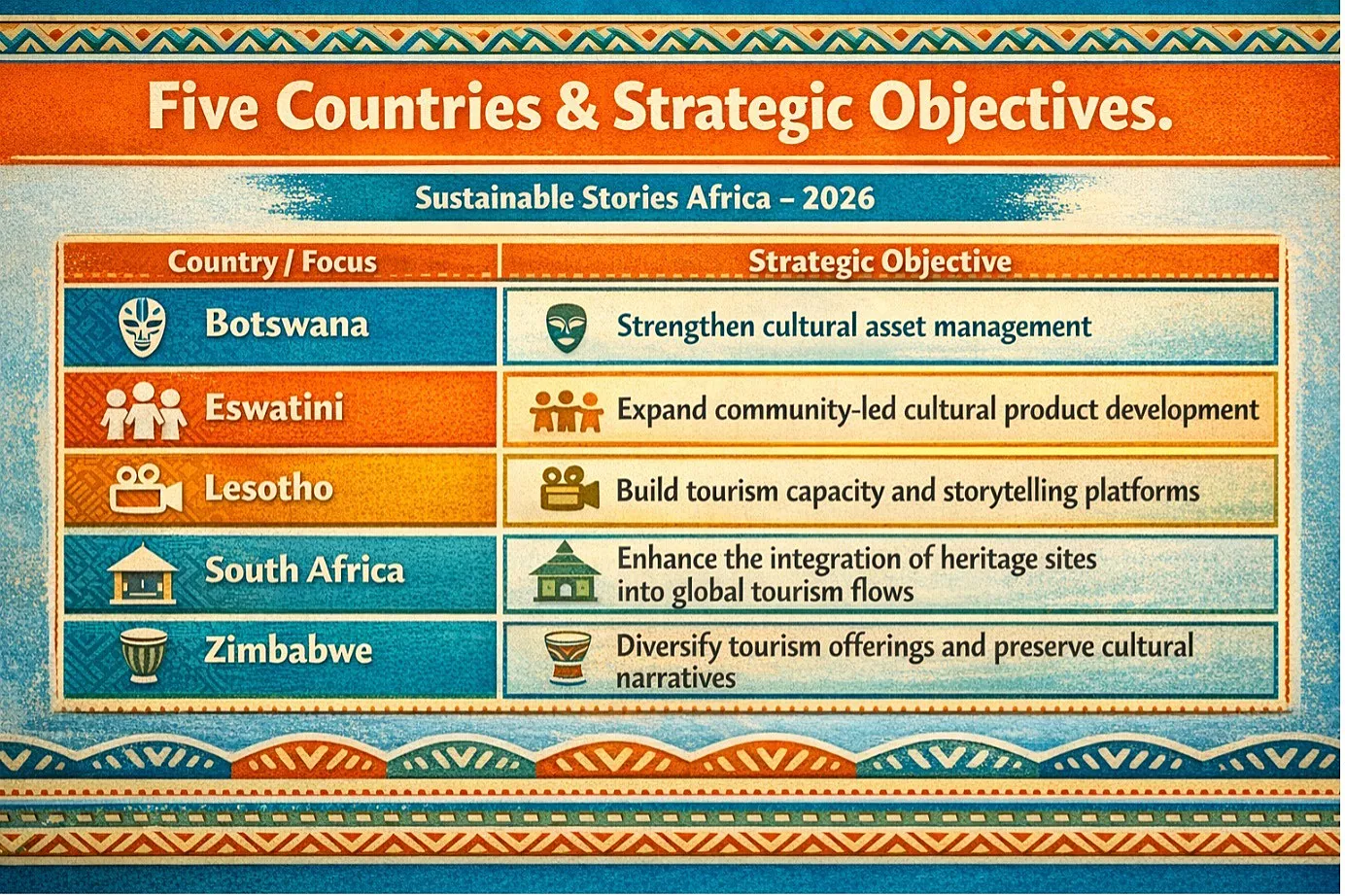
Five Countries & Strategic Objectives
| Country/Focus | Strategic Objective |
|---|---|
| Botswana | Strengthen cultural asset management |
| Eswatini | Expand community-led cultural product development |
| Lesotho | Build tourism capacity and storytelling platforms |
| South Africa | Enhance the integration of heritage sites into global tourism flows |
| Zimbabwe | Diversify tourism offerings and preserve cultural narratives |
This initiative will cut across UNESCO-designated and community heritage sites, supporting local actors to shape tourism that reflects authentic experiences rather than externally imposed models.
The project is supported by funding from the European Union and implemented through UNESCO and partner agencies, aiming to mainstream heritage into broader development planning and diversify the tourism products offered in the region.
What's Behind the Strategy
Culture-based sustainable tourism is increasingly seen as a development multiplier:
- Jobs & Livelihoods – Tourism supports small and micro businesses, particularly in the hospitality, crafts, guiding and performance arts.
- Youth & Women – The strategy emphasises inclusive opportunities for traditionally marginalised groups.
- Identity & Narrative – Elevating local stories and practices strengthens cultural pride and offers differentiated visitor experiences.
This approach aligns tourism more closely with the Sustainable Development Goals rather than treating it solely as an export-oriented leisure industry.
From Pilots to Permanent Engines of Local Prosperity
If effectively implemented, this project could deliver measurable outcomes well beyond tourism statistics:
- Expanded Local Incomes – Through heritage-linked economic activities.
- Skills & Capacity – Via structured training for site managers, guides and cultural practitioners.
- Branding & Visibility – Strengthened regional tourism branding with unique cultural narratives.
However, the initiative must align with broader infrastructure and market strategies, including transport connectivity, digital marketing channels and visa facilitation, to convert interest into sustainable travel flows.
Sustainable tourism cannot be just an add-on; it needs to be embedded into national and regional economic frameworks.
From Strategy to Execution
Policymaker Imperatives
- Prioritise cultural heritage preservation in national economic plans
- Integrate community tourism enterprises into value chains
- Ensure equitable benefit sharing with local populations
Industry Imperatives
- Invest in quality visitor services and storytelling platforms
- Partner with cultural custodians to co-design tourism products
- Embed climate and cultural sensitivity into destination management
Community Imperatives
- Lead narrative development and site-specific tourism planning
- Build local capacity through apprenticeships and cultural exchanges
- Leverage digital tools to reach broader audiences
Heritage tourism, when truly inclusive, can reduce pressure on urban economies and create pathways for rural prosperity.
PATH FORWARD – Culture at the Heart of Sustainable Tourism Growth
The Africa–Europe Partnerships for Culture project reflects an evolution in thinking about tourism, transitioning from areas of volume and visibility to authenticity and sustainability.
By placing communities at the centre of heritage tourism plans, it aims to shift the value chain toward local empowerment.
For Southern Africa, this may become a template for hybrid development models that harness culture, history and creativity to generate lasting economic and social value.
Culture is not just what we protect; it is what we can build with.
Culled From: https://www.unesco.org/en/articles/africa-europe-project-launches-new-era-culture-heritage-tourism-southern-africa