Nearly 3.8 billion people could face extreme heat by 2050, according to new research warning that both tropical and cold-climate nations are unprepared for the outcome.
Scientists say adaptation, particularly access to cooling, must accelerate within years, not decades.
For Africa and other vulnerable regions, the coming heat surge is not a distant forecast but an imminent economic and public health challenge.
Billions Face Intensifying Global Heat Risk
Climate change could expose nearly 50% of the world's population to extreme heat within a generation, scientists have warned, as governments remain "dangerously underprepared" for surging cooling demand.
A new study projects that 3.79 billion people could experience extreme heat conditions by 2050 if global temperatures rise 2°C above preindustrial levels. Much of the impact, researchers say, will be felt well before mid-century as the planet approaches the 1.5°C threshold.
The findings, published in Nature Sustainability, signal an urgent need for adaptation infrastructure, including sustainable air conditioning and passive cooling systems, particularly in developing economies.
A Heat Surge Few Are Ready For
The population exposed to extreme heat is projected to double under a 2°C scenario.
Demand for cooling is increasing "drastically" in populous nations such as Nigeria, Brazil and Indonesia. Where hundreds of millions currently lack air conditioning.
But the threat is not confined to the tropics. Even traditionally cold countries, including Canada, Russia and Finland, face severe impacts from moderate increases in hotter days.
The message from researchers is blunt: adaptation must accelerate within the next few years.
The Numbers Behind the Warning
The study examined heating and cooling degree days, metrics that measure how temperatures determine the level of indoor heating or cooling required.
Tropical and equatorial regions, particularly in Africa, are projected to see the most significant rise in cooling demand. Countries including the Central African Republic, Nigeria, and South Sudan are among those expected to face the sharpest increases in dangerously hot conditions.
Meanwhile, colder countries may see declines in heating demand and a rise in cooling costs over time.
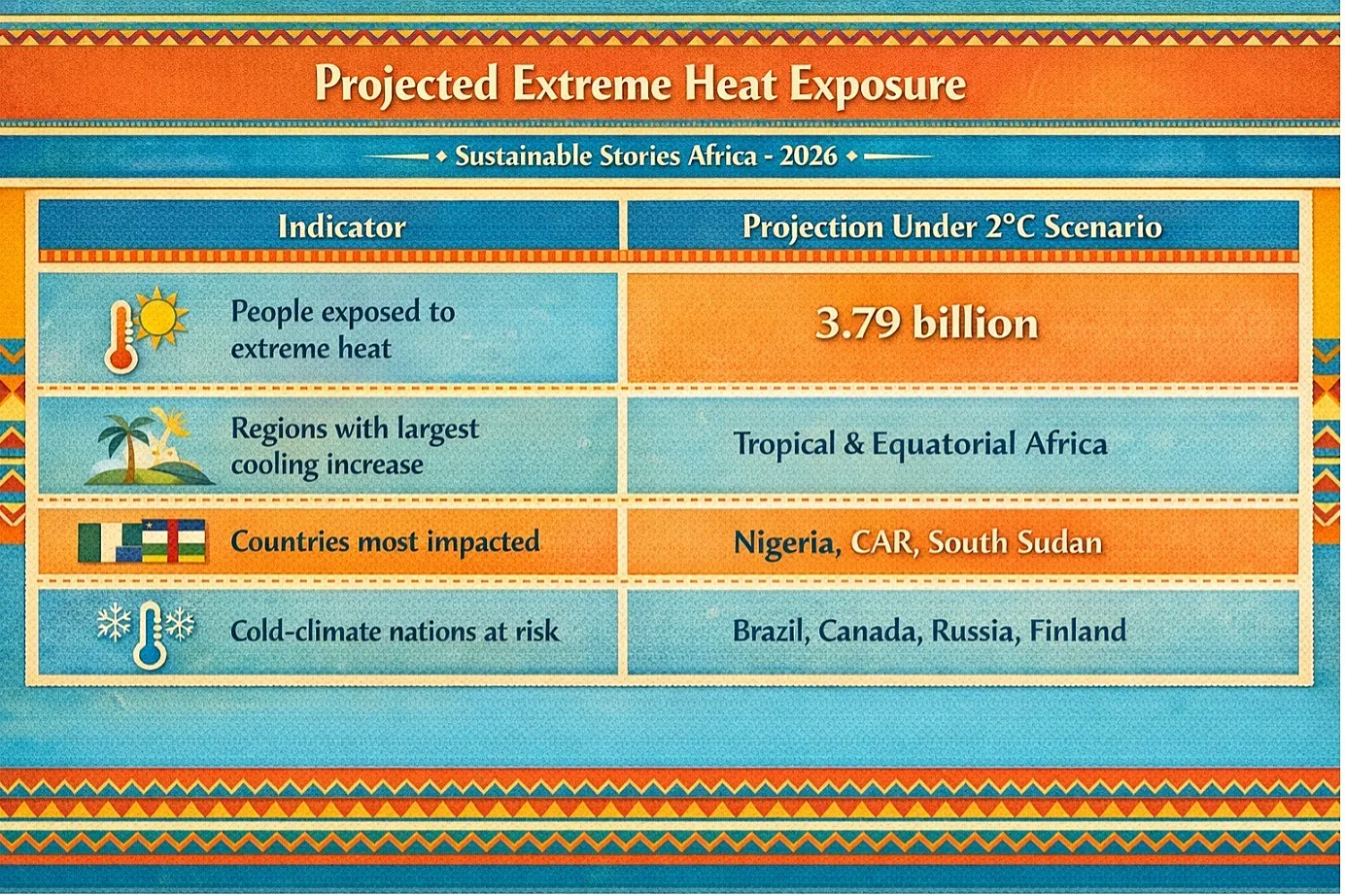
Projected Extreme Heat Exposure
| Indicator | Projection Under 2°C Scenario |
|---|---|
| People exposed to extreme heat | 3.79 billion |
| Regions with the largest cooling increase | Tropical & Equatorial Africa |
| Countries most impacted | Nigeria, CAR, South Sudan, Laos, Brazil |
| Cold-climate nations at risk | Canada, Russia, Finland |
Lead author Jesus Lizana described the findings as a wake-up call, saying the need for adaptation is "more urgent than previously known".
Heat is often termed a "silent killer," overwhelming the body gradually and leading to organ failure and death
What Preparedness Could Achieve
Proactive adaptation could reduce mortality, stabilise labour productivity and prevent energy shocks.
Urban design reforms, such as improved ventilation, reflective materials, green spaces and sustainable cooling, can cushion communities from heat stress.
In Africa, where infrastructure gaps persist, climate-resilient housing and decentralised renewable-powered cooling could transform public health outcomes.
Conversely, inaction risks compounding inequality. "The most disadvantaged people are the ones who will bear the brunt," noted co-author Radhika Khosla.
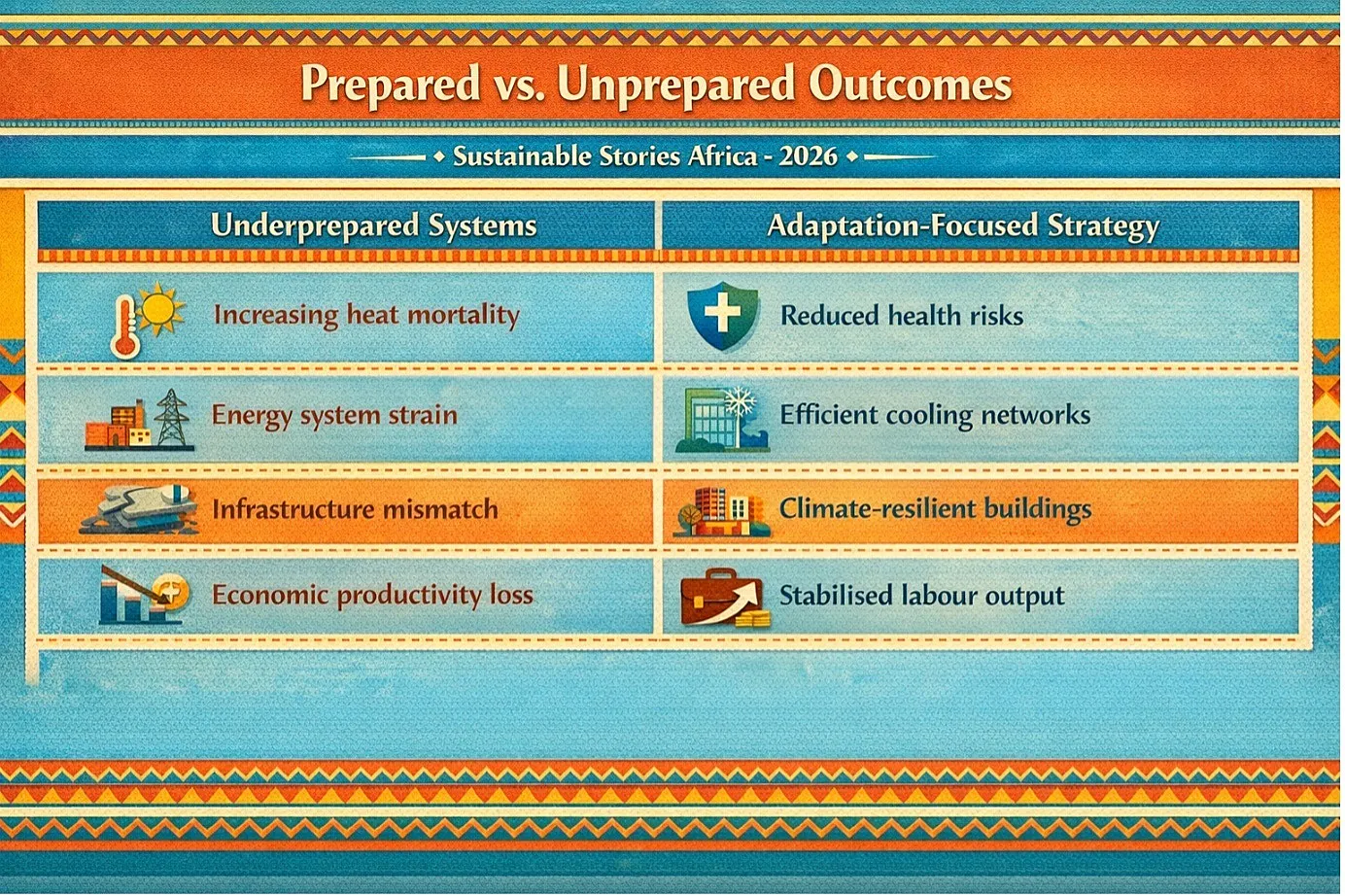
Prepared vs. Unprepared Outcomes
| Underprepared Systems | Adaptation-Focused Strategy |
|---|---|
| Increasing heat mortality | Reduced health risks |
| Energy system strain | Efficient cooling networks |
| Infrastructure mismatch | Climate-resilient buildings |
| Economic productivity loss | Stabilised labour output |
The economic implications are equally stark: cooling demand surges could strain grids and inflate household energy costs.
Adaptation Must Move Faster
Scientists stress that infrastructure for sustainable cooling must be deployed within a few years, not decades.
Wealthier nations, the study warns, cannot assume immunity. Many remain "dangerously underprepared" for the heat expected to arrive in the short term.
For policymakers, the path forward includes updating building codes, expanding renewable energy systems, and urban heat mitigation plans.
For investors and multilateral lenders, climate adaptation must be elevated alongside mitigation in capital allocation strategies.
The climate era is no longer defined solely by emissions targets, but by readiness.
Path Forward – Cooling Infrastructure Defines Climate Resilience
Governments must prioritise sustainable cooling infrastructure, updated building standards and expanded renewable energy systems to manage rising heat exposure. Investment in passive design and equitable access to cooling will determine resilience outcomes, particularly in Africa and densely populated tropical regions.
The study's warning is clear: adaptation windows are narrowing. Prepared nations will reduce mortality and economic disruption; unprepared systems will face mounting social and fiscal costs.