Africa's health systems are confronting a defining financial shock. Official Development Assistance has fallen by 70% since 2021, while debt servicing obligations now exceed projected external inflows.
In response, Africa CDC is advancing a continent-wide pivot toward domestic resource mobilisation, innovative levies, and blended finance, seeking to secure health sovereignty before hard-won gains in mortality reduction, immunisation and outbreak preparedness unravel.
Africa's Health Financing at Historic Crossroads
Africa's health sector is entering what policymakers describe as a "new era". This is defined by contraction and not by aid expansion.
According to Africa CDC's April 2025 concept paper, Official Development Assistance (ODA) to Africa is projected to decline by 70% from $80 billion in 2021 to $24 billion by 2025.
The implications are immediate. Africa hold 25% of the global disease burden but has just 3% of the global health workforce. Meanwhile, public health events have increased by 41% over a couple of years, from 152 outbreaks in 2022 to 213 in 2024.
Debt servicing pressures compound the challenge. Sub-Saharan Africa was expected to spend $81 billion servicing debt between 2023 and 2025, exceeding anticipated external financing inflows. The fiscal squeeze is narrowing space for domestic health investment at precisely the wrong moment.
Without structural reform, Africa CDC warns that between 2 and 4 million additional preventable deaths could occur annually, and 39 million more Africans could fall into poverty by 2030.
Aid Decline Meets Rising Risk
For decades, external financing underpinned Africa's progress: a 50% reduction in under-five mortality since 1990, expanded immunisation coverage, and HIV treatment for over 18 million people.
Now, financing architecture is fragmenting.
More than 90% of vaccines and medical countermeasures used across the continent are externally sourced. Fewer than 30% of African health systems are fully digitised. Health worker density averages between 1.5 and 2.3 per 1,000 people, well below the WHO threshold of 4.45.
The financing crisis is no longer abstract; it is operational.
Domestic Gaps, Structural Vulnerabilities
The Abuja Declaration of 2001 committed African governments to allocate 15% of their national budgets to health. Two decades later, only Rwanda, Botswana and Cabo Verde consistently meet that benchmark.
Over 30 AU member states allocate below 10%, others as low as between 5% and 7%.
Meanwhile, only 16 African countries (29%) have updated their National Health Development Plans, aligning with costed National Health Financing Plans. Without these frameworks, resource mobilisation remains fragmented and reactive.
Out-of-pocket spending accounts for between 30% and 60% of total health expenditure in many countries, affecting more than 200 million people in the continent. Health shocks continue to push families into poverty.
Africa CDC's response is built on three pillars:
Pillar 1: Domestic Financing
- Costed national plans (2025–2030)
- Legislative health budget increases
- Alignment of ODA via the Lusaka Agenda
- Target: Increase donor alignment from 50% to 80% by 2028
Pillar 2: Innovative Financing
- Airline solidarity levy ($2 economy / $10 business)
- 0.1% import levy
- Targeted "sin taxes"
- Diaspora bonds leveraging $95 billion in remittances
- Potential annual mobilisation: Over $6 billion
Pillar 3: Blended Finance
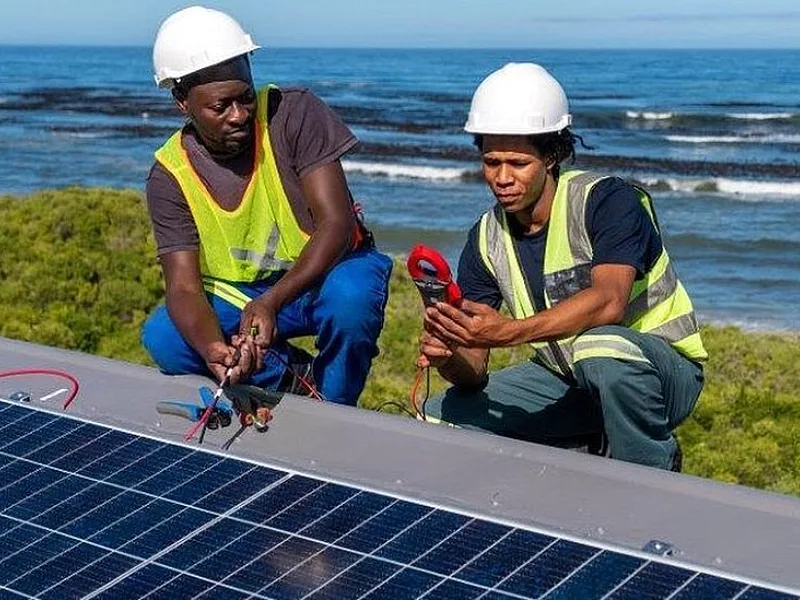
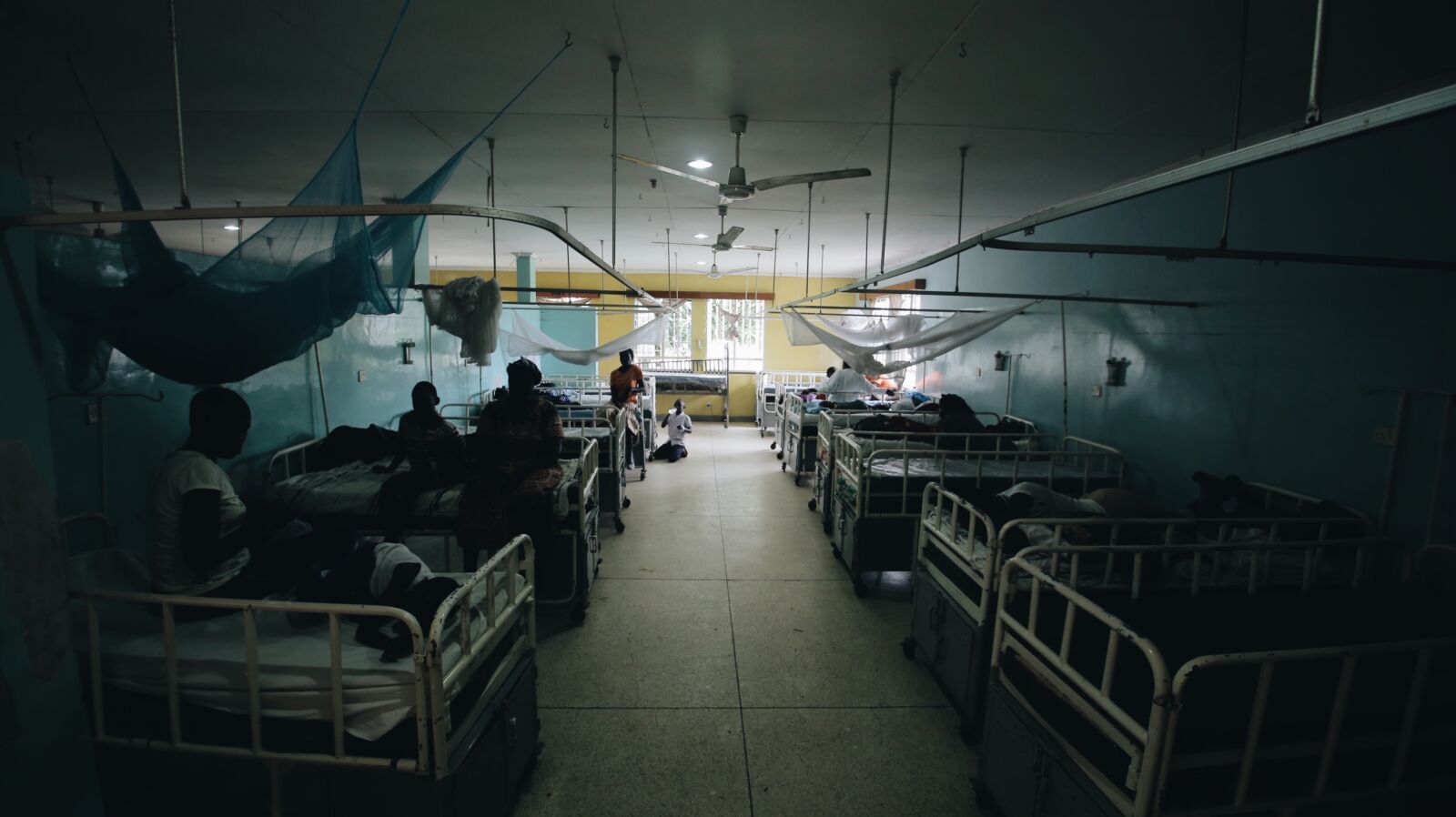
- Electrification of health centres
- Digital health infrastructure
- Supply chains
- Local manufacturing (projected sector size $259 billion by 2030)
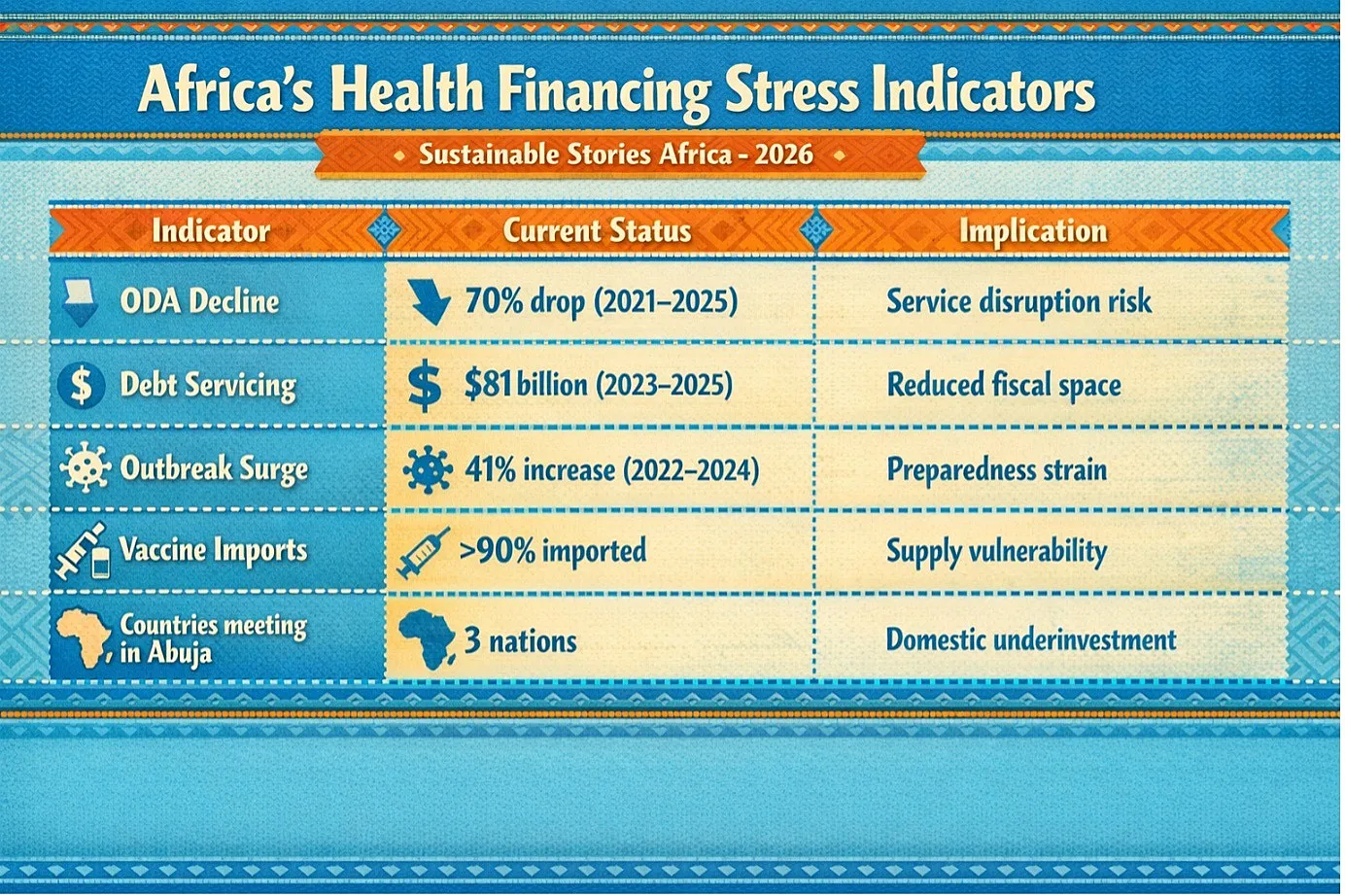
Africa's Health Financing Stress Indicators
| Indicator | Current Status | Implication |
|---|---|---|
| ODA Decline | 70% drop (2021–2025) | Service disruption risk |
| Debt Servicing | $81billion (2023–2025) | Reduced fiscal space |
| Outbreak Surge | 41% increase (2022–2024) | Preparedness strain |
| Vaccine Imports | >90% imported | Supply vulnerability |
| Countries meeting in Abuja | 3 nations | Domestic underinvestment |
Health Sovereignty as Economic Strategy
This is not simply a recalibration of the health sector. It is a macroeconomic pivot.
Africa CDC frames this strategy as health sovereignty, through the reduction of dependency, strengthening governance, and embedding accountability through reported scorecards to the AU Assembly.
Blended finance mechanisms aim to de-risk private capital by offering concessional financing and first-loss guarantees. Governance reforms target between 50% and 70% of donor funds that currently bypass national systems.
If executed, the strategy could:
- Reduce ODA dependency by 20% by 2030
- Enable at least 20 countries to reach 50% domestic health financing
- Unlock $3.4 billion annually via improved alignment
The economic multiplier is significant. Every $1 invested in health generates approximately $4 in economic growth, according to the Lancet Commission.
Political Will, Institutional Reform, Private Capital
Africa CDC has already convened:
- Ministerial Executive Leadership Programme (34 Ministers of Health, February 2025)
- High-level financing forum chaired by President Paul Kagame
Implementation will proceed in two phases:
- Phase 1 (2025–2026): 30 countries update costed plans; airline tax pilots; AU dashboard launch
- Phase 2 (2026–2030): scale innovative and blended finance; 20 countries reach 50% domestic funding
The requested implementation cost: $43 million.
The call is clear: political courage, governance discipline, and structured private-sector engagement.
Path Forward – Financing Sovereignty Through Domestic Innovation
Africa's strategy hinges on disciplined domestic mobilisation, credible governance reforms, and coordinated continental action. Innovative levies, diaspora capital and blended finance must complement, not replace, budgetary commitments.
If the continent aligns policy, capital and accountability mechanisms now, Africa can transform today's financing shock into a structural reset, anchoring resilient, sovereign health systems that underpin economic stability and long-term development.