Kenya’s electric vehicle transition is unfolding quietly, but deliberately, across Nairobi’s roads and start-up hubs.
From electric buses to battery-swapping motorcycles, innovators are testing business models built around affordability and clean energy.
Backed by a largely renewable-powered grid, Kenya’s push could redefine urban mobility in East Africa.
Kenya’s Quiet Electric Vehicle Push Gains Momentum
Kenya is steadily advancing what industry observers describe as a “quiet electric revolution,” driven by start-ups, policy reforms and a largely renewable electricity grid.
According to reporting by The World from PRX, electric mobility initiatives, including buses and motorcycles, are gaining traction in Nairobi and beyond, though persistent infrastructure gaps exist.
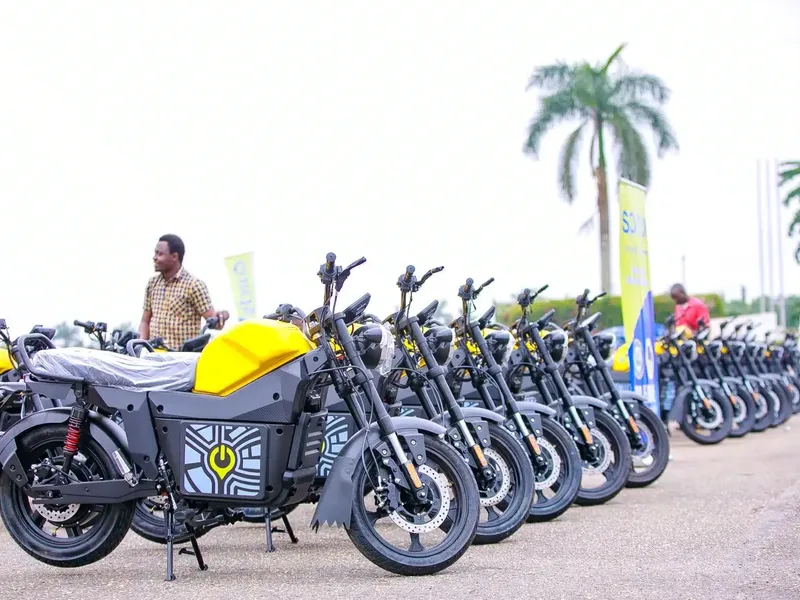
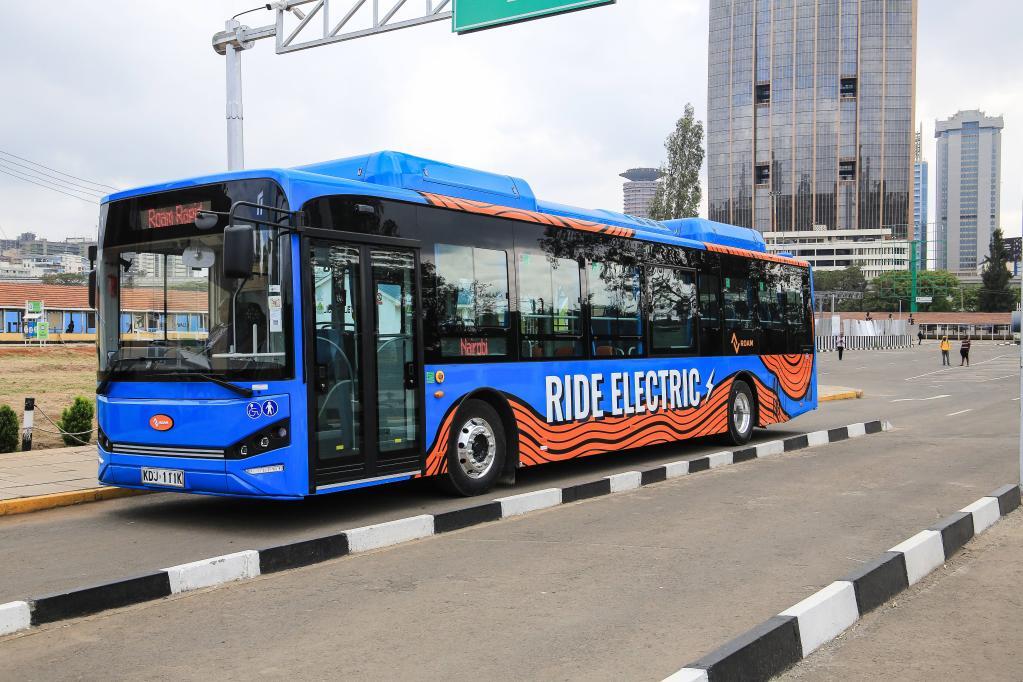
Unlike more headline-driven transitions elsewhere, Kenya’s electric vehicle (EV) movement has developed through incremental experimentation. Entrepreneurs are piloting electric buses on commuter routes, while battery-swapping systems for two- and three-wheelers aim to address affordability and charging-time constraints.
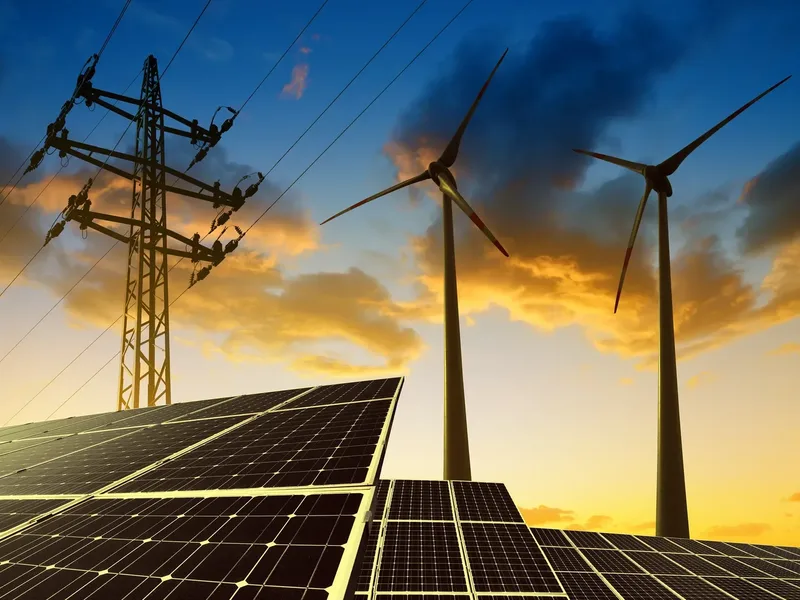
The shift aligns with Kenya’s broader climate commitments and its energy mix, which is dominated by geothermal and other renewable sources. This gives the country a structural advantage: electrified transport powered by relatively clean electricity.
Clean Grid Meets Mobility Shift
Kenya generates most of its electricity from renewable sources, particularly geothermal, which positions EV adoption not merely as a transport reform, but as a climate-aligned structural transition.
In a continent where transport emissions are rising alongside urbanisation, Kenya’s strategy reflects an early recognition that decarbonising mobility requires both vehicles and clean power.
Start-Ups Drive Incremental Change
Rather than relying solely on multinational automakers, Kenya’s EV momentum is being driven by local innovators.
Electric buses are operating on pilot routes, while start-ups are introducing battery-swapping systems for boda’s motorcycle taxis that form the backbone of urban mobility.
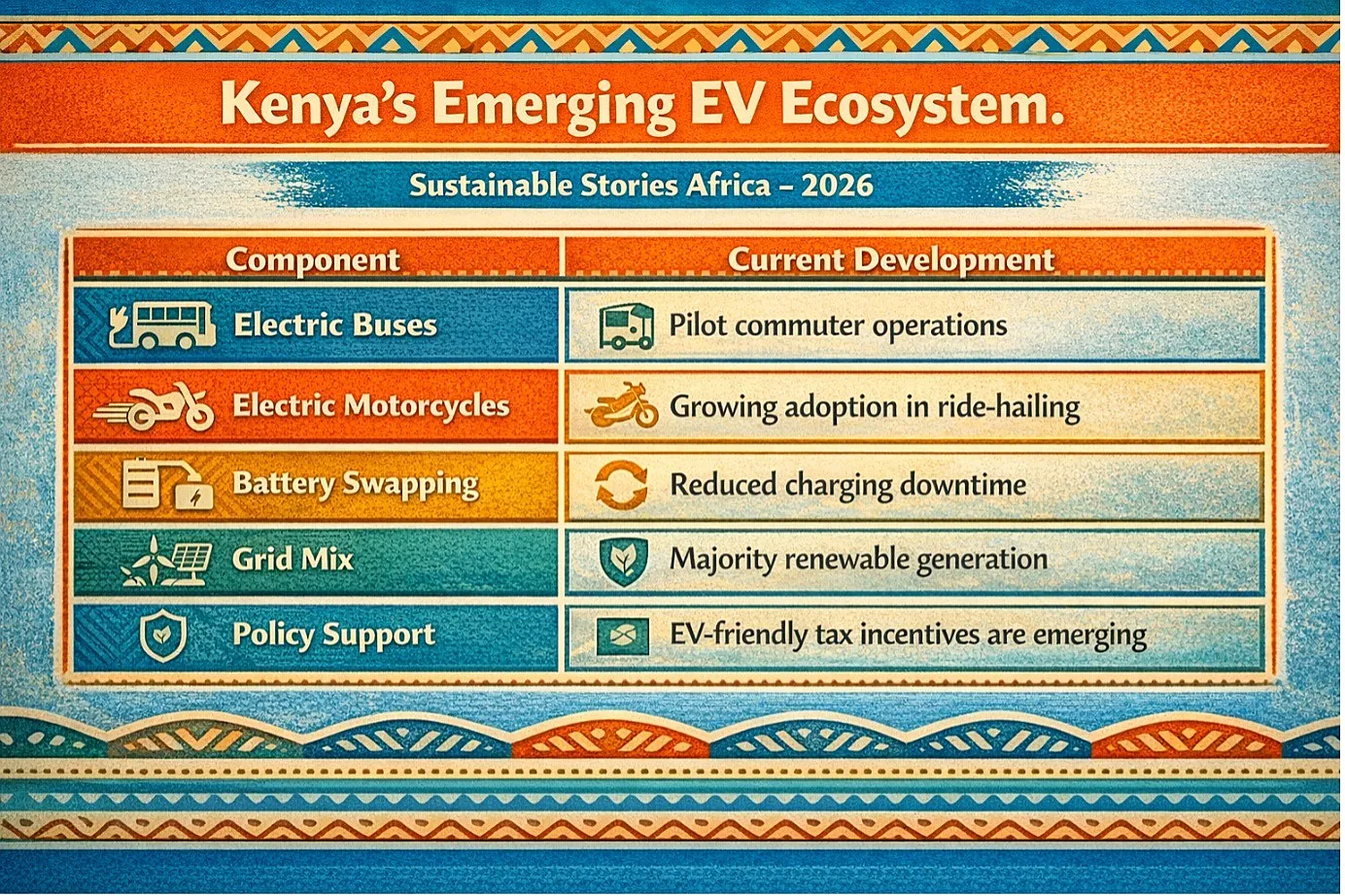
Kenya’s Emerging EV Ecosystem
Component | Current Development |
|---|---|
Electric Buses | Pilot commuter operations |
Electric Motorcycles | Growing adoption in ride-hailing |
Battery Swapping | Reduced charging downtime |
Grid Mix | Majority renewable generation |
Policy Support | EV-friendly tax incentives are emerging |
Battery-swapping models aim to reduce upfront costs by separating vehicle ownership from battery leasing. This approach addresses one of the largest barriers to adoption: the affordability of capital.
At the same time, policymakers are exploring tax adjustments to incentivise EV imports and local assembly.
Economic and Climate Dividends
The benefits extend beyond emissions reduction. Electric motorcycles reduce fuel expenses for riders, potentially increasing net income.
For bus operators, predictable electricity pricing may enable a reduction in long-term operating costs compared with diesel.
Strategic Impact Dimensions
Dimension | Projected Outcome |
|---|---|
Urban Air Quality | Lower particulate emissions |
Operator Costs | Reduced fuel expenditure |
Energy Security | Lower oil import dependency |
Climate Alignment | Reduced transport emissions |
Industrial Growth | Emerging EV value chains |
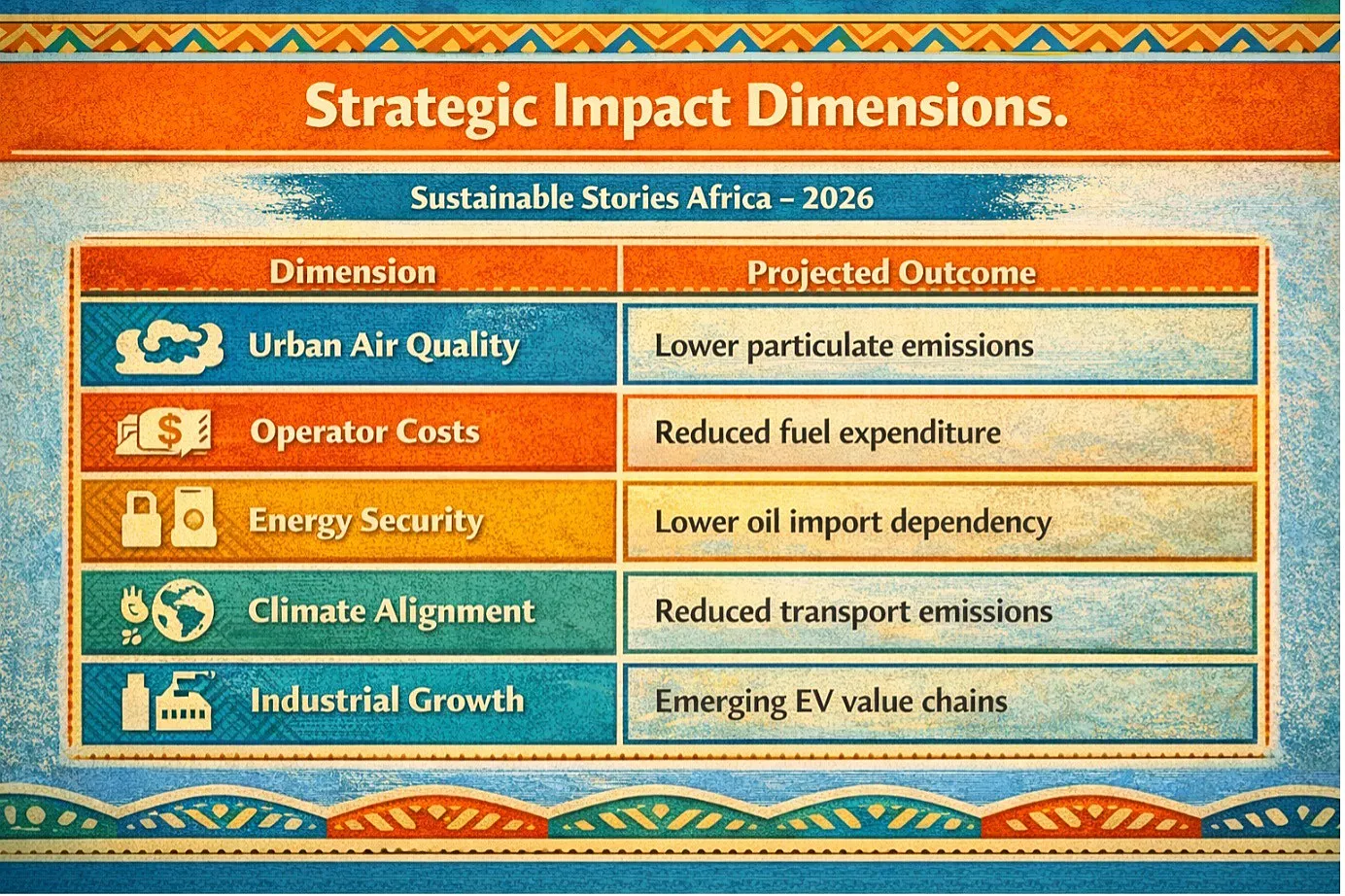
For Kenya, reducing oil imports could ease foreign exchange pressure. Simultaneously, a domestic EV ecosystem could stimulate assembly, maintenance and technology services sectors.
However, infrastructure remains a constraint. Charging networks, grid capacity management and regulatory clarity will determine the scale and pace of expansion.
Infrastructure and Policy Alignment Critical
Industry leaders argue that scaling the transition will require coordinated investment in charging stations and battery-swapping hubs. Regulatory frameworks must standardise safety requirements and grid integration protocols.
Private capital is increasingly attentive to Africa’s mobility sector, but investors typically seek stable policy signals. Ensuring predictable import duties, tax treatment, and licensing frameworks will influence long-term viability.
Kenya’s experience could serve as a blueprint for other African cities balancing urban congestion, pollution and fiscal pressures.
Path Forward – Scaling Infrastructure, Securing Investment
Kenya’s next phase centres on expanding charging infrastructure and formalising battery-swapping standards. Clear tax incentives and regulatory stability will be essential to sustain investor confidence.
If grid capacity and policy alignment keep pace, Kenya’s quiet revolution may evolve into a scalable model for electrified urban mobility across Africa.
Culled From: In Kenya, there’s a quiet push for an electric car revolution - The World from PRX