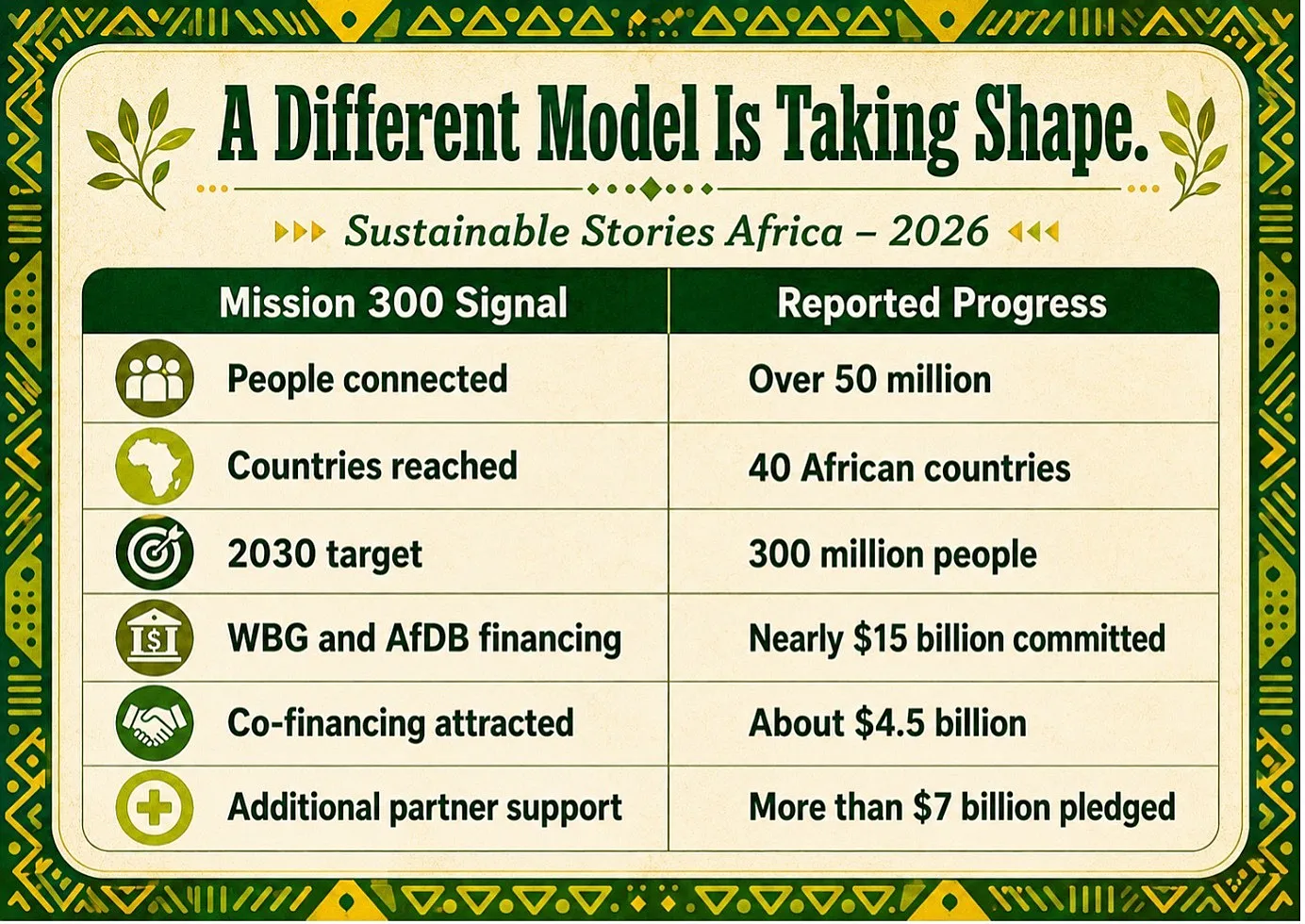
Mission 300 has connected over 50 million people to electricity across 40 African countries.
The milestone, announced by the World Bank Group and African Development Bank Group, shows faster progress toward the target of 300 million connections by 2030.
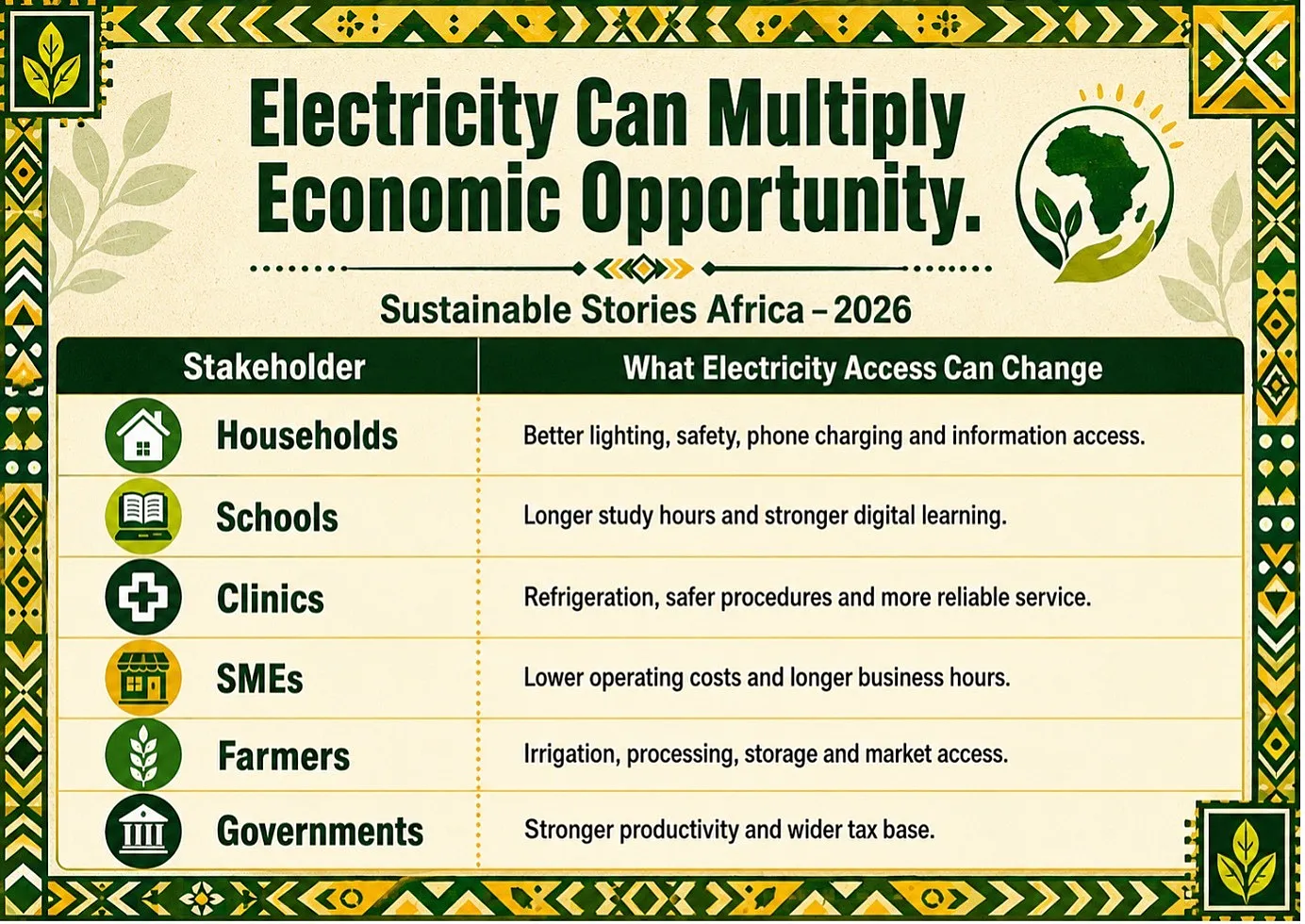
For households, schools, clinics and businesses, the shift could mean longer working hours, safer healthcare, better learning and stronger local economies.
Africa’s Power Gap Gets A Jolt
More than 50 million Africans have been connected to electricity under Mission 300, marking a major milestone in the continent’s effort to close one of the world’s deepest energy access gaps.
The World Bank Group and the African Development Bank Group announced the milestone on June 16, 2026, saying the initiative has reached people across 40 countries.
Mission 300 aims to connect 300 million Africans to electricity by 2030 through a mix of grid expansion, mini-grids, off-grid systems, policy reform and private-sector mobilisation.
The announcement matters because nearly 600 million people in Sub-Saharan Africa are still without access to electricity.
- For a household, that can mean children studying under weak light.
- For a clinic, it can mean vaccines stored at risk.
- For a small business, it can mean closing at sunset or relying on expensive diesel.
Mission 300’s central message is simple: access to electricity is no longer treated only as an infrastructure target.
It is being positioned as a jobs, health, education and growth strategy.
A Different Model Is Taking Shape
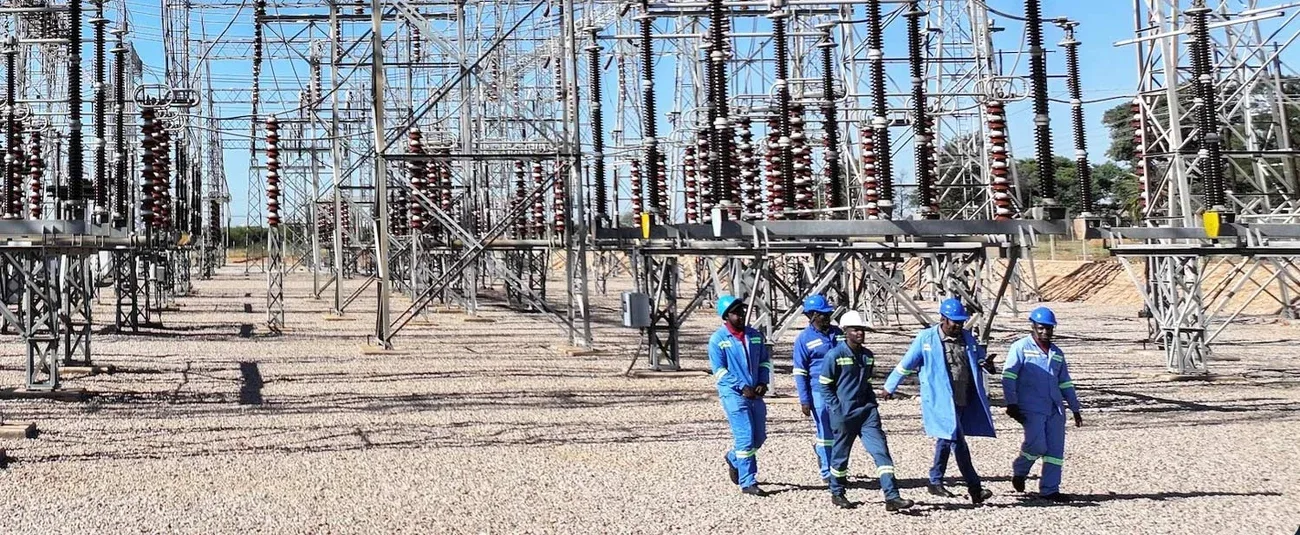
Mission 300 is delivering electricity access at nearly double the pace recorded when the initiative launched, with progress spanning generation, transmission and last-mile distribution.
- Tanzania has recorded 7.5 million new connections, a five-fold increase on its previous annual electrification pace.
- Ethiopia has connected 4.6 million people, supported by reforms that made grid connections more affordable.
The financial architecture is equally significant. The World Bank Group and African Development Bank have committed nearly $15 billion in financing, attracting approximately $4.5 billion in co-financing.
Other development partners have pledged more than $7 billion toward Africa's energy sector.
The defining innovation is coordination. National Energy Compacts align governments, donors and investors behind country-led plans, anchoring reform commitments, strengthening utilities, attracting private capital and creating clearer project pipelines.
Electricity Can Multiply Economic Opportunity
The upside is wider than household lighting.
Reliable, affordable electricity can support agro-processing, digital work, cold storage, small manufacturing, schools and healthcare facilities.
It can reduce dependence on generators and improve the economics of small enterprises that currently lose money to power outages.
For young Africans entering the labour market, access to electricity is a huge foundation for jobs.
Mission 300’s wider platform notes that 12 million young Africans enter the labour market each year, making energy access central to employment and industrial transformation.
The opportunity is also environmental.
- If new connections are supported by renewable energy, mini-grids and efficient systems, countries can expand access without locking communities into high-cost, high-emission power.
However, the risk of delay remains serious.
- Without faster implementation, millions may remain dependent on candles, diesel generators, biomass and unreliable grids.
That would deepen inequality and slow Africa’s industrial ambitions.
Reforms Must Match The Ambition
Mission 300’s next test is implementation.
- Governments will need to move from declarations to delivery by improving utility performance, reducing losses, expanding transmission, enabling private investment and protecting affordability for low-income users.
- Investors will need bankable projects, credible regulation and risk-sharing instruments. Development partners will need to coordinate financing instead of duplicating efforts.
- Utilities will need stronger governance, better collections and operational discipline.
The private sector also has a bigger role.
- Grants, guarantees and concessional loans can reduce risk; however, the long-term success depends on viable markets where energy providers can serve communities sustainably.
For African policymakers, the lesson is direct: access to energy is not only a power ministry issue.
It is an education, health, industry, jobs, gender and climate issue.
Countries that treat electricity as a whole-economy reform agenda are more likely to convert connections into productivity.
Path Forward – Power Must Deliver Shared Growth
Mission 300 has shown that coordinated finance, reform and political commitment can accelerate electricity access.
The next priority is turning connections into reliable service, productive use and inclusive growth.
African governments, financiers and utilities must now deepen reforms, protect affordability and expand clean energy solutions.
The promise is not just more power. It is stronger livelihoods, better services and a more resilient development pathway.
Culled From: Under Mission 300, A New Way of Doing Business Connects Over 50 Million People to Electricity Across Africa