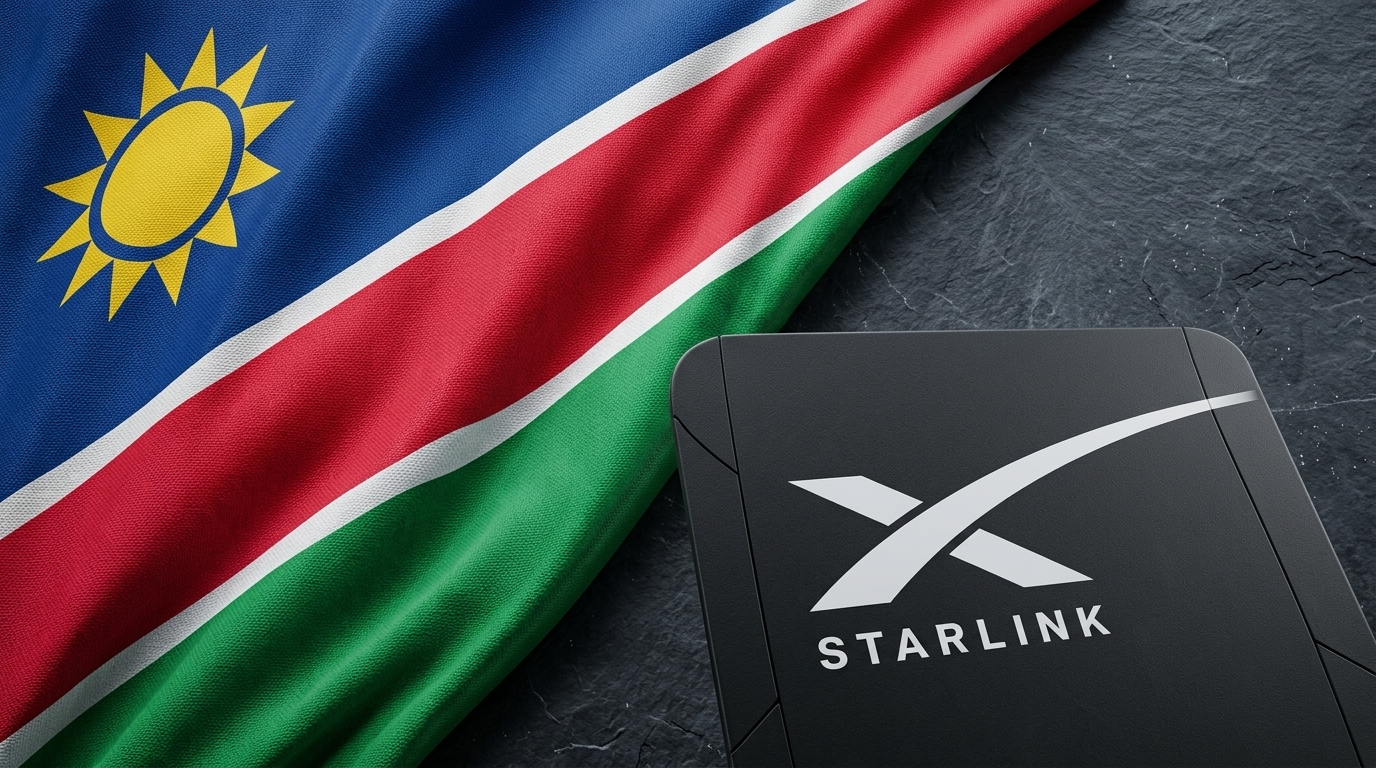
Namibia has upheld its decision to block Starlink from operating, rejecting 624 reconsideration requests linked to the satellite internet company’s licence refusal.
The decision matters because Africa’s connectivity race is no longer only about speed, coverage or cost.
It is also about who owns the infrastructure, who controls access, and whether digital expansion can serve national development without weakening local participation.
Namibia Draws A Digital Red Line
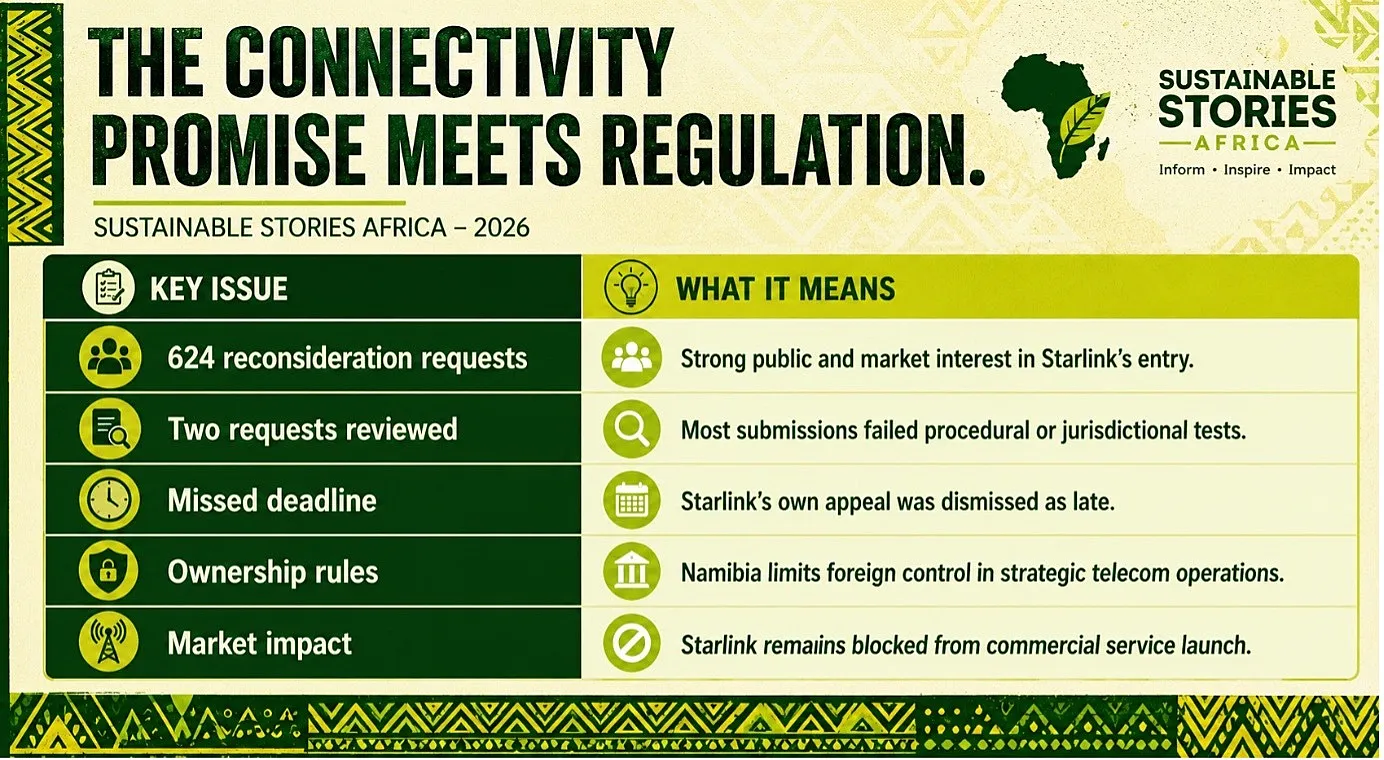
Namibia has reaffirmed its decision to keep Elon Musk’s Starlink out of its telecommunications market, after the Communications Regulatory Authority of Namibia dismissed 624 requests seeking reconsideration of an earlier licence rejection.
The regulator said Starlink failed to comply with Namibia’s ownership and control requirements under the country’s Communications Act. It also found that Starlink’s own reconsideration request was filed after the statutory deadline.
The ruling effectively prevents Starlink from launching commercial satellite broadband services in Namibia for now, despite strong public interest in faster and more reliable internet access.
For a country where remote communities, farms, schools, small businesses and tourism operators often depend on difficult infrastructure choices, the decision lands at the centre of a wider African debate: how can governments expand digital inclusion while protecting domestic ownership, market fairness and regulatory sovereignty?
The Connectivity Promise Meets Regulation
Starlink’s appeal followed the rejection of its applications for a telecommunications service licence and radio spectrum access. The original rejection came in March, when the regulator found that the company had not met legal requirements on local ownership and control.
Of the 624 reconsideration requests submitted, only two reportedly met the threshold for review.
Neither, according to the regulator, introduced new facts or showed material error in the original decision. A public petition backed by thousands of people was also rejected.
The case shows the tension between urgent connectivity needs and national regulatory control. Low Earth Orbit satellite internet can reach places where fibre, mobile towers and fixed broadband remain expensive or slow to deploy.
- For a rural clinic, it can mean faster patient referrals.
- For a remote school, it can mean access to digital learning.
- For a lodge operator, it can mean reliable bookings and payments.
However, governments are also asking a harder question: should digital infrastructure be opened quickly at any cost, or should foreign technology companies be required to build local partnerships, transfer value and comply with domestic laws?
Namibia has chosen the second path.
Better Access Needs Better Market Design
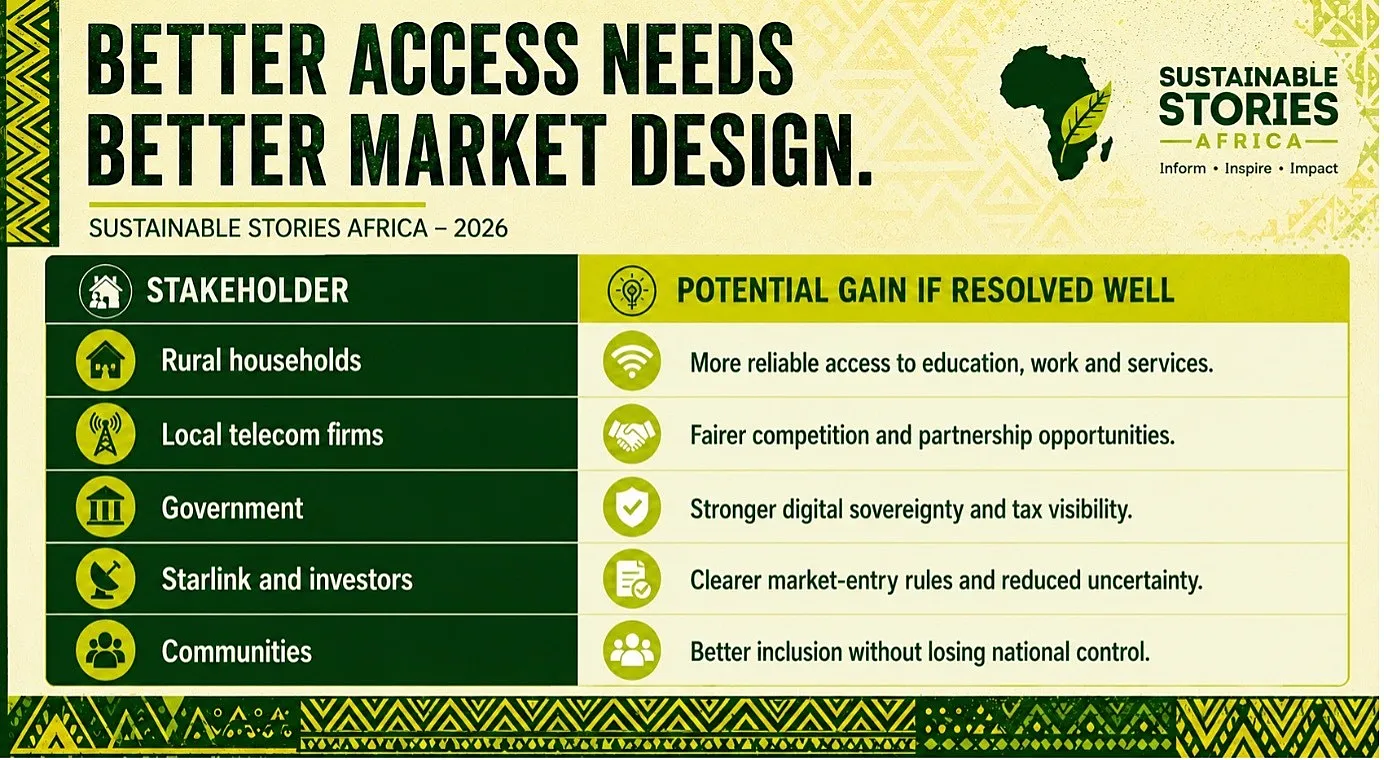
The Starlink decision should not be read simply as a rejection of innovation. It is also a statement that connectivity must be governed as a strategic development asset.
Across Africa, satellite internet is becoming more important as governments pursue digital public services, e-commerce, e-learning, telemedicine and climate-smart agriculture.
The opportunity is clear: better broadband can reduce isolation, support youth enterprise, improve emergency response and connect underserved communities to national markets.
However, the ownership question matters.
- If infrastructure access is expanded without local participation, African markets risk deepening dependence on external platforms
- If regulation is too rigid, countries risk delaying technologies that could immediately improve lives.
The better future sits between those extremes: clear rules, timely licensing, local investment, consumer protection and practical pathways for compliant foreign operators.
Connectivity Must Serve Citizens First
Namibia’s decision sends a clear message to technology companies entering African markets: innovation is welcome, but compliance is not optional.
- For policymakers, the task is to avoid turning regulation into exclusion. Ownership laws should protect the national interest.
However, they should also provide transparent, workable routes for investment, exemptions or local partnerships where public benefit is clear.
- For companies like Starlink, the lesson is equally direct. African markets are not passive recipients of technology.
They are sovereign jurisdictions with development priorities, legal frameworks and domestic industries to protect.
The next phase should move beyond confrontation. Namibia needs a licensing framework that protects local ownership while accelerating universal access.
Starlink, or any future satellite provider, needs to show how its model can create domestic value, respect the law and support long-term digital inclusion.
For citizens, the issue is not whether Starlink wins or loses. The real question is whether Namibia can deliver affordable, reliable and inclusive internet without weakening the rules designed to keep strategic sectors accountable.
Path Forward – Build Access With Local Value
Namibia’s Starlink case should push African regulators to modernise telecom rules for satellite broadband while keeping ownership, transparency and consumer protection at the centre.
The priority is not choosing between innovation and sovereignty. It is designing markets where fast internet, fair competition, local participation and digital inclusion can advance together.
Culled From: Namibia blocks Starlink operations after rejecting 624 appeals over ownership rules - Businessday NG