
Nature is moving from sustainability reports into financial statements as businesses face growing environmental risks.
Investors, regulators and lenders increasingly want companies to measure how ecosystems affect long-term value.
The shift could reshape investment decisions, supply chains and economic resilience across emerging markets.
Nature Becomes a Financial Asset and Liability
For decades, businesses treated nature as an unlimited resource. Today, that assumption is rapidly changing.
Across global markets, companies are beginning to assess how forests, rivers, wetlands, soils and biodiversity influence business performance, asset values and future earnings.
What was once considered an environmental issue is increasingly being viewed as a financial one.
The shift comes as investors, regulators and insurers warn that ecosystem degradation is creating material business risks.
From water shortages affecting manufacturing plants to declining soil health threatening agricultural productivity, nature loss is emerging as a balance-sheet issue rather than a purely sustainability concern.
The movement has gained momentum following the development of nature-related disclosure frameworks and growing calls for businesses to identify, assess and report dependencies on natural capital.
For African economies, where agriculture, mining, tourism and natural resources underpin economic activity, the implications are particularly significant.
The Hidden Economic Engine Behind Business Performance
Nature remains one of the world's most valuable yet least-accounted-for assets.
According to estimates from the World Economic Forum, more than half of global GDP is moderately or highly dependent on nature and ecosystem services.
However, many organisations still struggle to quantify how environmental degradation affects operational resilience.
The challenge is increasingly visible across Africa.
Prolonged droughts are reducing agricultural yields. Land degradation is affecting food systems.
Water scarcity is increasing operational costs for manufacturers. Coastal erosion threatens infrastructure investments, while biodiversity loss weakens tourism-dependent economies.
These pressures are translating into financial risks that boards and investors can no longer ignore.
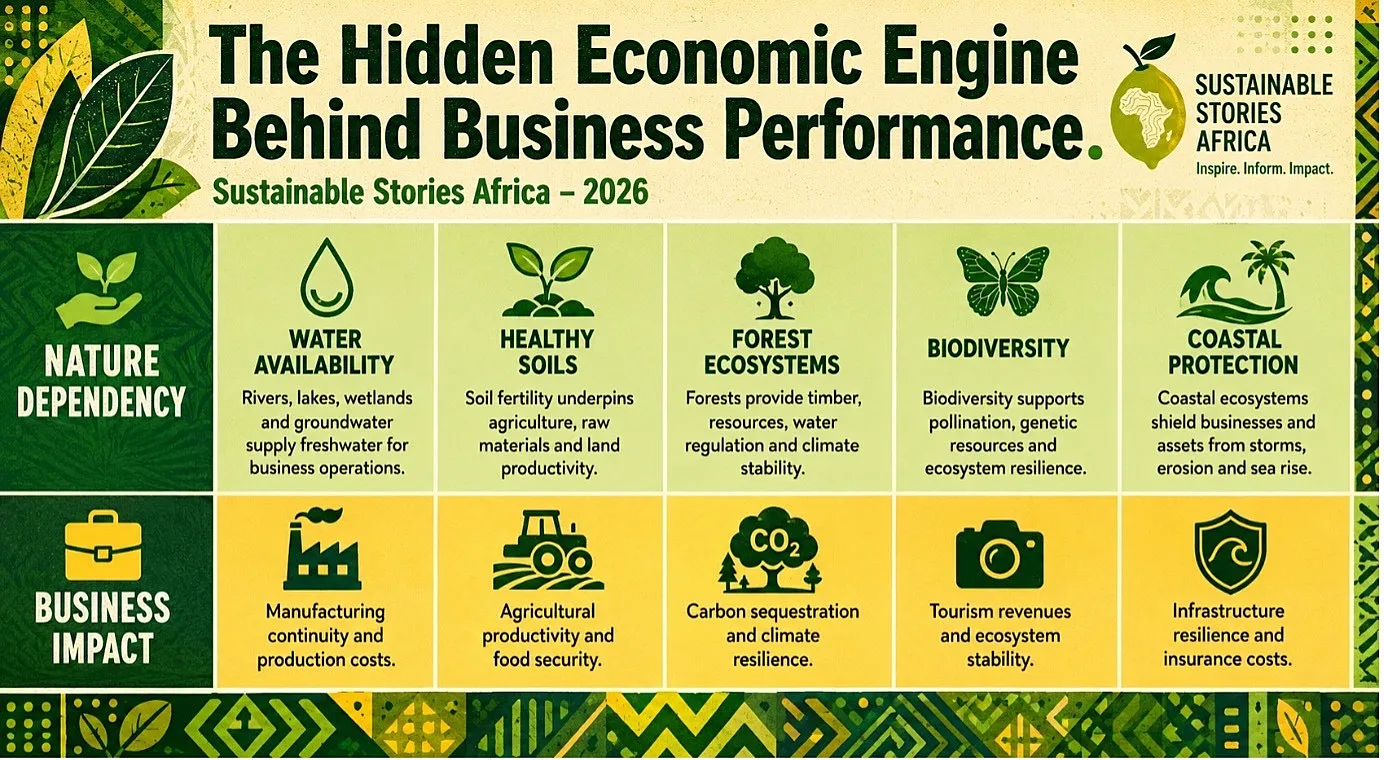
Major investors are increasingly asking companies not only how they affect nature but also how nature affects them. This represents a significant evolution in ESG thinking.
Rather than focusing solely on environmental footprints, organisations are now evaluating environmental dependencies.
The distinction is important. A company may have a relatively small environmental impact yet remain highly vulnerable to ecosystem disruption.
For African businesses operating in climate-sensitive sectors, understanding this relationship is becoming a strategic necessity rather than a voluntary exercise.
Turning Natural Capital into Strategic Advantage
The emerging focus on nature accounting presents opportunities alongside risks.
- Businesses that understand their environmental dependencies can make better investment decisions, strengthen supply chains and improve long-term resilience.
- Financial institutions can allocate capital more effectively by identifying environmental risks before they become financial losses.
The benefits extend beyond corporate performance.
Nature-positive investments can help restore degraded landscapes, improve water security, support livelihoods and strengthen local economies.
Better environmental data can also unlock financing opportunities as lenders increasingly seek evidence of resilience and sustainability.
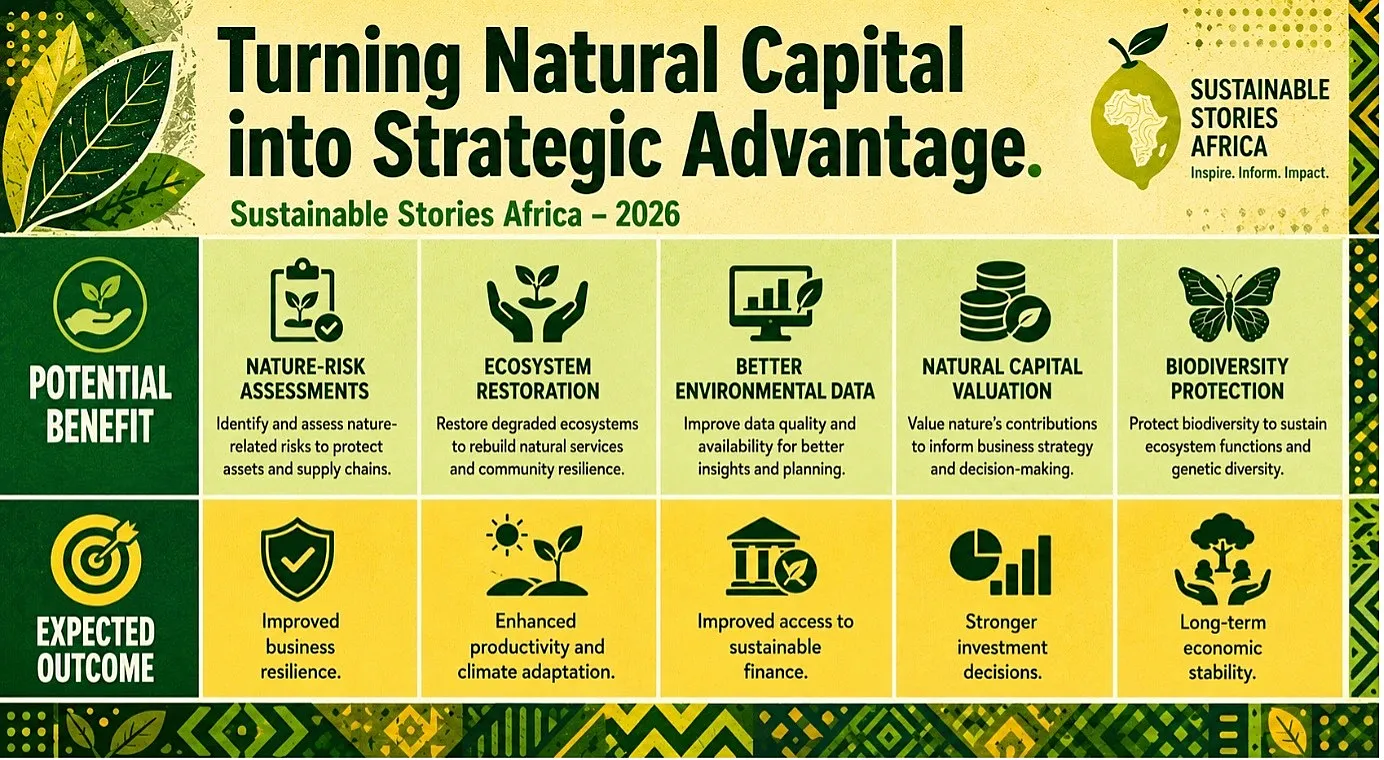
The opportunity is especially relevant for Africa, where abundant natural resources remain central to development ambitions.
Properly valued and managed, ecosystems can become drivers of inclusive growth rather than hidden vulnerabilities.
However, failure to act could expose businesses and economies to rising operational disruptions, higher financing costs, and reduced competitiveness in global markets increasingly focused on sustainability performance.
From Environmental Awareness to Financial Accountability
Experts argue that the next phase of corporate sustainability must move beyond broad commitments toward measurable accountability.
Boards should begin integrating nature-related risks into enterprise risk management systems.
- Companies need stronger environmental data, clearer disclosure practices and more robust governance structures.
- Financial institutions must develop tools that recognise both environmental risks and nature-positive opportunities.
Governments also have a critical role to play.
- Clear policy frameworks, stronger environmental monitoring and incentives for ecosystem restoration can help accelerate adoption.
- Regulators can support consistency in reporting, while development finance institutions can help build the technical capacity required for implementation.
For investors, the message is increasingly straightforward: nature risk is investment risk.
As climate pressures intensify and ecosystem degradation accelerates, organisations that understand their relationship with nature will be better positioned to navigate uncertainty, attract capital and create sustainable value.
Path Forward – Valuing Nature Before Costs Escalate
Nature accounting is moving from the margins of sustainability reporting to the centre of financial decision-making.
Businesses, investors and policymakers increasingly recognise that environmental resilience underpins economic resilience.
The next priority is translating awareness into action through stronger disclosures, better data, ecosystem restoration and investment strategies that recognise nature as a critical asset for the future of Africa's sustainable development.
Culled From: Nature on the balance sheet