A landmark joint study by the Boston University Global Development Policy Centre and the South Centre, published in November 2025, has produced the most comprehensive comparative analysis yet of compulsory licensing laws in 15 middle-income countries, and concluded that all 15 are failing to fully utilise the legal flexibility available to them under international trade law to secure affordable medicines.
The report does not stop at diagnosis. It issues a six-point action agenda, directed at governments, international organisations, and the WTO itself, a blueprint for turning the law's promise into medicine on the shelf.
Landmark Study Pinpoints Legal Gaps Blocking Medicine Access
Boston University's Global Development Policy Centre and the South Centre have jointly released a meticulous assessment of compulsory licensing (CL) laws across 15 middle-income countries, including Algeria, Colombia, China, Thailand, Malaysia, and the Philippines.
The study, the most granular of its kind, finds that while all 15 countries have some form of CL legislation, none has maximised the full range of TRIPS flexibilities available under Articles 31 and 31bis of the WTO TRIPS Agreement.
The report comes five years after the COVID-19 pandemic exposed the catastrophic consequences of medicine supply inequality, and just months after the WHO finalised a Pandemic Treaty whose technology transfer provisions were significantly diluted under pressure from pharmaceutical industry interests.
Its release lands at a moment of significant geopolitical tension around intellectual property rights and health sovereignty.
The Scope and Stakes of the Findings
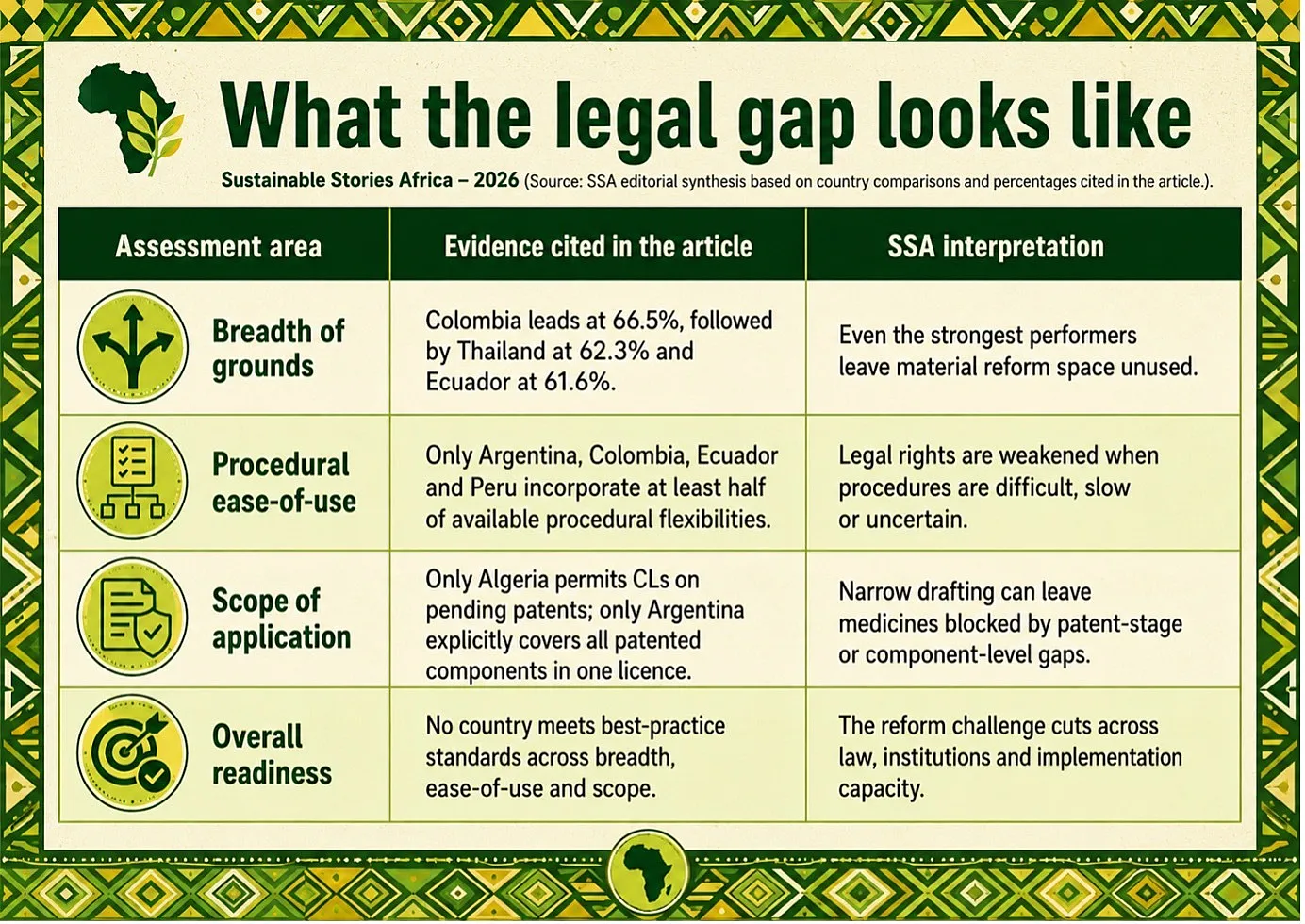
Across three dimensions, breadth of grounds for issuing CLs, procedural ease-of-use, and scope of application, no single country in the study achieves best-practice standards. Colombia leads on average breadth scores at 66.5%,
Thailand at 62.3%, and Ecuador at 61.6%; however, even these leaders leave substantial policy space unused. Only four countries (Argentina, Colombia, Ecuador, and Peru) incorporate even half of the procedural ease-of-use flexibilities that TRIPS allows.
Only one country (Algeria) permits CLs on pending patents, and only one (Argentina) explicitly covers all patented components of a pharmaceutical product in a single licence.
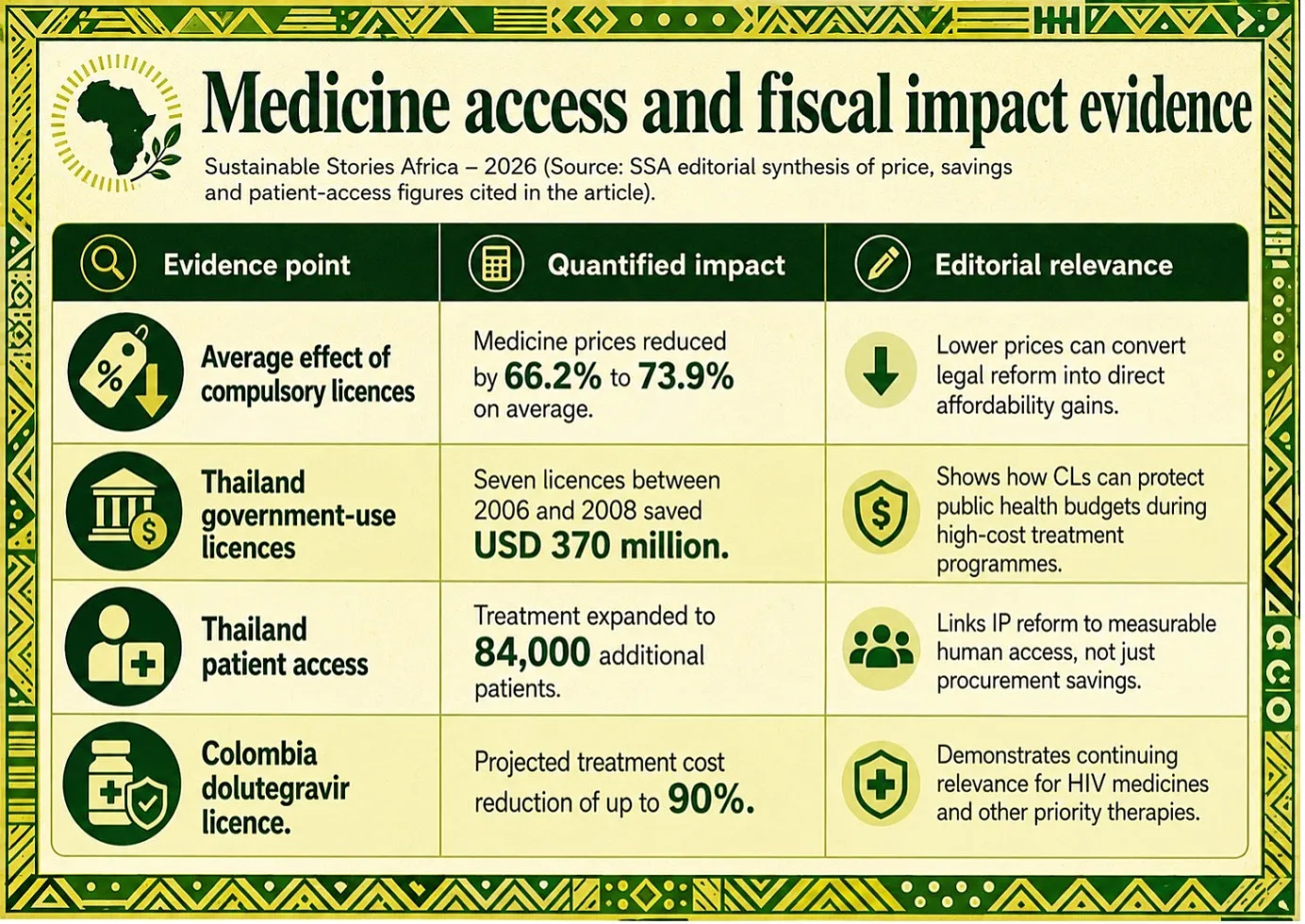
The human and economic costs are significant. Studies cited in the report show that compulsory licences reduce medicine prices by between 66.2% and 73.9% on average.
Thailand's seven government-use licences between 2006 and 2008 saved USD $370 million in government health expenditure and expanded treatment to 84,000 additional patients.
Colombia's 2024 dolutegravir compulsory licence is projected to reduce treatment costs by up to 90%.
A Six-Point Reform Agenda
The study's six core recommendations constitute one of the clearest reform agendas in the access-to-medicines space:
- National Law Reform – Countries should immediately update domestic patent legislation to reflect TRIPS CL flexibilities.
- Technical Support – WHO and UNDP should provide dedicated guidance and technical assistance to countries excluded from voluntary pharmaceutical licences.
- MIC Cooperation – Middle-income countries should coordinate law reforms and CL issuance to aggregate markets and attract generic manufacturers.
- Enabling Policies – Regulatory harmonisation, essential medicines list expansion, and clinical guidance alignment are all needed to support CL implementation.
- TRIPS Reform – Articles 31 and 31bis should be reformed to remove export and import obstacles that prevent effective cross-border medicines supply.
- Further Research – More granular analysis of full CL implementation examples is needed to support other countries' reform efforts.
Regional Implications for Africa and the Global South
The study's lead researchers, drawn from Northeastern University, La Trobe University, Boston University, and the University of Melbourne, note that the findings are particularly relevant for upper-middle-income countries excluded from the Medicines Patent Pool's voluntary licensing programmes.
These countries cannot easily access either donor-financed generic supply or commercial voluntary licences, placing them in a medicines access gap with few alternatives unless they activate their CL rights.
For African countries closely tracking these developments, the report provides both a diagnostic and a directive: the tools are available under international law; the task is to write them into national statute books and build the institutional capacity to use them.
Path Forward – Law Reform Is Both the Strategy and the Signal
Strengthening compulsory licensing laws is not only a practical strategy to accessing medicines; it is a signal to the pharmaceutical industry that governments are prepared to use every legal tool available.
The BU GDPC and South Centre call for action is both a research outcome and a policy mandate. Middle-income countries that act now will be better positioned to negotiate prices, secure supply, and protect their populations when the next health emergency arrives.