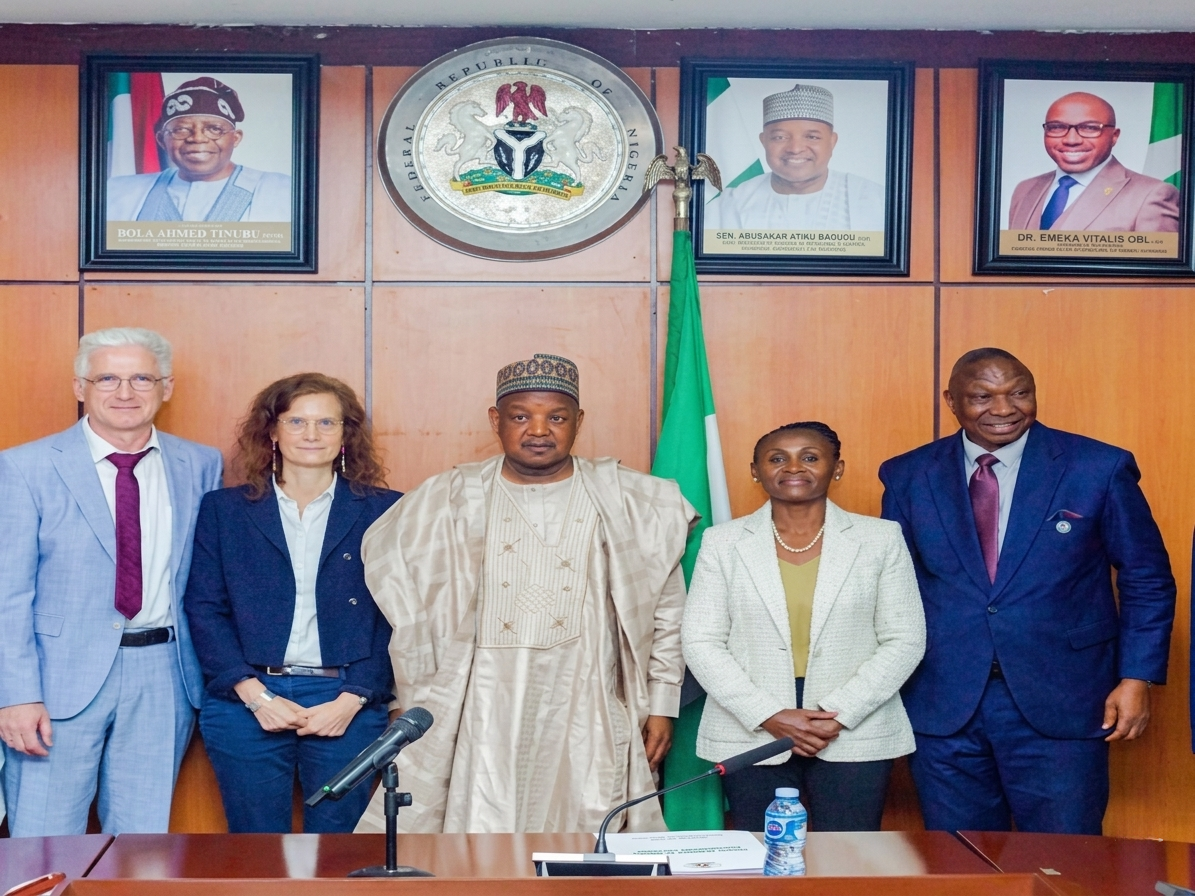
Nigeria and Germany have renewed cooperation on energy transition, infrastructure, and private capital mobilisation.
The agreement comes as Nigeria seeks reliable electricity, a cleaner industry and stronger climate finance.
For households, factories and young technicians, the test is simple: whether diplomacy becomes power, jobs and lower emissions.
Germany Partnership Enters New Phase
Nigeria and Germany have moved to deepen their energy transition partnership, placing power sector reform, sustainable infrastructure and private investment at the centre of a renewed bilateral cooperation framework.
The latest alignment follows government negotiations in Abuja, where both countries discussed economic transformation, climate-smart development and stronger German participation in Nigeria’s energy and industrial future.
Germany’s development agency GIZ said the 2026 negotiations highlighted new partnerships, including cooperation with Siemens Energy and GIZ, while recent reporting noted that the broader agreement covers energy, agriculture, healthcare, skills, and private-sector growth.
For Nigeria, the urgency is familiar. A welder in Aba, a cold-room operator in Kano, or a small clinic outside Makurdi does not experience energy transition as policy language.
They experience it as power that comes on, stays on, and costs less to secure. That is why the Nigeria-Germany alignment matters now: it links climate ambition with the everyday economics of productivity.
Power Reform Meets Climate Finance
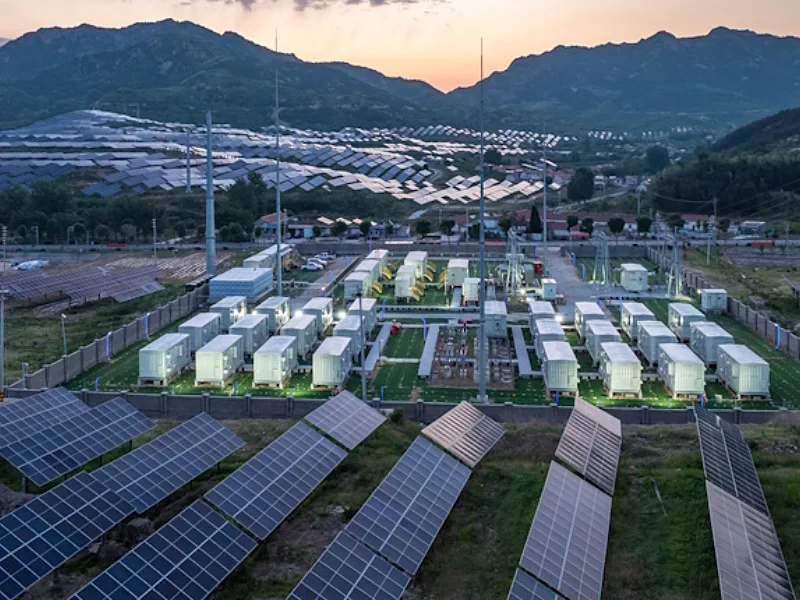
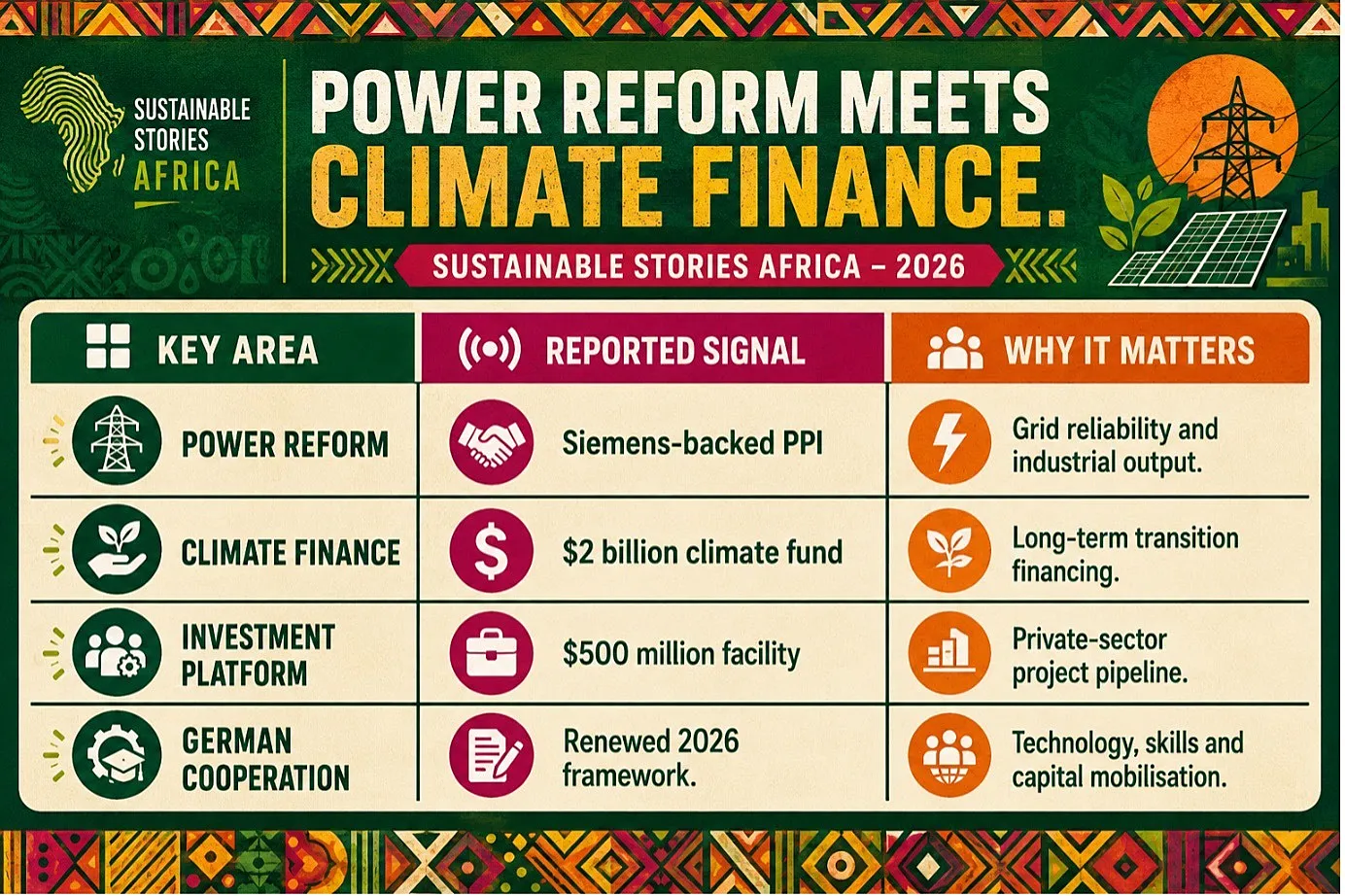
The partnership builds on years of German involvement in Nigeria’s power sector, including the Siemens-backed Presidential Power Initiative, designed to expand and stabilise electricity delivery.
Nigeria’s FGN Power Company says the initiative is structured in phases, targeting 7 GW, 11 GW and eventually 25 GW of operational capacity.
In February 2026, President Bola Tinubu and German Chancellor Friedrich Merz discussed reviving the Siemens power deal, with Deutsche Bank financing also raised during the call.
The new cooperation also comes with a broader financing moment. Nigeria has been seeking to mobilise $25 billion to $30 billion annually in climate finance and launched new green finance initiatives, including a $2 billion National Climate Change Fund and a $500 million Climate Investment Platform.
What Reliable Transition Can Unlock
If implemented well, the partnership could help Nigeria bridge two pressures at once: expanding energy access while lowering the carbon intensity of future growth.
The benefit is not only cleaner electricity. It is better cold chains for farmers, more predictable production for manufacturers, stronger digital infrastructure for small businesses, and technical jobs for young Nigerians trained in renewable energy, grid systems, gas-to-power and energy efficiency.
Germany’s comparative strength is not just funding. It is technical execution, industrial standards and energy systems planning.
Nigeria’s opportunity is scale: a large market, major gas resources, fast-growing electricity demand and an urgent need to modernise infrastructure.
Turn Agreements Into Delivery
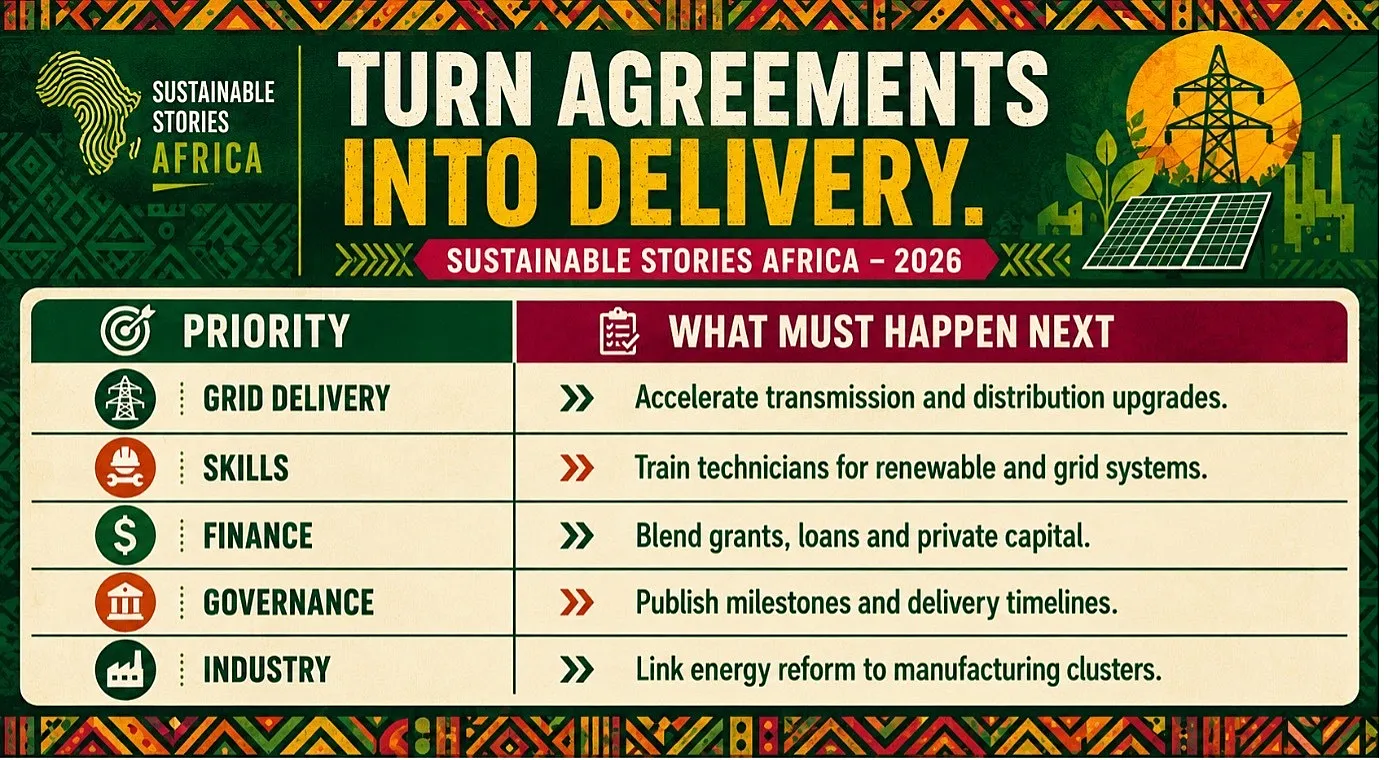
The risk is that the partnership becomes another high-level announcement without visible delivery.
Nigeria’s power sector has suffered from weak transmission, liquidity gaps, regulatory uncertainty and slow project execution.
To avoid that, both governments must prioritise bankable projects, transparent procurement, local workforce development and measurable milestones.
Private investors will also need clarity on tariffs, guarantees, grid access and currency risk.
For citizens, the promise should be practical: fewer diesel generators, more productive work hours and cleaner energy options that do not exclude low-income communities.
Path Forward – Delivery Must Define Partnership
Nigeria and Germany’s renewed alignment can advance ESG goals if it turns diplomacy into bankable projects, workforce training and measurable improvements of the power sector.
The next test is execution: stronger institutions, credible financing, transparent delivery and energy access that reaches households, businesses and public services, rather than policy documents.
Culled From: Nigeria, Germany Align on Energy Transition