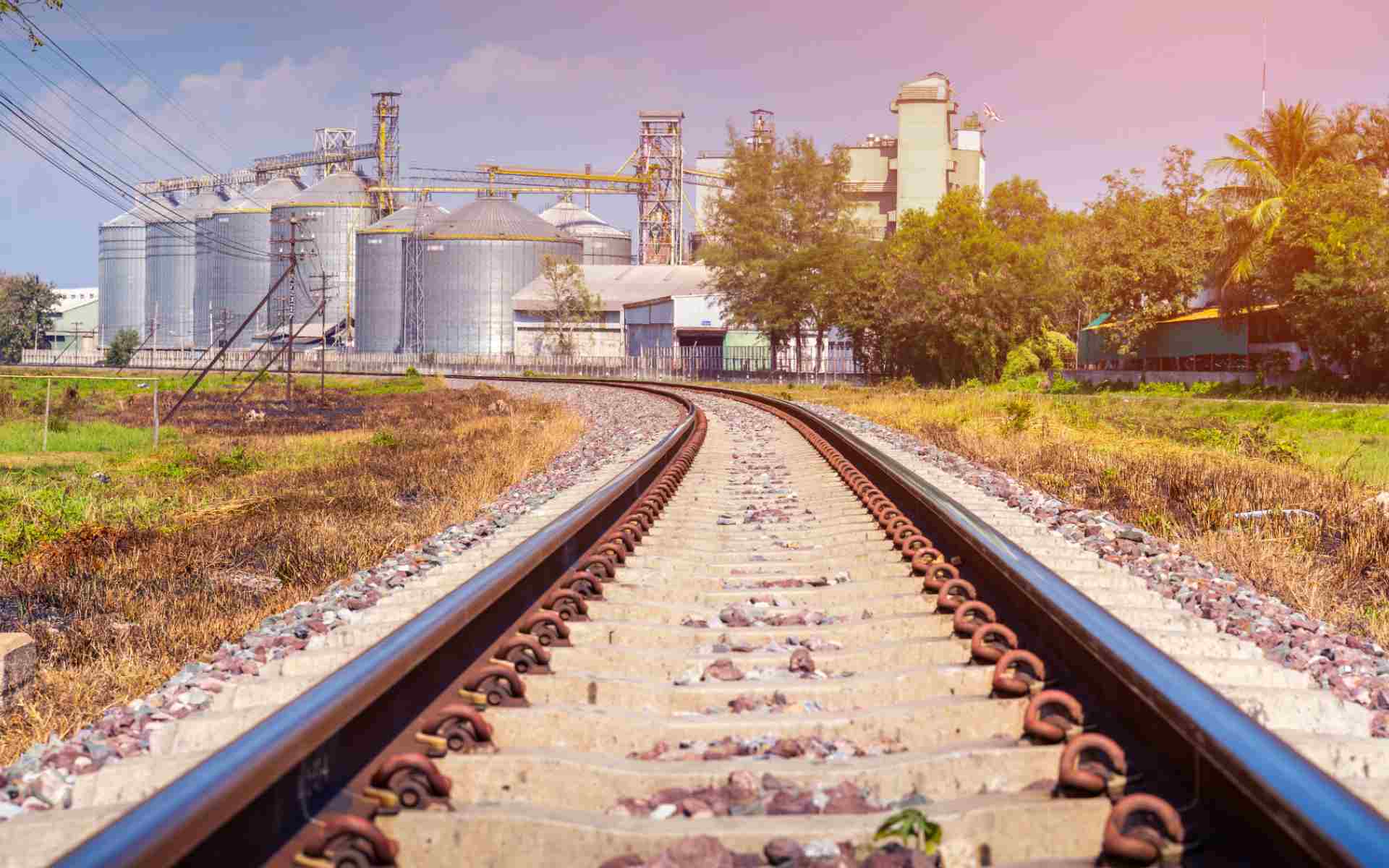
Nigeria and Ethiopia have signed a landmark agreement to develop a multibillion-dollar gas-by-rail corridor linking energy supply with industrial demand.
The project emphasises a strategic shift toward cross-border infrastructure integration aimed at unlocking Africa’s gas potential and strengthening energy security.
Analysts say the corridor could reshape regional energy logistics, accelerate industrial growth, and deepen economic cooperation between two of Africa’s largest economies.
Strategic Gas Corridor Signals Regional Shift
Nigeria and Ethiopia have formalised a multibillion-dollar agreement to develop a gas-by-rail corridor designed to transport natural gas efficiently across regional markets, marking a major milestone in Africa’s infrastructure-led energy transition.
The agreement reflects growing urgency among African economies to unlock domestic energy resources, reduce infrastructure bottlenecks, and strengthen industrial competitiveness.
By integrating rail logistics with gas transportation, the project offers an alternative to costly pipeline networks and inefficient road-based transport systems.
For Nigeria, Africa’s largest holder of gas reserves, the corridor presents an opportunity to monetise vast natural gas resources.
For Ethiopia, one of Africa’s fastest-growing economies, the agreement unlocks access to reliable energy, which will support industrial expansion and economic diversification.
Infrastructure Innovation Unlocks Gas Distribution Potential
Gas transportation constraints remain a major barrier to Africa’s energy utilisation. Limited pipeline infrastructure has restricted the ability to deliver gas efficiently across long distances and underserved markets.
The gas-by-rail model offers a flexible and scalable solution that supports cross-border energy trade.
Infrastructure Challenge | Corridor Solution | Strategic Impact |
|---|---|---|
Limited pipeline networks | Rail-based gas transport | Expanded market access |
High logistics costs | Efficient transport systems | Reduced energy delivery costs |
Energy supply constraints | Reliable gas distribution | Improved industrial productivity |
Infrastructure financing gaps | Scalable project model | Increased investor participation |
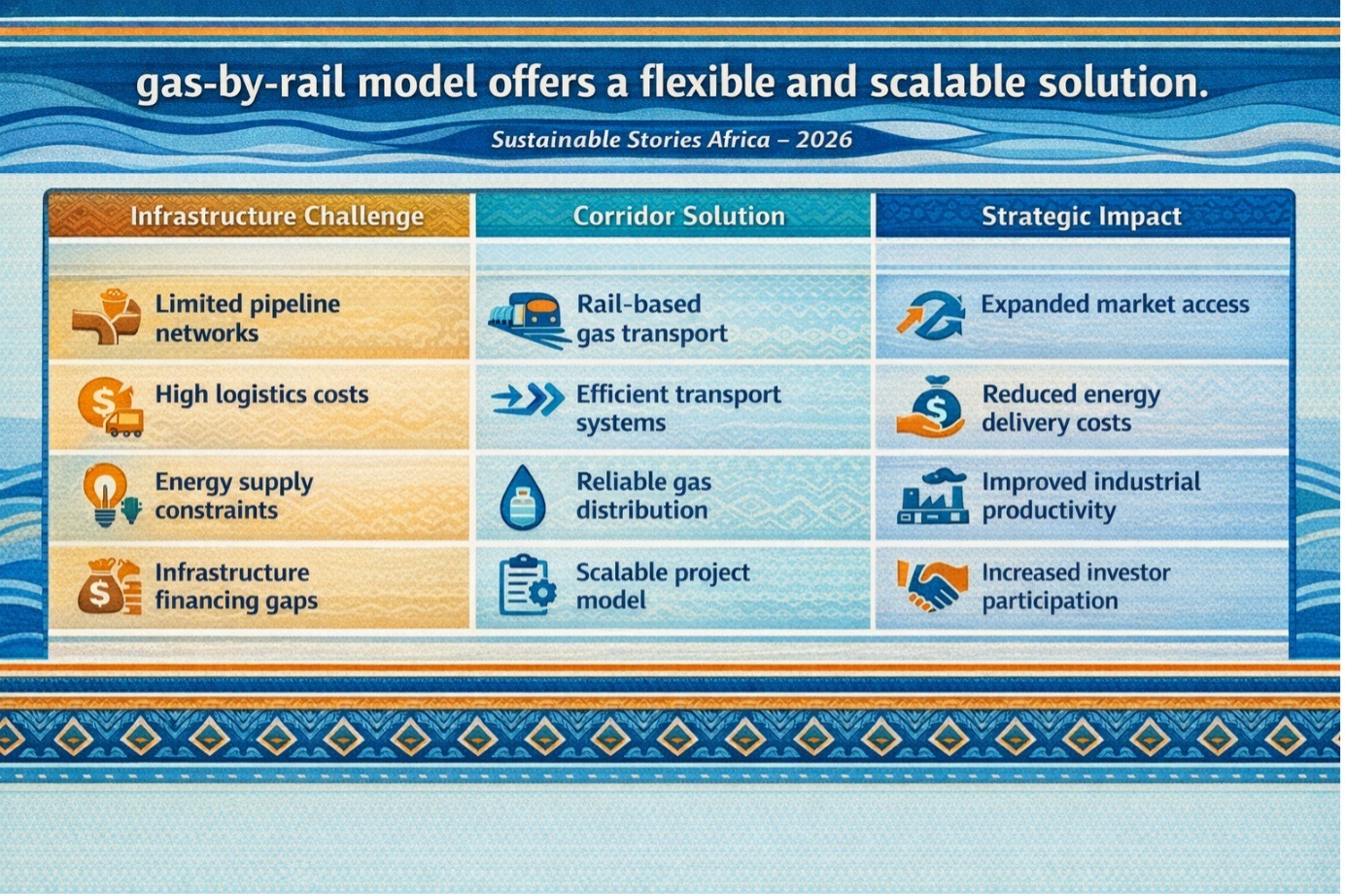
Rail-based gas transportation enables the efficient transportation of compressed or liquefied natural gas between production centres and industrial zones, accelerating energy access without requiring immediate pipeline construction.
This model has already gained traction globally as countries seek cost-effective and scalable energy infrastructure solutions.
Gas Corridor Strengthens Industrial Growth Prospects
The corridor is expected to support industrial development, energy security, and regional economic integration.
Reliable gas access enables manufacturing growth, power generation stability, and reduced reliance on expensive imported fuels.
For Nigeria, the project aligns with strategic priorities to expand gas utilisation, reduce flaring, and strengthen domestic and regional energy markets.
Strategic Benefit | Economic Outcome | Regional Impact |
|---|---|---|
Expanded gas utilisation | Increased export revenues | Stronger energy trade integration |
Reliable industrial energy supply | Manufacturing growth | Job creation |
Reduced reliance on imports | Improved trade balance | Greater energy independence |
Infrastructure investment mobilisation | Capital inflows | Economic diversification |
The project also strengthens Africa’s position in global energy markets by improving internal energy distribution efficiency and supporting industrialisation objectives.
As global energy systems evolve, natural gas remains a critical transition fuel supporting economic development while enabling gradual decarbonisation.
Execution and Financing Will Determine Success
Successful implementation will depend on coordinated execution, financing mobilisation, and regulatory alignment across participating stakeholders.
Infrastructure development of this scale requires strong public-private partnerships, investor confidence, and supportive regulatory frameworks.
Financing mechanisms, including development finance, sovereign investment, and private capital, will play a critical role in delivering the corridor.
If successfully implemented, the gas-by-rail corridor could serve as a model for scalable energy infrastructure across Africa, enabling efficient resource utilisation and strengthening regional integration.
The agreement reflects a growing shift toward infrastructure-driven energy security strategies across African economies.
Path Forward – Corridor Requires Coordinated Infrastructure Execution
Governments and investors must prioritise financing, regulatory coordination, and infrastructure development to ensure the implementation of a successful corridor.
Strategic execution can unlock gas resources, strengthen industrial growth, and accelerate regional energy integration.
Culled From: Ethiopia, Nigeria sign deal for multibillion dollar gas-by-rail corridor project - Energy in Africa