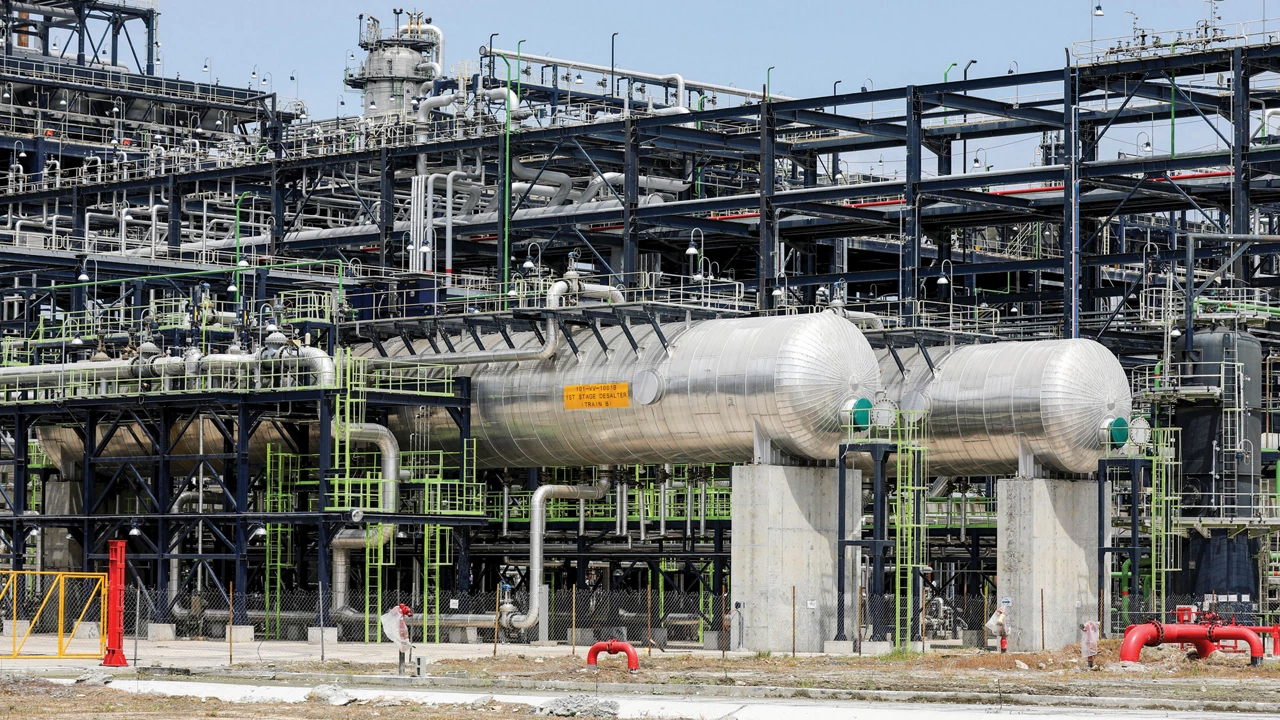
Nigeria is emerging as a strategic player in the global carbon credit market, positioning climate mitigation as both an environmental and economic opportunity.
New regulatory frameworks and project pipelines are unlocking pathways to monetise emissions reductions.
Carbon markets offer Nigeria the potential to attract climate finance, strengthen ESG compliance, and diversify revenue sources beyond fossil fuels.
However, governance integrity, market transparency, and institutional readiness will determine whether Nigeria fully captures this opportunity.
Nigeria Advances Carbon Market To Unlock Climate Finance Opportunity
Nigeria is strengthening its participation in the global carbon credit market, positioning emissions reduction as a new source of economic value and climate finance.
As global demand for carbon offsets grows, Nigeria’s natural assets, including forests, wetlands, and renewable energy potential, offer opportunities to generate high-value carbon credits.
Government reforms, ESG integration efforts, and private sector engagement are driving the development of carbon projects across sectors, including energy, forestry, and agriculture.
If scaled effectively, carbon markets could unlock billions in climate finance while accelerating Nigeria’s energy transition and economic diversification.
Carbon Markets Create New Economic Opportunity
Carbon credits are emerging as a powerful financial instrument that can transform climate action into measurable economic returns.
By monetising emissions reductions, Nigeria can attract global capital flows while strengthening environmental protection and sustainable development.
Carbon markets also provide companies with mechanisms to meet ESG targets while supporting emissions reduction initiatives.
This positions Nigeria at the intersection of climate finance and economic transformation.
Regulatory Framework Strengthens Market Participation Foundations
Nigeria has begun developing regulatory structures and institutional mechanisms to support participation in the carbon market.
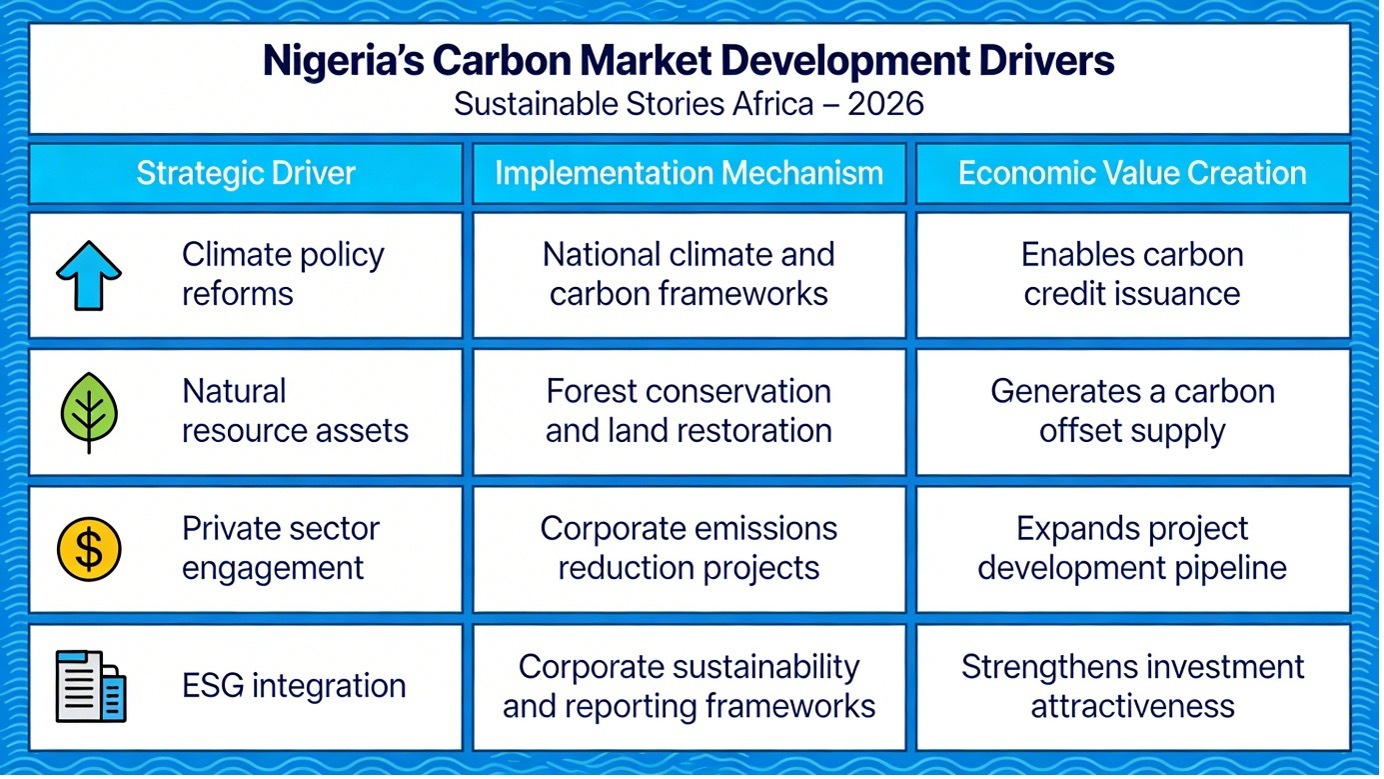
Nigeria’s Carbon Market Development Drivers
Strategic Driver | Implementation Mechanism | Economic Value Creation |
|---|---|---|
Climate policy reforms | National climate and carbon frameworks | Enables carbon credit issuance |
Natural resource assets | Forest conservation and land restoration | Generates a carbon offset supply |
Private sector engagement | Corporate emissions reduction projects | Expands project development pipeline |
ESG integration | Corporate sustainability and reporting frameworks | Strengthens investment attractiveness |
These initiatives are helping to position Nigeria as a credible participant in the international carbon markets.
However, regulatory clarity, project verification capacity, and market transparency remain essential for scaling participation.
Carbon Credits Strengthen Climate Finance Capacity
Carbon markets offer Nigeria a pathway to mobilise climate finance while supporting emissions reduction and sustainable development goals.
By generating carbon credits through renewable energy, conservation, and emissions reduction projects, Nigeria can unlock new revenue streams.
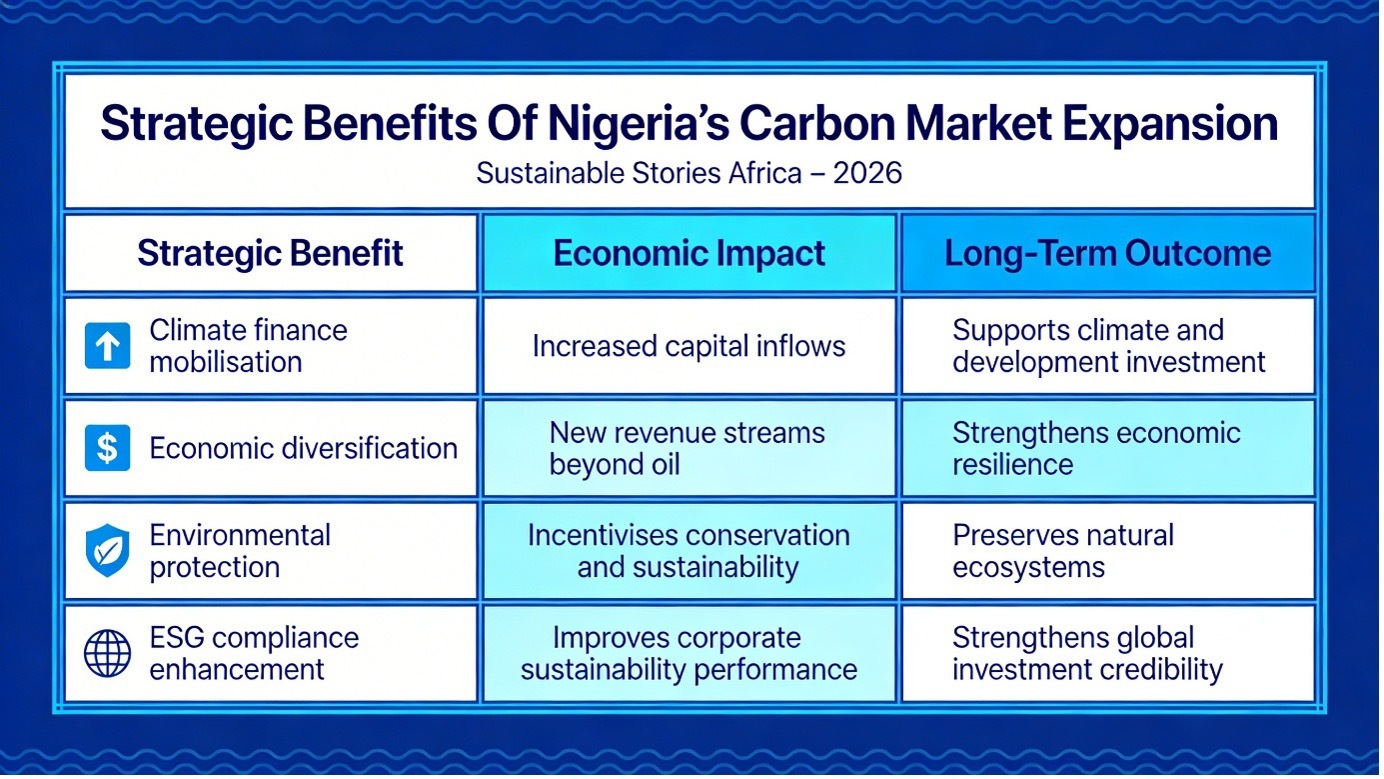
Strategic Benefits Of Nigeria’s Carbon Market Expansion
Strategic Benefit | Economic Impact | Long-Term Outcome |
|---|---|---|
Climate finance mobilisation | Increased capital inflows | Supports climate and development investment |
Economic diversification | New revenue streams beyond oil | Strengthens economic resilience |
Environmental protection | Incentivises conservation and sustainability | Preserves natural ecosystems |
ESG compliance enhancement | Improves corporate sustainability performance | Strengthens global investment credibility |
Carbon markets can align environmental protection with economic growth.
Institutional Strengthening Critical For Market Credibility
To fully capture carbon market opportunities, Nigeria must strengthen institutional capacity, regulatory clarity, and project verification systems.
Transparent governance and credible monitoring mechanisms are significant in building investor confidence and ensuring market integrity.
Public-private collaboration, international partnerships, and policy alignment will be critical to scaling carbon market participation.
Effective execution will determine Nigeria’s leadership position in global carbon markets.
Path Forward – Strong Governance Enables Carbon Market Leadership
Nigeria must strengthen its regulatory frameworks, verification systems, and institutional capacity to ensure integrity and investor confidence in the carbon market. Transparent governance will support sustainable market growth.
Strategic investment, private sector participation, and international collaboration will enable Nigeria to scale carbon credit generation and maximise climate finance opportunities.
Strategic Analysis: Why Nigeria’s Carbon Market Matters Now
Carbon markets represent one of the most significant climate finance opportunities for emerging economies.
For Nigeria, participation offers the potential to unlock new revenue streams while accelerating its transition toward a sustainable, diversified economy.
With its vast natural resources and growing ESG alignment, Nigeria has strong potential to become a significant supplier of carbon credits.
However, success will depend on governance integrity, institutional readiness, and the ability to scale credible carbon reduction projects, ensuring climate action translates into lasting economic value.
Culled From: https://environmentafricamag.com/2026/02/15/nigeria-and-the-carbon-credit-market-esg-energy-and-opportunities/