Nigeria is emerging as an African solar manufacturing hub, anchored by local firms and backed by multilateral support. A breakthrough $200 million solar-grid deal and an agreement for a 500–1,000 MW panel factory signal the shift from importer to industrial player.
But obstacles remain; solar still contributes under 2 % of Nigeria's power generation, while Chinese imports dominate the value chain. A strategic pivot will be vital for the country's energy transition.
Nigeria's Solar Leap Revealed
At a factory just outside Calabar, southern Nigeria, technicians clad in pink overalls assemble solar-battery systems to help power more than 2 million homes and businesses.
With that facility, Salpha Energy is emblematic of Nigeria's ambition to become Africa's solar manufacturing hub and a "green-industrial" force. The country has committed to generating 30 % of its electricity from renewables by 2030.
Industry and Data in Motion
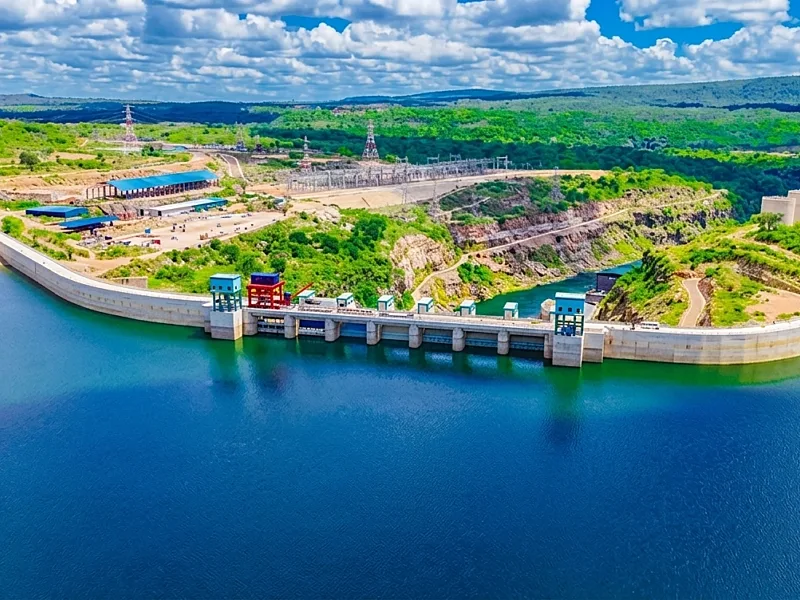
- Nigeria's electricity grid remains heavily reliant on gas (75%) and hydropower (20%), with solar, wind and biomass accounting for less than 2%.
- Between June 2024 and June 2025, the country imported approximately 1,721 MW of solar panels, making it Africa's second-largest importer after South Africa. China supplied roughly 60% of African solar imports in that period.
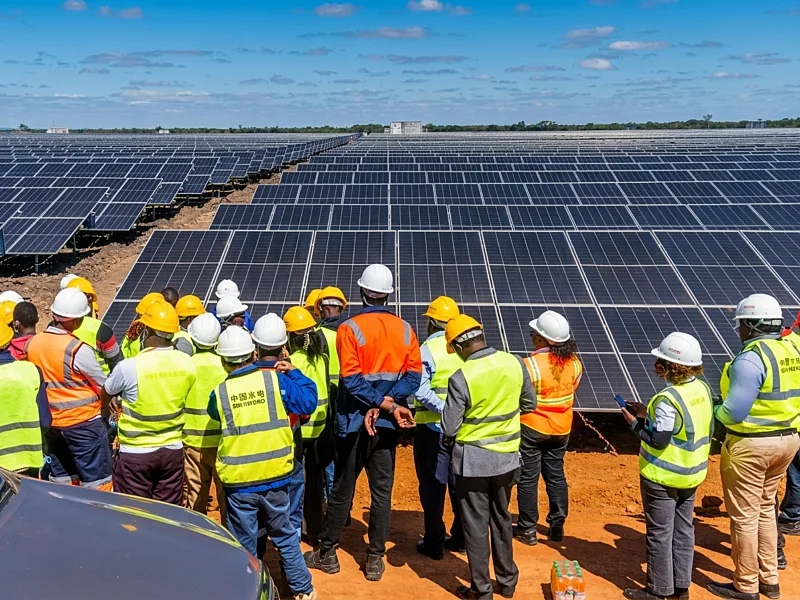
- In March 2025, Nigeria signed a $200 million agreement with the World Bank and partners to extend solar grids into rural communities.
- A recent push also showed Nigeria executing solar mini-grid contracts worth US $400 million, within a broader $3 billion investment frame for Africa's solar expansion.
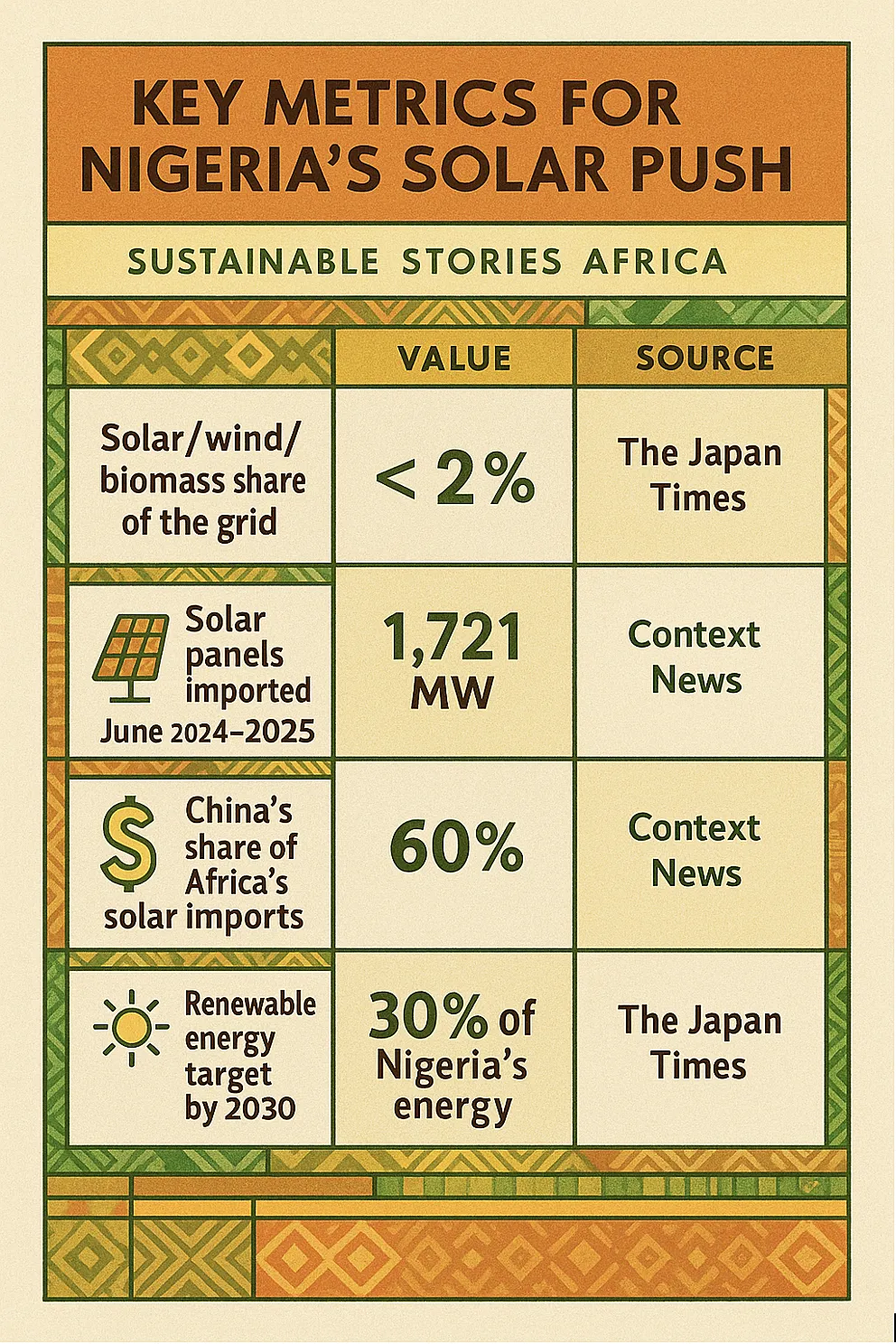
Key metrics for Nigeria's solar push
| Metric | Value | Source |
|---|---|---|
| Solar/wind/biomass share of the grid | < 2% | The Japan Times |
| Solar panels imported June 2024 - 2025 | 1,721 MW | Context News |
| China's share of Africa's solar imports | 60% | Context News |
| Renewable energy target by 2030 | 30% of Nigeria's energy | The Japan Times |
Why Nigeria's Value-Chain Shift Matters
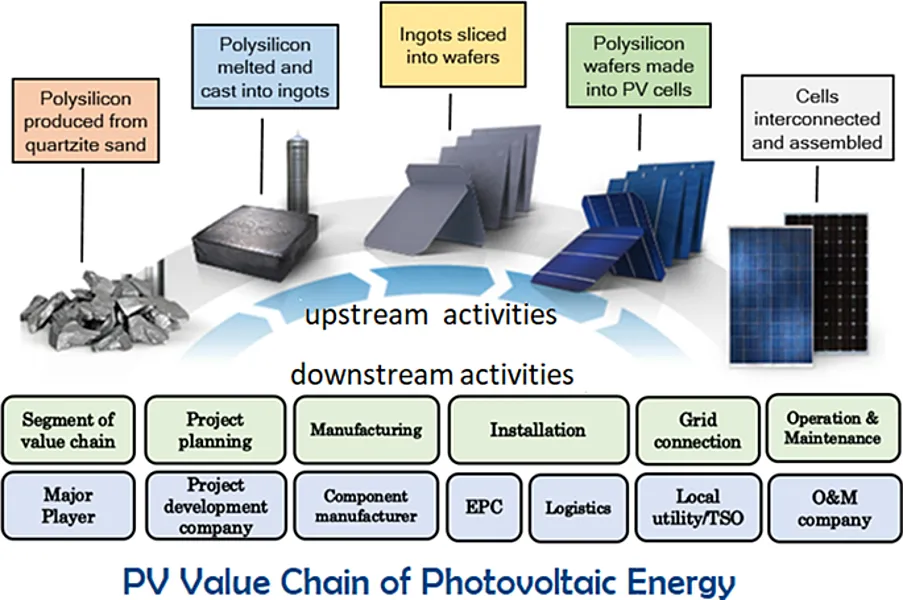
Nigeria isn't just chasing modules; it is seeking industrialisation: by moving from importing to manufacturing, the country could retain more value and stimulate jobs.
For instance, analysts say that by importing Chinese battery cells but performing panel assembly locally, Nigeria could retain about 60 % of the value chain.
Local firm Salpha Energy, founded in 2017, has produced systems for more than 2 million homes and seeks to assemble 300,000 units annually. This signals a desire for African-led green technology, not merely green imports.
What Nigeria Is Doing
- Signed deal with LONGi (China) for a 500–1,000 MW solar-panel manufacturing plant in Nigeria.
- Ministerial declarations at the Nigerian Renewable Energy Innovation Forum (October 2025) underscored the transition away from imported panels and toward domestic manufacturing and value-creation.
- Agreement with World Bank and development partners to roll out solar grids into rural Nigeria, reinforcing distributed generation and energy access.
Path Forward – Nigeria Builds Solar Industrial Hub
To succeed, Nigeria must continue ramping up local manufacturing and deploying distributed solar.
The country needs policies that support domestic value-chains and limit over-reliance on imports while tackling grid constraints and financing gaps.
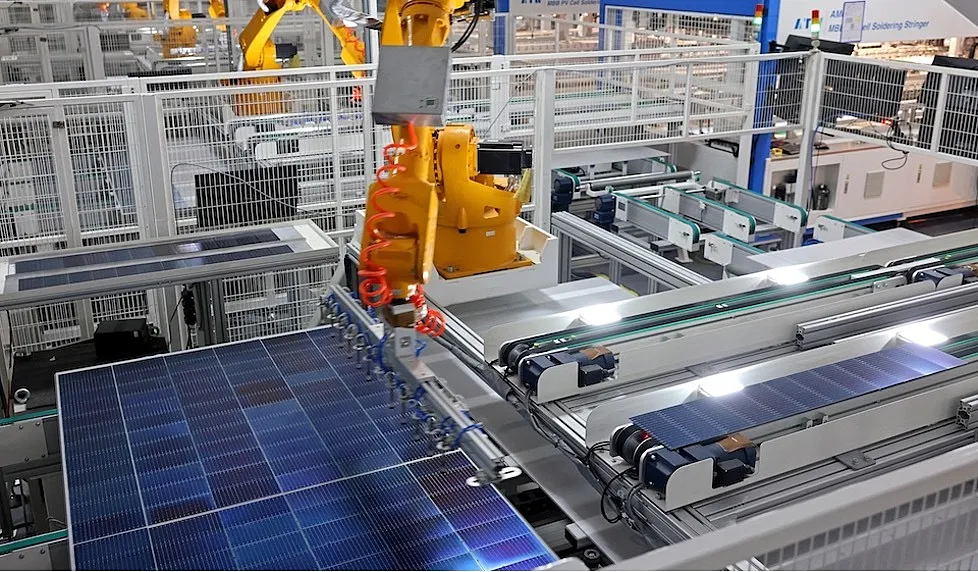
Infographic: Value-chain snapshot
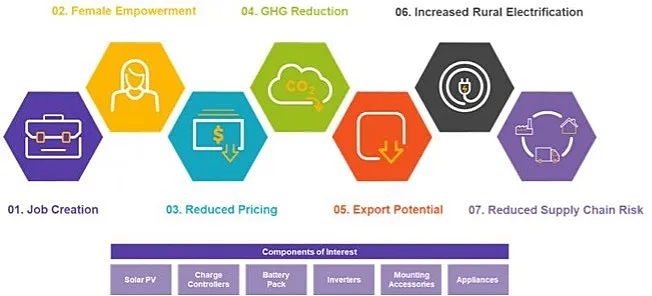
Key next steps:
- Strengthen local panel assembly and component manufacturing, reducing import-value leakage.
- Expand mini-grids and rural solar deployment to address heavily loaded grid and energy-poverty gaps.
- Secure long-term financing and technical partnerships to scale up to gigawatt-level manufacturing.
- Implement regulatory reforms and incentives to boost industry competitiveness and local participation.
If executed, Nigeria could not only meet its renewable goals but also reposition itself as a solar manufacturing hub for West Africa, shifting its role from energy consumer to industrial contributor.
Culled From: https://www.japantimes.co.jp/environment/2025/11/17/energy/nigeria-africa-solar-superpower/