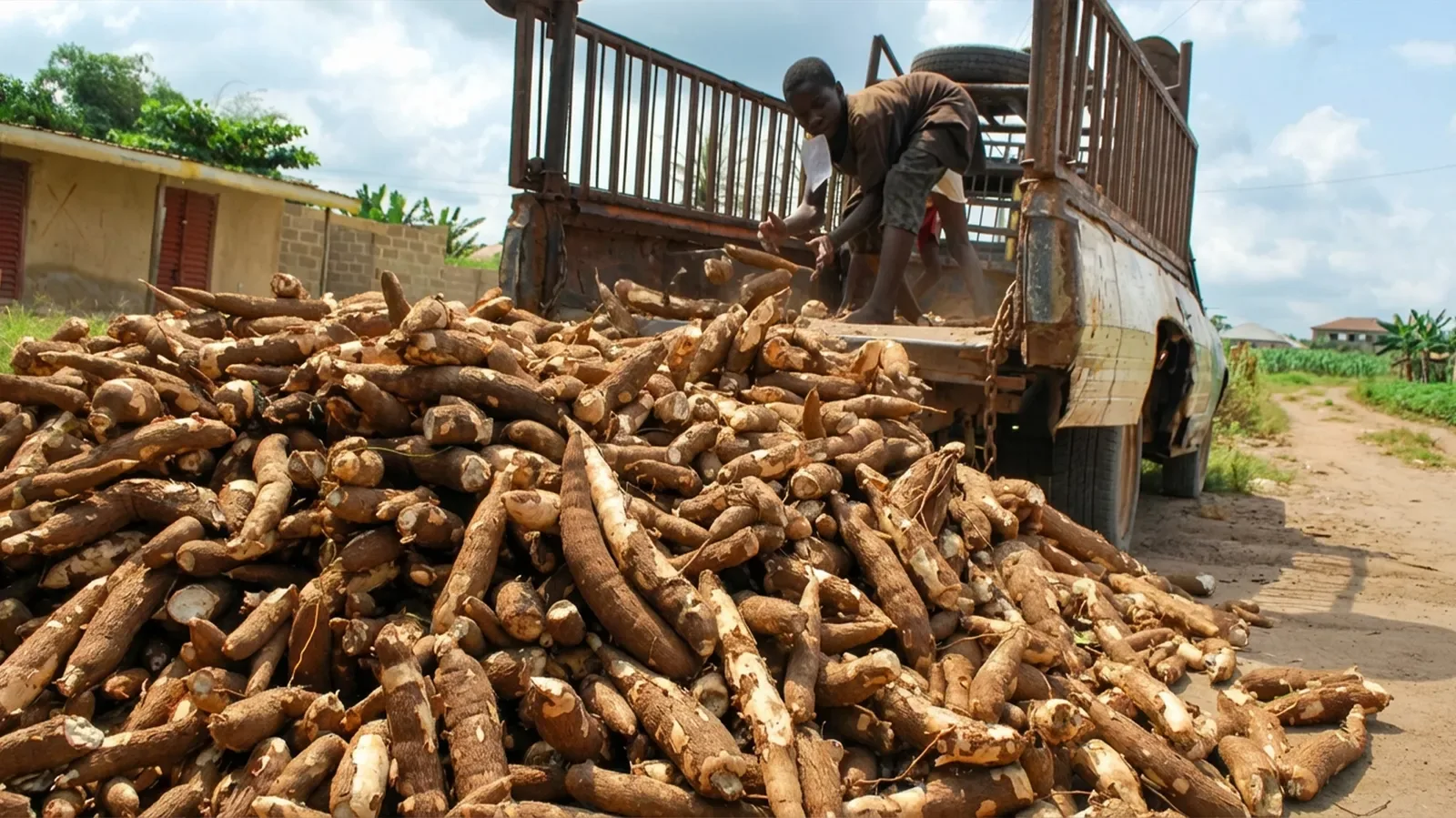
Nigeria grows more cassava than any country; however, it exports very little of it.
The “Federal Republic of Garri” story captures a national paradox: a crop that feeds millions but creates limited industrial value.
The challenge now is to turn cassava from a survival food into processed products, jobs and export earnings.
Nigeria’s Cassava Paradox Is Becoming Clearer
Nigeria’s cassava story begins with abundance, but it does not end with prosperity.
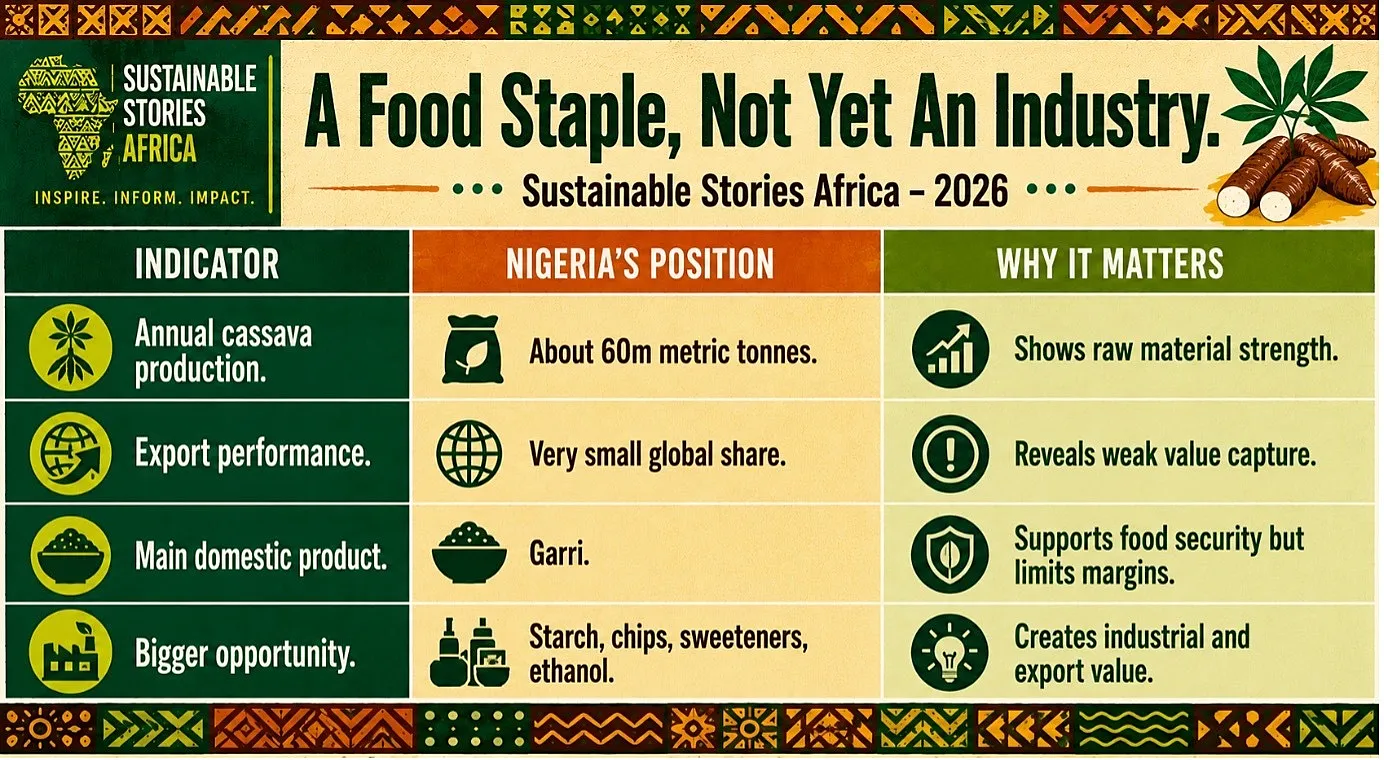
The country produces about 60 million metric tonnes of cassava annually, more than any other nation, yet remains a small player in global cassava exports. Ag Safari’s “Federal Republic of Garri” frames the contradiction sharply: Nigeria grows the crop at scale, but most of the value remains trapped in low-margin domestic consumption, especially garri.
Garri is not just food. It is a national safety net. Students cope when money is tight. Workers rely on it when meals are unaffordable or time is short. Across households, it has become an informal measure of economic pressure.
A Food Staple, Not Yet An Industry
The deeper issue is not whether Nigerians know cassava. They do. Cassava sits at the centre of food security, rural livelihoods and household resilience.
The problem is that Nigeria has not built enough processing, logistics, standards and export systems required to compete in higher-value cassava markets.
Thailand, by contrast, produces far less cassava than Nigeria but earns far more from derivatives such as starch, chips, sweeteners and industrial inputs.
A LinkedIn commentary on the report noted that Thailand’s success required farmers, processors, exporters, logistics firms and standards bodies to coordinate over decades.
Cassava Can Become Development Infrastructure
If Nigeria gets cassava right, the gains could reach far beyond farms.
Processors could build a stronger demand for smallholder supply. Rural communities could benefit from a more stable offtake.
Manufacturers could substitute imports with local starch and sweeteners. Exporters could earn foreign exchange from products with clearer industrial demand.
That is the promise hidden behind the garri bowl. Cassava can remain a food-security anchor while also becoming a platform for agro-processing, jobs and industrial competitiveness.
However, the shift requires discipline. It means consistent root supply, better drying systems, cleaner processing, food-grade standards, reliable power, working capital and ports that do not erase margins before products reach buyers.
Nigeria Must Build The Missing Chain
The “Federal Republic of Garri” is not a failure of farmers. It is a coordination failure.
Nigeria needs processors who can meet specifications, financiers who understand agro-industrial timelines, regulators who enforce quality, and governments that treat cassava as an industrial crop, not just a food crop.
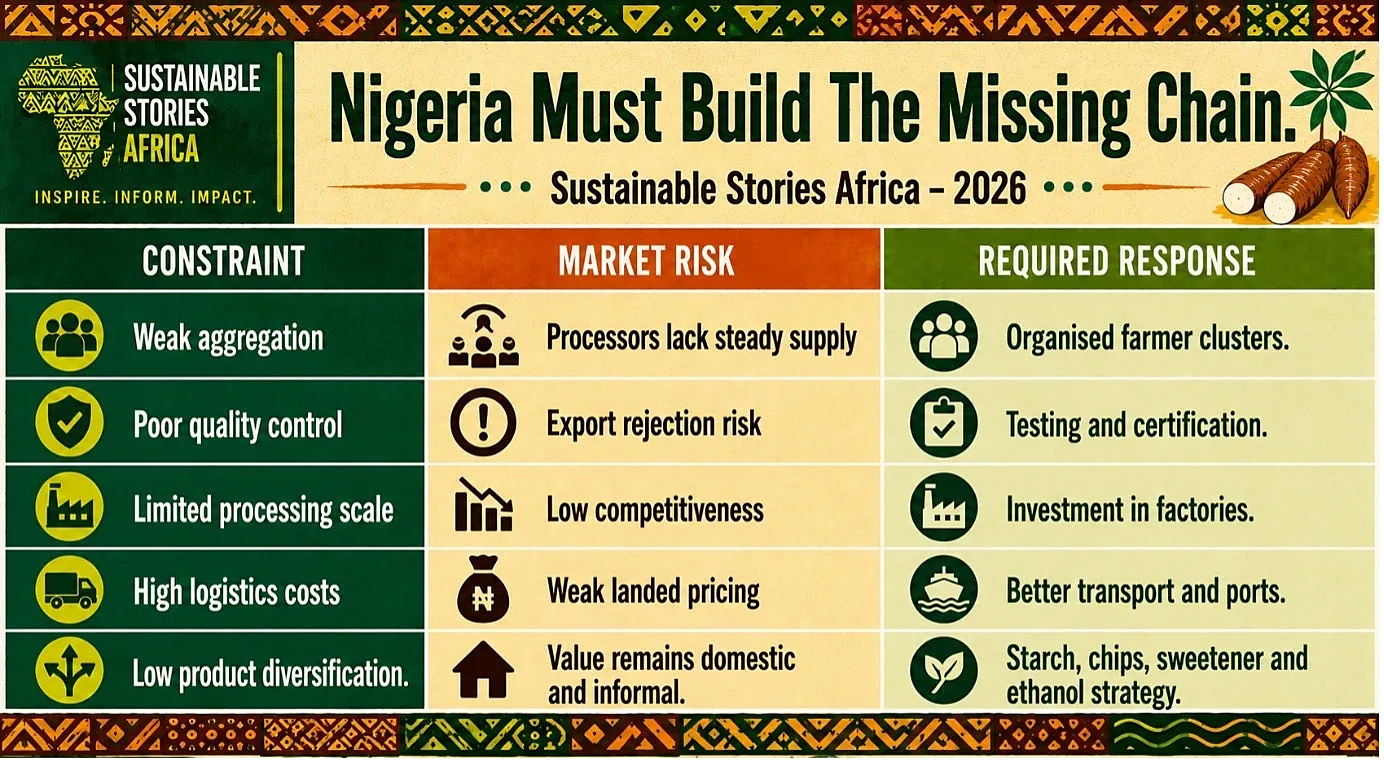
The next stage should focus less on celebrating production volume and more on building value chains that can survive buyer scrutiny.
Path Forward – Turn Garri Into Industrial Value
Nigeria’s cassava future depends on coordination, standards, finance and processing scale. Garri will remain important, but it should not be the ceiling of the sector.
A serious cassava strategy can advance food security, rural jobs, import substitution and ESG-aligned industrial growth across African markets.
Culled From: Federal Republic of Garri