
Nigeria’s industrial policy is moving from paper ambition to implementation test.
At the Udo Udoma & Belo-Osagie breakfast session, lawyers, policymakers and business leaders examined how legal and regulatory bottlenecks could shape productivity.
The central message was clear: Nigeria’s shift from import dependence to manufacturing competitiveness will depend on execution, coordination and private-sector confidence.

Policy Ambition Meets Execution Reality
Nigeria’s push to turn industrial policy into measurable productivity gains took centre stage at the inaugural breakfast session of Udo Udoma & Belo-Osagie’s Government Relations and Public Policy Practice Group, where Managing Partner Jumoke Lambo warned that policy design alone would not deliver competitiveness without practical implementation.
The session, themed “Translating Nigeria’s Industrial Policy into Productivity: Navigating Legal & Regulatory Bottlenecks,” brought together senior public-sector and private-sector stakeholders, including the Lagos State Commissioner for Commerce, Cooperatives, Trade and Investment, Folashade Ambrose-Medebem.
Lambo framed the discussion as one of the most important economic conversations in Nigeria, noting that legal and regulatory bottlenecks already influence “project financing decisions, investment approvals, procurement negotiations, and other boardroom conversations” across Nigeria and abroad.
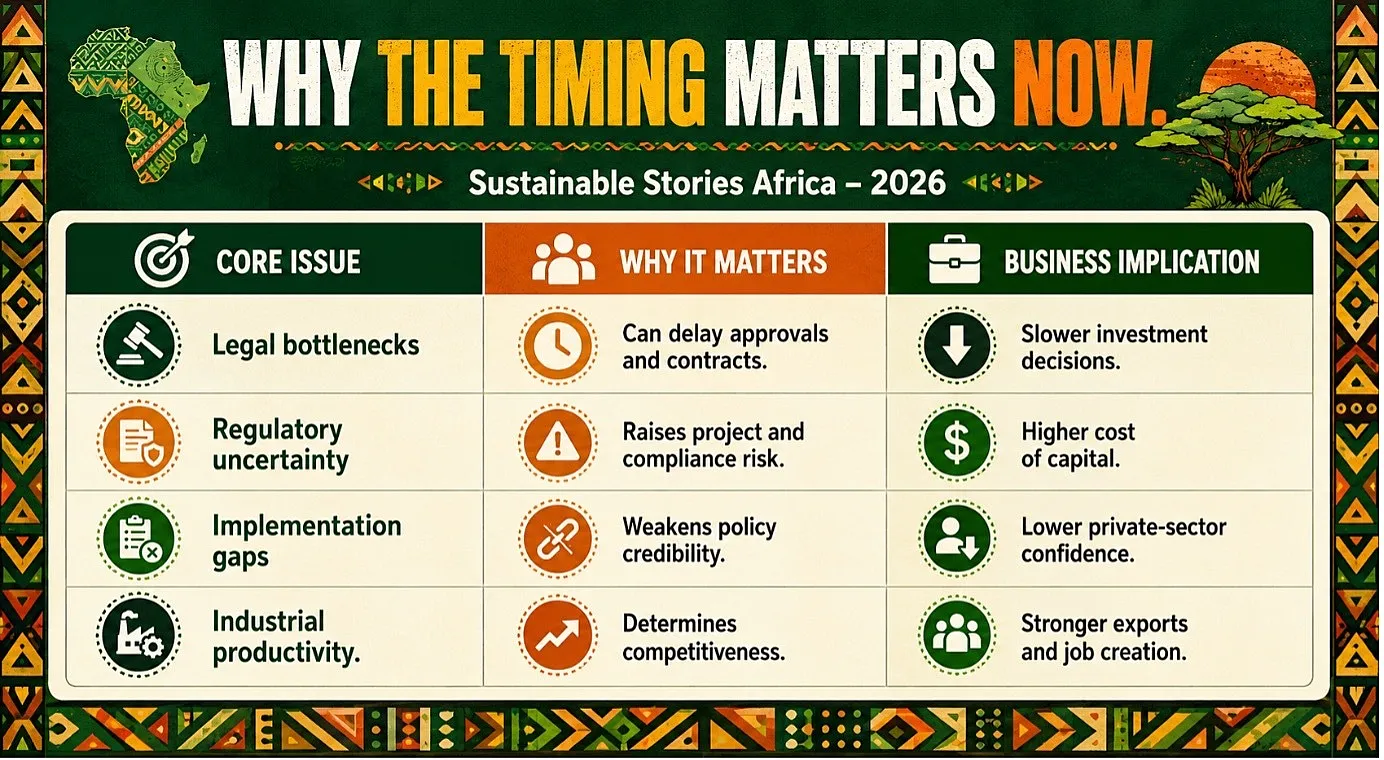
Why The Timing Matters Now
The conversation comes after the publication of the Nigerian Industrial Policy 2025 in February, a framework aimed at driving industrial growth, improving productivity and repositioning the economy for greater competitiveness.
For businesses, the issue is not whether Nigeria needs industrial transformation. That question has largely been settled.
The harder question is whether the legal, regulatory and institutional environment can support the shift from an import-based economy to one anchored on manufacturing and exports.
Lambo said the policy represents an important step in the federal government’s effort to “drive industrial growth, enhance productivity, and reposition the Nigerian economy for greater competitiveness.”
However, she stressed that the real test lies in whether the framework can be translated into practical outcomes.
Law, Business, and Public Policy Converge
Udo Udoma & Belo-Osagie positioned the breakfast session as more than a policy review. Lambo said the objective was to generate solutions that businesses could take away and apply.
The firm’s history gave the convening additional weight. Lambo pointed to UUBO’s decades of work at the intersection of law, business and public policy, including contributions to Nigeria’s telecoms reform framework, capital market regulation and company law reform.
“We do not see ourselves just as advising clients,” she said in substance. “We see ourselves as working to create the enabling environment that businesses need to succeed.”
That framing is important. In Nigeria, industrial policy often fails not because ambition is absent, but because execution is fragmented. Investors need clarity.
- Manufacturers need predictable rules.
- Regulators need coordination.
- Policymakers need feedback from the market before bottlenecks become growth barriers.
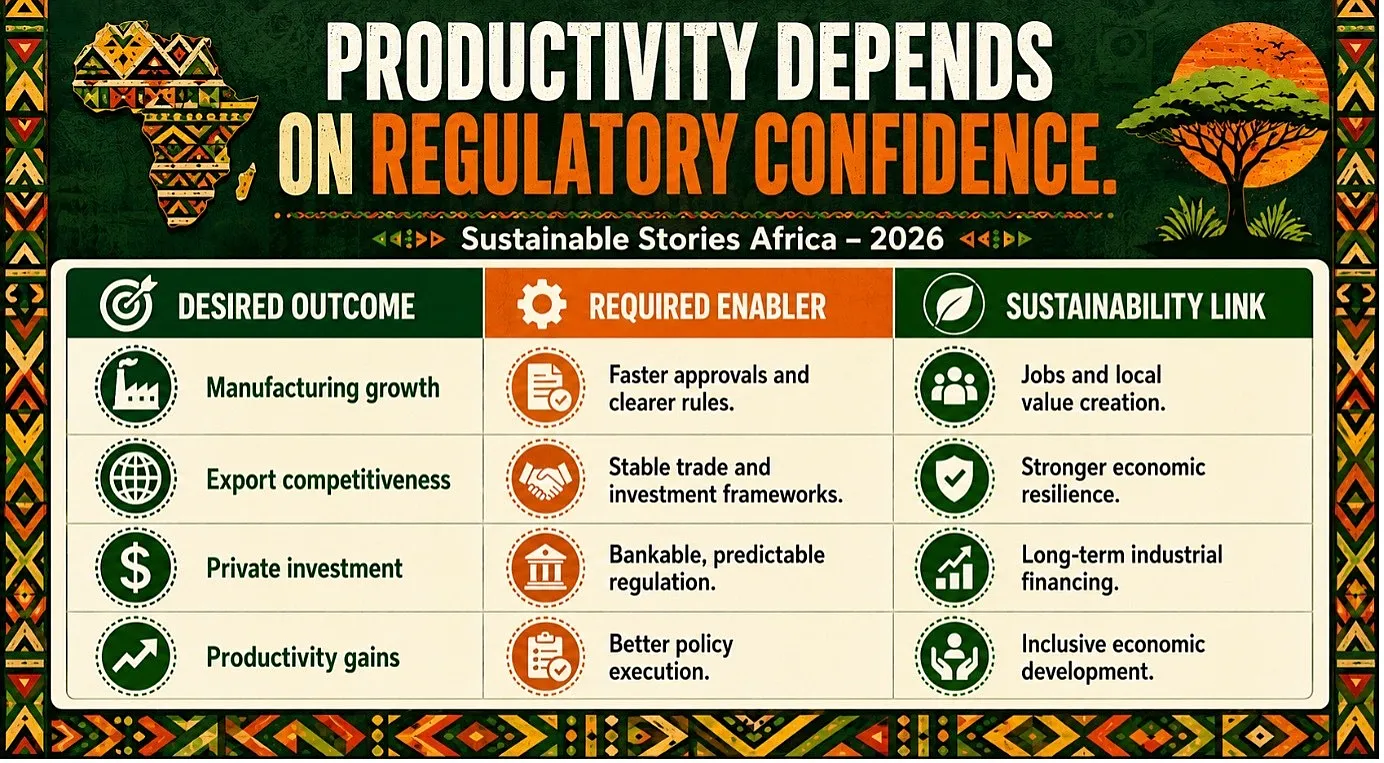
Productivity Depends On Regulatory Confidence
If implemented well, the Nigerian Industrial Policy 2025 could support local manufacturing, deepen supply chains, expand export capacity and reduce structural dependence on imports.
However, the risks are equally clear. If regulations remain slow, unclear or duplicative, companies may delay investment, reduce expansion plans or move capital into fewer markets.
For industrial policy to become productive, legal systems must make it easier, not harder, for firms to build, finance and scale.
From Policy Review To Practical Action
The breakfast session’s strongest call was for stakeholders to move beyond commentary and into implementation. Lambo urged participants to “find the answers together” and focus on what can be applied in businesses to maximise the policy’s potential.
- For policymakers, that means simplifying rules, improving inter-agency coordination and ensuring that industrial policy aligns with investment realities.
- For regulators, it means reducing uncertainty and supporting productive enterprise.
- For businesses, it means engaging constructively with reform processes rather than waiting for perfect conditions.
The broader lesson is straightforward: Nigeria’s industrial future will not be secured by policy documents alone. It will depend on whether law, regulation, finance and enterprise can move in the same direction.
Path Forward – Requires Coordinated Execution
Nigeria’s next industrial phase must prioritise implementation, legal clarity, regulatory coordination and private-sector confidence.
The policy ambition is already visible; the delivery architecture must now follow.
For ESG and sustainable development, stronger productivity can support decent jobs, local value chains and resilient markets.
The promise is not just industrial growth, but a more competitive economy built on clearer rules and shared execution.