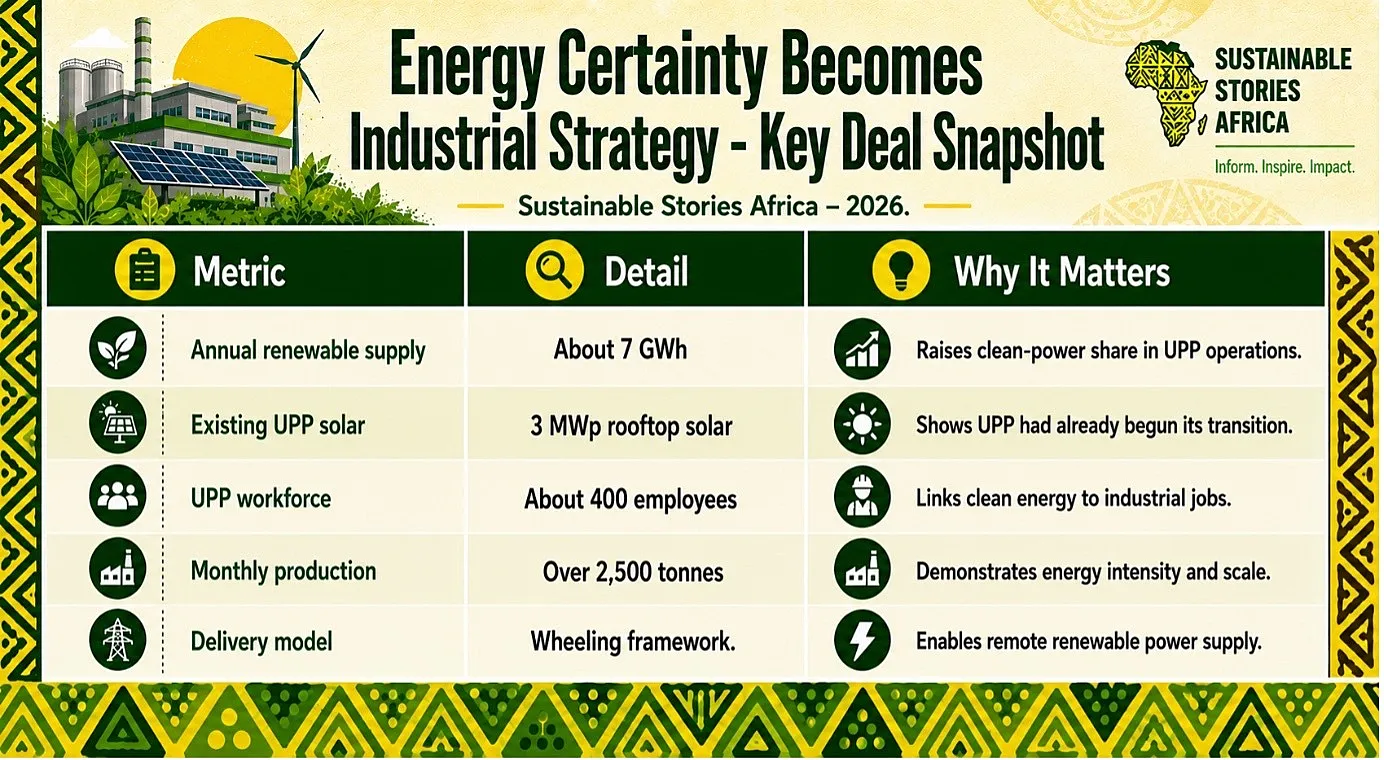
NOA will supply about 7 GWh of renewable electricity annually to Universal Paper and Plastics.
The deal matters because South African manufacturers are under pressure from energy costs, reliability concerns and decarbonisation demands.
For UPP, a 24-hour tissue producer employing about 400 people, cleaner power is becoming a competitiveness strategy, not just an ESG statement.
Clean Power Enters Factory Floors
South African renewable energy trader and aggregator NOA has signed an agreement to supply approximately 7 GWh of renewable electricity annually to Universal Paper and Plastics, marking another step in the country’s shift from grid dependence to corporate clean-energy procurement.
The electricity will support UPP’s operations in Ga-Rankuwa, Gauteng, where the family-owned manufacturer produces tissue paper, napkins and household towels for retailers and commercial customers across Southern Africa.
For a business that runs continuously, power is not a background utility. It is the heartbeat of production, pricing, delivery and jobs.
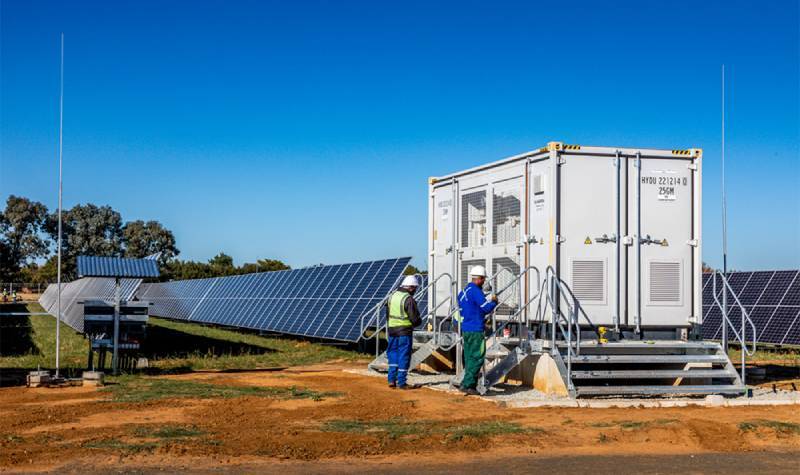
The agreement will allow UPP to access renewable electricity from NOA’s portfolio, using South Africa’s wheeling framework to move clean power generated elsewhere to the company’s operations.
The deal is expected to complement UPP’s existing 3 MWp rooftop solar installation and strengthen its long-term energy-cost certainty.
Energy Certainty Becomes Industrial Strategy
South Africa’s manufacturing sector is navigating a difficult energy reality. Electricity tariffs have risen sharply over the years, while industrial users continue to seek more predictable, reliable and cleaner supply options.
For tissue manufacturers, the challenge is particularly direct.
- Production lines must run consistently.
- Interruptions affect output.
- Rising power costs can push up the cost of basic household products.
In that context, renewable energy procurement is becoming less about corporate branding and more about industrial survival.
UPP has been operating for more than 75 years and employs around 400 people. The company produces more than 2,500 tonnes of tissue products monthly, supplying brands such as Dinu and Dinu Professional into retail and commercial markets.
NOA Group CEO Karel Cornelissen said the company is proud to support manufacturers such as UPP because energy cost certainty has become increasingly important for the South African industry.
Cleaner Energy Can Protect Competitiveness
If South Africa’s corporate clean-energy market deepens, manufacturers could gain more than lower emissions.
They could gain planning confidence, stronger cost control and better resilience against future energy shocks.
For UPP, the deal supports a broader investment strategy in manufacturing technology, production capacity and efficiency.
Managing electricity costs is part of protecting growth. It also helps the company align with customer, investor and regulatory expectations around sustainability.
The wider market signal is important: clean energy is moving from boardroom ambition to factory-floor infrastructure.
Energy traders and aggregators are becoming connectors between renewable-power producers and industrial consumers.
Scale Wheeling For Real Economy Impact
South Africa now needs to make corporate renewable procurement easier, faster and more investable.
That means improving grid access, strengthening wheeling rules, supporting municipal readiness and helping more manufacturers structure bankable clean-power agreements.
Businesses should also treat energy strategy as a core competitiveness issue. For factories, mines, farms and logistics operators, renewable electricity can reduce exposure to volatile costs while supporting emissions targets.
The NOA-UPP agreement shows what is possible when private-sector demand, renewable supply and market reform meet.
However, one deal is not enough. South Africa’s industrial transition will require many more agreements that connect clean power to productive sectors.
Path Forward – Cleaner Power For Productive Industry
The priority is to turn renewable procurement into a mainstream industrial tool, not a niche sustainability option.
Clearer wheeling systems, stronger grid investment and credible corporate demand will determine how quickly this market scales.
For African manufacturers, the lesson is practical: clean energy can protect jobs, improve competitiveness and support ESG goals when it is designed around real production needs.
Culled From: NOA to Supply 7 GWh of Renewable Power Annually to South African Tissue Producer UPP - SolarQuarter