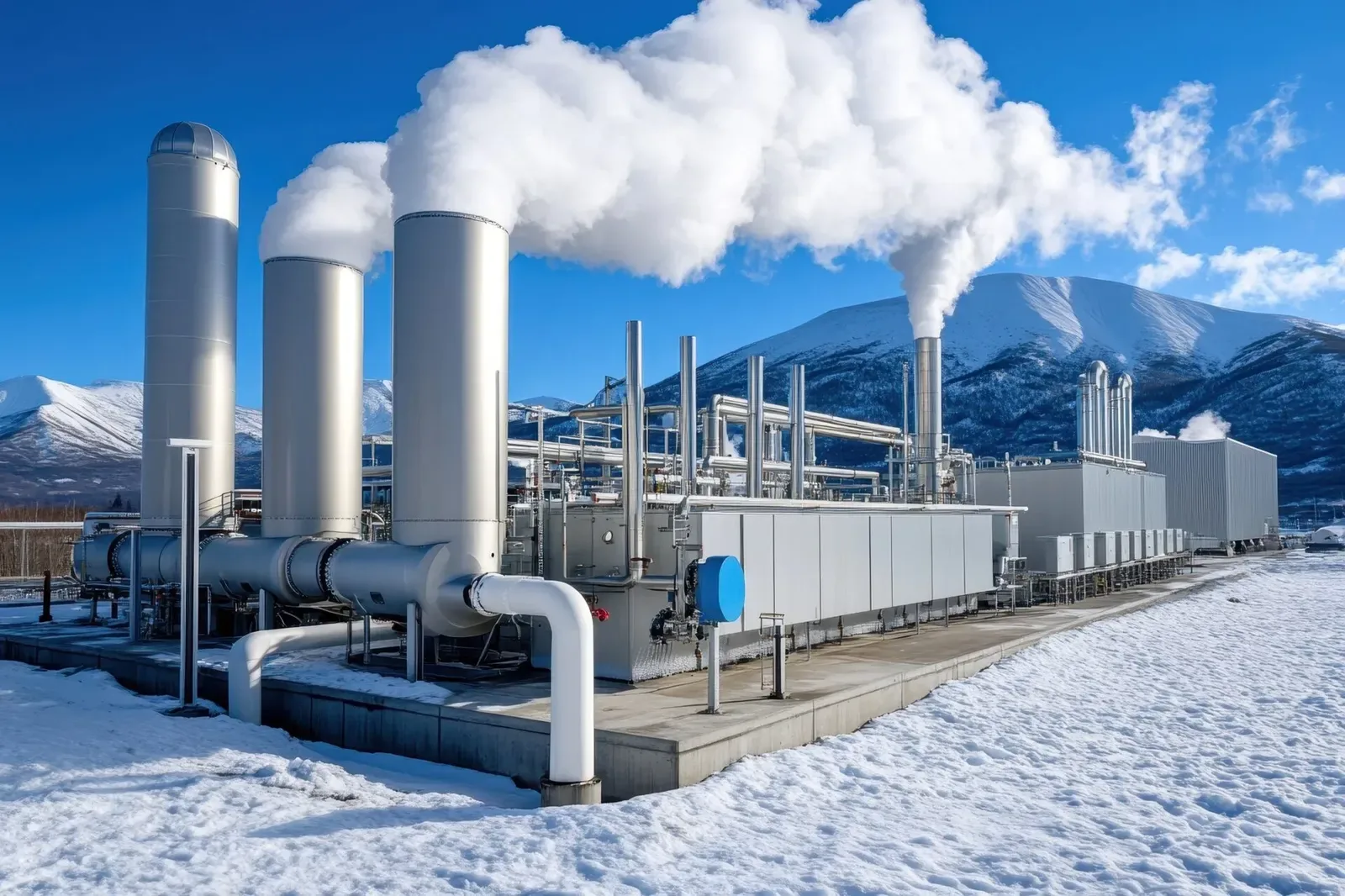
Private capital is beginning to move into Africa’s geothermal sector, with Ethiopia’s Corbetti project drawing fresh financing.
The shift matters because geothermal can provide reliable, low-emission power when solar and wind output fluctuates.
For African households, industries and grids, the deeper promise is cleaner electricity that works day and night.
Africa’s Underground Power Gets Investors
Africa’s geothermal future is no longer only a public-sector ambition. It is beginning to attract private capital.
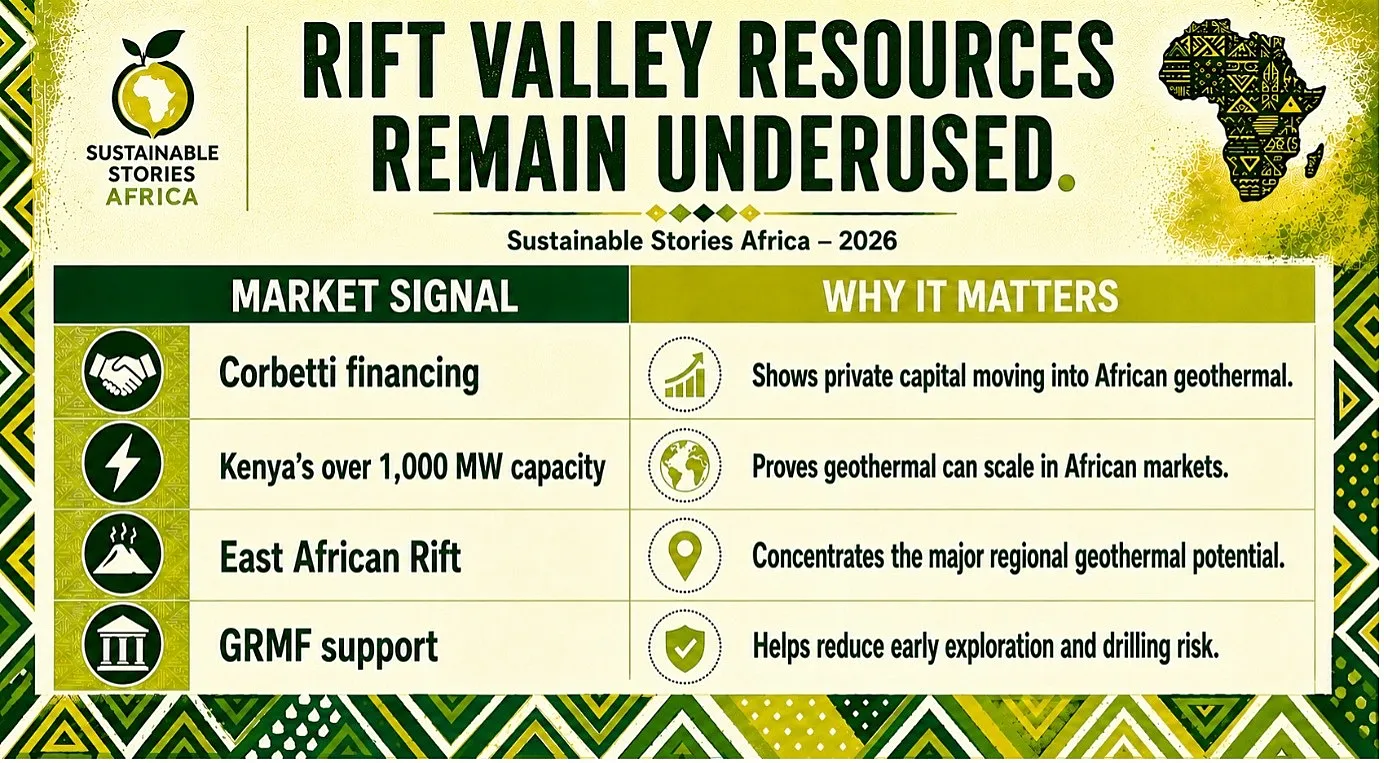
Taranis, an investment platform backed by the Private Infrastructure Development Group, has signed a $27 million loan agreement to support Ethiopia’s Corbetti Geothermal project, one of the continent’s first privately financed geothermal developments.
The deal signals growing investor interest in Africa’s underground heat resources, particularly along the East African Rift System.
The timing is important. African countries are under pressure to expand electricity access, reduce fossil-fuel dependence and build grids that can support industrialisation.
Unlike solar and wind, geothermal power can run around the clock, making it valuable for baseload supply, factories, hospitals, cold storage and digital infrastructure.
Rift Valley Resources Remain Underused
Africa’s geothermal promise is concentrated largely in the East African Rift, stretching through countries including Kenya, Ethiopia, Djibouti, Tanzania, Rwanda and Uganda.
The African Union-backed Geothermal Risk Mitigation Facility was created to encourage public and private investment across 12 partner countries in the region.
Kenya remains the continent’s clear leader. By March 2026, the country had surpassed 1,000MW of installed geothermal capacity, with geothermal accounting for more than 45% of total electricity generation, according to African Leadership Magazine.
The challenge has always been cost and risk. Geothermal projects require expensive drilling before developers fully know whether a resource can produce commercially viable power.
The International Energy Agency says drilling and well costs can represent up to 80% of total geothermal project costs.
That is why private capital alone has often been cautious. But the global market is shifting.
The IEA reports that next-generation geothermal financing reached nearly $2.2 billion in 2025, an 80% year-on-year increase, while conventional geothermal power project funding reached nearly $5 billion.
Reliable Clean Power Can Transform Markets
If Africa can unlock geothermal at scale, the gains could be substantial.
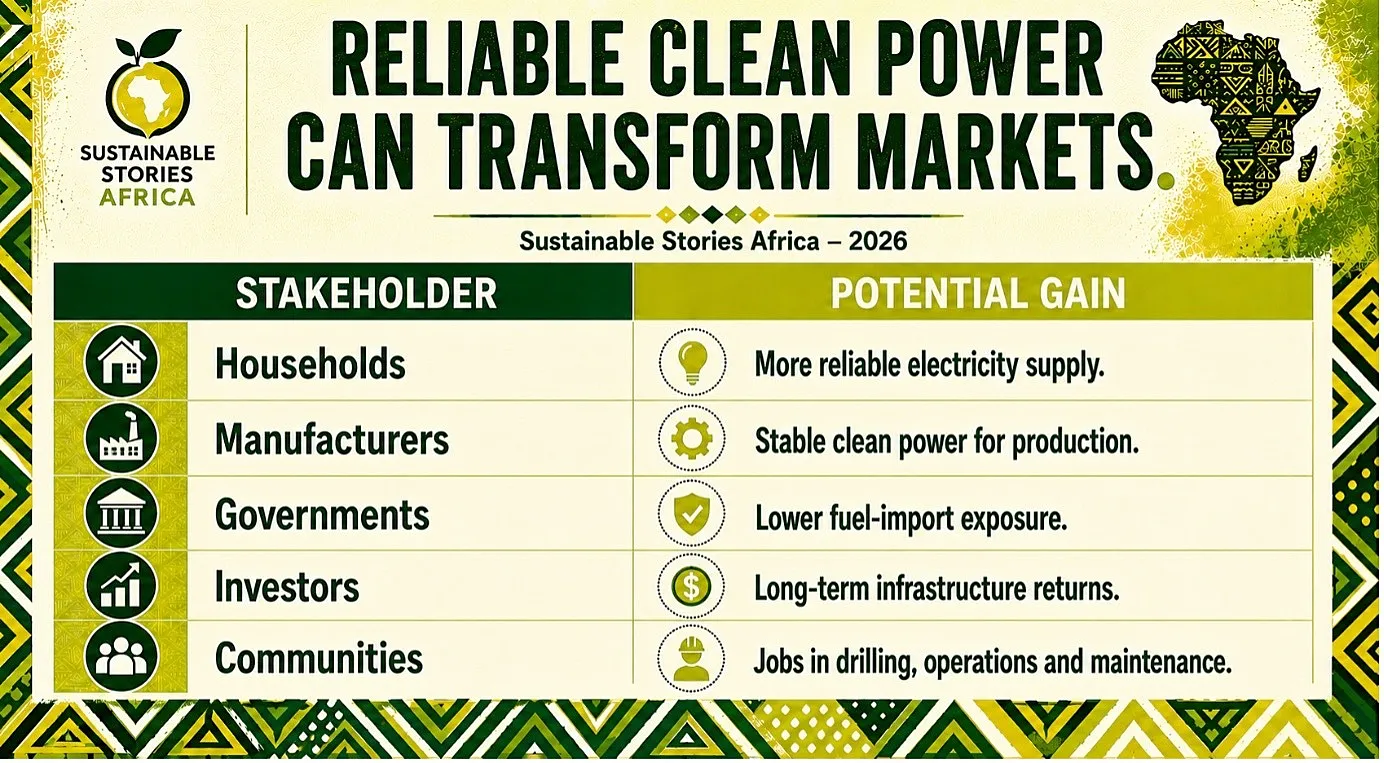
- For grid operators, geothermal provides stable electricity that can balance variable renewable power.
- For manufacturers, it offers cleaner baseload energy.
- For households, it can support a more reliable supply.
- For governments, it reduces dependence on imported fuels and strengthens energy security.
Private capital is already important in Africa’s energy story. AVCA research shows energy accounted for 41% of private capital deal volume and 57% of deal value in African infrastructure between 2012 and 2023.
Sustainable infrastructure deal volume also doubled from 66 deals in 2012–2015 to 129 in 2020 – 2023.
Geothermal can become part of that next wave if countries build bankable frameworks through resource mapping, risk-sharing, power purchase agreements, transmission access and community benefit systems.
De-Risk Exploration, Protect Communities
The message for policymakers is clear: geothermal needs patient capital, but patient capital needs confidence.
- African governments can unlock more private investment by expanding geological surveys, improving licensing clarity, supporting drilling risk mitigation and ensuring credible offtake arrangements.
- Development finance institutions can help absorb early-stage risk, allowing commercial lenders and equity investors to enter later.
Communities must also be central to project design.
- Land access, water use, benefit sharing and local employment can determine whether geothermal projects earn trust or face resistance.
- Clean energy projects cannot be sustainable if they ignore local realities.
For investors, the opportunity is not simply to fund power plants.
- It is to help build a geothermal value chain, drilling services, technical training, maintenance firms, grid infrastructure and local project-development capacity.
Path Forward – Turn Heat Into Shared Prosperity
Africa’s geothermal opportunity is moving from potential to finance. Corbetti’s private-capital backing shows that investors are beginning to treat underground heat as investable infrastructure.
The next priority is execution: de-risk drilling, strengthen regulation, protect communities and connect geothermal power to productive sectors.
Well done, geothermal can support cleaner grids, a resilient industry and long-term African energy security.
Culled From: Private capital bets on Africa's geothermal future