Over 600 million Africans still lack reliable electricity. This gap is both a challenge and an opportunity, one that demands collaboration, innovative investment, and a bold commitment to ESG leadership for our continent's sustainable future.
The Private Sector's Defining Moment
At the 2025 ESG Forum, industry leaders set a clear agenda: Africa's biggest challenge - energy insecurity for 600 million people - is also its greatest opportunity.
The forum's theme, "Energy Security and Decarbonisation: Bridging the Gap for a Sustainable Future," resonated deeply across manufacturing, clean tech, and finance.
As Yarub Al-Bahrani, Managing Director, BAT West & Central Africa, noted, "We can create pathways where sustainability and profitability not only coexist, but reinforce each other."
Manufacturing – From Challenge to Decarbonization
Nigeria's manufacturing sector faces high energy costs and unreliable supply, impacting competitiveness and productivity.
But as Otunba Francis Meshioye of MAN stressed, "Our sector is committed to reducing carbon footprints, driving sustainable practices, and unlocking investment in clean technologies." Strategic partnerships and policy reforms are crucial for scaling renewable energy, efficient infrastructure, and resilient jobs.
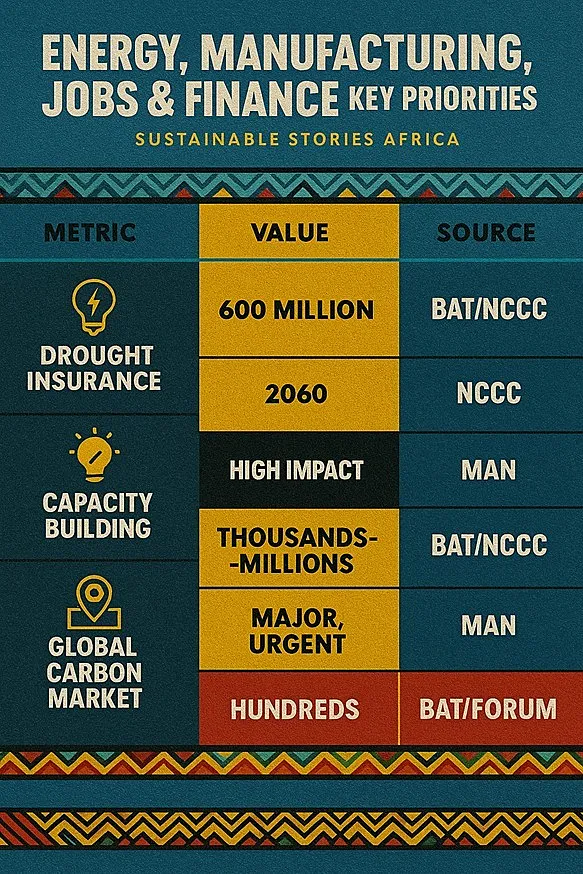
Africa ESG Forum: Energy, Manufacturing, Jobs & Finance Key Priorities
| Topic | Value | Note |
|---|---|---|
| Africans without reliable electricity | 600 million | BAT/ESG keynote: urgent energy access gap |
| Nigeria's carbon-neutral commitment (year) | 2060 | NCCC & Energy Transition Plan |
| Manufacturing sector challenges | High | Energy costs, reliability affect growth/productivity |
| Potential green jobs created | Thousands to millions | Green industries: investment fuels jobs for youth, women |
| Estimated global carbon market size | $1 trillion+ | Carbon finance needed, local buy-in essential |
| Renewable investment target (Nigeria manufacturing) | Major, urgent | MAN: sector-wide push for efficient energy |
| Forum attendance (leaders/investors) | Hundreds | Pan-African, multi-sector inclusion, robust dialogue |
Bold Moves Toward Job Creation and Carbon Neutrality
The National Council on Climate Change reaffirms Nigeria's pledge: carbon neutrality by 2060, guided by a legal and institutional climate framework.
"Africa stands at the intersection of energy access and emissions reduction,"
said Omotenioye Majekodunmi.
New partnerships with development banks and carbon market platforms will make clean manufacturing viable and finance local green transitions.
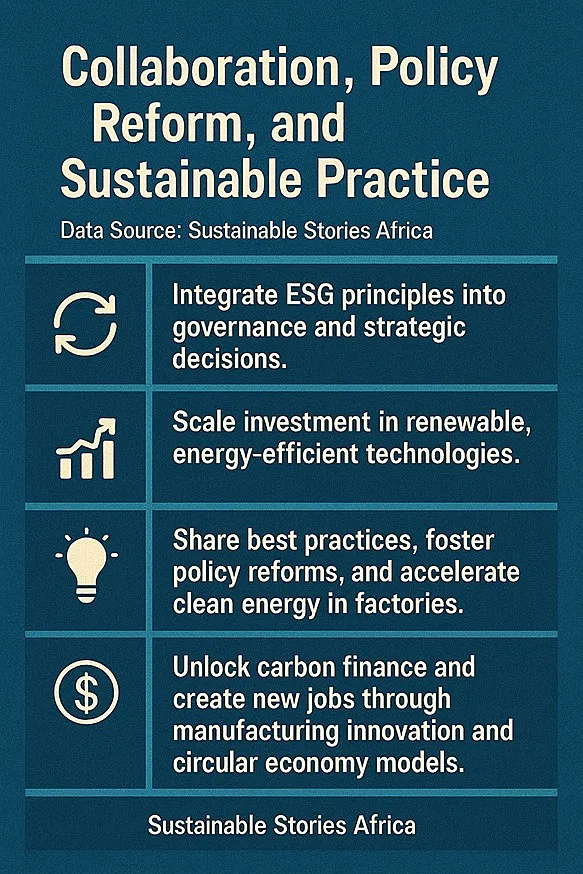
Collaboration, Policy Reform, and Sustainable Practice
Forum leaders urge action:
- Integrate ESG principles into governance and strategic decisions.
- Scale investment in renewable, energy-efficient technologies.
- Share best practices, foster policy reforms, and accelerate clean energy in factories.
- Unlock carbon finance and create new jobs through manufacturing innovation and circular economy models.
Path Forward – Partnerships Power Africa's Climate Prosperity
Africa's future relies on united business, government, and civil society action to unlock jobs and investments. Strategic partnerships are scaling clean energy and expanding ESG adoption, laying foundations for inclusive, competitive growth.
With collaboration at the core, Africa can deliver climate resilience and shared prosperity for generations to come.