PwC has launched the sale of KOKO Networks' assets after the collapse of one of Africa's most prominent clean cooking companies.
The process reflects both the growing risks facing climate-tech business models and the continued value of proven clean-energy infrastructure.
For investors, policymakers and households, the outcome could influence the future of carbon-financed clean cooking across Africa.
Africa's Clean Cooking Success Story Seeks A New Beginning
One of Africa's most celebrated climate technology companies is entering a defining new chapter.
PricewaterhouseCoopers (PwC), acting as administrator of KOKO Networks, has formally begun marketing the Kenyan clean cooking company's assets, inviting qualified investors to bid for its integrated ethanol cooking technology, manufacturing facilities and fuel distribution platform.
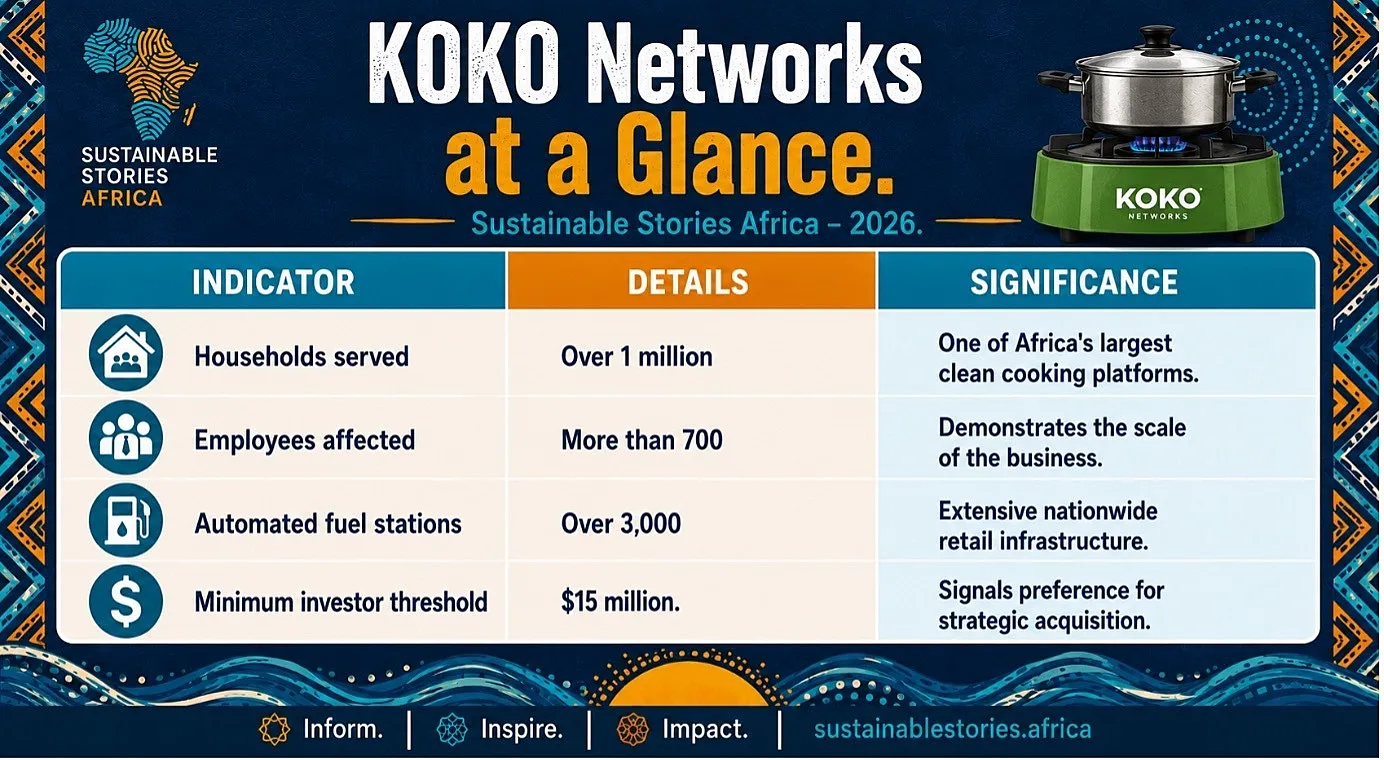
Expressions of interest close on 17 July 2026, with only buyers capable of completing transactions exceeding $15 million eligible to participate.
The sale follows KOKO's collapse earlier this year after it exhausted cash reserves and laid off more than 700 employees across Kenya, Rwanda, India, Mauritius and the United Kingdom.
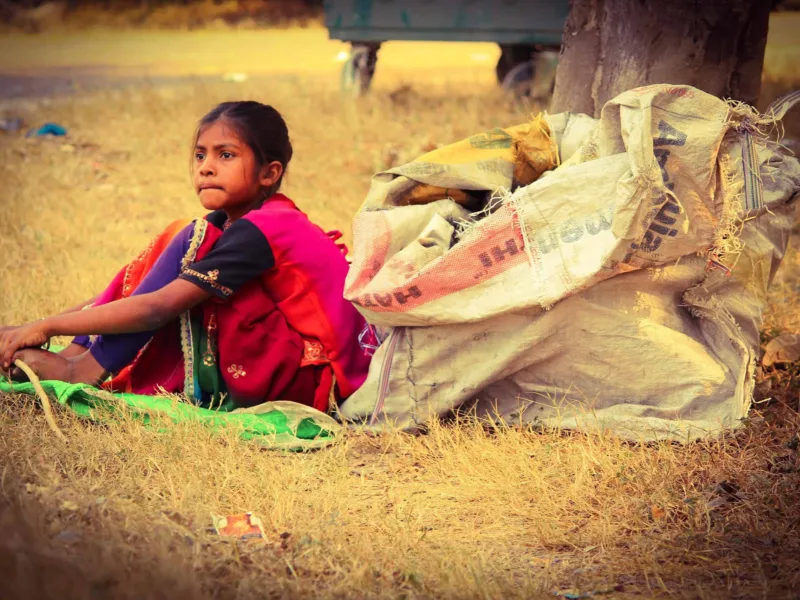
Once regarded as one of Africa's flagship climate-tech ventures, the company had supplied clean bioethanol cooking fuel to more than one million households, helping reduce dependence on charcoal and kerosene.
Valuable Innovation Meets Financial Reality
KOKO's rise demonstrated how technology could reshape one of Africa's most persistent development challenges, clean household cooking.
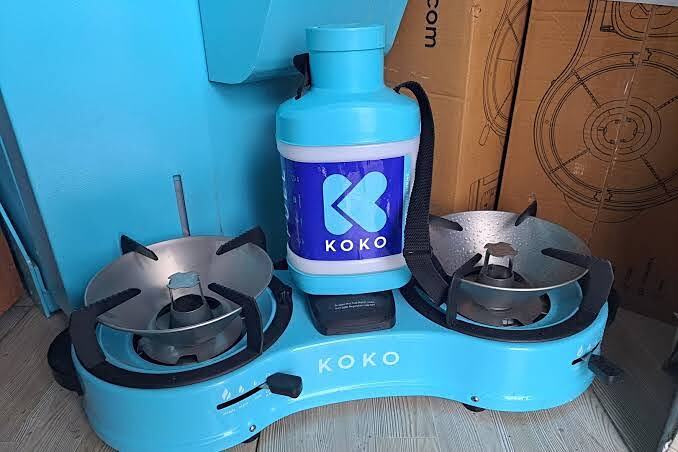
Founded in 2013, the company built an integrated ecosystem that combined smart ethanol fuel dispensers, digitally connected cooking stoves, proprietary software and an extensive logistics network serving more than 3,000 automated fuel stations across Kenya.
The business attracted backing from investors including Microsoft's Climate Innovation Fund, Mirova, Verod-Kepple, Rand Merchant Bank, as well as the World Bank's Multilateral Investment Guarantee Agency (MIGA), which supported the venture with a $179.6 million guarantee.
Its business model, however, relied heavily on carbon-credit revenues.
When Kenyan authorities declined to issue the Letter of Authorisation required for the company to sell carbon credits into international compliance markets, KOKO lost a critical revenue stream that subsidised affordable ethanol fuel for consumers.
Combined with scrutiny surrounding aspects of carbon-credit claims, the funding disruption ultimately pushed the company into administration.
Rather than dismantling the business piece by piece, PwC is pursuing a strategic sale of KOKO's integrated platform, including patents, hardware designs, software, manufacturing operations in Gujarat, India, and the retail fuel network, suggesting confidence that the underlying technology still retains significant commercial value.
Preserving Innovation Beyond Corporate Failure
The asset sale represents more than an insolvency process.
It offers investors an opportunity to preserve years of technological innovation while keeping alive one of Africa's largest clean cooking ecosystems.
Clean cooking remains central to Africa's sustainable development agenda.
According to international energy estimates, hundreds of millions of Africans still depend on biomass fuels that contribute to indoor air pollution, deforestation and adverse health outcomes.
Platforms such as KOKO demonstrated that cleaner alternatives can reach low-income households when supported by innovative financing and scalable distribution systems.
The challenge now is building business models that remain commercially resilient even when carbon markets or regulatory approvals become uncertain.
Climate Innovation Requires Stronger Policy Certainty
KOKO's collapse provides important lessons for governments, investors and climate entrepreneurs.
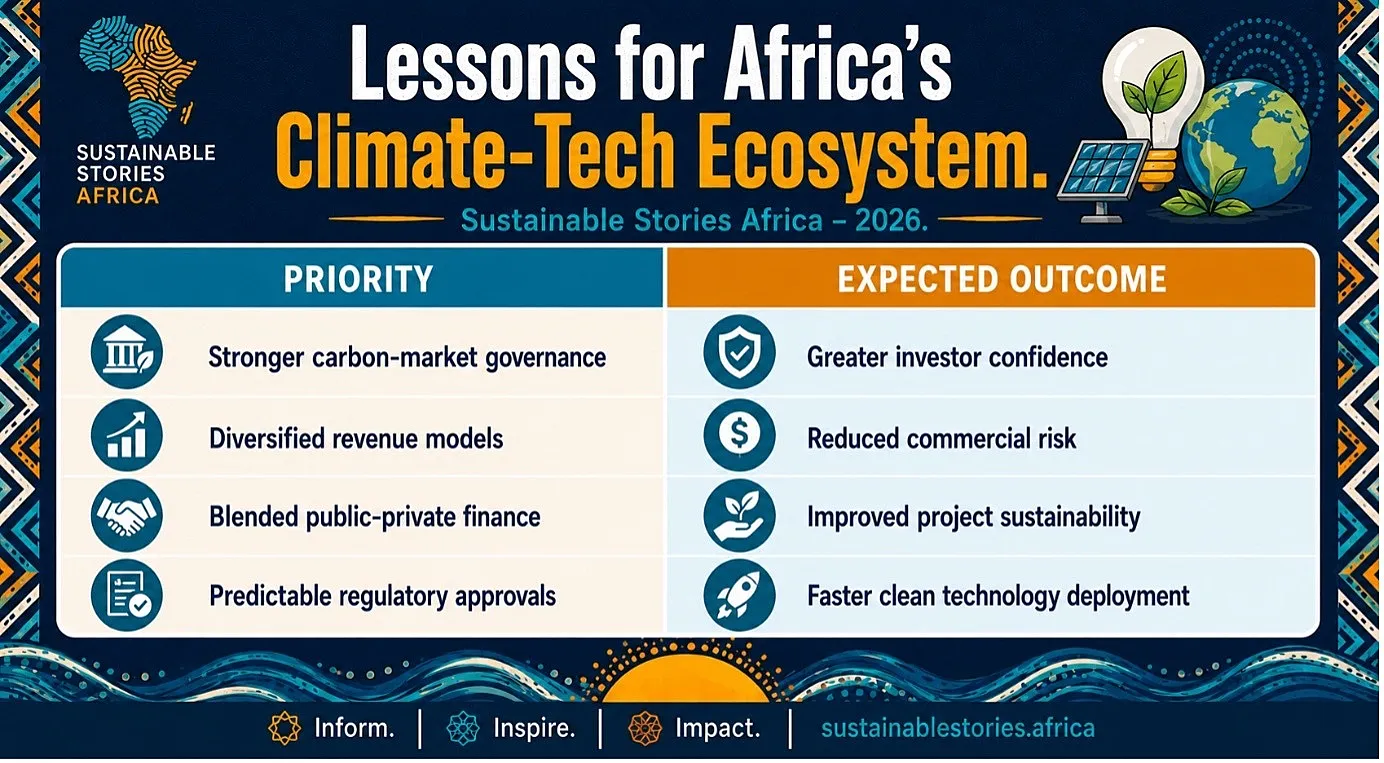
Africa's clean energy transition depends not only on breakthrough technologies but also on predictable regulation, transparent carbon market governance and diversified revenue models that reduce dependence on a single funding source.
Future climate ventures will likely require blended finance, stronger public-private partnerships and clearer regulatory pathways to attract long-term investment while maintaining affordable services for consumers.
Path Forward – Building Stronger Climate Innovation Ecosystems
The sale of KOKO's assets marks the end of one chapter but not necessarily the end of its technological legacy.
Strategic investors now have an opportunity to build on infrastructure that has already demonstrated market demand and operational scale.
For Africa's climate-tech sector, the broader priority is to create investment ecosystems in which innovation is supported by stable policy, diversified financing and resilient commercial models capable of delivering long-term environmental and social impact.
Culled From: PwC begins sale of Kenya's KOKO Network's assets