Renewvia Energy is expanding its solar mini-grid operations into Uganda, Rwanda, Ethiopia and the Democratic Republic of Congo.
The plan could require about $750 million and deliver roughly 2.1 million electricity connections.
For communities beyond the grid, the promise is bigger than light: it is jobs, learning, safety, enterprise and resilience.
Solar Mini-Grids Enter Africa’s Hardest Markets
Renewvia Energy Corp. is preparing a major expansion of its solar-powered mini-grid business into Uganda, Rwanda, Ethiopia and the Democratic Republic of Congo, targeting some of Africa’s most difficult electricity-access markets as pressure grows to close the continent’s power gap.
The company’s plan could require about $750 million and deliver around 2.1 million new electricity connections, according to Trey Jarrard, Chief Executive of Renewvia Solar Africa.
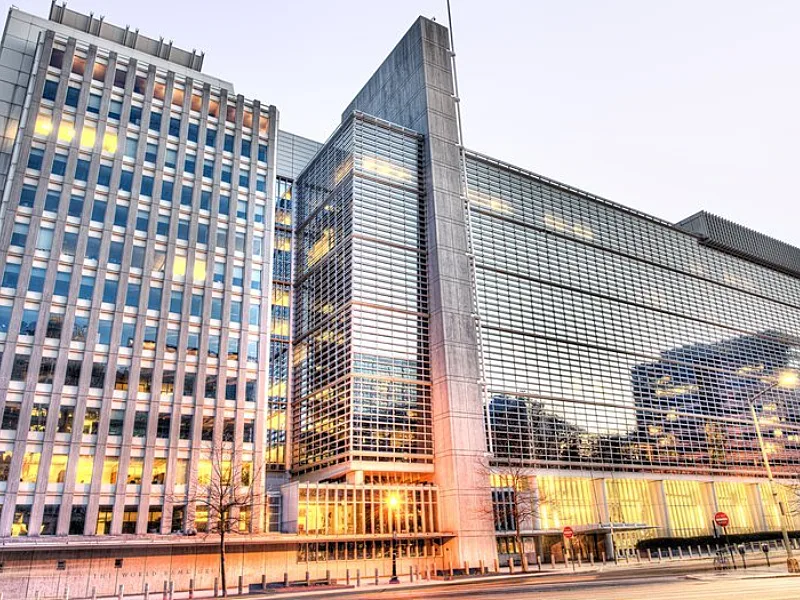
The expansion comes as nearly 600 million people in Sub-Saharan Africa are still without electricity, as the World Bank and African Development Bank’s Mission 300 initiative aims to connect 300 million people by 2030.
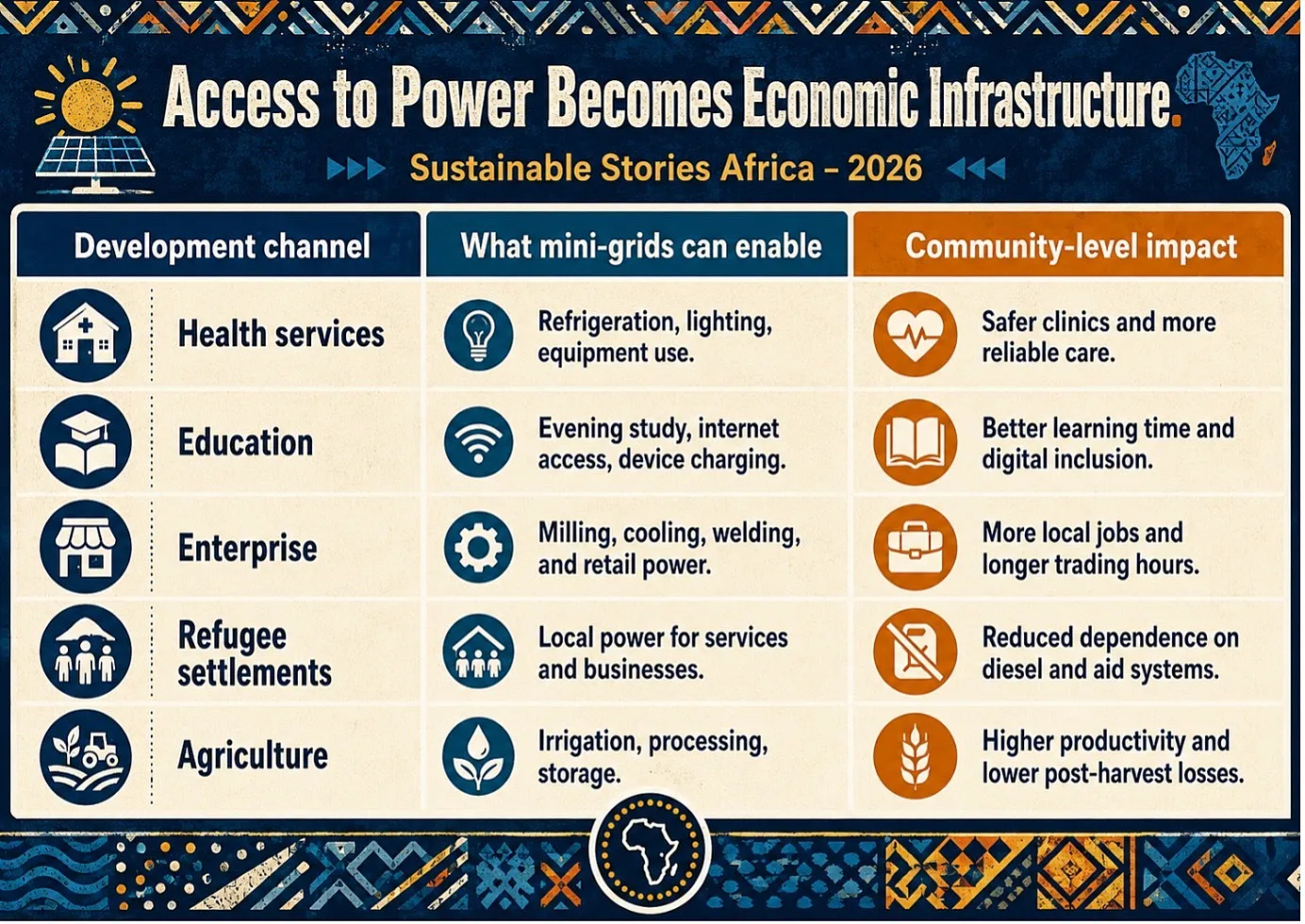
For many rural households, the issue is not simply whether a bulb can switch on. It is whether a clinic can refrigerate vaccines, a student can study after sunset, a farmer can power irrigation, and a small trader can keep a freezer running long enough to grow a business.
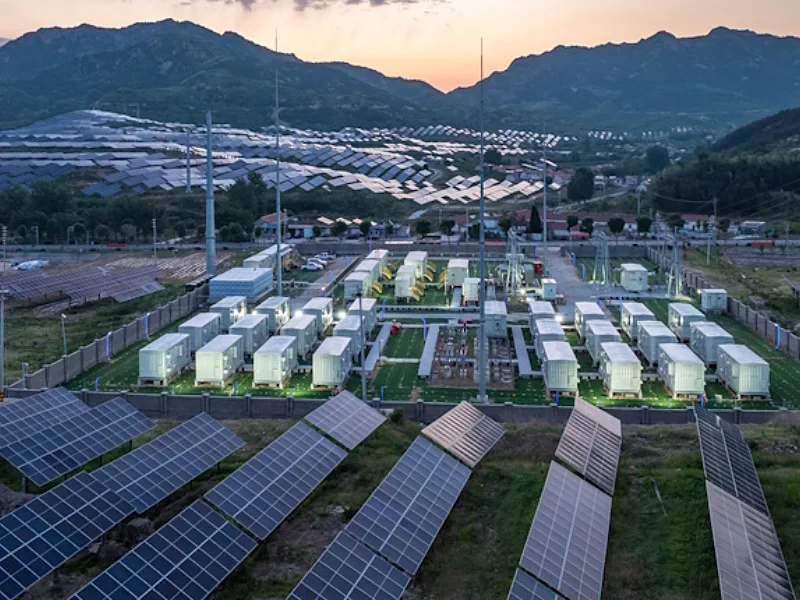
Renewvia bets that decentralised solar systems can reach communities where national grids remain too distant, too weak or too expensive to extend.
Expansion Meets A Continental Access Gap
Renewvia already operates commercial mini-grids in Kenya and Nigeria, with systems ranging from 100kW to 2.5MW and serving rural communities as well as clients including Shell, UBA Bank and the UN refugee agency.
The company’s African model focuses on standalone power systems that operate separately from national grids, using solar generation and battery storage to provide electricity on demand.
It is described as a rural microgrid model to cater for underserved areas that are not served by conventional utilities or are not eligible for grid extension.
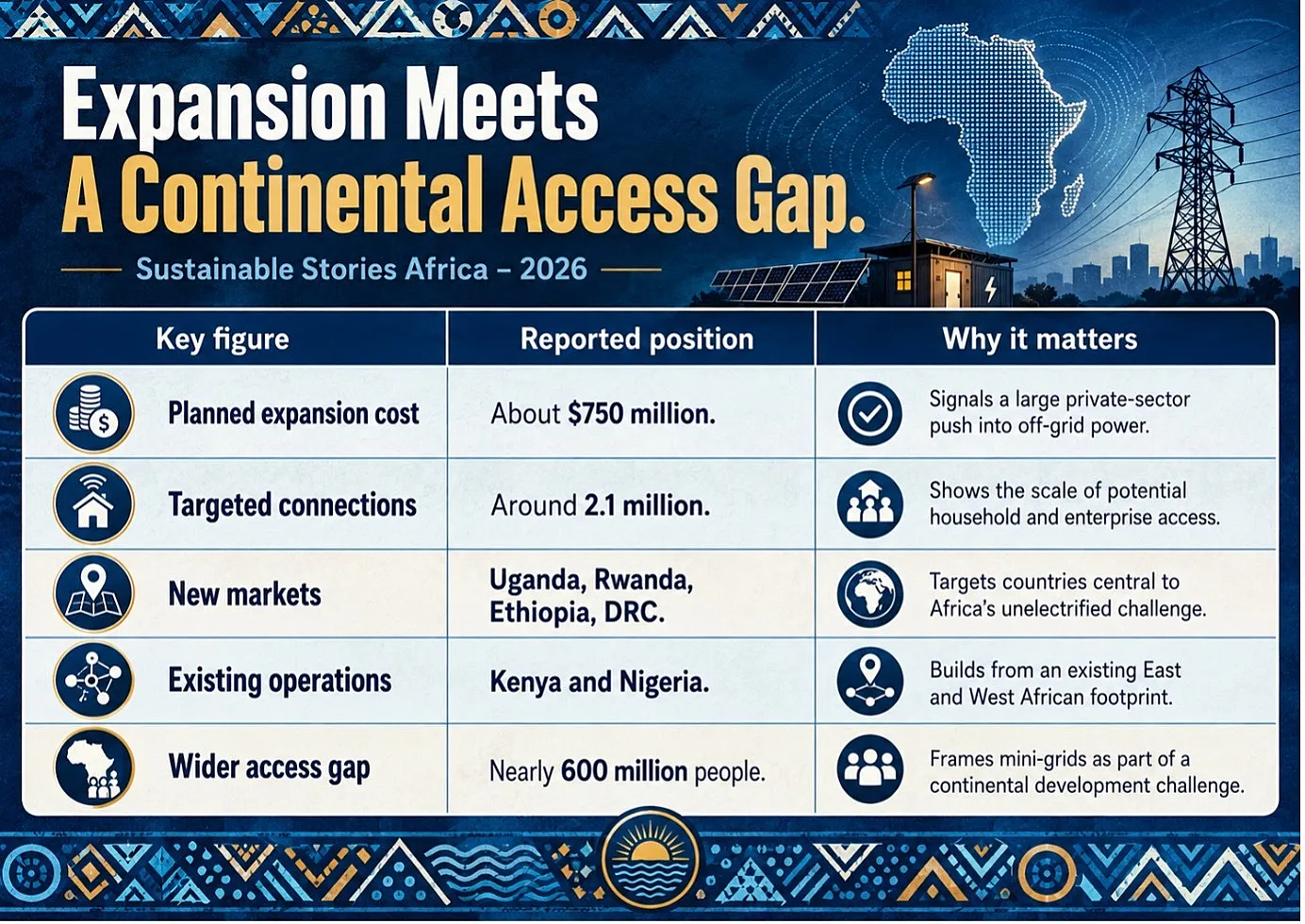
The timing is important. The International Energy Agency reports that approximately 600 million people in Africa lack electricity, with progress lagging behind national and international targets.
Its 2025 analysis also warns that electrification has barely kept pace with population growth, leaving the continent far from universal access.
Access to Power Becomes Economic Infrastructure
Mini-grids matter because they can turn electricity from a distant promise into a local asset.
In a village economy, reliable power can change what is possible in one business day: maize can be milled locally, fish can be preserved, phones can be charged, welders can take orders, and shops can stay open safely after dark.
Renewvia says its work in Africa has already demonstrated measurable development outcomes, including higher income, increased female employment and improved school attendance for girls. Those claims will need continued verification as the company enters larger and more complex markets.
The company is also seeking about $45 million in concessional finance to expand a metro grid in Kakuma and develop a renewable energy plant in Dadaab, two of the world’s largest refugee settlements in Kenya.
Those projects could increase access to electricity in the settlements fivefold, reaching more than 550,000 people.
Delivery Must Match Local Realities
The opportunity is significant, but the execution test is equally large. Mini-grids must be affordable for low-income users, financially viable for investors and technically reliable in remote areas.
That requires patient capital, transparent tariffs, local maintenance skills, community trust and supportive regulation.
Mission 300 has placed off-grid and distributed power at the centre of Africa’s electrification push; however, the programme also depends on reforms that make private investment easier: stronger utilities, clearer licensing, better payment systems and more predictable rules for mini-grid operators.
It was reported in 2025 that African nations had committed to opening power sectors and mobilising at least $90 billion for the Mission 300 agenda.
Renewvia’s expansion will therefore be judged by more than installed megawatts.
The real test is whether new connections translate into productive use, whether women and young people can build income around electricity, and whether households can afford enough power to change daily life.
Mini-Grids Need Finance, Trust, Reform
- Governments should simplify mini-grid licensing, protect consumers, and create tariff frameworks that allow operators to recover costs without pricing out poor communities.
- Development finance institutions should blend grants, guarantees and concessional loans to reduce early-stage risk, especially in refugee settlements and deep rural markets.
- Private developers must also show discipline. Strong ESG reporting, local hiring, durable equipment, transparent customer service and measurable community impact should be treated as core infrastructure standards, not optional sustainability language.
Path Forward – Power Must Become Productive Access
Renewvia’s expansion points to a wider truth: Africa’s electricity gap will not be closed by national grids alone.
The path forward is to finance mini-grids as economic infrastructure, align regulation with local realities, and ensure new connections power businesses, clinics, schools, farms and households, rather than just statistics on an access dashboard.
Culled From: Renewvia Energy expands to Africa’s largest unelectrified markets